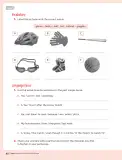
Vocabulary 1
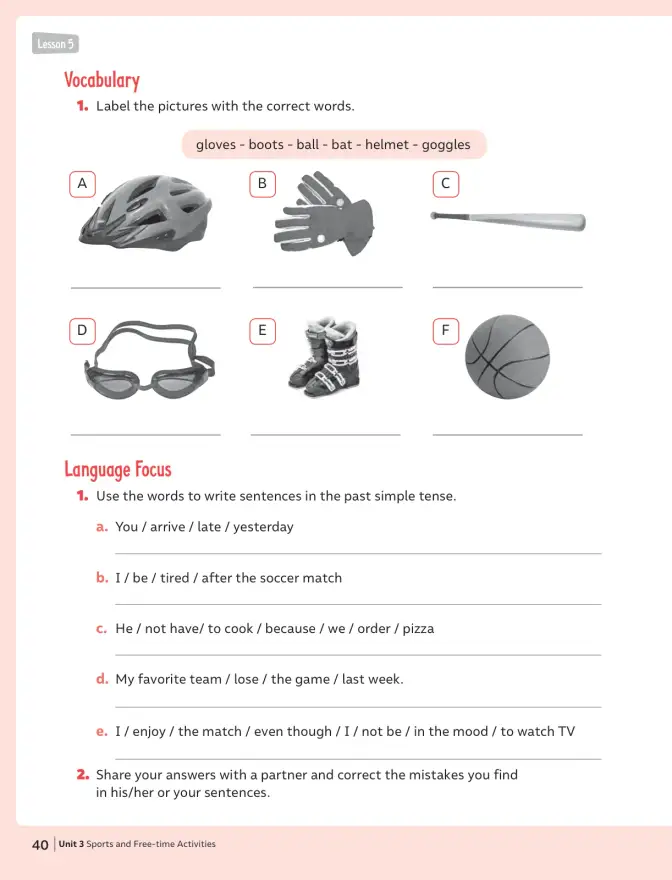
Label the pictures with the correct words.
- Observo cada imagen y la relaciono con la palabra del recuadro.
- A: casco de ciclismo → helmet.
- B: guantes de portero → gloves.
- C: bate de béisbol → bat.
- D: gafas de natación → goggles.
- E: botas de esquí → boots.
- F: balón de básquetbol → ball.
Respuesta: A helmet, B gloves, C bat, D goggles, E boots, F ball.
Language Focus 1
Use the words to write sentences in the past simple tense.
You / arrive / late / yesterday
- El sujeto es You.
- arrive es regular: se agrega -d → arrived.
- Orden: sujeto + verbo en pasado + complemento + tiempo.
You arrived late yesterday.
I / be / tired / after the soccer match
- El sujeto es I.
- be en pasado simple con I es was.
- Se une con el adjetivo tired y el complemento de tiempo.
I was tired after the soccer match.
He / not have / to cook / because / we / order / pizza
- Primera cláusula: He + did not have + to cook.
- have es irregular: en negativa se usa did not have.
- Segunda cláusula: we + ordered (regular) + pizza.
- Se une con el conector because.
He did not have to cook because we ordered pizza.
My favorite team / lose / the game / last week.
- Sujeto: My favorite team.
- lose es irregular: pasado lost.
- Complemento: the game last week.
My favorite team lost the game last week.
I / enjoy / the match / even though / I / not be / in the mood / to watch TV
- Primera cláusula: I + enjoyed (regular) + the match.
- Conector concesivo: even though.
- Segunda cláusula: I + was not + in the mood to watch TV.
Language Focus 2
Share your answers with a partner and correct the mistakes you find in his/her or your sentences.
- Intercambio mi hoja con un compañero.
- Leo sus oraciones en voz alta.
- Reviso si el verbo está en pasado simple, si la negativa usa did not + verbo base y si el orden de las palabras es correcto.
- Marco los errores con un lápiz y los comentamos.
Respuesta orientativa: Se espera que el estudiante identifique errores como arrive en lugar de arrived, not was en lugar de was not, o el uso de did not had en lugar de did not have.
I enjoyed the match even though I was not in the mood to watch TV.