Saltar al contenido
MisLibrosTexto
Ad
Inglés – Séptimo Básico | Student’s Book MINEDUC – Descargar PDF · 2024
Libro de Inglés 7

MINEDUC

53/82

Lesson 7: Protecting the Environment - Listening and Vocabulary

📄 ejercicios ingles 🎓 otro · 7° BASICA Chile 🇨🇱 CL 🗣 Español
Página 53
53 de 82
Página 53 de Inglés – Séptimo Básico | Student’s Book MINEDUC – Descargar PDF · 2024
Anterior Página 53 / 82 Siguiente

Respuesta rápida

  1. A-burning fossil fuels, B-planting, C-factories, D-air pollution, E-water/plastic, F-clean water. 2. a) pollution, b) artificial, c) artificial, d) air, e) burning, f) dioxide, g) factories, h) water, i) agricultural, j) oxygen.
📚 exercise ingles ⭐⭐ Dificultad 2/5 ⏱ 8 min lectura

Solución — Página 53

Inglés – Séptimo Básico | Student’s Book MINEDUC – Descargar PDF · 2024

1
Ejercicio 1

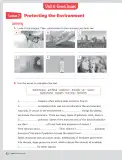
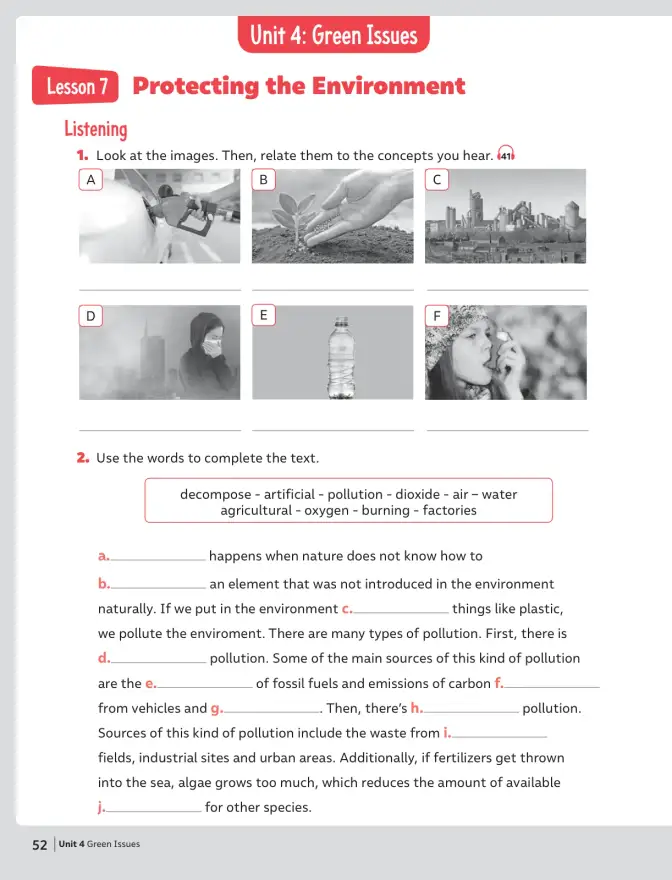
Look at the images. Then, relate them to the concepts you hear. (Mira las imágenes y relaciónalas con los conceptos que escuchas).

  1. Observo cada imagen y reconozco la acción o problema ambiental que representa.
  2. Asocio cada imagen con el concepto auditivo correspondiente.
  3. Verifico la relación imagen-concepto según el contexto de la unidad (contaminación, reciclaje, energías limpias, etc.).
Respuesta
  • A. Persona cargando combustible en un auto → burning of fossil fuels / air pollution.
  • B. Manos plantando una planta → planting trees / reforestation.
  • C. Ciudad industrial con fábricas → factories / industrial pollution.
  • D. Persona con mascarilla en ciudad contaminada → air pollution / smog.
  • E. Botella de agua → water / plastic pollution.
  • F. Persona bebiendo agua → water / clean water.
2
Ejercicio 2

Use the words to complete the text. (Usa las palabras para completar el texto).

Palabras disponibles: decompose - artificial - pollution - dioxide - air - water - agricultural - oxygen - burning - factories.

  1. Leo el texto completo para identificar el sentido global: se describen tipos de contaminación (aire y agua) y sus fuentes.
  2. Ubico cada palabra según el contexto gramatical y semántico de cada espacio.
  3. Verifico que todas las palabras del recuadro se usen una sola vez.
a
Parte 2.a

Respuesta: Pollution happens when nature does not know how to decompose an element that was not introduced in the environment naturally.

Respuesta

Pollution* happens when nature does not know how to decompose an element that was not introduced in the environment naturally.

b
Parte 2.b

Respuesta: Artificial an element that was not introduced in the environment naturally.

Respuesta

Artificial* an element that was not introduced in the environment naturally.

c
Parte 2.c

Respuesta: If we put in the environment artificial things like plastic, we pollute the environment.

Respuesta

If we put in the environment artificial things like plastic, we pollute the environment.

d
Parte 2.d

Respuesta: First, there is air pollution.

Respuesta

First, there is air pollution.

e
Parte 2.e

Respuesta: Some of the main sources of this kind of pollution are the burning of fossil fuels...

Respuesta

Some of the main sources of this kind of pollution are the burning of fossil fuels...

f
Parte 2.f

Respuesta: ...and emissions of carbon dioxide from vehicles...

Respuesta

...and emissions of carbon dioxide from vehicles...

g
Parte 2.g

Respuesta: ...from vehicles and factories.

Respuesta

...from vehicles and factories.

h
Parte 2.h

Respuesta: Then, there's water pollution.

Respuesta

Then, there's water pollution.

i
Parte 2.i

Respuesta: Sources of this kind of pollution include the waste from agricultural fields, industrial sites and urban areas.

Respuesta

Sources of this kind of pollution include the waste from agricultural fields, industrial sites and urban areas.

j
Parte 2.j

Respuesta final: a) pollution, b) artificial, c) artificial, d) air, e) burning, f) dioxide, g) factories, h) water, i) agricultural, j) oxygen.

Respuesta

...which reduces the amount of available oxygen for other species.

Contenido de la página

Unit 4: Green Issues

Lesson 7: Protecting the Environment

Listening

1. Look at the images. Then, relate them to the concepts you hear. (41)

  • A. Persona cargando combustible en un vehículo.
  • B. Manos plantando una planta en la tierra.
  • C. Ciudad con fábricas e industria.
  • D. Persona con mascarilla en una ciudad contaminada.
  • E. Botella de agua.
  • F. Persona bebiendo agua.

2. Use the words to complete the text.

decompose - artificial - pollution - dioxide - air - water - agricultural - oxygen - burning - factories

a. __________ happens when nature does not know how to

b. __________ an element that was not introduced in the environment naturally. If we put in the environment c. __________ things like plastic, we pollute the environment. There are many types of pollution. First, there is d. __________ pollution. Some of the main sources of this kind of pollution are the e. __________ of fossil fuels and emissions of carbon f. __________ from vehicles and g. __________. Then, there's h. __________ pollution. Sources of this kind of pollution include the waste from i. __________ fields, industrial sites and urban areas. Additionally, if fertilizers get thrown into the sea, algae grows too much, which reduces the amount of available j. __________ for other species.

Glosario (8)

pollution
Contaminación; introducción de sustancias dañinas en el medio ambiente.
decompose
Descomponer; proceso natural de degradación de la materia orgánica.
artificial
Artificial; creado por el ser humano, no natural.
dioxide
Dióxido; compuesto químico con dos átomos de oxígeno (ej. CO₂).
burning
Combustión; proceso de quemar combustibles fósiles.
factories
Fábricas; instalaciones industriales que emiten contaminantes.
agricultural
Agrícola; relacionado con la agricultura y el cultivo.
oxygen
Oxígeno; gas esencial para la vida de muchas especies.

Temas y conceptos clave

Green IssuesProtecting the EnvironmentPollutionpollutionair pollutionwater pollutionfossil fuelscarbon dioxideagricultural wasteoxygen
¿Te fue útil esta página?

Preguntas que la gente también hace

¿Qué tipos de contaminación existen según el texto?
Consulta la solución completa arriba o explora el libro entero para temas relacionados.
¿Cuáles son las fuentes de la contaminación del aire?
Consulta la solución completa arriba o explora el libro entero para temas relacionados.
¿Cómo afecta la contaminación del agua a las especies?
Consulta la solución completa arriba o explora el libro entero para temas relacionados.
📌 Antes de leer esto
  • • Vocabulario básico sobre naturaleza y medio ambiente en inglés
  • • Presente simple en inglés
  • • Comprensión auditiva de palabras clave
Siguiente tema sugerido
Lesson 8: Recycling and sustainable habits
📝 Transcripción de la página (texto seleccionable) 988 caracteres

Unit 4: Green Issues

Lesson 7Protecting the Environment

Listening

  1. Look at the images. Then, relate them to the concepts you hear. 41

  2. Use the words to complete the text.

decompose - artificial- pollution - dioxide - air - water agricultural- oxygen - burning - factories

a.happens when nature does not know how to

b.an element that was not introduced in the environment naturally. If we put in the environment c.things like plastic,we pollute the enviroment. There are many types of pollution. First, there is d.pollution. Some of the main sources of this kind of pollution are the e.of fossil fuels and emissions of carbon f.from vehicles and g.Then, there's h.pollution.Sources of this kind of pollution include the waste from i.fields, industrial sites and urban areas. Additionally, if fertilizers get thrown into the sea, algae grows too much, which reduces the amount of available 1for other species.

![](page=0,bbox=[139, 303, 1066, 727])

2

Unit 4 Green Issues

Ad

Otros libros recomendados

Ver todos →
Ad

Usamos cookies propias y de terceros para personalizar contenido, mostrar publicidad y analizar el tráfico. Las cookies necesarias siempre están activas.