Saltar al contenido
MisLibrosTexto
Ad
Inglés – Séptimo Básico | Student’s Book MINEDUC – Descargar PDF · 2024
Libro de Inglés 7

MINEDUC

22/82

Water and Your Body – Reading Comprehension

📄 ejercicios ingles 🎓 otro · 7° BASICA Chile 🇨🇱 CL 🗣 Español
Página 22
22 de 82
Página 22 de Inglés – Séptimo Básico | Student’s Book MINEDUC – Descargar PDF · 2024
Anterior Página 22 / 82 Siguiente

Respuesta rápida

3.a Brain, bones, blood. 3.b Regulate temperature and remove waste. 3.c Cholera and typhoid. 4. Orientativa: comparar consumo diario con 2 litros recomendados.

📚 exercise ingles ⭐⭐ Dificultad 2/5 ⏱ 12 min lectura

Solución — Página 22

Inglés – Séptimo Básico | Student’s Book MINEDUC – Descargar PDF · 2024

1
Ejercicio 1

Read the text and underline the words you don't know.

  1. Se lee el texto "Water and Your Body" completo.
  2. Se subrayan las palabras desconocidas (por ejemplo: organs, transported, dehydrate, contaminated, bacteria, cholera, typhoid, untreated).
  3. Se anotan en el cuaderno para buscarlas después.
Respuesta

Palabras sugeridas para subrayar: organs, transported, physical functions, dehydrate, regulate, waste, contaminated, bacteria, microorganisms, cholera, typhoid, untreated.

2
Ejercicio 2

Look up the words you underlined and read the text again.

  1. Se buscan en el diccionario las palabras subrayadas.
  2. Se anota el significado en inglés y español.
  3. Se relee el texto con los nuevos significados para confirmar la comprensión.
Respuesta

Ejemplos de significados: organs = órganos; dehydrate = deshidratarse; contaminated = contaminada; bacteria = bacterias; cholera = cólera; typhoid = tifus; untreated = no tratada.

3
Ejercicio 3

Answer the following questions.

a
Parte 3.a

Which three parts of the body mentioned in the text contain large amounts of water?

  1. Se localiza en el texto la oración con porcentajes: "Human brains are 75% water, human bones are 25% water, and human blood is 83% water".
  2. Se identifican las tres partes del cuerpo: brain, bones, blood.
Respuesta

The brain (75%), the bones (25%) and the blood (83%).

b
Parte 3.b

What are the functions of water stated in paragraph three?

  1. Se lee el tercer párrafo: "Water helps regulate the temperature and removes waste from the human body".
  2. Se extraen las dos funciones: regular la temperatura y eliminar desechos.
Respuesta

Water helps regulate body temperature and removes waste from the human body.

c
Parte 3.c

What types of diseases are caused by bacteria in water?

  1. Se busca en el texto la palabra diseases: "people don't get sick with diseases such as cholera and typhoid".
  2. Se identifican las enfermedades mencionadas.
Respuesta

Cholera and typhoid.

Ad
4
Ejercicio 4

In pairs, discuss: How much water do you drink everyday? Do you think it is enough?

  1. Se compara el consumo personal con la recomendación del texto: "Healthy people should drink two liters of water daily".
  2. Se reflexiona si la cantidad diaria propia alcanza los 2 litros.
  3. Se comparte la respuesta con la pareja y se justifica.

Respuesta orientativa: I drink about one and a half liters of water every day. I think it is not enough because the text says healthy people should drink two liters daily, so I need to drink more water, especially after doing exercise.

Contenido de la página

Reading

1. Read the text and underline the words you don't know.

Water and Your Body

Your body and the blue stuff – water facts

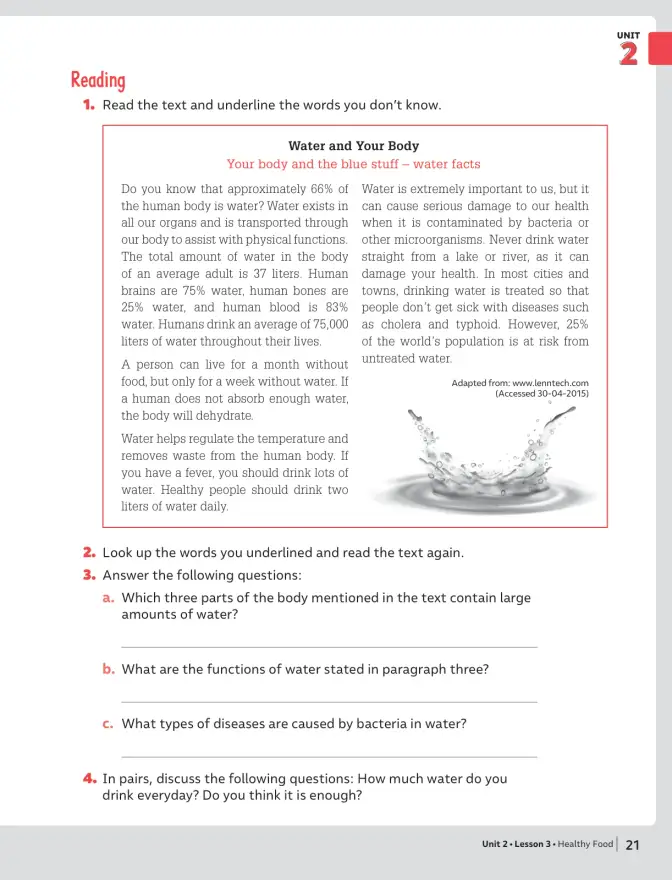
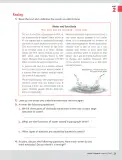
Do you know that approximately 66% of the human body is water? Water exists in all our organs and is transported through our body to assist with physical functions. The total amount of water in the body of an average adult is 37 liters. Human brains are 75% water, human bones are 25% water, and human blood is 83% water. Humans drink an average of 75,000 liters of water throughout their lives.

A person can live for a month without food, but only for a week without water. If a human does not absorb enough water, the body will dehydrate.

Water helps regulate the temperature and removes waste from the human body. If you have a fever, you should drink lots of water. Healthy people should drink two liters of water daily.

Water is extremely important to us, but it can cause serious damage to our health when it is contaminated by bacteria or other microorganisms. Never drink water straight from a lake or river, as it can damage your health. In most cities and towns, drinking water is treated so that people don't get sick with diseases such as cholera and typhoid. However, 25% of the world's population is at risk from untreated water.

Adapted from: www.lenntech.com (Accessed 30-04-2015)

2. Look up the words you underlined and read the text again.

3. Answer the following questions:

a. Which three parts of the body mentioned in the text contain large amounts of water?

b. What are the functions of water stated in paragraph three?

c. What types of diseases are caused by bacteria in water?

4. In pairs, discuss the following questions: How much water do you drink everyday? Do you think it is enough?

Glosario (8)

organs
órganos del cuerpo
dehydrate
deshidratarse, perder agua del cuerpo
contaminated
contaminada, con bacterias o sustancias dañinas
bacteria
bacterias, microorganismos que pueden causar enfermedades
cholera
cólera, enfermedad intestinal transmitida por agua contaminada
typhoid
tifus, enfermedad transmitida por agua o alimentos contaminados
untreated water
agua no tratada, sin purificar
waste
desechos, sustancias que el cuerpo elimina

Preguntas para practicar

How much water do you drink everyday? Do you think it is enough?

I drink about one and a half liters of water every day. I think it is not enough because the text says healthy people should drink two liters daily, so I need to drink more water, especially after doing exercise.

Temas y conceptos clave

Reading comprehensionWater and healthWaterborne diseaseswater percentage in the bodybody functions of waterwater contaminationcholeratyphoiddaily water intake

Fuentes y referencias

  • www.lenntech.com (Accessed 30-04-2015)
¿Te fue útil esta página?

Preguntas que la gente también hace

¿Cuánta agua debe tomar una persona al día?
Consulta la solución completa arriba o explora el libro entero para temas relacionados.
¿Qué porcentaje del cuerpo humano es agua?
Consulta la solución completa arriba o explora el libro entero para temas relacionados.
¿Qué enfermedades transmite el agua contaminada?
Consulta la solución completa arriba o explora el libro entero para temas relacionados.
📌 Antes de leer esto
  • • Vocabulario básico de salud en inglés
  • • Uso de diccionario bilingüe
  • • Identificación de ideas principales en un texto
Siguiente tema sugerido
Healthy Food – Food Groups and a Balanced Diet
📝 Transcripción de la página (texto seleccionable) 1796 caracteres

Reading

  1. Read the text and underline the words you don't know.

Water and Your Body Your body and the blue stuff — water facts

Do you know that approximately 66% of the human body is water? Water exists in all our organs and is transported through our body to assist with physical functions.The total amount of water in the body of an average adult is 37 liters. Human brains are 75% water, human bones are 25% water, and human blood is 83%water. Humans drink an average of 75,000liters of water throughout their lives.

A person can live for a month without food, but only for a week without water. If a human does not absorb enough water,the body will dehydrate.

Water helps regulate the temperature and removes waste from the human body. If you have a fever, you should drink lots of water. Healthy people should drink two liters of water daily.

Water is extremely important to us, but it can cause serious damage to our health when it is contaminated by bacteria or d straight from a lake or river, as it can damage your health. In most cities and towns, drinking water is treated so that people don't get sick with diseases such as cholera and typhoid. However, 25%of the world's population is at risk from untreated water.

Adapted from: www.lenntech.com (Accessed 30-04-2015)

  1. Look up the words you underlined and read the text again.

3.Answer the following questions:

a. Which three parts of the body mentioned in the text contain large amounts of water?

b. What are the functions of water stated in paragraph three?

c. What types of diseases are caused by bacteria in water?

4.In pairs, discuss the following questions: How much water do you drink everyday? Do you think it is enough?

UNIT 2

![](page=0,bbox=[671, 724, 1096, 942])

Unit 2·Lesson 3·Healthv Food

21

Ad

Otros libros recomendados

Ver todos →
Ad

Usamos cookies propias y de terceros para personalizar contenido, mostrar publicidad y analizar el tráfico. Las cookies necesarias siempre están activas.