Saltar al contenido
MisLibrosTexto
Ad
Ingles 1° · 2024
Libro de Inglés 1 BGU

Ministerio de Educación del Ecuador

10/34

Día de Muertos (México): lectura y preguntas de comprensión

📄 ejercicios ingles 🎓 bachillerato · 1° BGU Ecuador 🇪🇨 EC 🗣 Español
Página 10
10 de 34
Página 10 de Ingles 1° · 2024
Anterior Página 10 / 34 Siguiente

Respuesta rápida

  1. Life, not death. 2. To remember and honor loved ones who passed away. 3. Their spirits come back to be with their families. 4. Latin America and the United States. Speaking: respuestas orientativas según el estudiante.
📚 exercise ingles ⭐ Dificultad 1/5 ⏱ 6 min lectura

Solución — Página 10

Ingles 1° · 2024

1
Ejercicio 1

What is the emphasis of Día de Muertos? (¿Cuál es el énfasis del Día de Muertos?)

  1. Localizo en el texto la primera oración: "Día de Muertos is a special celebration that's all about life, not death."
  2. La palabra clave es life (vida), en contraste con death (muerte).
  3. Redacto la respuesta con una oración completa en inglés.

Respuesta

The emphasis of Día de Muertos is life, not death — it is a celebration of life.

2
Ejercicio 2

Why do families and friends come together during Día de Muertos? (¿Por qué se reúnen familias y amigos?)

  1. Busco en el texto: "It's a time when families and friends get together to remember and honor their loved ones who have passed away."
  2. Identifico los dos verbos de propósito: remember (recordar) y honor (honrar).
  3. Formulo la respuesta.

Respuesta

They come together to remember and honor their loved ones who have passed away.

3
Ejercicio 3

What is the belief about the spirits of the deceased during this time? (¿Cuál es la creencia sobre los espíritus de los difuntos?)

  1. Busco en el texto: "People believe that the spirits of the deceased come back to be with their families during this time."
  2. Extraigo la idea principal: los espíritus regresan a estar con sus familias.
  3. Redacto la respuesta.

Respuesta

People believe that the spirits of the deceased come back to be with their families during this time.

Ad
4
Ejercicio 4

In addition to Mexico, where else is Día de Muertos celebrated? (Además de México, ¿dónde más se celebra?)

  1. Busco en el texto: "Día de Muertos isn't just celebrated in Mexico; you can find it in other parts of Latin America and even in the United States."
  2. Señalo los dos lugares: otras partes de Latinoamérica y Estados Unidos.
  3. Redacto la respuesta.

Respuesta

It is also celebrated in other parts of Latin America and in the United States.

5
Ejercicio 5

(Speaking)

Which one is your favorite? What do you like about it? (¿Cuál es tu favorita? ¿Qué te gusta de ella?)

  1. Elegimos una celebración conocida (por ejemplo, la fiesta de Año Nuevo o el Inti Raymi).
  2. Escribimos dos oraciones: la preferida y una razón.

Respuesta orientativa: My favorite celebration is New Year's Eve. I like it because my whole family gets together, we share a special dinner, and we celebrate with fireworks at midnight.


6
Ejercicio 6

(Speaking: class discussion)

What do celebrations teach us about a culture? (¿Qué nos enseñan las celebraciones sobre una cultura?)

Respuesta orientativa: Celebrations teach us about a culture's values, beliefs, and traditions. Through festivals we learn what people consider important, such as family, religion, history, or nature.


Ad
7
Ejercicio 7

(Speaking: class discussion)

Is there any similarity between those celebrations and the ones in our country? (¿Hay similitudes con las celebraciones de nuestro país?)

Respuesta orientativa: Yes. For example, in Ecuador we also honor deceased relatives by visiting cemeteries and bringing flowers, similar to Día de Muertos. Both celebrations show that families value remembering their loved ones.

Contenido de la página

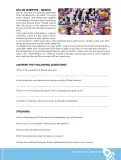
DÍA DE MUERTOS - MÉXICO

Día de Muertos is a special celebration that's all about life, not death. It's a time when families and friends get together to remember and honor their loved ones who have passed away. People believe that the spirits of the deceased come back to be with their families during this time.

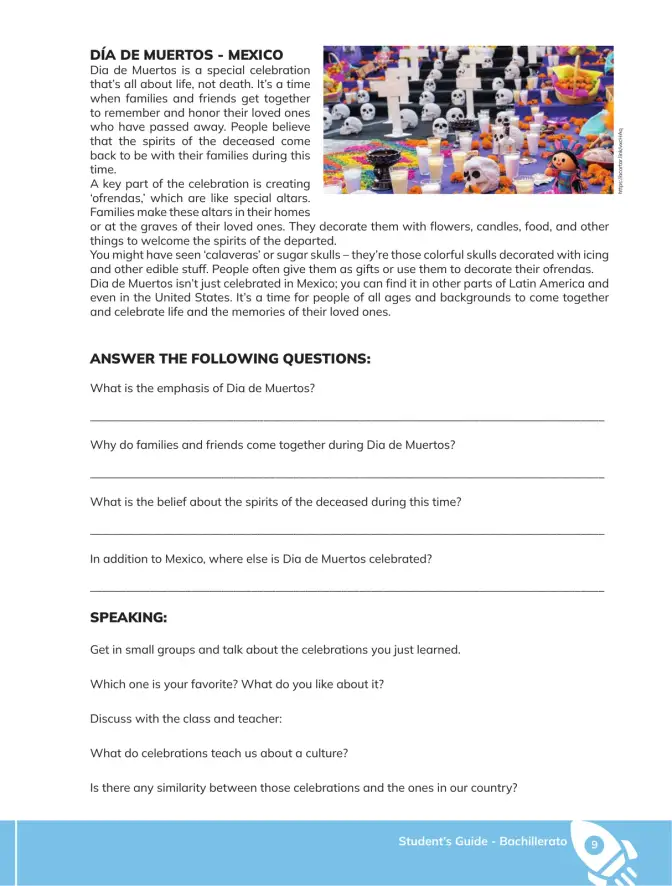
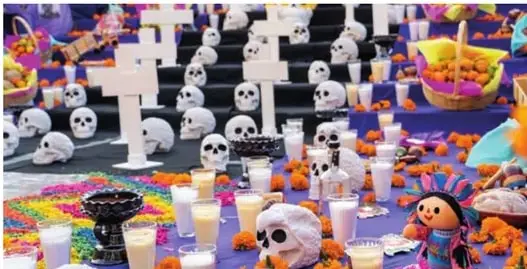
A key part of the celebration is creating 'ofrendas,' which are like special altars. Families make these altars in their homes or at the graves of their loved ones. They decorate them with flowers, candles, food, and other things to welcome the spirits of the departed.

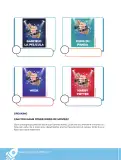
You might have seen 'calaveras' or sugar skulls – they're those colorful skulls decorated with icing and other edible stuff. People often give them as gifts or use them to decorate their ofrendas.

Día de Muertos isn't just celebrated in Mexico; you can find it in other parts of Latin America and even in the United States. It's a time for people of all ages and backgrounds to come together and celebrate life and the memories of their loved ones.

ANSWER THE FOLLOWING QUESTIONS:

  1. What is the emphasis of Día de Muertos?
  2. Why do families and friends come together during Día de Muertos?
  3. What is the belief about the spirits of the deceased during this time?
  4. In addition to Mexico, where else is Día de Muertos celebrated?

SPEAKING:

  • Get in small groups and talk about the celebrations you just learned.
  • Which one is your favorite? What do you like about it?
  • Discuss with the class and teacher:
    • What do celebrations teach us about a culture?
    • Is there any similarity between those celebrations and the ones in our country?

Glosario (6)

Ofrenda
Altar especial que las familias preparan con flores, velas y comida para recibir a los espíritus de los difuntos.
Calavera / sugar skull
Calavera de azúcar decorada con glaseado y colores; se usa como regalo o para adornar las ofrendas.
Spirits of the deceased
Espíritus de los difuntos; según la creencia, regresan para estar con sus familias.
To honor
Honrar, rendir homenaje a alguien.
Passed away
Fallecido (eufemismo en inglés para 'morir').
Emphasis
Énfasis; el punto principal o central de algo.

Preguntas para practicar

What do celebrations teach us about a culture?

Celebrations teach us about a culture's values, beliefs, and traditions. Through festivals we learn what people consider important, such as family, religion, history, or nature.

Is there any similarity between those celebrations and the ones in our country?

Yes. In Ecuador, families also honor deceased relatives by visiting cemeteries and bringing flowers, similar to Día de Muertos in Mexico; both show the value placed on remembering loved ones.

Which celebration is your favorite and why?

My favorite celebration is New Year's Eve because my whole family gets together and we share a special dinner with fireworks at midnight.

Temas y conceptos clave

Día de Muertos - MéxicoCelebraciones culturales en inglésComprensión lectora (reading comprehension)Speaking: discusión en gruposdía de Muertosofrendacalavera / sugar skullspirits of the deceasedremember and honorcelebration of lifeLatin AmericaUnited States
¿Te fue útil esta página?

Figuras de la página (1)

Fotografía de una ofrenda del Día de Muertos con calaveras de azúcar blancas, velas, flores de cempasúchil, bebidas en vasos y una muñeca tradicional sobre un mantel morado y naranja.
Figura 1 image

Preguntas que la gente también hace

¿Qué es una ofrenda en el Día de Muertos?
Consulta la solución completa arriba o explora el libro entero para temas relacionados.
¿Cómo se responde a preguntas de comprensión lectora en inglés?
Consulta la solución completa arriba o explora el libro entero para temas relacionados.
¿Qué significa 'it's all about life, not death' en español?
Consulta la solución completa arriba o explora el libro entero para temas relacionados.
📌 Antes de leer esto
  • • Vocabulario básico de celebraciones en inglés
  • • Lectura de párrafos cortos en inglés
  • • Oraciones simples en presente
Siguiente tema sugerido
Otra tradición latinoamericana en inglés (p. ej., Inti Raymi o Carnaval) con más preguntas de comprensión y vocabulario.
📝 Transcripción de la página (texto seleccionable) 1673 caracteres

DÍA DE MUERTOS - MEXICO

Dia de Muertos is a special celebration that's all about life, not death. It's a time when families and friends get together to remember and honor their loved ones who have passed away. People believe that the spirits of the deceased come back to be with their families during this time.

A key part of the celebration is creating “ofrendas; which are like special altars. Families make these altars in their homes or at the graves of their loved ones. They decorate them with flowers, candles, food, and other things to welcome the spirits of the departed.

You might have seen ‘calaveras’ or sugar skulls — they're those colorful skulls decorated with icing and other edible stuff. People often give them as gifts or use them to decorate their ofrendas. Dia de Muertos isn’t just celebrated in Mexico; you can find it in other parts of Latin America and even in the United States. It’s a time for people of all ages and backgrounds to come together and celebrate life and the memories of their loved ones.

https:/facortar.link/vxcHAq

ANSWER THE FOLLOWING QUESTIONS:

What is the emphasis of Dia de Muertos?

Why do families and friends come together during Dia de Muertos?

What is the belief about the spirits of the deceased during this time?

In addition to Mexico, where else is Dia de Muertos celebrated?

SPEAKING:

Get in small groups and talk about the celebrations you just learned. Which one is your favorite? What do you like about it?

Discuss with the class and teacher:

What do celebrations teach us about a culture?

Is there any similarity between those celebrations and the ones in our country?

Student’s Guide - Bachillerato

Ad

Páginas cercanas

Otros libros recomendados

Ver todos →
Ad

Usamos cookies propias y de terceros para personalizar contenido, mostrar publicidad y analizar el tráfico. Las cookies necesarias siempre están activas.