Saltar al contenido
MisLibrosTexto
Ad
Ingles 1° · 2024
Libro de Inglés 1 BGU

Ministerio de Educación del Ecuador

18/34

Verdad o falso sobre redes sociales e identificar noticias falsas

📄 ejercicios ingles 🎓 bachillerato · 1° BGU Ecuador 🇪🇨 EC 🗣 Español
Página 18
18 de 34
Página 18 de Ingles 1° · 2024
Anterior Página 18 / 34 Siguiente

Respuesta rápida

1: True, 2: True, 3: True, 4: False, 5: True. Fake news tips: source, evidence, date, skepticism, fact-check, biases. Proyecto: analizar y presentar noticias reales/falsas.

📚 exercise ingles ⭐⭐ Dificultad 2/5 ⏱ 8 min lectura

Solución — Página 18

Ingles 1° · 2024

1
Ejercicio 1

"Maintaining a healthy balance of social media use is important for personal well-being, especially for young people."

  1. Esta afirmación coincide con las pautas de bienestar digital que revisamos: un uso equilibrado protege la salud mental y física.
  2. Los jóvenes son especialmente vulnerables a la comparación social y a la adicción a pantallas.
  3. Por lo tanto, la afirmación es correcta.
Respuesta

True (Verdadero)

2
Ejercicio 2

"Scheduling specific times for social media use can help ensure that you are present in the moment and not spending too much time on social media."

  1. Establecer horarios fijos limita el uso impulsivo de las redes.
  2. Al tener franjas sin pantallas, la persona está más "presente in the moment" (presente en el momento).
  3. La afirmación es correcta.
Respuesta

True (Verdadero)

3
Ejercicio 3

"Following people and accounts that have positive messages can help create a more encouraging social media feed."

  1. El algoritmo del feed refleja lo que seguimos y lo que interactuamos.
  2. Seguir cuentas con mensajes positivos produce un entorno digital más alentador (encouraging).
  3. La afirmación es correcta.
Respuesta

True (Verdadero)

Ad
4
Ejercicio 4

"Recognizing and interpreting emotions that arise during digital media activities is not necessary for maintaining a healthy balance."

  1. La frase contiene la partícula negativa "not necessary", lo que invierte el sentido del buen hábito.
  2. Reconocer e interpretar las emociones (autoconciencia emocional) SÍ es esencial para el equilibrio digital sano.
  3. Por lo tanto, la afirmación es falsa.
Respuesta

False (Falso)

5
Ejercicio 5

"Spending time connecting face-to-face with friends and family and enjoying hobbies can help cultivate healthy habits that balance time online."

  1. Las interacciones cara a cara y los hobbies offline contrarrestan el exceso de tiempo en línea.
  2. Esto cultiva hábitos saludables de equilibrio digital.
  3. La afirmación es correcta.
Respuesta

True (Verdadero)

6
Ejercicio 6

(Identifying Fake News)

Seis consejos para detectar noticias falsas:

  1. Check the source: verifica que la fuente sea confiable y conocida.
  2. Look for evidence: busca pruebas que respalden las afirmaciones; si no hay evidencia o es débil, probablemente es fake news.
  3. Check the date: confirma que la noticia esté actualizada; suelen usar información vieja para engañar.
  4. Be skeptical: desconfía de titulares sensacionalistas o demasiado buenos para ser ciertos.
  5. Use fact-checking tools: usa sitios como Snopes o FactCheck.org para verificar.
  6. Be aware of your own biases: reconoce tus propios sesgos y aborda la información con mente abierta.
Respuesta

Los seis tips anteriores, aplicados en orden, permiten determinar si una noticia es real o falsa.

Ad
7
Ejercicio 7

(Project)

"Find different news and use the tips previously mentioned to identify if they are real or fake. Present it to the class."

Respuesta orientativa: El estudiante selecciona dos noticias (una real y una falsa), aplica los seis tips y prepara una breve presentación oral: fuente, fecha, evidencia, verificación con fact-checkers y conclusión (real/falsa), explicando la decisión a la clase.

Contenido de la página

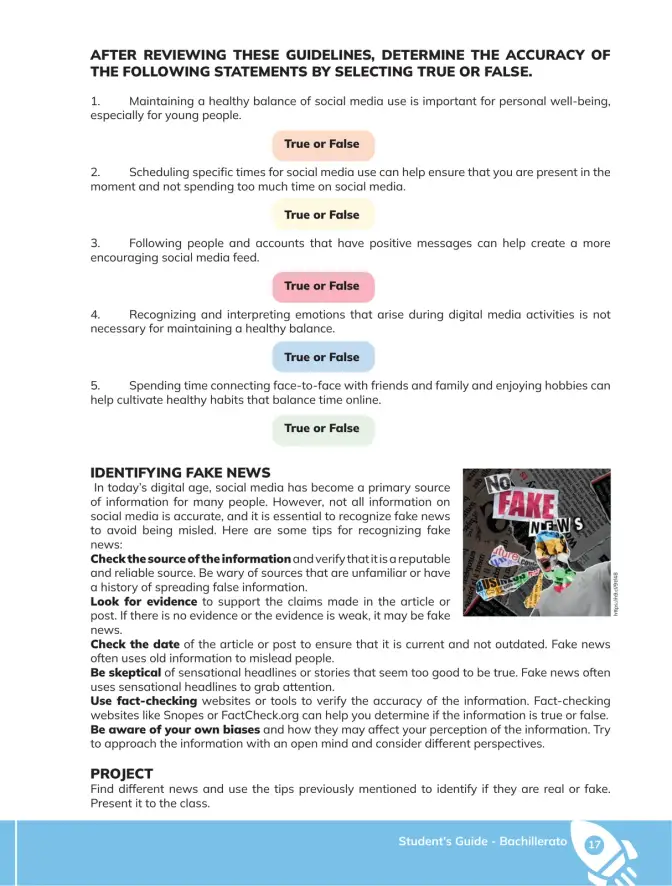
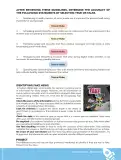
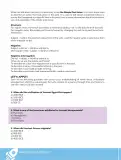
AFTER REVIEWING THESE GUIDELINES, DETERMINE THE ACCURACY OF THE FOLLOWING STATEMENTS BY SELECTING TRUE OR FALSE.

  1. Maintaining a healthy balance of social media use is important for personal well-being, especially for young people. — True or False

  2. Scheduling specific times for social media use can help ensure that you are present in the moment and not spending too much time on social media. — True or False

  3. Following people and accounts that have positive messages can help create a more encouraging social media feed. — True or False

  4. Recognizing and interpreting emotions that arise during digital media activities is not necessary for maintaining a healthy balance. — True or False

  5. Spending time connecting face-to-face with friends and family and enjoying hobbies can help cultivate healthy habits that balance time online. — True or False

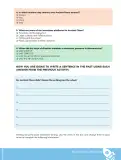
IDENTIFYING FAKE NEWS

In today's digital age, social media has become a primary source of information for many people. However, not all information on social media is accurate, and it is essential to recognize fake news to avoid being misled. Here are some tips for recognizing fake news:

  • Check the source of the information and verify that it is a reputable and reliable source. Be wary of sources that are unfamiliar or have a history of spreading false information.
  • Look for evidence to support the claims made in the article or post. If there is no evidence or the evidence is weak, it may be fake news.
  • Check the date of the article or post to ensure that it is current and not outdated. Fake news often uses old information to mislead people.
  • Be skeptical of sensational headlines or stories that seem too good to be true. Fake news often uses sensational headlines to grab attention.
  • Use fact-checking websites or tools to verify the accuracy of the information. Fact-checking websites like Snopes or FactCheck.org can help you determine if the information is true or false.
  • Be aware of your own biases and how they may affect your perception of the information. Try to approach the information with an open mind and consider different perspectives.

PROJECT

Find different news and use the tips previously mentioned to identify if they are real or fake. Present it to the class.

Student's Guide - Bachillerato — pág. 17

Ejemplos resueltos

Ejemplo de aplicación: Un titular dice "You won't believe this miracle cure!" sin fuente ni fecha.

  1. Check the source: no se indica autor ni medio → fuente no confiable.
  2. Look for evidence: no hay estudios ni datos → evidencia débil.
  3. Check the date: sin fecha → posible información vieja.
  4. Be skeptical: "too good to be true" → titular sensacionalista.
  5. Fact-check: buscar en Snopes o FactCheck.org.
  6. Biases: evaluar si quiero creerlo por mi propio sesgo. Conclusión: probablemente fake news.

Tabla

# Statement Answer
1 Healthy balance of social media is important for well-being True
2 Scheduling times helps you be present in the moment True
3 Following positive accounts creates an encouraging feed True
4 Recognizing emotions is NOT necessary for balance False
5 Face-to-face time and hobbies balance online time True

Glosario (9)

well-being
bienestar físico y mental
present in the moment
estar presente en el momento, sin distracciones
encouraging
alentador, que da ánimo
fake news
noticias falsas diseñadas para engañar
reputable source
fuente confiable y de buena reputación
sensational headline
titular sensacionalista que busca captar la atención
fact-checking
verificación de hechos con herramientas especializadas
biases
sesgos que distorsionan la percepción
skeptical
escéptico, que duda antes de aceptar algo

Preguntas para practicar

Project: analiza noticias reales o falsas con los tips y preséntalas a la clase.

El estudiante elige dos noticias, aplica los seis tips (fuente, evidencia, fecha, escepticismo, fact-checking, sesgos) y expone en clase cuál es real y cuál es falsa, justificando cada paso con evidencia concreta.

Temas y conceptos clave

Healthy social media habitsIdentifying fake newsFact-checkinghealthy balance of social mediapresent in the momentpositive feedemotional awarenessface-to-face connectionfake newsreputable sourceevidencesensational headlinesfact-checkingbiases

Fuentes y referencias

  • Snopes
  • FactCheck.org
¿Te fue útil esta página?

Preguntas que la gente también hace

¿Cómo identificar noticias falsas (fake news) en redes sociales?
Consulta la solución completa arriba o explora el libro entero para temas relacionados.
¿Por qué es importante mantener un equilibrio en el uso de redes sociales?
Consulta la solución completa arriba o explora el libro entero para temas relacionados.
¿Qué son los sitios de fact-checking y cómo se usan?
Consulta la solución completa arriba o explora el libro entero para temas relacionados.
📌 Antes de leer esto
  • • Comprensión lectora en inglés intermedio
  • • Conocer el vocabulario básico sobre redes sociales y bienestar digital
  • • Haber leído las pautas (guidelines) previas de la unidad
Siguiente tema sugerido
Presentación oral del proyecto de análisis de noticias reales o falsas
📝 Transcripción de la página (texto seleccionable) 2304 caracteres

AFTER REVIEWING THESE GUIDELINES, DETERMINE THE ACCURACY OF THE FOLLOWING STATEMENTS BY SELECTING TRUE OR FALSE.

  1. Maintaining a healthy balance of social media use is important for personal well-being, especially for young people.

True or False

  1. Scheduling specific times for social media use can help ensure that you are present in the moment and not spending too much time on social media.

True or False

  1. Following people and accounts that have positive messages can help create a more encouraging social media feed.

True or False

  1. Recognizing and interpreting emotions that arise during digital media activities is not necessary for maintaining a healthy balance.

True or False

  1. Spending time connecting face-to-face with friends and family and enjoying hobbies can help cultivate healthy habits that balance time online.

True or False

IDENTIFYING FAKE NEWS

In today’s digital age, social media has become a primary source of information for many people. However, not all information on social media is accurate, and it is essential to recognize fake news to avoid being misled. Here are some tips for recognizing fake news:

Check the source of the information and verify that itis a reputable and reliable source. Be wary of sources that are unfamiliar or have a history of spreading false information.

Look for evidence to support the claims made in the article or post. If there is no evidence or the evidence is weak, it may be fake news.

Check the date of the article or post to ensure that it is current and not outdated. Fake news often uses old information to mislead people.

Be skeptical of sensational headlines or stories that seem too good to be true. Fake news often uses sensational headlines to grab attention.

Use fact-checking websites or tools to verify the accuracy of the information. Fact-checking websites like Snopes or FactCheck.org can help you determine if the information is true or false. Be aware of your own biases and how they may affect your perception of the information. Try to approach the information with an open mind and consider different perspectives.

https://n9.cl/9rf48

PROJECT Find different news and use the tips previously mentioned to identify if they are real or fake. Present it to the class.

Student's Guide - Bachillerato

Ad

Otros libros recomendados

Ver todos →
Ad

Usamos cookies propias y de terceros para personalizar contenido, mostrar publicidad y analizar el tráfico. Las cookies necesarias siempre están activas.