













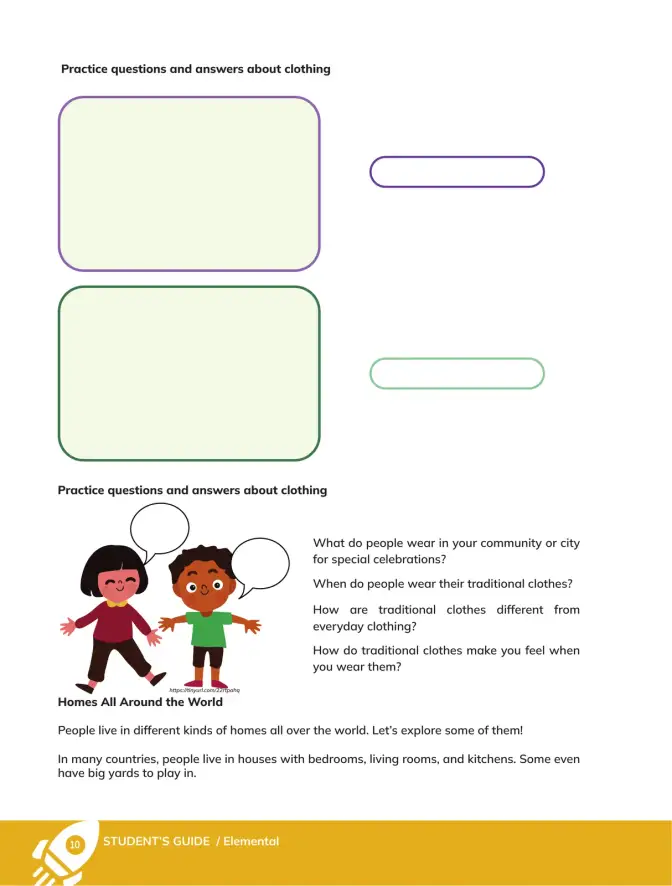
Practica preguntas y respuestas sobre vestimenta (clothing). Responde cada pregunta de forma oral o escrita:
What do people wear in your community or city for special celebrations?
- Piensa en las celebraciones locales (Fiesta de la Mama Negra en Esmeraldas, Inti Raymi en Sierra, carnavales, matrimonios).
- Identifica la vestimenta típica asociada a cada una.
- Formula la respuesta usando vocabulario de ropa: "They wear ..."
Respuesta orientativa: In special celebrations, people often wear traditional or festive clothes. In Ecuador, for the Mama Negra festival, people wear colorful costumes with red and yellow fabrics, feathers, and traditional jewelry. For weddings, people wear elegant dresses and suits.
When do people wear their traditional clothes?
- Identifica las ocasiones culturales y religiosas.
- Relaciona con la identidad y el orgullo cultural.
Respuesta orientativa: People wear their traditional clothes during cultural festivals, national holidays, religious ceremonies, weddings, and important community celebrations.
How are traditional clothes different from everyday clothing?
- Compara: traje típico vs. ropa de diario.
- Considera materiales, colores, diseños y significado cultural.
Respuesta orientativa: Traditional clothes are usually handmade, use bright colors and symbolic patterns, and represent cultural identity. Everyday clothing is simpler, more comfortable, and practical for daily activities like school or work.
How do traditional clothes make you feel when you wear them?
- Reflexiona sobre las emociones asociadas a la identidad cultural.
Respuesta orientativa: When I wear traditional clothes, I feel proud of my culture, connected to my family and community, and happy to share my traditions with others.