
Página — Ingles 7 (pág. 22)
Solución no disponible aún
Esta página está en proceso de revisión.
Pídela y la resolveremos antes. Sin registro.
📝 Transcripción de la página (texto seleccionable) 1796 caracteres
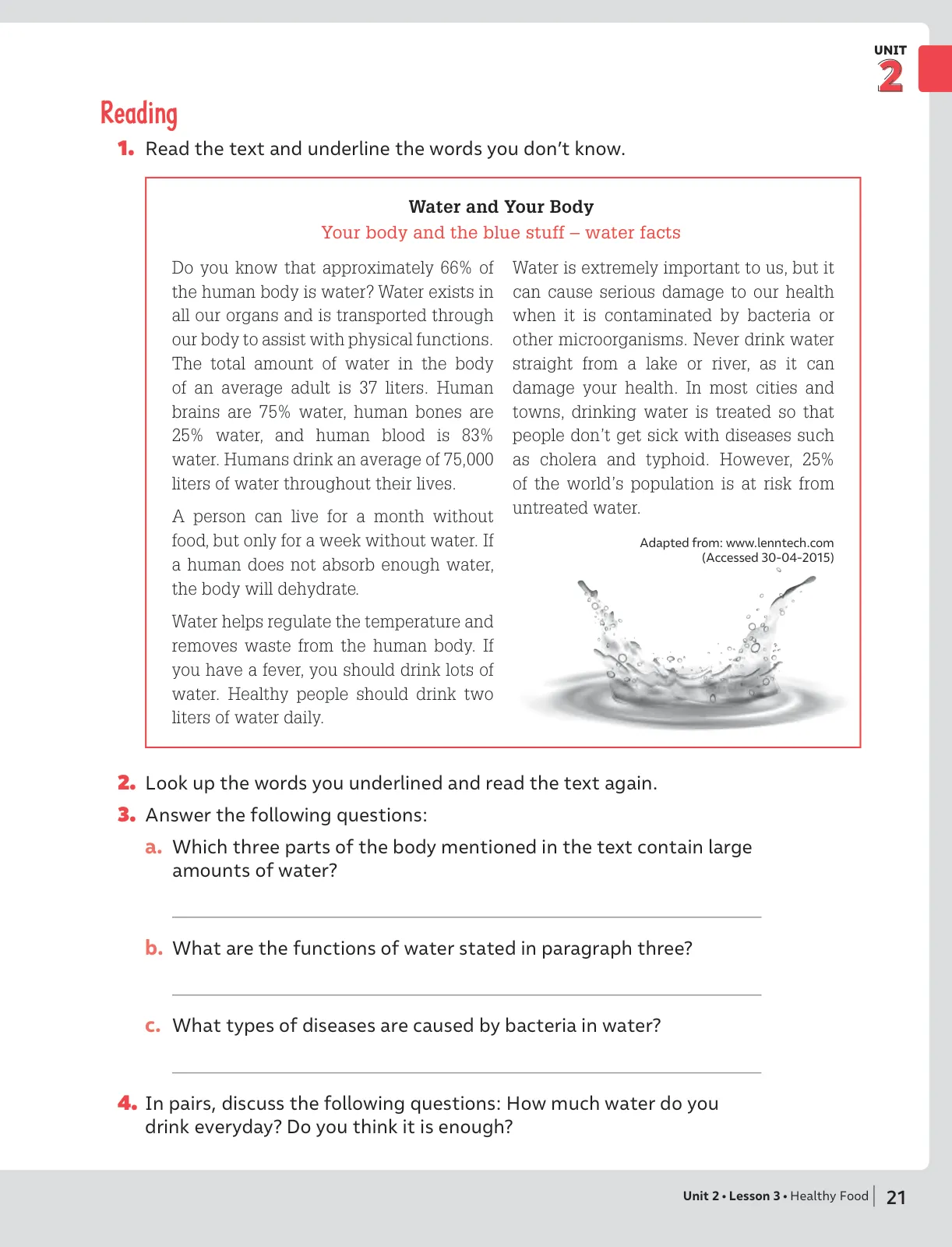
Reading
- Read the text and underline the words you don't know.
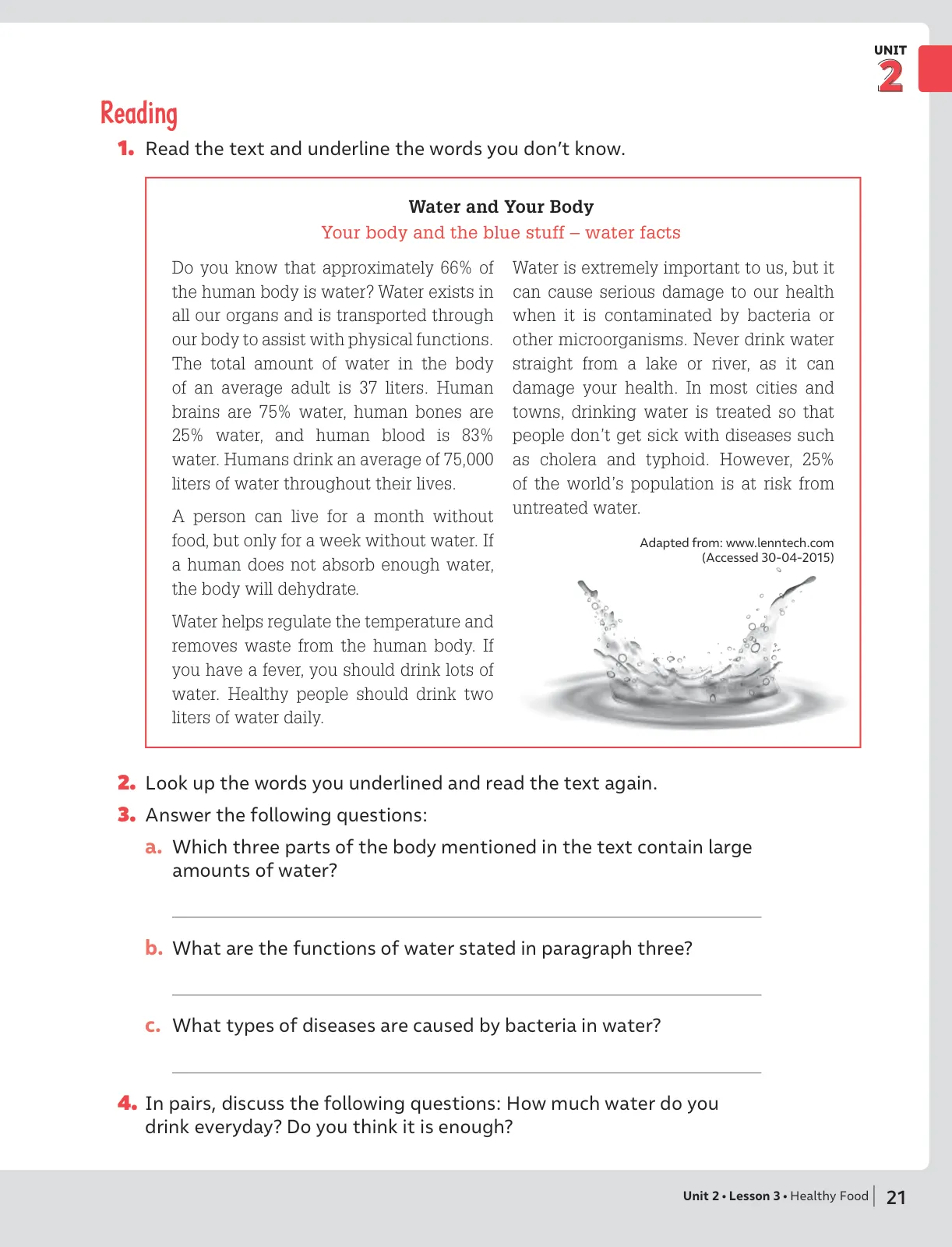
Water and Your Body Your body and the blue stuff — water facts
Do you know that approximately 66% of the human body is water? Water exists in all our organs and is transported through our body to assist with physical functions.The total amount of water in the body of an average adult is 37 liters. Human brains are 75% water, human bones are 25% water, and human blood is 83%water. Humans drink an average of 75,000liters of water throughout their lives.
A person can live for a month without food, but only for a week without water. If a human does not absorb enough water,the body will dehydrate.
Water helps regulate the temperature and removes waste from the human body. If you have a fever, you should drink lots of water. Healthy people should drink two liters of water daily.
Water is extremely important to us, but it can cause serious damage to our health when it is contaminated by bacteria or d straight from a lake or river, as it can damage your health. In most cities and towns, drinking water is treated so that people don't get sick with diseases such as cholera and typhoid. However, 25%of the world's population is at risk from untreated water.
Adapted from: www.lenntech.com (Accessed 30-04-2015)
- Look up the words you underlined and read the text again.
3.Answer the following questions:
a. Which three parts of the body mentioned in the text contain large amounts of water?
b. What are the functions of water stated in paragraph three?
c. What types of diseases are caused by bacteria in water?
4.In pairs, discuss the following questions: How much water do you drink everyday? Do you think it is enough?
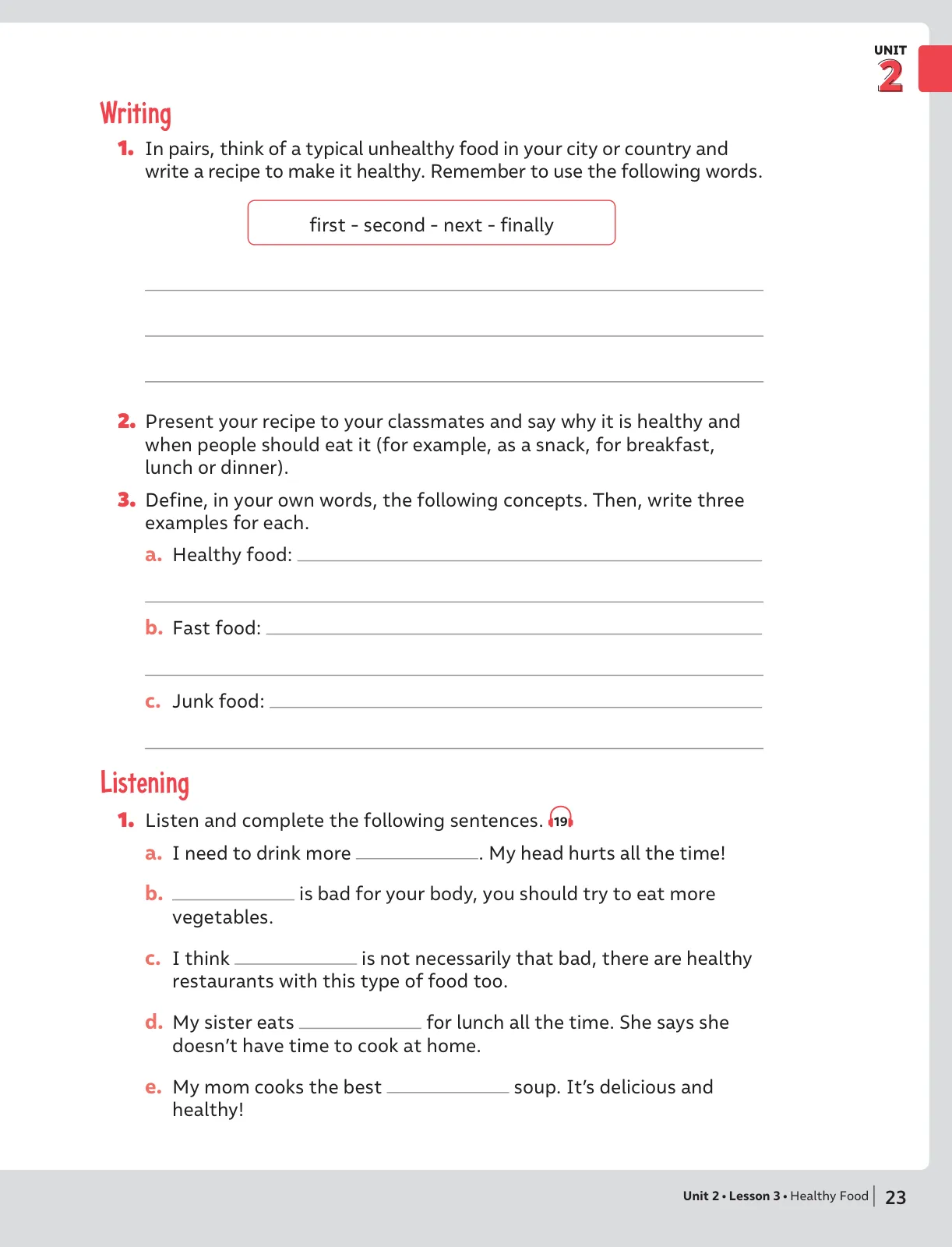
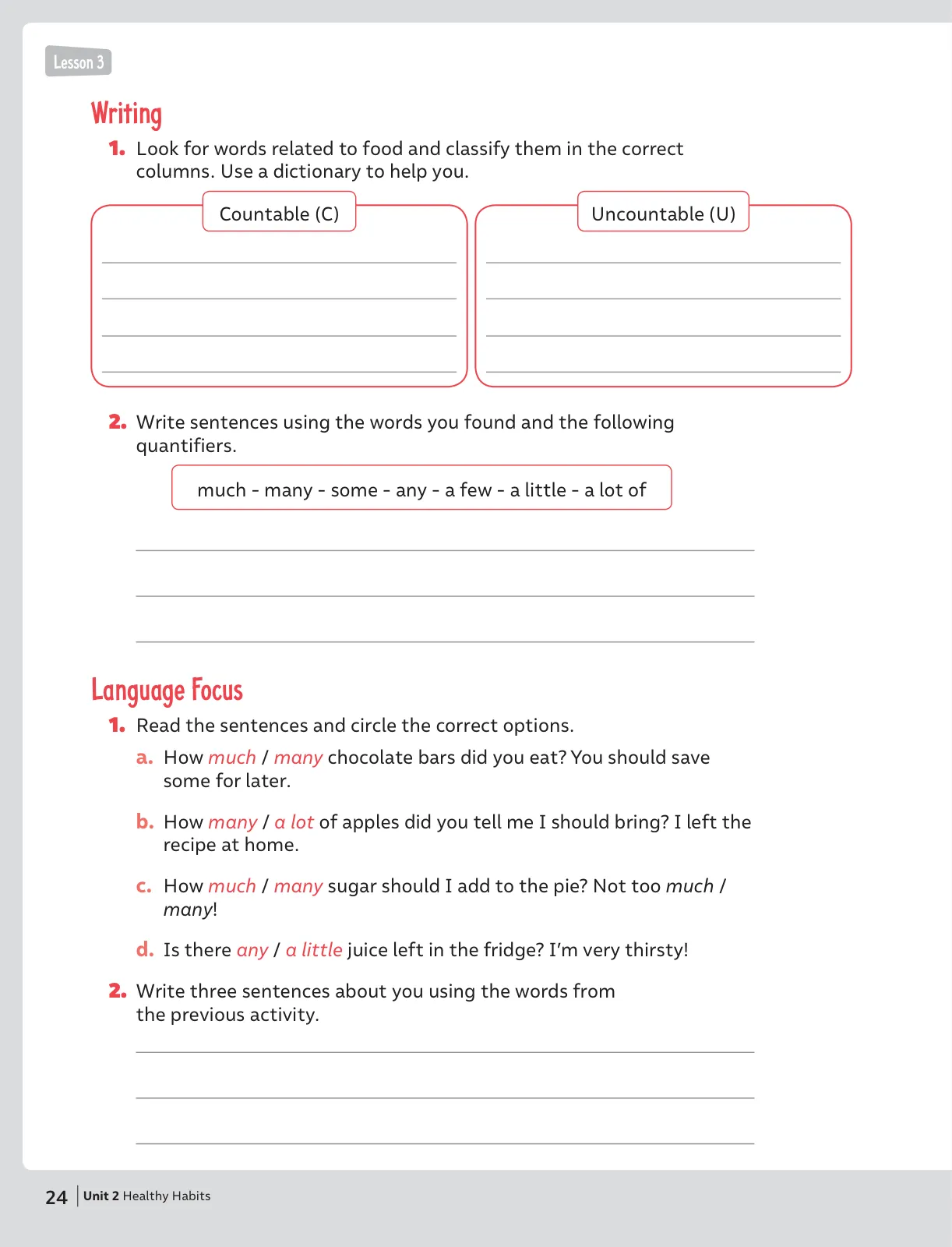
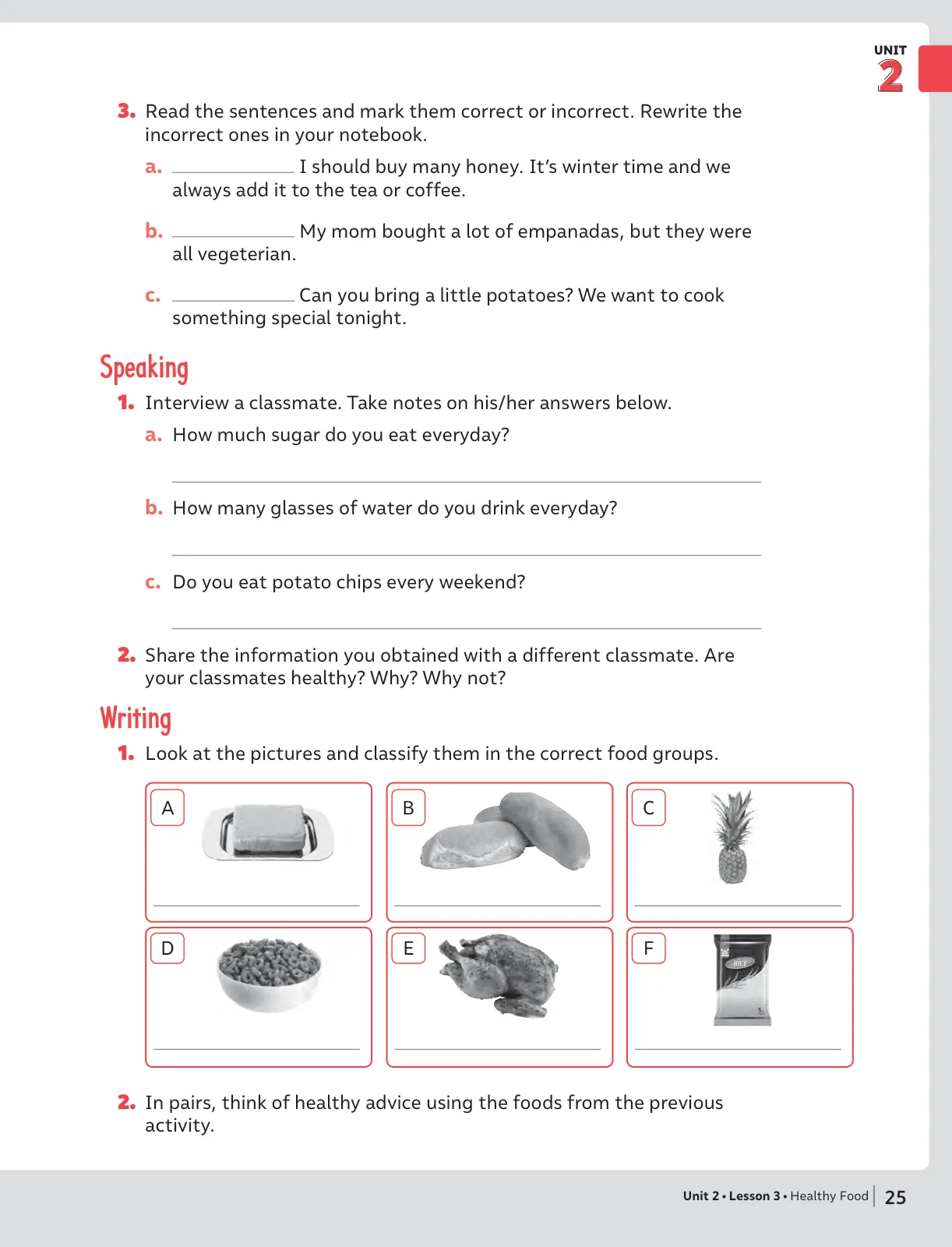
UNIT 2

Unit 2·Lesson 3·Healthv Food
21
Otros libros recomendados

Matemática – Séptimo Básico | Texto del Estudiante MINEDUC – Descargar PDF · 2024
MINEDUC
146 págs.
Inglés – Séptimo Básico | Student’s Book MINEDUC – Descargar PDF · 2024
MINEDUC
162 págs.
Inglés – Séptimo Básico | Student’s Book MINEDUC – Descargar PDF · 2024
MINEDUC
162 págs.
Inglés – Séptimo Básico | Student’s Book MINEDUC – Descargar PDF · 2024
MINEDUC
136 págs.

Ciencias Naturales – Séptimo Básico | Texto del Estudiante MINEDUC – Descargar PDF · 2024
MINEDUC
178 págs.
Ciencias Naturales – Séptimo Básico | Texto del Estudiante MINEDUC – Descargar PDF · 2024
MINEDUC
162 págs.

Ciencias Naturales – Séptimo Básico | Texto del Estudiante MINEDUC – Descargar PDF · 2024
MINEDUC
178 págs.
Historia, Geografía y Ciencias Sociales – Séptimo Básico | Texto del Estudiante MINEDUC – Descargar PDF · 2024
MINEDUC
146 págs.