Saltar al contenido
MisLibrosTexto
Ad
Inglés – Séptimo Básico | Student’s Book MINEDUC – Descargar PDF · 2024
Libro de Inglés 7

MINEDUC

8/82

Intensifiers, connectors and Paul's daily routine

📄 ejercicios ingles 🎓 otro · 7° BASICA Chile 🇨🇱 CL 🗣 Español
Página 8
8 de 82
Página 8 de Inglés – Séptimo Básico | Student’s Book MINEDUC – Descargar PDF · 2024
Anterior Página 8 / 82 Siguiente

Respuesta rápida

  1. a) I am really afraid of spiders. b) My brother is very annoying. c) She is a bit worried. d) He is really mean. e) You are so lucky.
  2. Texto con first, second, then, next, finally en pasado.
  3. 12 afirmativas subrayadas; 3 negativas encerradas.
📚 exercise ingles ⭐⭐ Dificultad 2/5 ⏱ 10 min lectura

Solución — Página 8

Inglés – Séptimo Básico | Student’s Book MINEDUC – Descargar PDF · 2024

1
Ejercicio 1

Use the following intensifiers and adjectives to make sentences. / Usa los siguientes intensificadores y adjetivos para formar oraciones.

Intensifiers: so – really – a little – super – a bit – very

a
Parte 1.a

(afraid)

  1. Elegimos un intensificador adecuado para "afraid" (asustado).
  2. Formamos la oración con el verbo to be: sujeto + be + intensificador + adjetivo.
  3. Ejemplo: I am really afraid of spiders.
Respuesta

I am really afraid of spiders. / I am a little afraid of the dark.

b
Parte 1.b

(annoying)

  1. "Annoying" (molesto) describe una cualidad.
  2. Usamos very o super para dar énfasis.
  3. Ejemplo: My brother is very annoying.
Respuesta

My brother is very annoying. / That noise is super annoying.

c
Parte 1.c

(worried)

  1. "Worried" (preocupado) va con to be.
  2. Podemos usar a bit para moderar.
  3. Ejemplo: She is a bit worried about the test.
Respuesta

She is a bit worried about the test. / I am so worried about my grades.

d
Parte 1.d

(mean)

  1. "Mean" (malo, cruel) es un adjetivo de personalidad.
  2. Usamos really o very.
  3. Ejemplo: The villain in the movie is really mean.
Respuesta

The villain in the movie is really mean. / Don't be so mean to your sister.

e
Parte 1.e

(lucky)

  1. "Lucky" (afortunado) expresa suerte.
  2. Usamos so o very.
  3. Ejemplo: You are so lucky to have a dog.
Respuesta

You are so lucky to have a dog. / We are very lucky to be here.
2
Ejercicio 2

Write about something that happened last week using the following connectors. Use the correct punctuation and spelling. / Escribe sobre algo que pasó la semana pasada usando los siguientes conectores.

Connectors: first – second – then – next – finally

  1. Elegimos un evento pasado (por ejemplo, una salida al parque).
  2. Usamos first para el primer evento, second para el segundo, then y next para los siguientes, y finally para el último.
  3. Todos los verbos van en pasado simple.
Respuesta

Last week I went to the park with my family. First, we took the bus to the park. Second, we played football on the grass. Then, we ate sandwiches under a tree. Next, we took photos near the lake. Finally, we went home and watched a movie.

3
Ejercicio 3

Read the paragraph about Paul's routine. Underline the affirmative statements and circle the negative sentences. / Lee el párrafo sobre la rutina de Paul. Subraya las oraciones afirmativas y encierra en un círculo las oraciones negativas.

  1. Identificamos las oraciones afirmativas (sin not).
  2. Identificamos las oraciones negativas (con don't).
  3. Las clasificamos según corresponda.

Oraciones afirmativas (subrayar):

  • Hi, I'm Paul, and this is my daily routine.
  • First, I get up at 7am, take a shower and brush my teeth.
  • I go to school by 7:40.
  • We usually have breakfast there.
  • Then, we have lunch at around 1:45.
  • My favorite dish is lentils!
  • We finish school at 4:15.
  • I walk back home and clean my room.
  • After that, I do my homework or study for an hour or two.
  • Then, at around 7:00 I have dinner with my family.
  • I usually go to bed at 10:00.
  • That is what I generally do on a normal day!

Oraciones negativas (encerrar en un círculo):

  • I don't take a bus because I walk with a friend from school.
  • I don't study the same subjects everyday.
  • I don't like to have dinner late because if I do so I don't sleep well.
Respuesta

Se subrayan 12 oraciones afirmativas y se encierran 3 oraciones negativas.

Contenido de la página

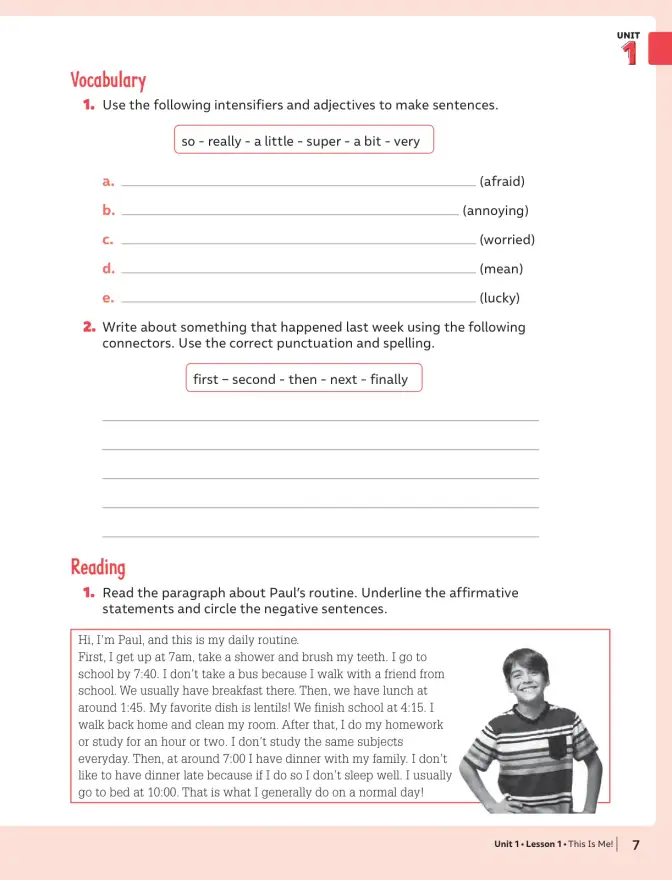
Vocabulary

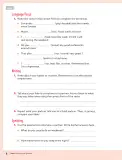
1. Use the following intensifiers and adjectives to make sentences.

so – really – a little – super – a bit – very

a. ________________________ (afraid)

b. ________________________ (annoying)

c. ________________________ (worried)

d. ________________________ (mean)

e. ________________________ (lucky)

2. Write about something that happened last week using the following connectors. Use the correct punctuation and spelling.

first – second – then – next – finally

Reading

1. Read the paragraph about Paul's routine. Underline the affirmative statements and circle the negative sentences.

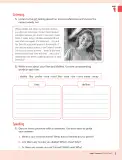
Hi, I'm Paul, and this is my daily routine.

First, I get up at 7am, take a shower and brush my teeth. I go to school by 7:40. I don't take a bus because I walk with a friend from school. We usually have breakfast there. Then, we have lunch at around 1:45. My favorite dish is lentils! We finish school at 4:15. I walk back home and clean my room. After that, I do my homework or study for an hour or two. I don't study the same subjects everyday. Then, at around 7:00 I have dinner with my family. I don't like to have dinner late because if I do so I don't sleep well. I usually go to bed at 10:00. That is what I generally do on a normal day!

Ejemplos resueltos

Make a sentence with the intensifier 'really' and the adjective 'afraid'.

I am really afraid of spiders.

Write a short paragraph about last week using first, second, then, next, finally.

Last week I went to the park with my family. First, we took the bus to the park. Second, we played football on the grass. Then, we ate sandwiches under a tree. Next, we took photos near the lake. Finally, we went home and watched a movie.

Glosario (5)

intensifier
Palabra que aumenta o disminuye la fuerza de un adjetivo (so, really, very, a bit).
connector
Palabra que une ideas y ordena una secuencia (first, second, then, next, finally).
affirmative statement
Oración que afirma algo, sin negación.
negative sentence
Oración que niega algo, generalmente con not o don't.
routine
Conjunto de actividades que se realizan habitualmente.

Preguntas para practicar

What is Paul's daily routine like?

Paul gets up at 7am, goes to school at 7:40, has breakfast and lunch at school, finishes at 4:15, does homework, has dinner at 7:00 and goes to bed at 10:00.

Temas y conceptos clave

IntensificadoresConectores de secuenciaRutina diariaOraciones afirmativas y negativasIntensifiersConnectorsAffirmative statementsNegative sentencesDaily routine
¿Te fue útil esta página?

Preguntas que la gente también hace

¿Cómo se usan los intensificadores en inglés?
Consulta la solución completa arriba o explora el libro entero para temas relacionados.
¿Cuáles son los conectores de secuencia en inglés?
Consulta la solución completa arriba o explora el libro entero para temas relacionados.
¿Cómo identificar oraciones afirmativas y negativas en inglés?
Consulta la solución completa arriba o explora el libro entero para temas relacionados.
📌 Antes de leer esto
  • • Verbo to be en presente
  • • Adjetivos básicos en inglés
  • • Presente simple
  • • Vocabulario de rutina diaria
Siguiente tema sugerido
Past simple: regular and irregular verbs
📝 Transcripción de la página (texto seleccionable) 1196 caracteres

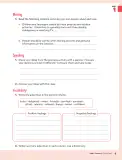
Vocabulary

  1. Use the following intensifiers and adjectives to make sentences.

so - really - a little – super - a bit – very

a.(afraid)

b.(annoying)

(worried)

(mean)

e.(lucky)

Write about something that happened last week using the following connectors. Use the correct punctuation and spelling.

first – second - then - next - finally

Reading

.Read the paragraph about Paul's routine. Underline the affirmative statements and circle the negative sentences.

Hi, I'm Paul, and this is my daily routine.

First, I get up at 7am, take a shower and brush my teeth. I go to school by 7:40. I don't take a bus because I walk with a friend from school. We usually have breakfast there. Then, we have lunch at around 1:45. My favorite dish is lentils! We finish school at 4:15. I walk back home and clean my room. After that, I do my homework or study for an hour or two. I don't study the same subjects everyday. Then, at around 7:00 I have dinner with my family. I don't like to have dinner late because if I do so I don't sleep well. I usually go to bed at 10:00. That is what I generally do on a normal day!

![](page=0,bbox=[831, 1143, 1109, 1478])

Unit 1· Lesson 1·This Is Me!|

7

Ad

Páginas cercanas

Otros libros recomendados

Ver todos →
Ad

Usamos cookies propias y de terceros para personalizar contenido, mostrar publicidad y analizar el tráfico. Las cookies necesarias siempre están activas.