
















Saltar al contenido
MisLibrosTexto
Ad
Ingles 10° · 2024
Libro de Inglés 10 EGB

Ministerio de Educación del Ecuador

18/50

Natural Resources: Renewable and Non-Renewable Resources

📄 ejercicios ingles 🎓 secundaria · 10° EGB Ecuador 🇪🇨 EC 🗣 Español
Página 18
18 de 50
Página 18 de Ingles 10° · 2024
Anterior Página 18 / 50 Siguiente

Respuesta rápida

  1. KWL completado. 2) Renovables: sol, viento, agua; no renovables: petróleo, carbón, gas. 3) Oraciones: wind/solar/geothermal energy según el texto. 4) Porque ayuda a entender el impacto humano en el ambiente.
📚 exercise ingles ⭐⭐ Dificultad 2/5 ⏱ 6 min lectura

Solución — Página 18

Ingles 10° · 2024

1
Ejercicio 1

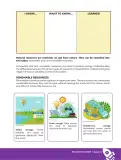
Completar el organizador KWL (I Know / Want to Know / Learned) sobre los recursos naturales.

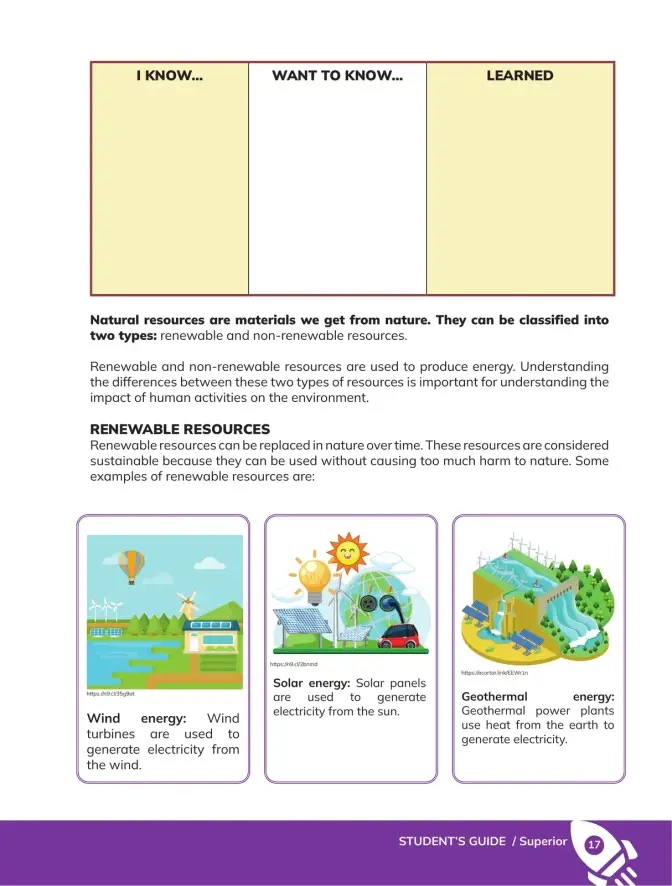
I KNOW... WANT TO KNOW... LEARNED
Los recursos naturales son materiales que obtenemos de la naturaleza (madera, agua, minerales). ¿Cuál es la diferencia entre recursos renovables y no renovables? ¿Cuáles son las fuentes de energía más limpias? Los recursos se clasifican en renovables (reponibles: sol, viento, agua) y no renovables (fósiles: petróleo, carbón, gas).

Respuesta

Cuadro KWL completado con ejemplos reales.
2
Ejercicio 2

Clasificar: según el texto, ¿a qué tipo pertenece cada recurso? (petróleo, sol, viento, carbón, agua, gas natural)

  1. Recursos renovables: se reponen en la naturaleza con el tiempo → sol (solar energy), viento (wind energy), agua (hydropower).
  2. Recursos no renovables: se agotan al usarse → petróleo, carbón, gas natural.
  3. Criterio: renewable = can be replaced in nature over time; non-renewable = cannot be replaced quickly.

Respuesta

Renovables: sol, viento, agua. No renovables: petróleo, carbón, gas natural.

3
Ejercicio 3

Escribir una oración en inglés describiendo cada ejemplo de la página (Wind, Solar, Geothermal energy).

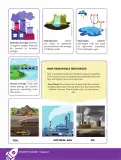
  1. Wind energy: Wind turbines are used to generate electricity from the wind.
  2. Solar energy: Solar panels are used to generate electricity from the sun.
  3. Geothermal energy: Geothermal power plants use heat from the earth to generate electricity.

Respuesta

Tres oraciones modeladas según el texto.

Ad
4
Ejercicio 4

(Pregunta abierta — "Understanding the differences...")

Why is it important to understand the difference between renewable and non-renewable resources?

  1. Both types are used to produce energy.
  2. Understanding them helps us evaluate the impact of human activities on the environment.
  3. Non-renewable resources pollute more and run out; renewable ones are sustainable.

Respuesta orientativa: It is important because these resources are used to produce energy and knowing the difference helps us understand how human activities affect the environment, choosing sustainable options to protect nature.


Vocabulario clave (glosario bilingüe)

  • Natural resources — recursos naturales
  • Renewable — renovable (se repone)
  • Non-renewable — no renovable (se agota)
  • Sustainable — sostenible
  • Wind turbines — turbinas eólicas
  • Solar panels — paneles solares
  • Generate electricity — generar electricidad

Contenido de la página

Natural resources

KWL Chart

I KNOW... WANT TO KNOW... LEARNED

Natural resources are materials we get from nature. They can be classified into two types: renewable and non-renewable resources.

Renewable and non-renewable resources are used to produce energy. Understanding the differences between these two types of resources is important for understanding the impact of human activities on the environment.

RENEWABLE RESOURCES

Renewable resources can be replaced in nature over time. These resources are considered sustainable because they can be used without causing too much harm to nature. Some examples of renewable resources are:

  • Wind energy: Wind turbines are used to generate electricity from the wind.
  • Solar energy: Solar panels are used to generate electricity from the sun.
  • Geothermal energy: Geothermal power plants use heat from the earth to generate electricity.

STUDENT'S GUIDE / Superior — 17

Ejemplos resueltos

Escribe una oración en inglés para explicar la solar energy.

Solar panels are used to generate electricity from the sun.

Tabla

I KNOW... WANT TO KNOW... LEARNED
Los recursos naturales son materiales de la naturaleza (agua, madera, minerales). ¿Cuál es la diferencia entre renovables y no renovables? Renovables: sol, viento, agua. No renovables: petróleo, carbón, gas.

Diagrama

graph LR
A[Natural resources] --> B[Renewable]
A --> C[Non-renewable]
B --> B1[Wind energy]
B --> B2[Solar energy]
B --> B3[Geothermal energy]
B --> B4[Water]
C --> C1[Oil - petróleo]
C --> C2[Coal - carbón]
C --> C3[Natural gas]

Glosario (8)

Natural resources
Materiales que obtenemos de la naturaleza (materials we get from nature).
Renewable resources
Recursos que pueden reponerse en la naturaleza con el tiempo; son sostenibles.
Non-renewable resources
Recursos que no se reponen rápidamente y se agotan al usarlos.
Sustainable
Sostenible: puede usarse sin dañar excesivamente la naturaleza.
Generate electricity
Generar electricidad.
Wind turbines
Turbinas eólicas que producen electricidad a partir del viento.
Solar panels
Paneles solares que producen electricidad a partir del sol.
Geothermal
Geotérmico: energía procedente del calor interno de la Tierra.

Preguntas para practicar

What do you already know about natural resources? (I KNOW column)

I know that natural resources are materials we get from nature, like water, wood and minerals.

What do you want to know about renewable and non-renewable resources? (WANT TO KNOW column)

I want to know which resources are used to produce electricity in my country and which ones pollute the most.

Temas y conceptos clave

Natural resourcesRenewable vs non-renewable resourcesEnergy sourcesrenewablenon-renewablesustainablegenerate electricitynatural resources

Fuentes y referencias

  • https://ih9.cl/35g9lat
  • https://ih9c1/2bnmd
  • https://bcortor.link/EEnW1n
¿Te fue útil esta página?

Preguntas que la gente también hace

¿Qué son los recursos naturales renovables en inglés?
Consulta la solución completa arriba o explora el libro entero para temas relacionados.
¿Cómo se clasifican los recursos naturales?
Consulta la solución completa arriba o explora el libro entero para temas relacionados.
¿Cuál es la diferencia entre renewable y non-renewable resources?
Consulta la solución completa arriba o explora el libro entero para temas relacionados.
📌 Antes de leer esto
  • • Vocabulario básico de naturaleza y energía en inglés
  • • Comprensión lectora en inglés de textos expositivos cortos
Siguiente tema sugerido
Non-renewable resources: fossil fuels (coal, oil, natural gas) y su impacto ambiental
📝 Transcripción de la página (texto seleccionable) 976 caracteres

I KNOW... WANT TO KNOW... LEARNED

Natural resources are materials we get from nature. They can be classified into two types: renewable and non-renewable resources.

Renewable and non-renewable resources are used to produce energy. Understanding the differences between these two types of resources is important for understanding the impact of human activities on the environment.

RENEWABLE RESOURCES

Renewable resources can be replaced in nature over time. These resources are considered sustainable because they can be used without causing too much harm to nature. Some examples of renewable resources are:

EEEPIEEEE|

https:/in9.cl/2bnmd https:/lacortarlink/EEWrin

Solar energy: Solar panels are used to generate Geothermal energy: electricity from the sun. Geothermal power plants use heat from the earth to generate electricity.

https://n9.cl/35990t

Wind energy: Wind turbines are used to generate electricity from

the wind. a JA. Y) y,

STUDENT’S GUIDE / Superior

Ad

Otros libros recomendados

Ver todos →
Ad

Usamos cookies propias y de terceros para personalizar contenido, mostrar publicidad y analizar el tráfico. Las cookies necesarias siempre están activas.