Ejercicio 1
Lectura
Espacios numerados (1, 2, 3) en blanco para que el estudiante escriba correcciones de las afirmaciones falsas de la página anterior.
 MisLibrosTexto
 Prueba nacional
TransformarPor universidad (27)
 ESPE — Universidad de las Fuerzas Armadas ESPE
 ESPOCH — Escuela Superior Politécnica de Chimborazo
 ESPOL — Escuela Superior Politécnica del Litoral IKIAM — Universidad Regional Amazónica Ikiam
 UCE — Universidad Central del Ecuador
 UCUENCA — Universidad de Cuenca UEA — Universidad Estatal Amazónica
 UEB — Universidad Estatal de Bolívar
 UG — Universidad de Guayaquil
 ULEAM — Universidad Laica Eloy Alfaro de Manabí
 UNACH — Universidad Nacional de Chimborazo
 UNAE — Universidad Nacional de Educación
 UNEMI — Universidad Estatal de Milagro
 UNESUM — Universidad Estatal del Sur de Manabí UNL — Universidad Nacional de Loja
 UPEC — Universidad Politécnica Estatal del Carchi
 UPSE — Universidad Estatal Península de Santa Elena UTA — Universidad Técnica de Ambato UTB — Universidad Técnica de Babahoyo UTC — Universidad Técnica de Cotopaxi
 UTELVT — Universidad Técnica Luis Vargas Torres de Esmeraldas
 UTEQ — Universidad Técnica Estatal de Quevedo
 UTM — Universidad Técnica de Manabí UTMACH — Universidad Técnica de Machala UTN — Universidad Técnica del Norte MisLibrosTexto
Respuesta abierta.
Ingles 10° · Egb 10 Ingles 2024 · 2024
Espacios numerados (1, 2, 3) en blanco para que el estudiante escriba correcciones de las afirmaciones falsas de la página anterior.
WRITE ONE EXAMPLE — Comparte un ejemplo de experiencia personal relacionada con normas sociales.
Identifica los imperativos en el diálogo de Elena.
Respuesta abierta.
Respuesta orientativa: El imperativo es una orden directa; el modal con 'should' es una sugerencia/recomendación más cortés.
Dos formas comunes para expresar reglas
flowchart TD
  A[Rules and Norms] --> B[Imperatives]
  A --> C[Modal verbs]
  B --> B1[Don't use phones]
  B --> B2[Pay attention]
  C --> C1[should]
  C --> C2[can]
  C --> C3[need to]
Espacios numerados (1, 2, 3) en blanco para que el estudiante escriba correcciones de las afirmaciones falsas de la página anterior.
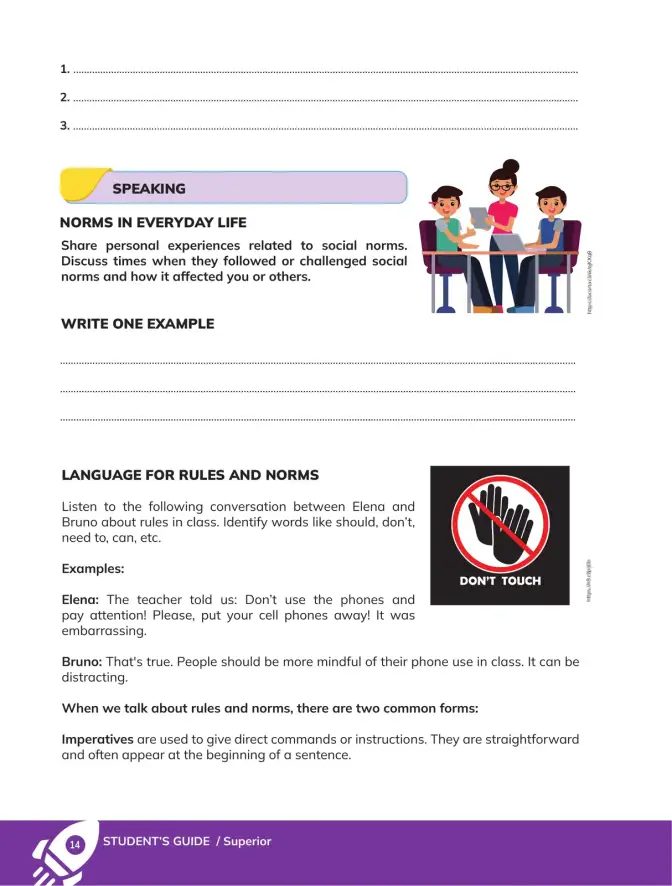
Share personal experiences related to social norms. Discuss times when they followed or challenged social norms and how it affected you or others.
(espacio en blanco)
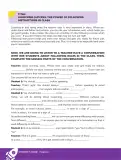
Listen to the following conversation between Elena and Bruno about rules in class. Identify words like should, don't, need to, can, etc.
Elena: The teacher told us: "Don't use the phones and pay attention! Please, put your cell phones away!" It was embarrassing.
Bruno: That's true. People should be more mindful of their phone use in class. It can be distracting.
When we talk about rules and norms, there are two common forms:
Imperatives are used to give direct commands or instructions. They are straightforward and often appear at the beginning of a sentence.
Identifica los imperativos en el diálogo de Elena.
flowchart TD
  A[Rules and Norms] --> B[Imperatives]
  A --> C[Modal verbs]
  B --> B1[Don't use phones]
  B --> B2[Pay attention]
  C --> C1[should]
  C --> C2[can]
  C --> C3[need to]
¿Qué diferencia hay entre usar un imperativo ('Don't use phones') y un modal ('You shouldn't use phones')?
El imperativo es una orden directa; el modal con 'should' es una sugerencia/recomendación más cortés.
7 SPEAKING )
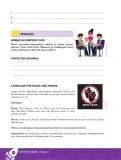
NORMS IN EVERYDAY LIFE
Share personal experiences related to social norms. Discuss times when they followed or challenged social norms and how it affected you or others.
httpsi//acortarlink/ojKXq8
WRITE ONE EXAMPLE
LANGUAGE FOR RULES AND NORMS
Listen to the following conversation between Elena and Bruno about rules in class. Identify words like should, don't, need to, can, etc.
Examples: DON'T TOUCH
https:/In9.cfpijOb
Elena: The teacher told us: Don't use the phones and pay attention! Please, put your cell phones away! It was embarrassing.
Bruno: That's true. People should be more mindful of their phone use in class. It can be distracting.
When we talk about rules and norms, there are two common forms:
Imperatives are used to give direct commands or instructions. They are straightforward and often appear at the beginning of a sentence.
@ STUDENT’S GUIDE / Superior
Inglés – Sexto Básico | Student’s Book MINEDUC – Descargar PDF · 2024
MINEDUC
240 págs.
Inglés – Sexto Básico | Student’s Book MINEDUC – Descargar PDF · 2024
MINEDUC
240 págs.

Inglés – Sexto Básico | Student’s Book MINEDUC – Descargar PDF · 2024
MINEDUC
132 págs.

Inglés – Octavo Básico | Student’s Book MINEDUC – Descargar PDF · 2024
MINEDUC
124 págs.

Inglés – Octavo Básico | Student’s Book MINEDUC – Descargar PDF · 2024
MINEDUC
82 págs.

Inglés – Octavo Básico | Student’s Book MINEDUC – Descargar PDF · 2024
MINEDUC
162 págs.

Inglés – Octavo Básico | Student’s Book MINEDUC – Descargar PDF · 2024
MINEDUC
162 págs.

Inglés – Octavo Básico | Student’s Book MINEDUC – Descargar PDF · 2024
MINEDUC
4 págs.
Usamos cookies propias y de terceros para personalizar contenido, mostrar publicidad y analizar el tráfico. Las cookies necesarias siempre están activas.