Saltar al contenido
MisLibrosTexto
Ad
Ingles 10° · 2024
Libro de Inglés 10 EGB

Ministerio de Educación del Ecuador

32/50

Worksheet 5: Language Through the Arts — Objetivos y descriptores

📄 teoria ingles 🎓 secundaria · 10° EGB Ecuador 🇪🇨 EC 🗣 Español
Página 32
32 de 50
Página 32 de Ingles 10° · 2024
Anterior Página 32 / 50 Siguiente

Respuesta rápida

  1. Analizar rasgos artísticos antiguos y su influencia cultural actual. 2) El learning objective añade nivel de dominio verificable. 3) Descriptor = contenido + proceso + actitud. 4) Seis indicadores: identificación, contexto, conexión con presente, pensamiento crítico, comunicación y apertura a perspectivas.
📚 theory ingles ⭐⭐ Dificultad 2/5 ⏱ 5 min lectura

Solución — Página 32

Ingles 10° · 2024

1
Ejercicio 1

Interpreta el objetivo general (General objective) de la Worksheet 5.

  1. El objetivo pide identificar y analizar las características artísticas (artistic features) de los legados antiguos (ancient legacies).
  2. También exige comprender cómo su influencia contribuye a dar forma a la cultura y creencias contemporáneas.
  3. Finalmente, el estudiante debe desarrollar respuestas e interpretaciones personales de la obra de arte.
Respuesta

Analizar rasgos artísticos antiguos, relacionarlos con la cultura actual y expresar interpretaciones propias del arte.

2
Ejercicio 2

Explica la diferencia entre el objetivo general y el objetivo de aprendizaje (Learning objective).

  1. El objetivo general enuncia el propósito amplio del worksheet.
  2. El objetivo de aprendizaje lo reformula en términos de competencia del estudiante: "Proficiently identify..." (identificar con destreza).
  3. Ambos comparten los mismos contenidos, pero el learning objective pide un nivel de dominio (proficiency) verificable.
Respuesta

El objetivo general describe el propósito global; el objetivo de aprendizaje lo traduce a una competencia concreta y demostrable del estudiante, con nivel de dominio.

3
Ejercicio 3

Analiza el Descriptor, distinguiendo las partes coloreadas.

  1. En negro: la acción cognitiva "Recognize and differentiate" (reconocer y diferenciar).
  2. En rojo: el objeto —expresiones culturales diversas (literatura, artes visuales, música, esculturas, películas) como medios para transmitir ideas, emociones, narrativas históricas e historias.
  3. En verde: la actitud —demostrar respeto y tolerancia ante las diferencias culturales.
Respuesta

El descriptor integra contenido (expresiones culturales), proceso (reconocer/diferenciar) y actitud (respeto y tolerancia).

Ad
4
Ejercicio 4

Enumera y agrupa los seis indicadores de desempeño (Performance indicators).

  1. Identificar y describir rasgos artísticos clave (estilo, técnicas, simbolismo).
  2. Demostrar comprensión del contexto histórico y cultural de las obras.
  3. Conectar rasgos artísticos antiguos con la cultura y creencias contemporáneas.
  4. Desarrollar pensamiento crítico con respuestas e interpretaciones razonadas.
  5. Comunicar interpretaciones con claridad, por escrito o de forma oral.
  6. Estar abierto a perspectivas diversas, fomentando discusiones y debates.

Respuesta: Seis indicadores: identificación, contexto histórico, conexión con el presente, pensamiento crítico, comunicación y apertura a múltiples perspectivas.

a
Parte 4.a

¿Qué habilidades del pensamiento crítico se evalúan?

Respuesta

Formular respuestas razonadas (well-reasoned), articular puntos de vista propios y sostener discusiones/debates con diferentes interpretaciones de una misma obra.

b
Parte 4.b

¿Qué actitudes socioafectivas se promueven?

Respuesta

Respeto y tolerancia por las diferencias culturales, y apertura a perspectivas e interpretaciones diversas del mismo arte.

Contenido de la página

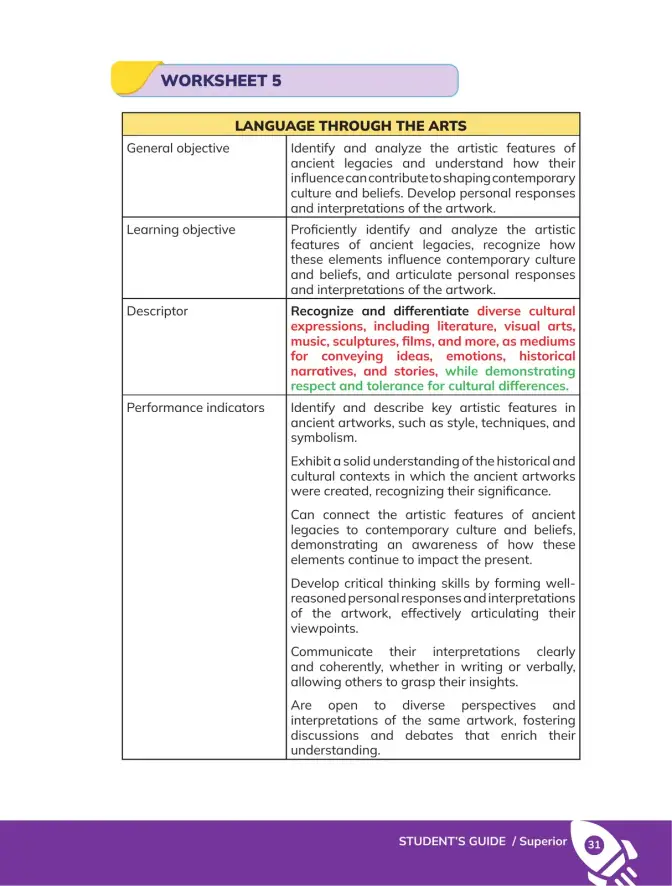
WORKSHEET 5

LANGUAGE THROUGH THE ARTS

Componente Descripción
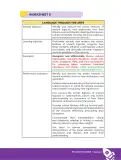
General objective Identify and analyze the artistic features of ancient legacies and understand how their influence can contribute to shaping contemporary culture and beliefs. Develop personal responses and interpretations of the artwork.
Learning objective Proficiently identify and analyze the artistic features of ancient legacies, recognize how these elements influence contemporary culture and beliefs, and articulate personal responses and interpretations of the artwork.
Descriptor Recognize and differentiate diverse cultural expressions, including literature, visual arts, music, sculptures, films, and more, as mediums for conveying ideas, emotions, historical narratives, and stories, while demonstrating respect and tolerance for cultural differences.
Performance indicators 1. Identify and describe key artistic features in ancient artworks, such as style, techniques, and symbolism.
2. Exhibit a solid understanding of the historical and cultural contexts in which the ancient artworks were created, recognizing their significance.
3. Connect the artistic features of ancient legacies to contemporary culture and beliefs, demonstrating an awareness of how these elements continue to impact the present.
4. Develop critical thinking skills by forming well-reasoned personal responses and interpretations of the artwork, effectively articulating their viewpoints.
5. Communicate their interpretations clearly and coherently, whether in writing or verbally, allowing others to grasp their insights.
6. Are open to diverse perspectives and interpretations of the same artwork, fostering discussions and debates that enrich their understanding.

STUDENT'S GUIDE / Superior — Página 31

Tabla

Componente Descripción
General objective Identify and analyze the artistic features of ancient legacies and understand how their influence contributes to shaping contemporary culture and beliefs. Develop personal responses and interpretations of the artwork.
Learning objective Proficiently identify and analyze the artistic features of ancient legacies, recognize how these elements influence contemporary culture and beliefs, and articulate personal responses and interpretations.
Descriptor Recognize and differentiate diverse cultural expressions as mediums for conveying ideas, emotions, historical narratives, and stories, while demonstrating respect and tolerance for cultural differences.
Performance indicators 6 indicadores: identificación de rasgos, contexto histórico-cultural, conexión con el presente, pensamiento crítico, comunicación clara y apertura a perspectivas diversas.

Glosario (6)

Ancient legacies
Legados antiguos: obras, tradiciones y conocimientos transmitidos desde culturas del pasado.
Artistic features
Rasgos artísticos: estilo, técnicas, simbolismo y otras características de una obra.
Descriptor
Descriptor de desempeño: enunciado que integra proceso, contenido y actitud esperados.
Performance indicators
Indicadores de logro: conductas observables que demuestran el alcance del aprendizaje.
Cultural expressions
Expresiones culturales: literatura, artes visuales, música, escultura, cine, entre otras.
Symbolism
Simbolismo: uso de símbolos para representar ideas más allá de su sentido literal.

Preguntas para practicar

¿Qué habilidades del pensamiento crítico se evalúan en los indicadores?

Formular respuestas e interpretaciones bien razonadas, articular puntos de vista propios con claridad y participar en discusiones y debates que consideren múltiples interpretaciones de una misma obra.

¿Qué actitudes socioafectivas se promueven en esta worksheet?

Se promueven el respeto y la tolerancia ante las diferencias culturales, además de la apertura a perspectivas e interpretaciones diversas del mismo arte.

Temas y conceptos clave

Language Through the ArtsAncient legaciesCultural expressionsArt analysis in EnglishGeneral objectiveLearning objectiveDescriptorPerformance indicatorsArtistic featuresCultural heritageInterpretation of artwork
¿Te fue útil esta página?

Preguntas que la gente también hace

¿Qué es un descriptor de desempeño en el currículo de inglés de Ecuador?
Consulta la solución completa arriba o explora el libro entero para temas relacionados.
¿Cómo se relacionan los indicadores de logro con los objetivos de aprendizaje?
Consulta la solución completa arriba o explora el libro entero para temas relacionados.
¿Qué significa analizar artistic features en obras de arte antiguas?
Consulta la solución completa arriba o explora el libro entero para temas relacionados.
📌 Antes de leer esto
  • • Vocabulario básico de arte en inglés (style, techniques, symbolism)
  • • Comprensión lectora de textos académicos en inglés
  • • Conocer la estructura curricular: objetivos, descriptores, indicadores
Siguiente tema sugerido
Actividades prácticas de la Worksheet 5: análisis de obras de arte antiguas y su vínculo con la cultura contemporánea
📝 Transcripción de la página (texto seleccionable) 1691 caracteres

__/ WORKSHEET 5 )

General objective Identify and analyze the artistic features of ancient legacies and understand how their influencecancontributeto shaping contemporary culture and beliefs. Develop personal responses and interpretations of the artwork.

Learning objective Proficiently identify and analyze the artistic features of ancient legacies, recognize how these elements influence contemporary culture and beliefs, and articulate personal responses and interpretations of the artwork.

Descriptor Recognize and differentiate diverse cultural expressions, including literature, visual arts, music, sculptures, films, and more, as mediums for conveying ideas, emotions, historical narratives, and stories, while demonstrating respect and tolerance for cultural differences.

Performance indicators Identify and describe key artistic features in ancient artworks, such as style, techniques, and symbolism.

Exhibit a solid understanding of the historical and cultural contexts in which the ancient artworks were created, recognizing their significance.

Can connect the artistic features of ancient legacies to contemporary culture and beliefs, demonstrating an awareness of how these elements continue to impact the present.

Develop critical thinking skills by forming well- reasoned personal responses and interpretations of the artwork, effectively articulating their viewpoints.

Communicate their interpretations clearly and coherently, whether in writing or verbally, allowing others to grasp their insights.

Are open to diverse perspectives and interpretations of the same artwork, fostering discussions and debates that enrich their understanding.

STUDENTS GUIDE / Superior

Ad

Otros libros recomendados

Ver todos →
Ad

Usamos cookies propias y de terceros para personalizar contenido, mostrar publicidad y analizar el tráfico. Las cookies necesarias siempre están activas.