
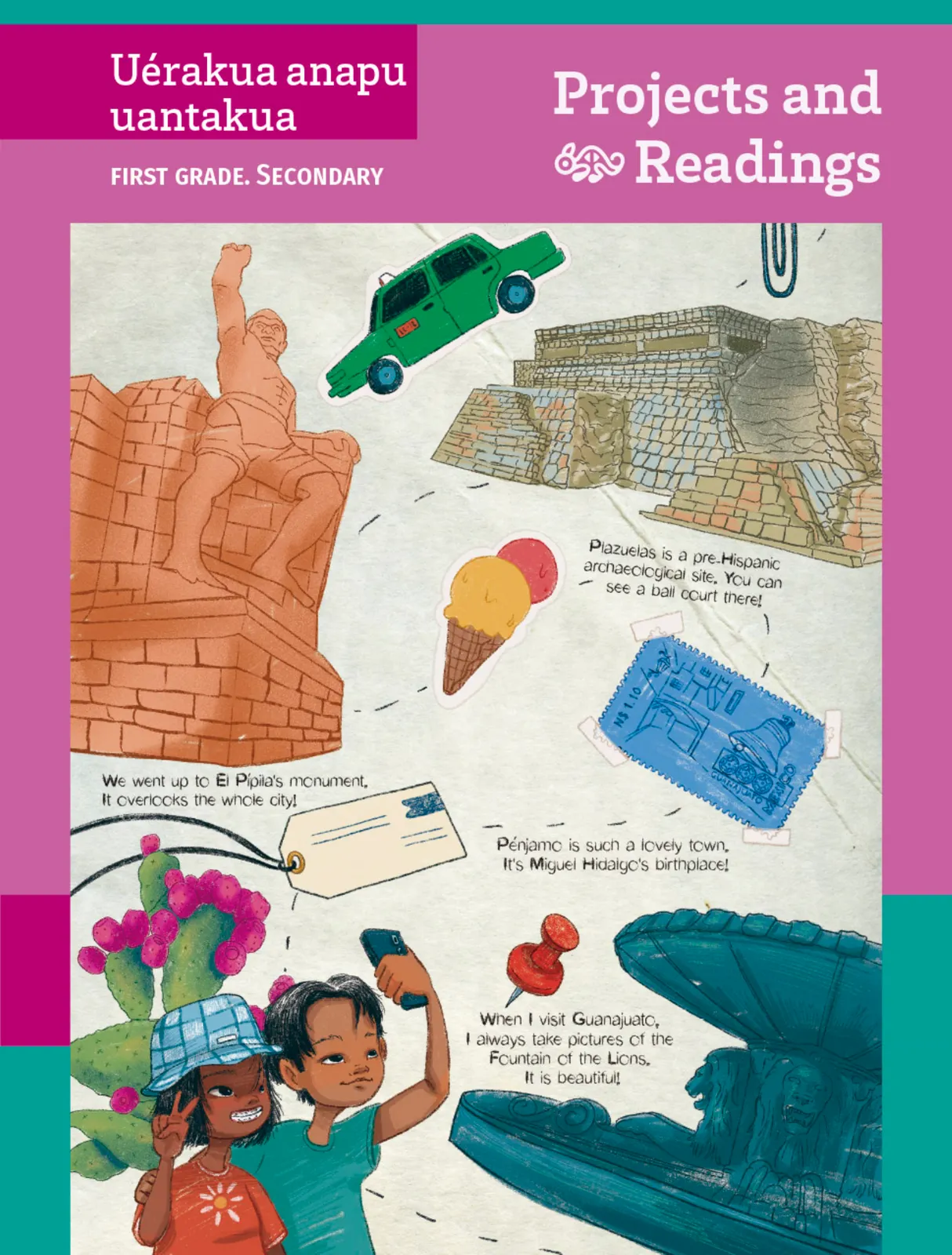
Página — Uerakua Anapu Uantakua Projects And Readings 1° Secundaria (pág. 82)
Solución no disponible aún
Esta página está en proceso de revisión.
Pídela y la resolveremos antes. Sin registro.
📝 Transcripción de la página (texto seleccionable) 1756 caracteres
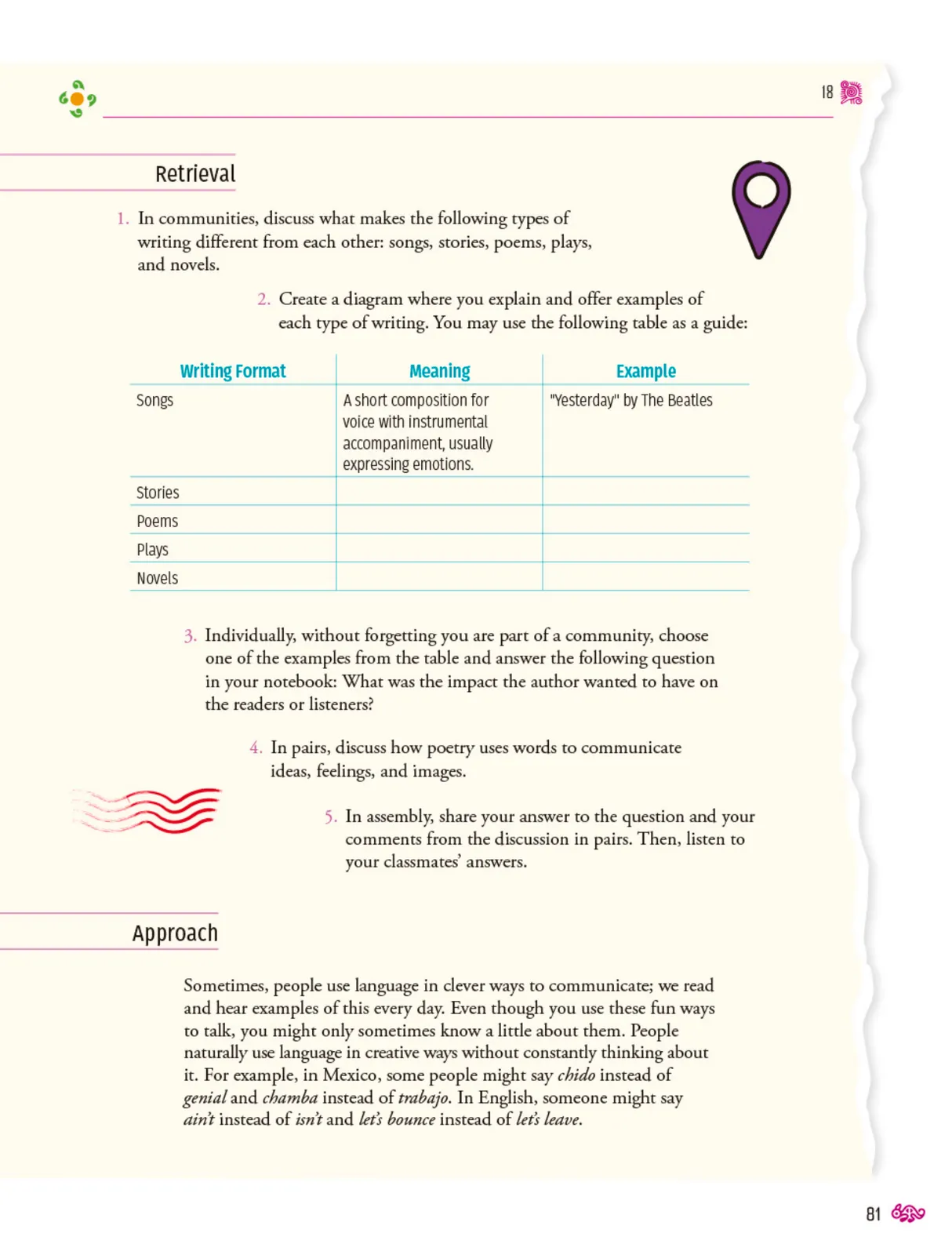
Retrieval
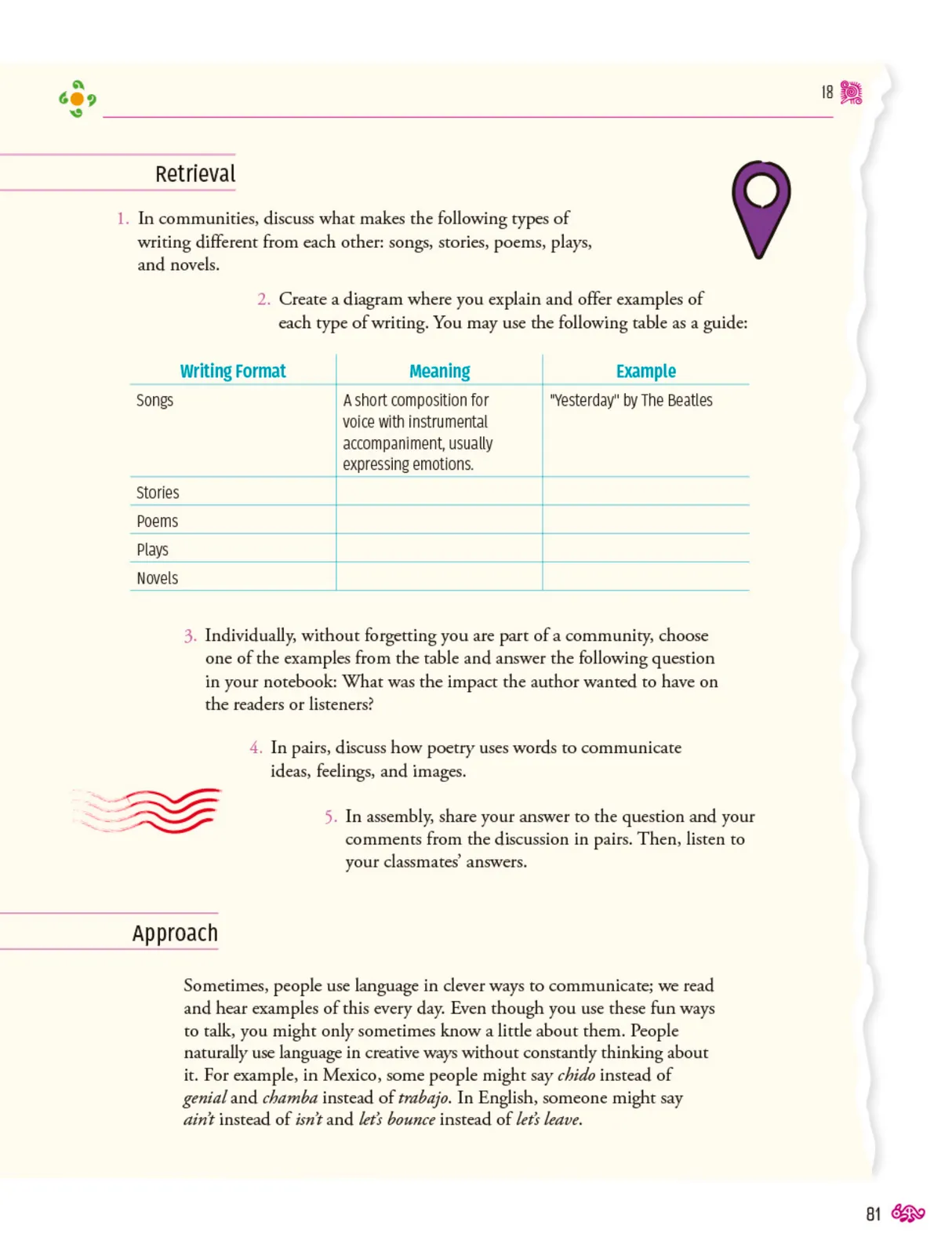
In communities, discuss what makes the following types of writing different from each other: songs, stories, poems, plays,and novels.
Create a diagram where you explain and offer examples of each type of writing. You may use the following table as a guide:
Individually, without forgetting you are part of a community, choose one of the examples from the table and answer the following question in your notebook: What was the impact the author wanted to have on the readers or listeners?
In pairs, discuss how poetry uses words to communicate ideas, feelings, and images.
Approach
- In assembly, share your answer to the question and your comments from the discussion in pairs. Then, listen to your classmates'answers.
Sometimes, people use language in clever ways to communicate; we read and hear examples of this every day. Even though you use these fun ways to talk, you might only sometimes know a little about them. People naturally use language in creative ways without constantly thinking about it. For example, in Mexico, some people might say chido instead of genial and chamba instead of trabajo. In English, someone might say ain't instead of isn't and let's bounce instead of let's leave.
18

| Writing Format | Meaning | Example |
| Songs | A short composition for voice with instrumental accompaniment, usually expressing emotions. | "Yesterday" by The Beatles |
| Stories | ||
| Poems | ||
| Plays | ||
| Novels |

81
Otros libros recomendados
Uérakua anapu uantakua. Projects and Readings. Libro de Educación Secundaria Grado 3° Ciclo Escolar 2025 - 2026
SEP/CONALITEG
187 págs.
Uérakua anapu uantakua. Projects and Readings. Libro de Educación Secundaria Grado 2° Ciclo Escolar 2025 - 2026
SEP/CONALITEG
171 págs.
Colección Ximhai. De lo humano y lo comunitario. Libro de Educación Secundaria Grado 1° Ciclo Escolar 2025 - 2026
SEP/CONALITEG
259 págs.
Colección Ximhai. Nuestro libro de proyectos. Libro de Educación Secundaria Grado 1° Ciclo Escolar 2025 - 2026
SEP/CONALITEG
299 págs.
Un libro sin recetas para la maestra y el maestro. Fase 6. Libro de Educación Secundaria Grado 1°, 2°, 3° Ciclo Escolar 2025 - 2026
SEP/CONALITEG
202 págs.
Colección Ximhai. Saberes y pensamiento científico. Libro de Educación Secundaria Grado 1° Ciclo Escolar 2025 - 2026
SEP/CONALITEG
339 págs.
Colección Ximhai. Múltiples lenguajes. Libro de Educación Secundaria Grado 1° Ciclo Escolar 2025 - 2026
SEP/CONALITEG
163 págs.
Ciencias Naturales 9° · Secundaria Activa
MinEducación
318 págs.