
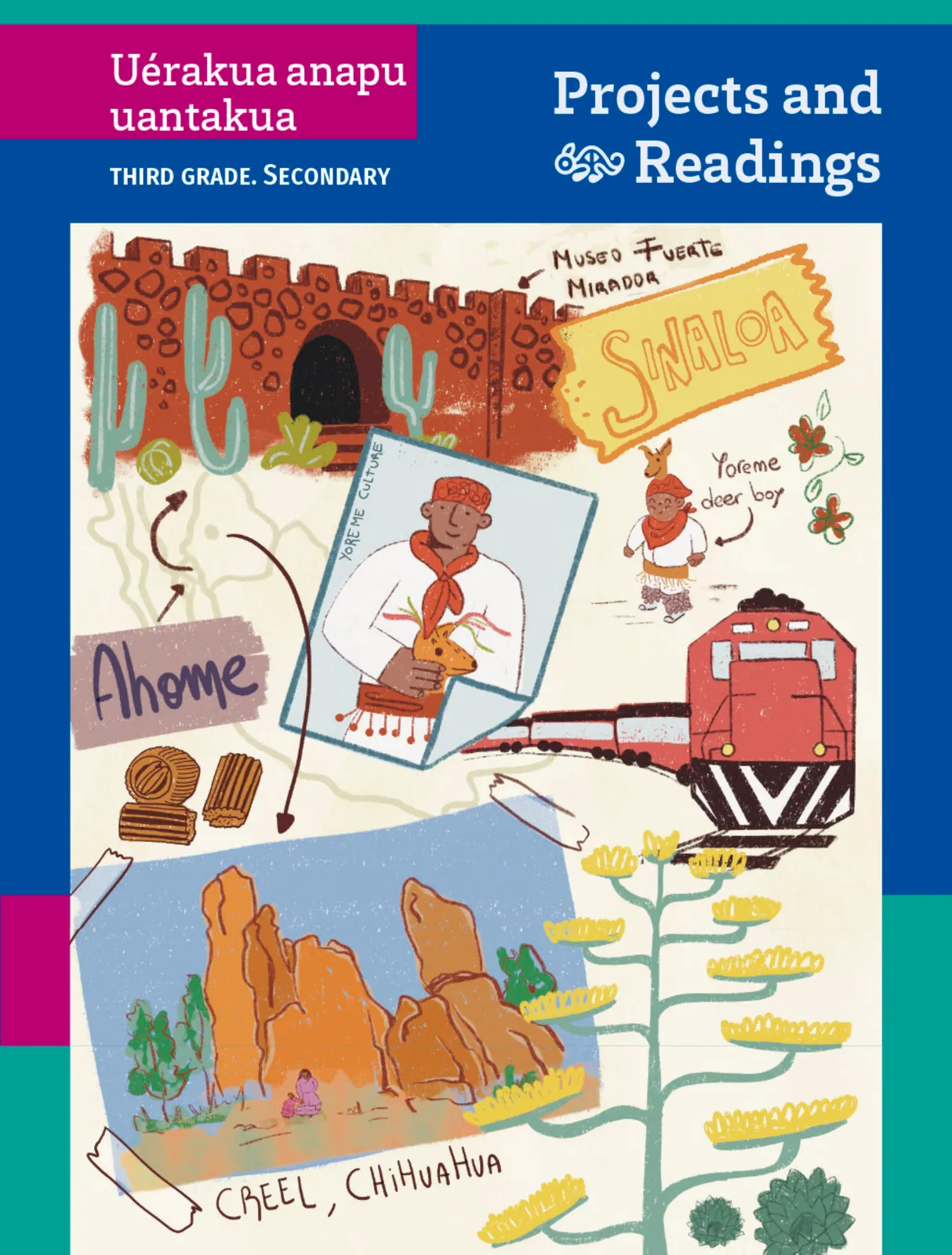
Página — Uerakua Anapu Uantakua Projects And Readings 3° Secundaria (pág. 158)
Solución no disponible aún
Esta página está en proceso de revisión.
Pídela y la resolveremos antes. Sin registro.
📝 Transcripción de la página (texto seleccionable) 2781 caracteres
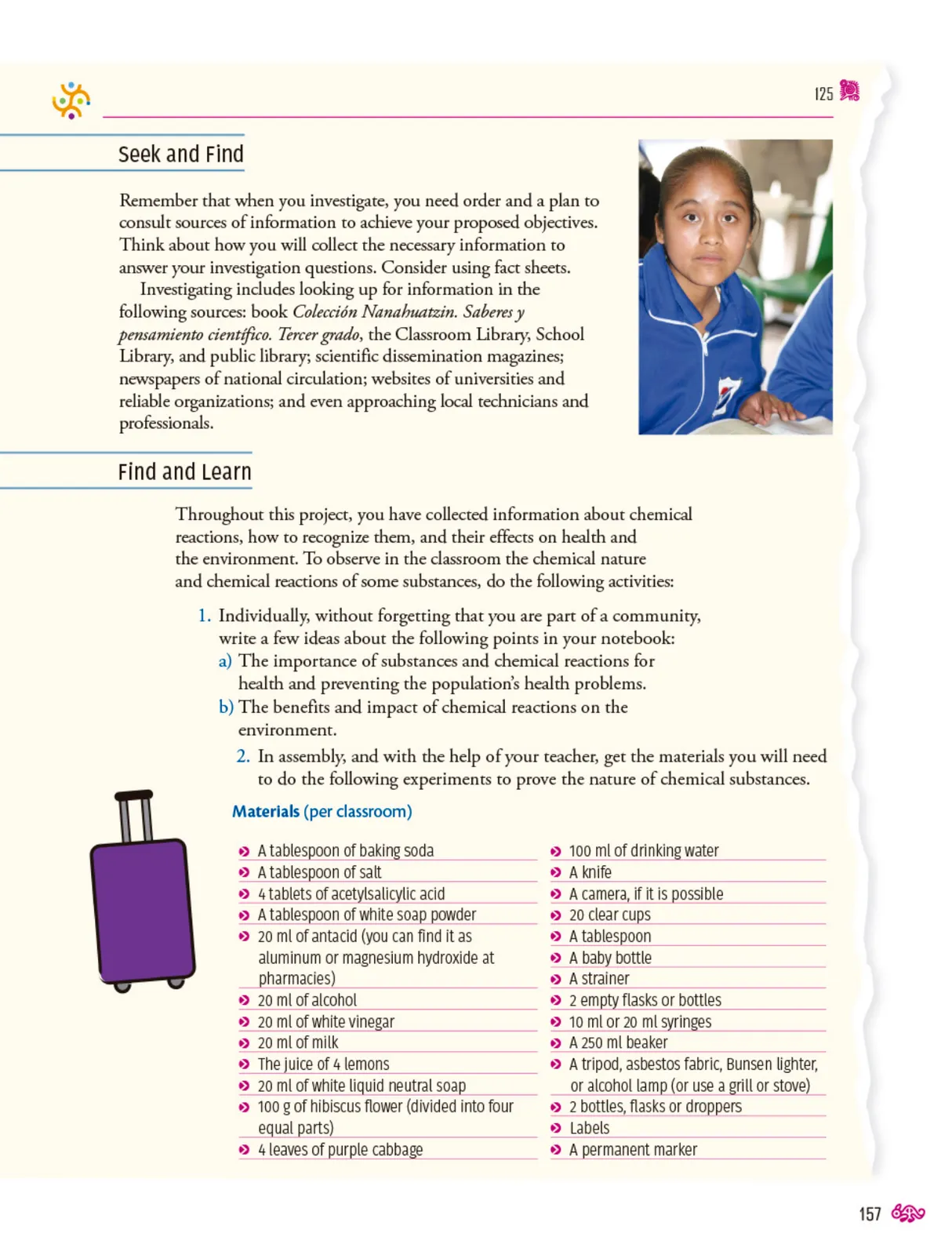
Seek and Find
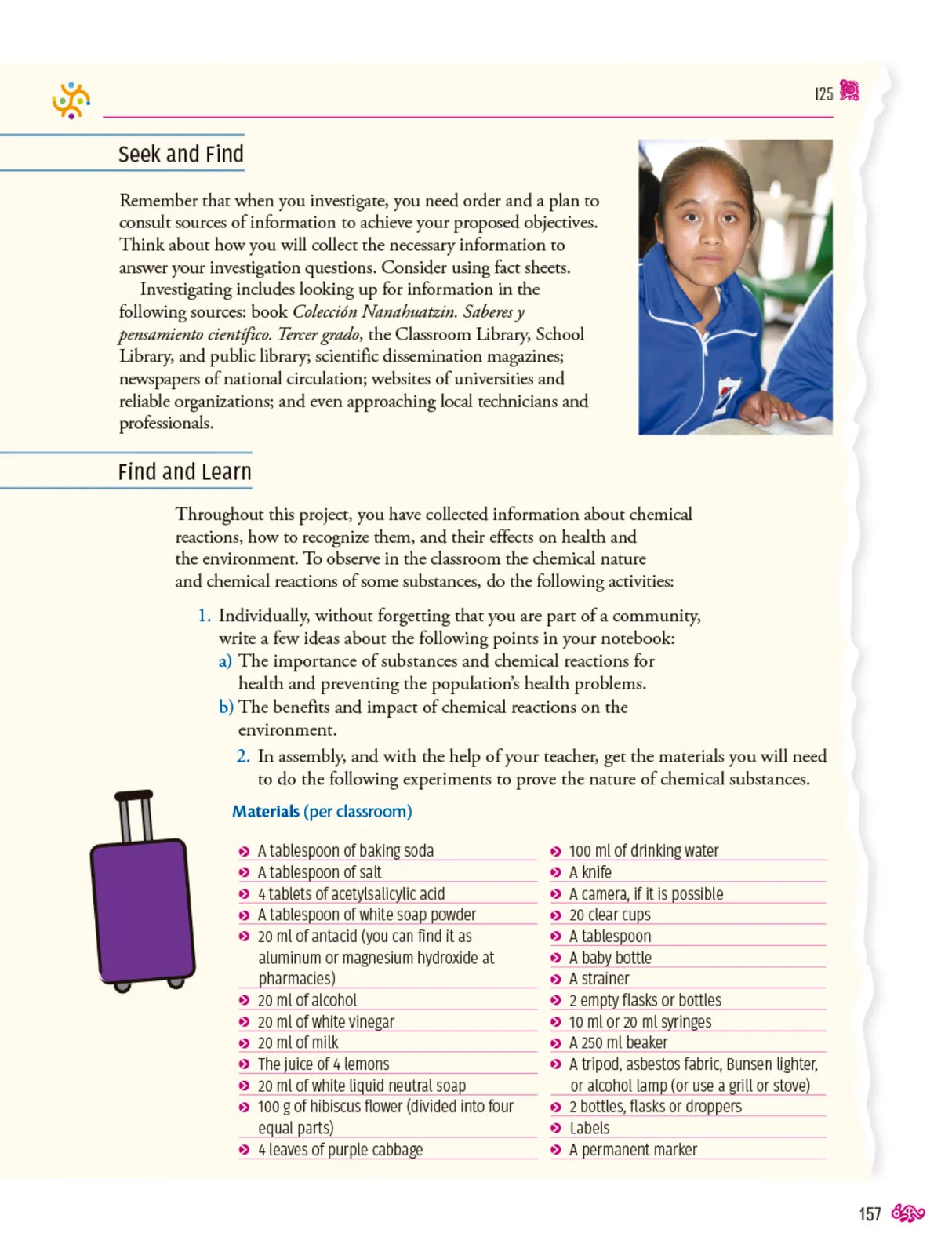
Remember that when you investigate, you need order and a plan to consult sources of information to achieve your proposed objectives.Think about how you will collect the necessary information to answer your investigation questions. Consider using fact sheets.
Investigating includes looking up for information in the following sources: book Colección Nanahuatzin. Saberes y pensamiento cientifico. Tercer grado, the Classroom Library, School Library, and public library; scientific dissemination magazines;newspapers of national circulation; websites of universities and reliable organizations; and even approaching local technicians and professionals.
Find and Learn
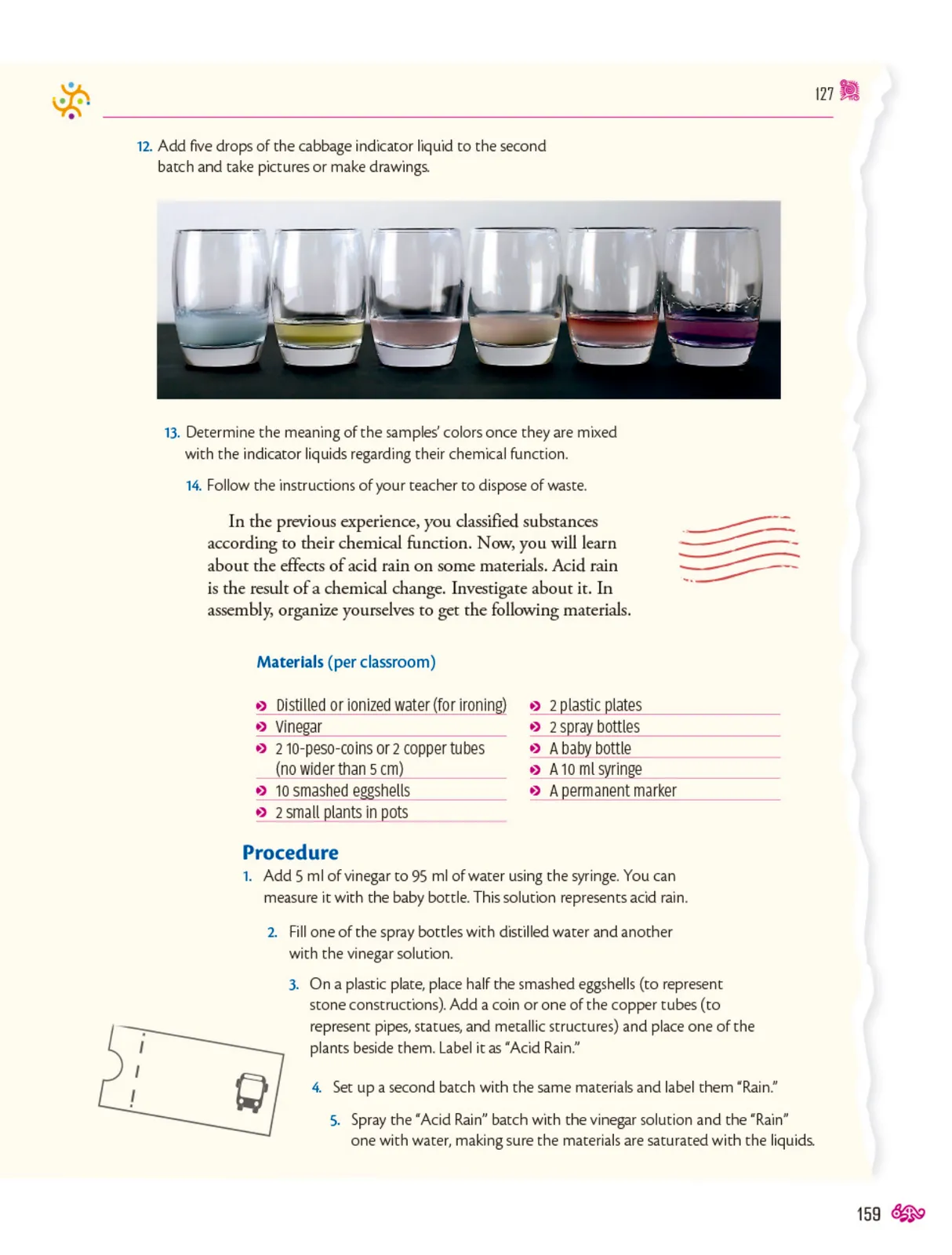
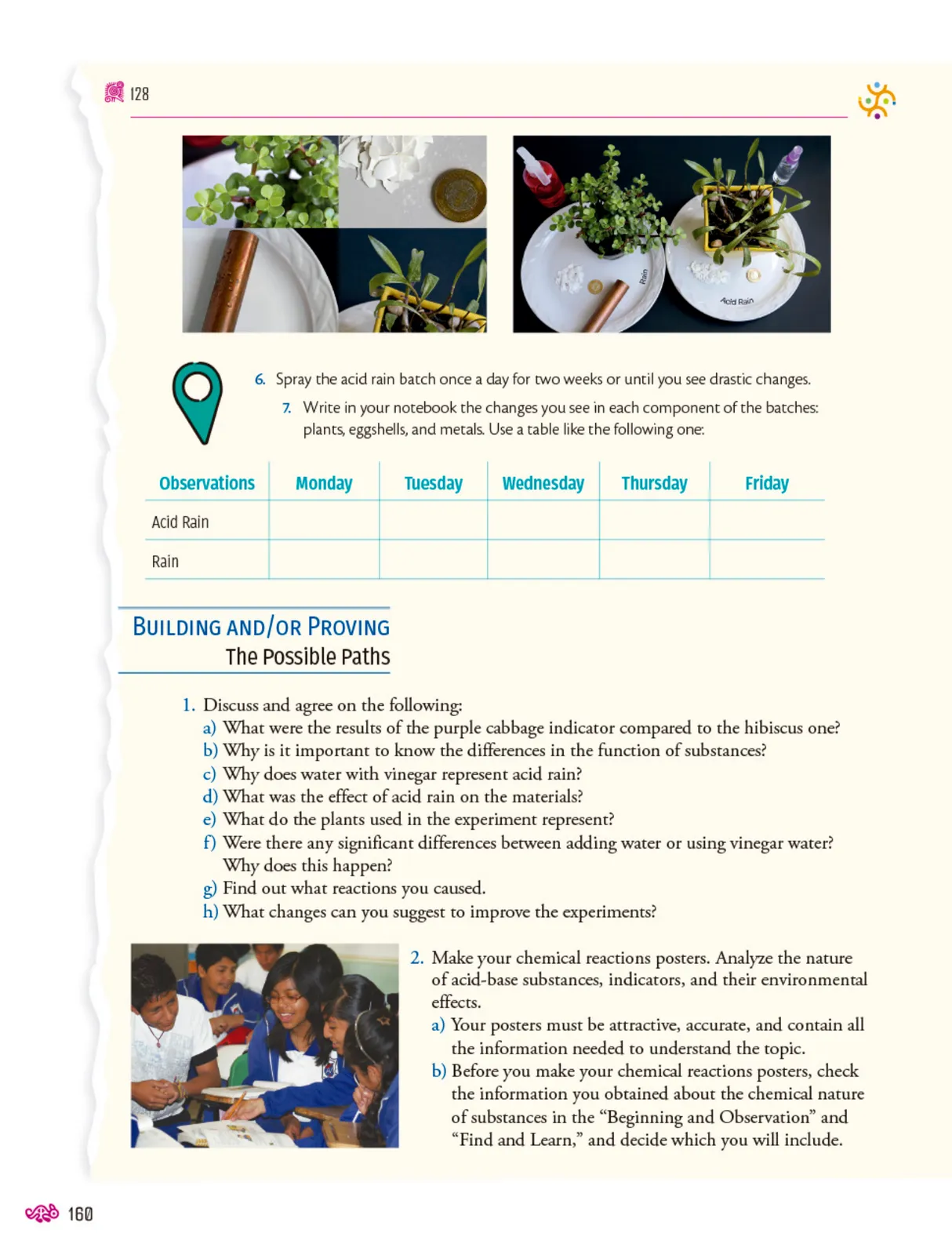
Throughout this project, you have collected information about chemical reactions, how to recognize them, and their effects on health and the environment. To observe in the classroom the chemical nature and chemical reactions of some substances, do the following activities:
- Individually, without forgetting that you are part of a community,write a few ideas about the following points in your notebook:a) The importance of substances and chemical reactions for health and preventing the population's health problems.
b) The benefits and impact of chemical reactions on the environment.
- In assembly, and with the help of your teacher, get the materials you will need to do the following experiments to prove the nature of chemical substances.
Materials (per classroom)
125


| Atablespoon of baking soda | 100 ml of drinking water |
| Atablespoon of salt | A knife |
| 4 tablets of acetylsalicylic acid | A camera, if it is possible |
| A tablespoon of white soap powder | 20 clear cups |
| 20 ml of antacid (you can find it as aluminum or magnesium hydroxide at | Atablespoon |
| A baby bottle | |
| A strainer | |
| pharmacies) 20 ml of alcohol | |
| 2 empty flasks or bottles | |
| 20 ml of white vinegar | |
| 20 ml of milk | 10 ml or 20 ml syringes A 250 ml beaker |
| The juice of 4 lemons | A tripod, asbestos fabric, Bunsen lighter, |
| 20 ml of white liquid neutral soap | |
| or alcohol lamp (or use a grill or stove) | |
| 100 g of hibiscus flower (divided into four equal parts) | 2 bottles, flasks or droppers |
| Labels | |
| 4 leaves of purple cabbage | A permanent marker |
157
Otros libros recomendados
Uérakua anapu uantakua. Projects and Readings. Libro de Educación Secundaria Grado 2° Ciclo Escolar 2025 - 2026
SEP/CONALITEG
171 págs.
Uérakua anapu uantakua. Projects and Readings Libro de Educación Secundaria Grado 1° Ciclo Escolar 2025 - 2026
SEP/CONALITEG
187 págs.
Colección Ximhai. Nuestro libro de proyectos. Libro de Educación Secundaria Grado 1° Ciclo Escolar 2025 - 2026
SEP/CONALITEG
299 págs.
Un libro sin recetas para la maestra y el maestro. Fase 6. Libro de Educación Secundaria Grado 1°, 2°, 3° Ciclo Escolar 2025 - 2026
SEP/CONALITEG
202 págs.
Colección Ximhai. Saberes y pensamiento científico. Libro de Educación Secundaria Grado 1° Ciclo Escolar 2025 - 2026
SEP/CONALITEG
339 págs.
Colección Ximhai. Múltiples lenguajes. Libro de Educación Secundaria Grado 1° Ciclo Escolar 2025 - 2026
SEP/CONALITEG
163 págs.
Matematica 9° · Secundaria Activa
MinEducación
218 págs.
Ciencias Naturales 9° · Secundaria Activa
MinEducación
318 págs.