Saltar al contenido
MisLibrosTexto
Ad
Inglés – Séptimo Básico | Student’s Book MINEDUC – Descargar PDF · 2024
Libro de Inglés 7

MINEDUC

13/82

Lesson 2: My Fashionable Friends - The Emperor's New Clothes

📄 teoria ingles 🎓 otro · 7° BASICA Chile 🇨🇱 CL 🗣 Español
Página 13
13 de 82
Página 13 de Inglés – Séptimo Básico | Student’s Book MINEDUC – Descargar PDF · 2024
Anterior Página 13 / 82 Siguiente

Respuesta rápida

  1. Subrayar palabras desconocidas (fond, impostors, weave, exquisite, fabric, invisible, fools, cape, looms, prime minister, pretenders, lied). 2. Buscar significados en el diccionario y releer el texto.
📚 theory ingles ⭐⭐ Dificultad 2/5 ⏱ 8 min lectura

Solución — Página 13

Inglés – Séptimo Básico | Student’s Book MINEDUC – Descargar PDF · 2024

1
Ejercicio 1

Read the text and underline the words you don't know.

  1. Lee el texto completo una vez sin detenerte para captar la idea general.
  2. En una segunda lectura, subraya las palabras cuyo significado no conozcas. En este texto suelen ser: fond, impostors, weave, exquisite, fabric, invisible, fools, cape, looms, prime minister, pretenders, lied.
  3. Anota cada palabra subrayada en tu cuaderno con la oración donde aparece.
Respuesta

Palabras sugeridas para subrayar: fond, impostors, weave, exquisite, fabric, invisible, fools, cape, looms, prime minister, pretenders, lied.

2
Ejercicio 2

In pairs, look for the words you don't know in a dictionary. Then, read the text again.

  1. En parejas, busquen en el diccionario las palabras subrayadas en el ejercicio 1.
  2. Registren el significado en inglés y en español, por ejemplo:
    • fond: tener cariño o afición por algo / to be fond of = ser aficionado a.
    • impostors: personas que engañan haciéndose pasar por otras / impostores.
    • weave: tejer / to weave fabric.
    • exquisite: extremely beautiful and delicate / exquisito, refinado.
    • fabric: tela, tejido.
    • invisible: que no se puede ver.
    • fools: personas necias / tontos.
    • cape: capa, prenda sin mangas.
    • looms: telares.
    • prime minister: primer ministro.
    • pretenders: impostores, quienes fingen.
    • lied: pasado de lie, mintió.
  3. Vuelvan a leer el texto en voz alta por turnos, aplicando los significados aprendidos.
Respuesta

Cada pareja completa su glosario bilingüe y relee el texto con comprensión. Ejemplo de glosario: fond = aficionado; impostors = impostores; weave = tejer; exquisite = exquisito; fabric = tela; invisible = invisible; fools = tontos; cape = capa; looms = telares; prime minister = primer ministro; pretenders = impostores; lied = mintió.

Contenido de la página

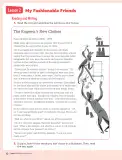
Lesson 2: My Fashionable Friends

Reading and Writing

1. Read the text and underline the words you don't know.

The Emperor's New Clothes

Hans Christian Andersen (1805 – 1875)

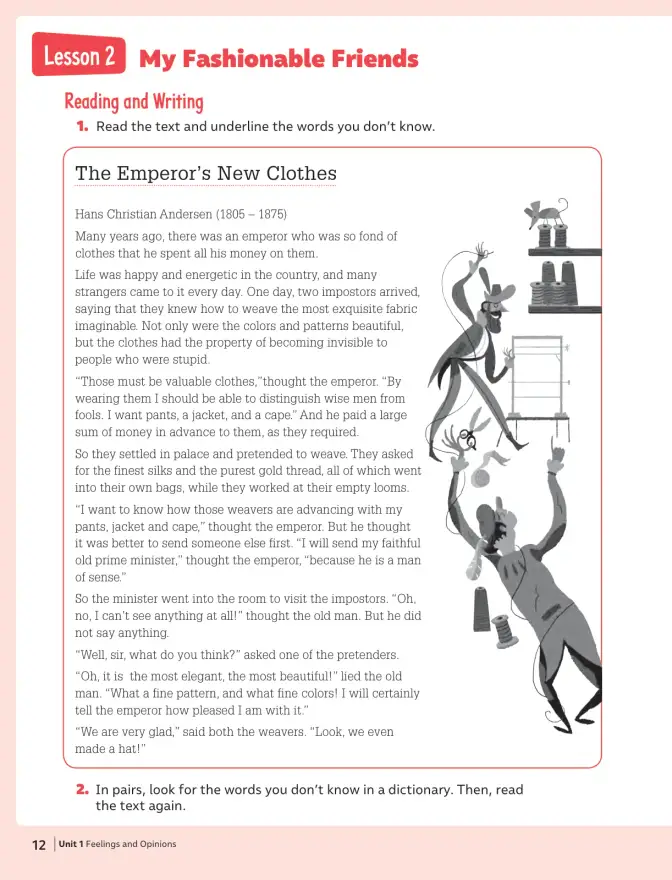
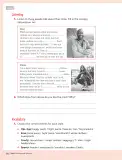
Many years ago, there was an emperor who was so fond of clothes that he spent all his money on them.

Life was happy and energetic in the country, and many strangers came to it every day. One day, two impostors arrived, saying that they knew how to weave the most exquisite fabric imaginable. Not only were the colors and patterns beautiful, but the clothes had the property of becoming invisible to people who were stupid.

"Those must be valuable clothes," thought the emperor. "By wearing them I should be able to distinguish wise men from fools. I want pants, a jacket, and a cape." And he paid a large sum of money in advance to them, as they required.

So they settled in palace and pretended to weave. They asked for the finest silks and the purest gold thread, all of which went into their own bags, while they worked at their empty looms.

"I want to know how those weavers are advancing with my pants, jacket and cape," thought the emperor. But he thought it was better to send someone else first. "I will send my faithful old prime minister," thought the emperor, "because he is a man of sense."

So the minister went into the room to visit the impostors. "Oh, no, I can't see anything at all!" thought the old man. But he did not say anything.

"Well, sir, what do you think?" asked one of the pretenders.

"Oh, it is the most elegant, the most beautiful!" lied the old man. "What a fine pattern, and what fine colors! I will certainly tell the emperor how pleased I am with it."

"We are very glad," said both the weavers. "Look, we even made a hat!"

2. In pairs, look for the words you don't know in a dictionary. Then, read the text again.

Glosario (12)

fond
aficionado, tener cariño por algo
impostors
impostores, personas que engañan
weave
tejer
exquisite
exquisito, refinado
fabric
tela, tejido
invisible
invisible, que no se ve
fools
tontos, necios
cape
capa
looms
telares
prime minister
primer ministro
pretenders
impostores, fingidores
lied
mintió (pasado de lie)

Preguntas para practicar

What is the main idea of the story so far?

The main idea is that an emperor who loves clothes is deceived by two impostors who pretend to weave a magical fabric that is invisible to stupid people. The emperor and his minister lie to avoid looking foolish.

Why did the minister lie about seeing the fabric?

The minister lied because he could not see the fabric, but he was afraid of being considered stupid or unfit for his position. So he pretended to admire it to protect his reputation.

Temas y conceptos clave

Lectura en inglésVocabularioLiteratura clásicaReading comprehensionVocabulary buildingFairy talePast simple

Fuentes y referencias

  • Hans Christian Andersen, 'The Emperor's New Clothes' (1837)
¿Te fue útil esta página?

Preguntas que la gente también hace

¿Quién escribió The Emperor's New Clothes?
Consulta la solución completa arriba o explora el libro entero para temas relacionados.
¿Qué significa 'impostors' en español?
Consulta la solución completa arriba o explora el libro entero para temas relacionados.
¿Cuál es la moraleja del cuento El traje nuevo del emperador?
Consulta la solución completa arriba o explora el libro entero para temas relacionados.
📌 Antes de leer esto
  • • Lectura básica en inglés
  • • Uso del diccionario bilingüe
  • • Reconocimiento de tiempos verbales simples (past simple)
Siguiente tema sugerido
Continuación del cuento: el emperador y el desfile (páginas siguientes)
📝 Transcripción de la página (texto seleccionable) 1909 caracteres

Lesson 2My Fashionable Friends

Reading and Writing

  1. Read the text and underline the words you don't know.

The Emperor's New Clothes

Hans Christian Andersen (1805– 1875)

Many years ago, there was an emperor who was so fond of clothes that he spent all his money on them.

Life was happy and energetic in the country, and many strangers came to it every day. One day, two impostors arrived,saying that they knew how to weave the most exquisite fabric imaginable. Not only were the colors and patterns beautiful,but the clothes had the property of becoming invisible to people who were stupid.

"Those must be valuable clothes,"thought the emperor. "By wearing them I should be able to distinguish wise men from fools. I want pants, a jacket, and a cape." And he paid a large sum of money in advance to them, as they required.

So they settled in palace and pretended to weave. They asked for the finest silks and the purest gold thread, all of which went into their own bags, while they worked at their empty looms.

"I want to know how those weavers are advancing with my pants, jacket and cape,"thought the emperor. But he thought it was better to send someone else first. "I will send my faithful old prime minister," thought the emperor, "because he is a man of sense."

So the minister went into the room to visit the impostors. "Oh,no, I can't see anything at all!"thought the old man. But he did not say anything.

"Well, sir, what do you think?" asked one of the pretenders.

"Oh, it is the most elegant, the most beautiful!" lied the old man. "What a fine pattern, and what fine colors! I will certainly tell the emperor how pleased I am with it."

"We are very glad," said both the weavers. "Look, we even made a hat!"

  1. In pairs, look for the words you don't know in a dictionary. Then, read the text again.

![](page=0,bbox=[778, 331, 1094, 1391])

12

Unit 1 Feelings and Opinions

Ad

Otros libros recomendados

Ver todos →
Ad

Usamos cookies propias y de terceros para personalizar contenido, mostrar publicidad y analizar el tráfico. Las cookies necesarias siempre están activas.