Saltar al contenido
MisLibrosTexto
Ad
Ingles 2° · 2024
Libro de Inglés 2 BGU

Ministerio de Educación del Ecuador

25/34

Worksheet 5: Language Through the Arts - objetivos y descriptores

📄 teoria ingles 🎓 bachillerato · 2° BGU Ecuador 🇪🇨 EC 🗣 Español
Página 25
25 de 34
Página 25 de Ingles 2° · 2024
Anterior Página 25 / 34 Siguiente

Respuesta rápida

E1: Conectar los elementos artísticos con experiencias personales, otras obras y la comunidad artística para crear interpretaciones. E2: General = propósito amplio; Learning = desempeño observable del estudiante. E3: Comparar mensajes, técnicas, recursos y referencias culturales. E4: Cuatro indicadores: conexiones, puntos de vista, mejora progresiva, creación propia. E5: Da sentido y motiva la preservación del patrimonio cultural.

📚 theory ingles ⭐ Dificultad 1/5 ⏱ 4 min lectura

Solución — Página 25

Ingles 2° · 2024

1
Ejercicio 1

Comprehension question: According to the General objective, what should students do with the artistic elements they identify in a work of art?

  1. Identify artistic elements within a work of art.
  2. Connect those elements to personal experiences, other artworks, and the artistic community.
  3. Use those connections to develop personal responses and interpretations of the artwork.
Respuesta

Students must analyze and recognize artistic elements, connect them to personal experiences, other artworks and the artistic community, and use those connections to develop personal responses and interpretations.

2
Ejercicio 2

Comprehension question: What is the difference between the General objective and the Learning objective stated on this page?

  1. The general objective describes the broad aim of the worksheet (analyze, recognize and connect artistic elements to develop interpretations).
  2. The learning objective specifies what the student ("They") will actually do: analyze and identify artistic elements in various works of art, draw connections between elements, experiences, artworks and the artistic community, and formulate informed, personal responses and interpretations.
  3. In short: the general objective is the teacher's/institution's aim; the learning objective is the student's observable performance.
Respuesta

The general objective states the broad purpose, while the learning objective states what the student will concretely do: identify elements, draw connections and formulate informed, personal responses.

3
Ejercicio 3

Comprehension question: Restate the Descriptor of this worksheet in your own words.

  1. The descriptor asks students to compare and contrast (a) main messages, (b) techniques, and (c) resources used in different forms of artistic expression.
  2. It also requires identifying the cultural references associated with each form of expression.
  3. Finally, it links this analysis to a civic purpose: contributing to the preservation and promotion of Ecuador's national cultural heritage.
Respuesta

Compare and contrast the messages, techniques and resources of different artistic expressions and their cultural references, while helping preserve and promote national cultural heritage.

Ad
4
Ejercicio 4

Comprehension question: List the four performance indicators that show a student has achieved this standard.

  1. The learner makes meaningful connections between elements identified in a work of art and their own experiences, and relates them to other artworks in terms of similarities and differences.
  2. The student considers different viewpoints and interpretations of the same artwork, promoting a more comprehensive understanding.
  3. Over time, the student improves in analyzing and connecting artistic elements, showing an evolving understanding of art and its contexts.
  4. The student applies the skills acquired in analysis and interpretation to create their own artwork, integrating knowledge and practical application.
Respuesta

(1) Connections between elements and personal experiences/other artworks; (2) consideration of different viewpoints; (3) improvement over time in analysis; (4) application of analysis skills to create own artwork.

5
Ejercicio 5

Open question: Why is it important to connect an artwork to your own experiences and to your national cultural heritage?

Respuesta orientativa: Connecting an artwork to personal experiences makes interpretation meaningful and memorable, because the student uses their own frame of reference to understand the artist's message. Relating the artwork to national cultural heritage reinforces identity and language use in context, and motivates the student to use English to talk about Ecuadorian culture, preserving and promoting it while practicing the language.

Contenido de la página

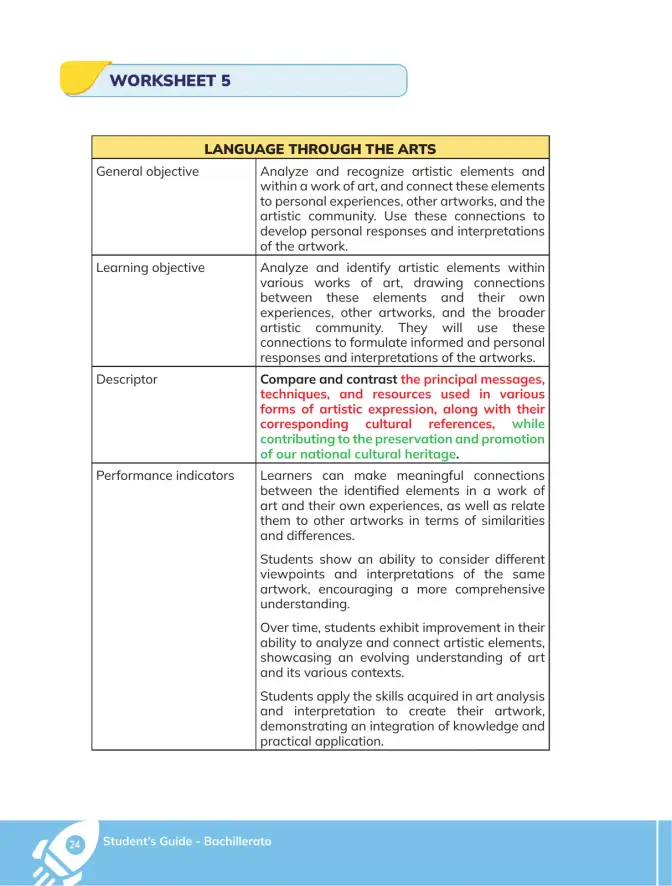
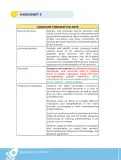
WORKSHEET 5

LANGUAGE THROUGH THE ARTS

Section Content
General objective Analyze and recognize artistic elements within a work of art, and connect these elements to personal experiences, other artworks, and the artistic community. Use these connections to develop personal responses and interpretations of the artwork.
Learning objective Analyze and identify artistic elements within various works of art, drawing connections between these elements and their own experiences, other artworks, and the broader artistic community. They will use these connections to formulate informed and personal responses and interpretations of the artworks.
Descriptor Compare and contrast the principal messages, techniques, and resources used in various forms of artistic expression, along with their corresponding cultural references, while contributing to the preservation and promotion of our national cultural heritage.
Performance indicators • Learners can make meaningful connections between the identified elements in a work of art and their own experiences, as well as relate them to other artworks in terms of similarities and differences. • Students show an ability to consider different viewpoints and interpretations of the same artwork, encouraging a more comprehensive understanding. • Over time, students exhibit improvement in their ability to analyze and connect artistic elements, showcasing an evolving understanding of art and its various contexts. • Students apply the skills acquired in art analysis and interpretation to create their artwork, demonstrating an integration of knowledge and practical application.

Student's Guide - Bachillerato · pág. 24

Tabla

Section Content
General objective Analyze and recognize artistic elements within a work of art, and connect these elements to personal experiences, other artworks, and the artistic community; develop personal responses and interpretations.
Learning objective Analyze and identify artistic elements in various works of art, connect them to experiences, other artworks and the artistic community; formulate informed and personal responses and interpretations.
Descriptor Compare and contrast principal messages, techniques and resources of various forms of artistic expression, with their cultural references, contributing to preservation and promotion of national cultural heritage.
Performance indicators Connections with own experiences and other artworks; consideration of different viewpoints; improvement over time in analysis; application of analysis skills to create own artwork.

Glosario (6)

Artistic elements
Componentes de una obra de arte (línea, color, forma, textura, composición) que el estudiante identifica y analiza.
Descriptor
Enunciado curricular que describe el aprendizaje esperado y su nivel de exigencia en el currículo ecuatoriano.
Performance indicators
Indicadores de desempeño: conductas observables que evidencian que el estudiante alcanzó el aprendizaje esperado.
Cultural references
Referencias culturales vinculadas a una obra de arte, como tradiciones, símbolos o hechos históricos.
National cultural heritage
Patrimonio cultural de un país: expresiones artísticas, tradiciones e historia que se preservan y promueven.
Compare and contrast
Estrategia de pensamiento que consiste en identificar semejanzas y diferencias entre dos o más elementos.

Preguntas para practicar

Why is it important to connect an artwork to your own experiences and to your national cultural heritage?

Conectar la obra con experiencias propias hace que la interpretación sea significativa y personal; vincularla con el patrimonio cultural refuerza la identidad y permite usar el inglés para difundir y preservar la cultura del propio país.

Compare the General objective and the Learning objective: who acts in each one?

En el objetivo general la acción la lidera el programa/enseñanza ('Analyze and recognize...'); en el objetivo de aprendizaje la acción la realiza el estudiante ('They will use these connections to formulate...').

Temas y conceptos clave

Language through the artsObjetivos curriculares de inglés (BGU)Análisis de elementos artísticosPatrimonio cultural nacionalGeneral objectiveLearning objectiveDescriptorPerformance indicatorsArtistic elementsCultural referencesNational cultural heritage
¿Te fue útil esta página?

Preguntas que la gente también hace

¿Qué es un descriptor curricular en el Bachillerato General Unificado?
Consulta la solución completa arriba o explora el libro entero para temas relacionados.
¿Cómo se analiza una obra de arte en inglés?
Consulta la solución completa arriba o explora el libro entero para temas relacionados.
¿Qué son los indicadores de desempeño en el currículo ecuatoriano?
Consulta la solución completa arriba o explora el libro entero para temas relacionados.
📌 Antes de leer esto
  • • Vocabulario básico de artes (elements, techniques, messages, cultural references)
  • • Comprensión lectora en inglés a nivel intermedio
  • • Nociones de estructura curricular: objetivos, descriptores, indicadores
Siguiente tema sugerido
Ejercicios prácticos de la Worksheet 5: comparar y contrastar obras de arte en inglés (pág. 26)
📝 Transcripción de la página (texto seleccionable) 1618 caracteres

/ WORKSHEET 5 )

General objective Analyze and recognize artistic elements and within a work of art, and connect these elements to personal experiences, other artworks, and the artistic community. Use these connections to develop personal responses and interpretations of the artwork.

Learning objective Analyze and identify artistic elements within various works of art, drawing connections between these elements and their own experiences, other artworks, and the broader artistic community. They will use these connections to formulate informed and personal responses and interpretations of the artworks.

Descriptor Compare and contrast the principal messages, techniques, and resources used in various forms of artistic expression, along with their corresponding cultural references, while contributing to the preservation and promotion of our national cultural heritage.

Performance indicators Learners can make meaningful connections between the identified elements in a work of art and their own experiences, as well as relate them to other artworks in terms of similarities and differences.

Students show an ability to consider different viewpoints and interpretations of the same artwork, encouraging a more comprehensive understanding.

Over time, students exhibit improvement in their ability to analyze and connect artistic elements, showcasing an evolving understanding of art and its various contexts.

Students apply the skills acquired in art analysis and interpretation to create their artwork, demonstrating an integration of knowledge and practical application.

@ Student's Guide - Bachillerato

Ad

Otros libros recomendados

Ver todos →
Ad

Usamos cookies propias y de terceros para personalizar contenido, mostrar publicidad y analizar el tráfico. Las cookies necesarias siempre están activas.