Saltar al contenido
MisLibrosTexto
Ad
Ingles 2° · 2024
Libro de Inglés 2 BGU

Ministerio de Educación del Ecuador

27/34

Art, Feelings and Emotions: how paintings express emotions

📄 teoria ingles 🎓 bachillerato · 2° BGU Ecuador 🇪🇨 EC 🗣 Español
Página 27
27 de 34
Página 27 de Ingles 2° · 2024
Anterior Página 27 / 34 Siguiente

Respuesta rápida

  1. Hard work and slavery. 2) happy; sad. 3) Happiness: warm/bright, smiling; Sadness: cool/muted, tearful; Surprise: startling, wide-eyed. 4) El arte es para todos porque se disfruta sin conocimientos previos. 5) Refleja nuestras emociones. 6) Premio UNESCO; murió en 1999.
📚 theory ingles ⭐⭐ Dificultad 2/5 ⏱ 5 min lectura

Solución — Página 27

Ingles 2° · 2024

1
Ejercicio 1

(Lectura de comprensión)

Responde según el texto: ¿Qué representa las manos en las pinturas de Guayasamin?

  1. Localizamos la oración en el segundo párrafo: "the hands on his paintings represent the hard work and slavery".
  2. Traducimos el sentido: las manos simbolizan el trabajo duro y la esclavitud.
  3. Contextualizamos: sus obras expresan el sufrimiento de personas oprimidas de distintos contextos.
Respuesta

Las manos representan el trabajo duro (hard work) y la esclavitud (slavery).

2
Ejercicio 2

(Completar)

Completa según el texto: "Bright colors can make us _______, and dark colors can make us _______."

  1. Buscamos la sección Color and Feelings.
  2. Leemos: "Bright colors can make us happy, and dark colors can make us sad."
  3. Verificamos que cada color tiene una emoción asociada: "Every color has a feeling."
Respuesta

happy; sad.

3
Ejercicio 3

(Vocabulario: Let's Learn Some Emotions)

Empareja cada emoción con su descripción correcta.

  1. Happiness → colores brillantes y cálidos, rostros sonrientes, escenas alegres (bright and warm colors, smiling faces, joyful scenes).
  2. Sadness → colores fríos y apagados, expresiones llorosas, ambientes sombríos (cool and muted colors, tearful expressions, somber settings).
  3. Surprise → colores impactantes, ojos muy abiertos, elementos inesperados (startling colors, wide-eyed expressions, unexpected elements).
Respuesta

Happiness–bright/warm, smiling, joyful; Sadness–cool/muted, tearful, somber; Surprise–startling, wide-eyed, unexpected.

Ad
4
Ejercicio 4

(Pregunta abierta: Art is for Everyone)

¿Por qué se dice que "Art is for Everyone"?

  1. Releemos la última sección: incluso sin entender todo sobre el arte, se puede disfrutar.
  2. El arte es una forma de hablar de sentimientos e historias sin importar el origen de las personas.
  3. Concluimos: no requiere conocimientos previos para disfrutarlo y compartido.

Respuesta orientativa: Porque no es necesario entenderlo todo para disfrutarlo; es un medio para expresar y compartir sentimientos e historias, disponible para cualquier persona sin importar de dónde venga.

5
Ejercicio 5

(Pregunta abierta: Our Feelings)

El texto dice: "Art can be like a mirror for our feelings." ¿Qué significa esta metáfora?

  1. Un espejo refleja lo que está enfrente.
  2. Al mirar una obra de arte, reconocemos en ella nuestras propias emociones y recuerdos.
  3. El arte nos ayuda a identificar y entender lo que sentimos.

Respuesta orientativa: Significa que al observar una obra de arte reconocemos en ella nuestras propias emociones y recuerdos felices o tristes, como si el arte reflejara lo que sentimos por dentro.

6
Ejercicio 6

(Pregunta abierta sobre Guayasamin)

¿Qué premio recibió Guayasamin y en qué año falleció?

  1. Primer párrafo: "He received a UNESCO prize for his lifelong commitment to peace."
  2. Continúa: "He passed away in 1999, leaving a significant void in the art world."
Respuesta

Recibió un premio de la UNESCO por su compromiso de por vida con la paz y falleció en 1999.

Contenido de la página

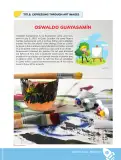
He received a UNESCO prize for his lifelong commitment to peace. He passed away in 1999, leaving a significant void in the art world.

Guayasamin's paintings express the suffering of oppressed people of different contexts, the hands on his paintings represent the hard work and slavery. He has hundreds of paintings and all of them represent people's emotions and suffering.

Art, like paintings, can make us feel things. Artists use colors, shapes, and pictures to show different emotions. When we look at art, it can remind us of our feelings or tell us a story.

Color and Feelings: Artists use colors to show how they feel. Bright colors can make us happy, and dark colors can make us sad. Every color has a feeling.

Pictures and Stories: Paintings can tell stories. We can see people, places, and things in paintings. These pictures help us understand what the artist wants to say.

Faces and Emotions: Sometimes, paintings show faces with different feelings. A smile can show happiness, and a frown can show sadness. We can look at the faces in paintings to see how they feel.

Our Feelings: When we look at art, we can think about how it makes us feel. We might remember our own happy or sad times. Art can be like a mirror for our feelings.

Art is for Everyone: Even if we don't understand everything about art, we can still enjoy it. Art is a way for people to talk about feelings and stories, no matter where they come from. Art is a special way for us to understand and share our feelings, and anyone can enjoy it.

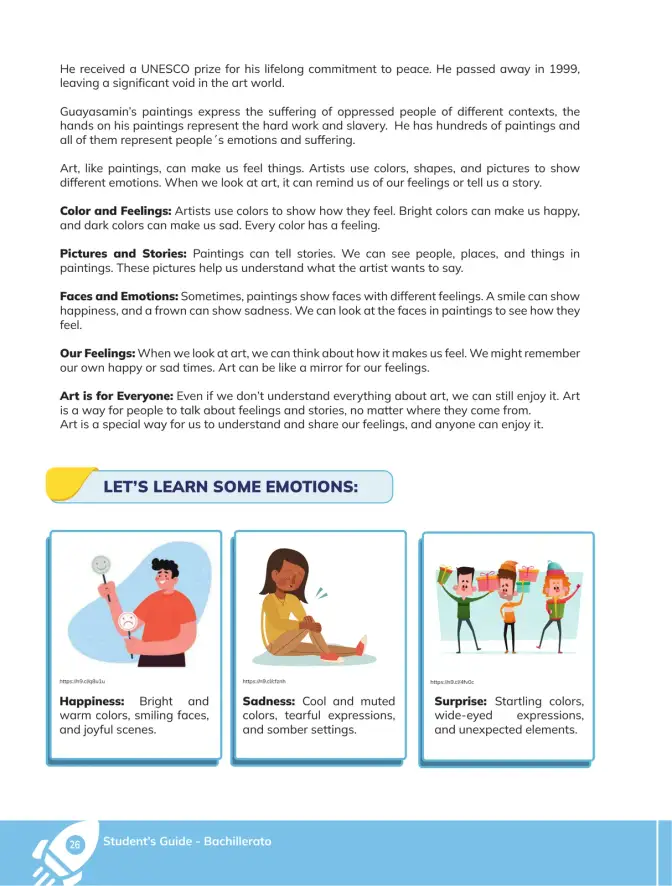
LET'S LEARN SOME EMOTIONS:

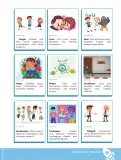
  • Happiness: Bright and warm colors, smiling faces, and joyful scenes.
  • Sadness: Cool and muted colors, tearful expressions, and somber settings.
  • Surprise: Startling colors, wide-eyed expressions, and unexpected elements.

Ejemplos resueltos

Según la sección 'Color and Feelings', ¿qué colores pueden hacernos felices y cuáles tristes?

  1. Bright colors → happy (colores brillantes → felicidad). 2. Dark colors → sad (colores oscuros → tristeza). 3. Conclusión: 'Every color has a feeling.'

Tabla

Emoción Colores Expresiones / Escenas
Happiness Bright and warm colors Smiling faces, joyful scenes
Sadness Cool and muted colors Tearful expressions, somber settings
Surprise Startling colors Wide-eyed expressions, unexpected elements

Diagrama

mindmap
  root((Emociones en el arte))
    Happiness
      Bright and warm colors
      Smiling faces
      Joyful scenes
    Sadness
      Cool and muted colors
      Tearful expressions
      Somber settings
    Surprise
      Startling colors
      Wide-eyed expressions
      Unexpected elements

Glosario (7)

Happiness
Felicidad; se representa con colores brillantes y cálidos, rostros sonrientes y escenas alegres.
Sadness
Tristeza; se representa con colores fríos y apagados, expresiones llorosas y ambientes sombríos.
Surprise
Sorpresa; se representa con colores impactantes, ojos muy abiertos y elementos inesperados.
Oppressed people
Personas oprimidas; grupos que sufren injusticia o falta de libertad.
Suffering
Sufrimiento; dolor físico o emocional expresado en el arte.
Somber
Sombrío; oscuro o melancólico, propio de ambientes tristes.
Commitment to peace
Compromiso con la paz; dedicación prolongada a buscar la convivencia pacífica.

Preguntas para practicar

¿Por qué se dice que 'Art is for Everyone'?

Porque no se requiere entenderlo todo para disfrutarlo; el arte es un medio universal para expresar y compartir sentimientos e historias, disponible para cualquier persona sin importar su origen.

¿Qué significa 'Art can be like a mirror for our feelings'?

Significa que al contemplar una obra de arte reconocemos en ella nuestras propias emociones y recuerdos, como si el arte reflejara lo que sentimos por dentro.

How do colors show emotions in art?

Bright and warm colors show happiness, while dark, cool and muted colors show sadness; every color has a feeling.

Temas y conceptos clave

Arte y emocionesVocabulario de emociones en inglésGuayasamin: pinturas sobre el sufrimiento humanoColor and FeelingsPictures and StoriesFaces and EmotionsOur FeelingsArt is for EveryoneHappinessSadnessSurprise

Fuentes y referencias

  • https://h9.cl/q8u1u
  • https://h9.cl/cfznh
  • https://h9.cl/4fv0c
¿Te fue útil esta página?

Figuras de la página (2)

Ilustración de un joven sosteniendo dos máscaras (una sonriente y una triste) sobre fondo azul claro; representa la emoción happiness.
Figura 1 image
Ilustración de una chica sentada en el piso con las rodillas abrazadas, ojos cerrados y expresión triste; representa la emoción sadness.
Figura 2 image

Preguntas que la gente también hace

¿Cómo expresan los artistas las emociones en sus pinturas?
Consulta la solución completa arriba o explora el libro entero para temas relacionados.
¿Qué significa que el arte sea un espejo de nuestros sentimientos?
Consulta la solución completa arriba o explora el libro entero para temas relacionados.
¿Qué emociones se aprenden en inglés en esta página y cómo se describen?
Consulta la solución completa arriba o explora el libro entero para temas relacionados.
📌 Antes de leer esto
  • • Vocabulario básico de emociones en inglés
  • • Lectura comprensiva en inglés de nivel bachillerato
Siguiente tema sugerido
Actividades de práctica: describir obras de arte y expresar emociones en inglés (pág. 28)
📝 Transcripción de la página (texto seleccionable) 1879 caracteres

He received a UNESCO prize for his lifelong commitment to peace. He passed away in 1999, leaving a significant void in the art world.

Guayasamin's paintings express the suffering of oppressed people of different contexts, the hands on his paintings represent the hard work and slavery. He has hundreds of paintings and all of them represent people “s emotions and suffering.

Art, like paintings, can make us feel things. Artists use colors, shapes, and pictures to show different emotions. When we look at art, it can remind us of our feelings or tell us a story.

Color and Feelings: Artists use colors to show how they feel. Bright colors can make us happy, and dark colors can make us sad. Every color has a feeling.

Pictures and Stories: Paintings can tell stories. We can see people, places, and things in paintings. These pictures help us understand what the artist wants to say.

Faces and Emotions: Sometimes, paintings show faces with different feelings. A smile can show happiness, and a frown can show sadness. We can look at the faces in paintings to see how they feel.

Our Feelings: When we look at art, we can think about how it makes us feel. We might remember our own happy or sad times. Art can be like a mirror for our feelings.

Art is for Everyone: Even if we don’t understand everything about art, we can still enjoy it. Art is a way for people to talk about feelings and stories, no matter where they come from. Art is a special way for us to understand and share our feelings, and anyone can enjoy it.

A LET’S LEARN SOME EMOTIONS: }

https:/n9.cliq8ulu https://n9.cl/cfznh https://n9.cl/4fvOc

Happiness: Bright and warm colors, smiling faces, and joyful scenes.

Sadness: Cool and muted Surprise: Startling colors, colors, tearful expressions, wide-eyed expressions, and somber settings. and unexpected elements.

(26 } Student's Guide - Bachillerato

Ad

Otros libros recomendados

Ver todos →
Ad

Usamos cookies propias y de terceros para personalizar contenido, mostrar publicidad y analizar el tráfico. Las cookies necesarias siempre están activas.