










Saltar al contenido
MisLibrosTexto
Ad
Ingles 9° · 2024
Libro de Inglés 9 EGB

Ministerio de Educación del Ecuador

17/50

Worksheet 3: Renewable and Non-renewable Resources (KWL chart)

📄 ejercicios ingles 🎓 secundaria · 9° EGB Ecuador 🇪🇨 EC 🗣 Español
Página 17
17 de 50
Página 17 de Ingles 9° · 2024
Anterior Página 17 / 50 Siguiente

Respuesta rápida

K: recursos naturales divididos en renovables (sol, agua, viento) y no renovables (petróleo, carbón). W: por qué se agotan y cómo conservarlos. L: los renovables se regeneran; usarlos evita contaminación.

📚 exercise ingles ⭐⭐ Dificultad 2/5 ⏱ 5 min lectura

Solución — Página 17

Ingles 9° · 2024

1
Ejercicio 1

(Work Sheet 3 – Reading: chart)

Completar el organizador gráfico (KWL) sobre "Renewable and Non-renewable Resources" escribiendo lo que ya se sabe, lo que se quiere saber y, tras la lectura, lo que se aprendió.

What I Know (K):

  1. Los recursos naturales son materiales o energía que obtenemos de la Tierra.
  2. Se dividen en dos grupos: renovables y no renovables.
  3. Ejemplos de renovables: sol, viento, agua, biomasa; de no renovables: petróleo, carbón, gas natural, minerales.
  4. Los no renovables se agotan porque se forman en millones de años.

What I Want to Know (W):

  1. ¿Por qué algunos recursos se renuevan y otros no?
  2. ¿Cuánto tiempo tarda en formarse el petróleo?
  3. ¿Qué ventajas tienen las energías renovables?
  4. ¿Cómo podemos conservar los recursos naturales?

What I Learned (L) (se completa después de leer el texto):

  1. Un recurso renovable se regenera en un periodo corto (años o décadas).
  2. Un recurso no renovable existe en cantidad finita y se consume más rápido de lo que se forma.
  3. El uso excesivo de combustibles fósiles causa contaminación y cambio climático.
  4. Usar energías renovables ayuda a preservar el medio ambiente.
Respuesta

Se completa la tabla KWL con lo anterior y la sección "Learned" tras la lectura.
Contenido de la página

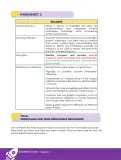
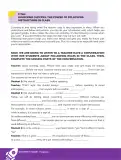
WORKSHEET 3

READING

General objective Apply a variety of strategies and tools for comprehending and evaluating textual information holistically, while considering context and purpose.
Learning objective Students will be able to use their prior knowledge, graphic organizers, and other tools to analyze and assess written texts, demonstrating the ability to identify key information, evaluate its relevance to the subject matter, and determine the text's intended purpose.
Descriptor Identify, compare, and contrast natural resources, both renewable and nonrenewable, and promote awareness of their utilization and preservation.
Performance indicators • Identify the key information in a given text. • Highlight or underline relevant information effectively. • Demonstrate an understanding of the subject matter by evaluating the relevance of information in the text. • Draw on their prior knowledge and relate it to the content of the text to enhance comprehension. • Construct and use graphic organizers, such as concept maps or diagrams, to visually represent the structure and content of a text. • Apply graphic organizers effectively to different types of texts.

TITLE: RENEWABLE AND NON-RENEWABLE RESOURCES

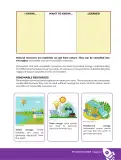
Let's complete the following chart about renewable and non-renewable resources. Write what you know and what you want to know. Once we have read the text, we will complete the learned section.

Chart (KWL): What I Know / What I Want to Know / What I Learned (completar por el estudiante).

Ejemplos resueltos

Complete the 'What I Know' column of the chart about renewable and non-renewable resources.

  1. Write that natural resources come from nature. 2. Classify them as renewable (sun, water, wind) or non-renewable (oil, coal, gas). 3. Add that non-renewable resources take millions of years to form.

Tabla

Criterio Contenido
General objective Apply a variety of strategies and tools for comprehending and evaluating textual information holistically, while considering context and purpose.
Learning objective Use prior knowledge, graphic organizers and other tools to analyze texts, identify key information, evaluate its relevance and determine the text's intended purpose.
Descriptor Identify, compare, and contrast natural resources, both renewable and nonrenewable, and promote awareness of their utilization and preservation.
Performance indicators Identify key information; highlight relevant information; evaluate relevance; relate prior knowledge; construct and apply graphic organizers.

Glosario (6)

renewable resource
Natural resource that is replenished in a short period of time (sun, wind, water).
non-renewable resource
Natural resource that exists in finite amounts and takes millions of years to form (oil, coal).
descriptor
Statement describing what the student must demonstrate in a specific subject area.
performance indicator
Observable behavior showing that a learning objective has been achieved.
graphic organizer
Visual tool (concept map, diagram, KWL chart) to represent information.
prior knowledge
What the student already knows about a topic before reading.

Preguntas para practicar

What is the general objective of this reading activity? (EN/ES)

The general objective is to apply a variety of strategies and tools for comprehending and evaluating textual information holistically, while considering context and purpose; es decir, usar estrategias para comprender y evaluar textos considerando su contexto y propósito.

Why do we complete the 'Learned' column after reading the text?

Because the KWL chart is completed in stages: prior knowledge is activated before reading, questions are raised, and only after reading can students verify and record what they actually learned.

Give two differences between renewable and non-renewable resources.

Renewable resources regenerate in a short time (sun, water, wind), while non-renewable resources exist in limited quantities and take millions of years to form (oil, coal); the first are sustainable, the second get exhausted.

Temas y conceptos clave

Reading: renewable and non-renewable resourcesLearning objectives and performance indicatorsKWL chart (Know–Want to know–Learned)recurso renovablerecurso no renovableobjectivedescriptorperformance indicatorsgraphic organizerprior knowledge
¿Te fue útil esta página?

Preguntas que la gente también hace

¿Qué es un recurso renovable y cuáles son ejemplos?
Consulta la solución completa arriba o explora el libro entero para temas relacionados.
¿Cómo se usa una tabla KWL en clase de inglés?
Consulta la solución completa arriba o explora el libro entero para temas relacionados.
¿Por qué el petróleo se considera un recurso no renovable?
Consulta la solución completa arriba o explora el libro entero para temas relacionados.
📌 Antes de leer esto
  • • Vocabulario básico en inglés sobre medio ambiente
  • • Comprensión lectora de textos informativos
  • • Conocer la diferencia entre recursos renovables y no renovables
Siguiente tema sugerido
Lectura del texto sobre renewable and non-renewable resources y completar la sección 'Learned' de la tabla KWL
📝 Transcripción de la página (texto seleccionable) 1436 caracteres

__/ WORKSHEET 3 )

General objective Apply a variety of strategies and tools for comprehending «and evaluating textual information holistically, while considering context and purpose.

Learning objective Students will be able to use their prior knowledge, graphic organizers, and other tools to analyze and assess written texts, demonstrating the ability to identify key information, evaluate its relevance to the subject matter, and determine the text's intended purpose.

Descriptor Identify, compare, and contrast natural resources, both renewable and nonrenewable, and promote awareness of their utilization and preservation.

Performance indicators Identify the key information in a given text.

Highlight or underline relevant information effectively.

Demonstrate an understanding of the subject matter by evaluating the relevance of information in the text.

Draw on their prior knowledge and relate it to the content of the text to enhance comprehension.

Construct and use graphic organizers, such as concept maps or diagrams, to visually represent the structure and content of a text.

Apply graphic organizers effectively to different types of texts.

TITLE: RENEWABLE AND NON-RENEWABLE RESOURCES ]

Let’s complete the following chart about renewable and non-renewable resources. Write what you know and what you want to know. Once we have read the text, we will complete the learned section.

(16) STUDENTS GUIDE / Superior

Ad

Otros libros recomendados

Ver todos →
Ad

Usamos cookies propias y de terceros para personalizar contenido, mostrar publicidad y analizar el tráfico. Las cookies necesarias siempre están activas.