
















Saltar al contenido
MisLibrosTexto
Ad
Ingles 9° · 2024
Libro de Inglés 9 EGB

Ministerio de Educación del Ecuador

15/50

Speaking: Norms in Everyday Life y Language for Rules and Norms

📄 ejercicios ingles 🎓 secundaria · 9° EGB Ecuador 🇪🇨 EC 🗣 Español
Página 15
15 de 50
Página 15 de Ingles 9° · 2024
Anterior Página 15 / 50 Siguiente

Respuesta rápida

  1. Ejemplo: 'Last Monday I forgot to greet my teacher; now I always say good morning, a social norm of respect.' 2) Imperativos: don't use, pay attention, put away; modales: should, can. 3) Dos formas: imperativos y modales (should, can, need to).
📚 exercise ingles ⭐⭐ Dificultad 2/5 ⏱ 6 min lectura

Solución — Página 15

Ingles 9° · 2024

1
Ejercicio 1

Enunciado (WRITE ONE EXAMPLE, anteriormente listado como 1., 2., 3.): Comparte una experiencia personal relacionada con normas sociales e incluye un ejemplo escrito.

  1. Elige una norma social cotidiana: por ejemplo, "greet people when you arrive" (saludar al llegar) o "wait in line" (hacer fila).
  2. Escribe una experiencia usando el pasado simple: "Last week I waited in line at the store even though people were in a hurry."
  3. Explica el efecto: "It was respectful and nobody complained. When I challenged the norm by interrupting, people felt annoyed."
  4. Usa estructuras de normas: should, don't, need to.

Respuesta orientativa: "One example of a social norm is greeting your teachers in the morning. Last Monday I forgot to say good morning and my teacher looked disappointed. Since then I always greet them because it is polite and makes everyone feel welcome."

Respuesta

"Last Monday I forgot to greet my teacher; she looked disappointed. Now I always say good morning because being polite is a social norm that makes others feel respected."
2
Ejercicio 2

Enunciado (LANGUAGE FOR RULES AND NORMS): Escucha (lee) el diálogo entre Elena y Bruno e identifica palabras como should, don't, need to, can, etc.

  1. Revisa la réplica de Elena: "Don't use the phones" (imperativo negativo), "pay attention!" (imperativo), "Please, put your cell phones away!" (imperativo con please).
  2. Revisa la réplica de Bruno: "People should be more mindful..." (modal should), "It can be distracting" (modal can).
  3. Clasifica: imperativos → Don't use, pay attention, put away. Modales → should, can. También aparece "told us" (verbo tell + objeto) y "need to" como ejemplo dado en el enunciado.
  4. ¿Qué palabras identificaste? should, don't, need to, can.
Respuesta

Palabras identificadas: don't, pay attention, put away (imperativos); should, can (modales); need to (mencionado como ejemplo).

3
Ejercicio 3

Enunciado: "When we talk about rules and norms, there are two common forms: Imperatives are used to give direct commands or instructions."

  1. La primera forma son los imperativos: verbo en forma base al inicio de la oración, sin sujeto (tú/you implícito).
  2. Ejemplo: "Don't touch" (señal de la imagen) = no sujeto + verbo base en negativa con do not/don't.
  3. Ejemplo positivo: "Pay attention!" → sujeto omitido + verbo base.
  4. La segunda forma (aparece en la siguiente página) son los modales: should, can, must, need to.

Respuesta orientativa: Los imperativos dan órdenes directas: "Don't touch", "Pay attention", "Put your cell phones away". Son directos y suelen estar al comienzo de la oración; el sujeto "you" no se escribe.

Respuesta

Los dos formas son: (1) imperativos (comandos directos: Don't touch, pay attention) y (2) modales como should, can, need to (reglas con matiz de obligación o recomendación).

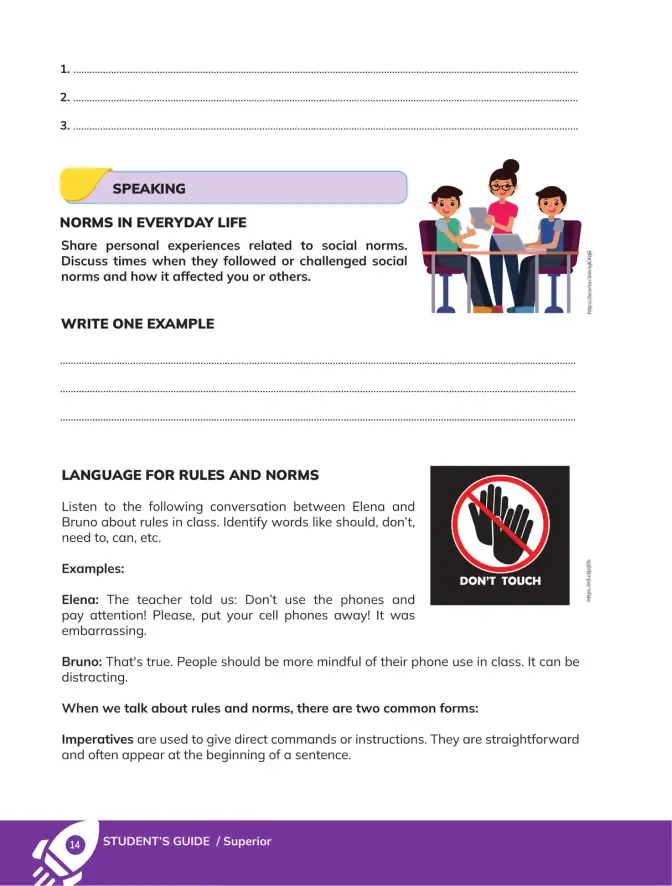
Contenido de la página

  1. ...................................................
  2. ...................................................
  3. ...................................................

SPEAKING

NORMS IN EVERYDAY LIFE

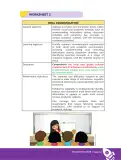
Share personal experiences related to social norms. Discuss times when they followed or challenged social norms and how it affected you or others.

WRITE ONE EXAMPLE

...................................................

LANGUAGE FOR RULES AND NORMS

Listen to the following conversation between Elena and Bruno about rules in class. Identify words like should, don't, need to, can, etc.

Examples:

Elena: The teacher told us: Don't use the phones and pay attention! Please, put your cell phones away! It was embarrassing.

Bruno: That's true. People should be more mindful of their phone use in class. It can be distracting.

When we talk about rules and norms, there are two common forms:

Imperatives are used to give direct commands or instructions. They are straightforward and often appear at the beginning of a sentence.

Ejemplos resueltos

Identifica los marcadores de reglas en el diálogo de Elena: "Don't use the phones and pay attention! Please, put your cell phones away!"

  1. "Don't use" → imperativo negativo (don't + verbo base). 2. "Pay attention" → imperativo positivo. 3. "Please, put ... away" → imperativo con cortesía (please). Todas son órdenes directas sin sujeto explícito.

Identifica los marcadores de reglas en la réplica de Bruno: "People should be more mindful... It can be distracting."

  1. "should" → modal de recomendación. 2. "can" → modal de posibilidad. No hay imperativos: Bruno opina usando modales.

Tabla

Marcador Tipo Ejemplo del texto
don't imperativo negativo Don't use the phones
pay attention imperativo positivo Pay attention!
please + imperativo petición cortés Please, put your cell phones away!
should modal de recomendación People should be more mindful
can modal de posibilidad It can be distracting
need to modal de necesidad (mencionado como ejemplo)

Fórmulas y ecuaciones

Imperativo positivo: (You) + verbo base + complemento → Pay attention!

Imperativo negativo: (You) + don't + verbo base → Don't use the phones!

Glosario (5)

Social norm
Regla no escrita de comportamiento aceptado en una sociedad o grupo.
Imperative
Forma verbal que expresa una orden directa; el sujeto you se omite (ej. Don't touch).
Modal verb
Verbo auxiliar que expresa obligación, posibilidad o recomendación (should, can, must, need to).
Mindful
Atento o consciente de algo; en el texto, 'mindful of their phone use'.
Distracting
Que causa distracción o interrumpe la atención.

Preguntas para practicar

Share a personal experience related to social norms. How did it affect you or others?

Orientativa: "A social norm in my family is having dinner together. One day I challenged it by using my phone at the table; my parents felt ignored. Now I put my phone away because we enjoy talking and it strengthens our relationship."

Why are imperatives common when we talk about rules and norms?

Porque los imperativos dan órdenes o instrucciones claras y directas; al omitir el sujeto 'you' la instrucción es breve y fácil de entender, ideal para señales y reglas de clase.

What is the difference between saying 'Don't touch' and 'You shouldn't touch'?

'Don't touch' es un imperativo: orden directa, fuerte e inmediata. 'You shouldn't touch' usa el modal should: es una recomendación o norma más suave y explicada.

Temas y conceptos clave

Normas sociales en la vida cotidianaLanguage for rules and normsImperativos para dar órdenesModales should/can/need toSocial normsImperativesModals (should, can, need to)Direct commandsPolite requests (please)

Fuentes y referencias

  • https://es.slideshare.net/... (crédito de imagen de estudiantes)
  • https://url.lab.clay... (crédito de imagen de señal)
¿Te fue útil esta página?

Preguntas que la gente también hace

¿Qué son los imperativos en inglés y cómo se forman?
Consulta la solución completa arriba o explora el libro entero para temas relacionados.
¿Qué diferencia hay entre 'should' y 'can' al dar reglas?
Consulta la solución completa arriba o explora el libro entero para temas relacionados.
¿Cómo compartir una experiencia personal sobre normas sociales en inglés?
Consulta la solución completa arriba o explora el libro entero para temas relacionados.
📌 Antes de leer esto
  • • Verbos en base (base form)
  • • Present simple y past simple
  • • Vocabulario básico de normas y reglas
Siguiente tema sugerido
Second common form for rules: modales (should, need to, must) con ejercicios de transformación de imperativos a modales
📝 Transcripción de la página (texto seleccionable) 902 caracteres

7 SPEAKING )

NORMS IN EVERYDAY LIFE

Share personal experiences related to social norms. Discuss times when they followed or challenged social norms and how it affected you or others.

httpsi//acortarlink/ojKXq8

WRITE ONE EXAMPLE

LANGUAGE FOR RULES AND NORMS

Listen to the following conversation between Elena and Bruno about rules in class. Identify words like should, don't, need to, can, etc.

Examples: DON'T TOUCH

https:/In9.cfpijOb

Elena: The teacher told us: Don't use the phones and pay attention! Please, put your cell phones away! It was embarrassing.

Bruno: That's true. People should be more mindful of their phone use in class. It can be distracting.

When we talk about rules and norms, there are two common forms:

Imperatives are used to give direct commands or instructions. They are straightforward and often appear at the beginning of a sentence.

@ STUDENT’S GUIDE / Superior

Ad

Otros libros recomendados

Ver todos →
Ad

Usamos cookies propias y de terceros para personalizar contenido, mostrar publicidad y analizar el tráfico. Las cookies necesarias siempre están activas.