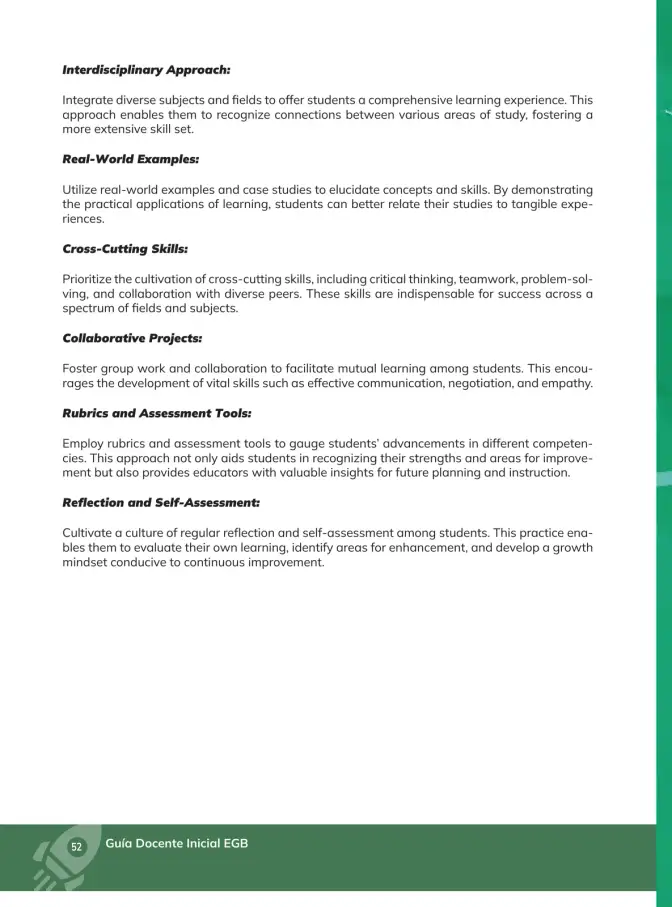
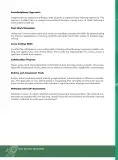
Interdisciplinary Approach:
Integrate diverse subjects and fields to offer students a comprehensive learning experience. This
approach enables them to recognize connections between various areas of study, fostering a
more extensive skill set.
Real-World Examples:
Utilize real-world examples and case studies to elucidate concepts and skills. By demonstrating
the practical applications of learning, students can better relate their studies to tangible expe-
riences.
Cross-Cutting Skills:
Prioritize the cultivation of cross-cutting skills, including critical thinking, teamwork, problem-sol-
ving, and collaboration with diverse peers. These skills are indispensable for success across a
spectrum of fields and subjects.
Collaborative Projects:
Foster group work and collaboration to facilitate mutual learning among students. This encou-
rages the development of vital skills such as effective communication, negotiation, and empathy.
Rubrics and Assessment Tools:
Employ rubrics and assessment tools to gauge students’ advancements in different competen-
cies. This approach not only aids students in recognizing their strengths and areas for improve-
ment but also provides educators with valuable insights for future planning and instruction.
Reflection and Self-Assessment:
Cultivate a culture of regular reflection and self-assessment among students. This practice ena-
bles them to evaluate their own learning, identify areas for enhancement, and develop a growth
mindset conducive to continuous improvement.
- Guia Docente Inicial EGB