Saltar al contenido
MisLibrosTexto
Ad
Ingles 2° · 2024
Libro de Inglés 2 EGB

Ministerio de Educación del Ecuador

25/48

Simple Present y Present Continuous: hábitos vs acciones en el momento

📄 ejercicios ingles 🎓 primaria · 2° EGB Ecuador 🇪🇨 EC 🗣 Español
Página 25
25 de 48
Página 25 de Ingles 2° · 2024
Anterior Página 25 / 48 Siguiente

Respuesta rápida

1.a) like; 1.b) reads; 2.a) is playing; 2.b) are running; 3.a) barks; 3.b) are singing; 4.a) sleep; 4.b) go; 5.a) am drawing; 5.b) are dancing

📚 exercise ingles ⭐ Dificultad 1/5 ⏱ 3 min lectura

Solución — Página 25

Ingles 2° · 2024

1
Ejercicio 1

— Simple Present

Completar con la forma correcta del Present Simple:

1.a) I ______ (like) to eat ice cream.

  • Sujeto "I" (primera persona singular): se usa el verbo en su forma base.
  • Se agrega la terminación -s para tercera persona, pero "I" no la necesita. Respuesta: I like to eat ice cream.

1.b) She ______ (read) a book every night.

  • Sujeto "She" (tercera persona singular) + verbo en presente simple.
  • Se añade la terminación -s al verbo (read + s).
  • La señal temporal "every night" confirma que es un hábito → Present Simple. Respuesta: She reads a book every night.
2
Ejercicio 2

— Present Continuous

Completar con la forma correcta del Present Continuous (verbo + -ing):

2.a) He ______ (play) with his toys right now.

  • Estructura: sujeto + verbo + am/is/are + verbo con -ing.
  • "He" es tercera persona singular → se usa "is".
  • "play" + ing = "playing".
  • La expresión "right now" indica que la acción ocurre en este momento. Respuesta: He is playing with his toys right now.

2.b) They ______ (run) in the park at the moment.

  • "They" es tercera persona plural → se usa "are".
  • "run" tiene terminación CVC, se duplica la "n" antes de -ing → "running".
  • "at the moment" indica acción en curso. Respuesta: They are running in the park at the moment.
3
Ejercicio 3

— Simple Present OR Present Continuous

Elegir el tiempo verbal según el contexto:

3.a) My dog always ______ (bark) loudly.

  • La palabra "always" es una señal típica de hábitos → Present Simple.
  • Sujeto "My dog" (tercera persona singular) → + s al verbo. Respuesta: My dog always barks loudly.

3.b) Look! The birds ______ (sing) in the trees.

  • "Look!" es una señal de que algo está ocurriendo ahora mismo → Present Continuous.
  • "The birds" es tercera persona plural → "are".
  • "sing" + ing = "singing". Respuesta: The birds are singing in the trees.
Ad
4
Ejercicio 4

— Simple Present

4.a) Cats ______ (sleep) a lot during the day.

  • Sujeto "Cats" (tercera persona plural) → verbo en forma base.
  • La oración describe una característica general (no un momento específico) → Present Simple. Respuesta: Cats sleep a lot during the day.

4.b) We ______ (go) to school from Monday to Friday.

  • Sujeto "We" (primera persona plural) → forma base del verbo.
  • "from Monday to Friday" indica una rutina → Present Simple. Respuesta: We go to school from Monday to Friday.
5
Ejercicio 5

— Present Continuous

5.a) I ______ (draw) a picture for my mom today.

  • Estructura: sujeto + am/is/are + verbo-ing.
  • "I" → se usa "am".
  • "draw" + ing = "drawing".
  • "today" indica una acción en curso durante este día → Present Continuous. Respuesta: I am drawing a picture for my mom today.

5.b) The kids ______ (dance) in the living room now.

  • "The kids" es tercera persona plural → "are".
  • "dance" + ing = "dancing" (la "e" final se mantiene antes de -ing).
  • "now" indica acción en este momento → Present Continuous. Respuesta: The kids are dancing in the living room now.

Contenido de la página

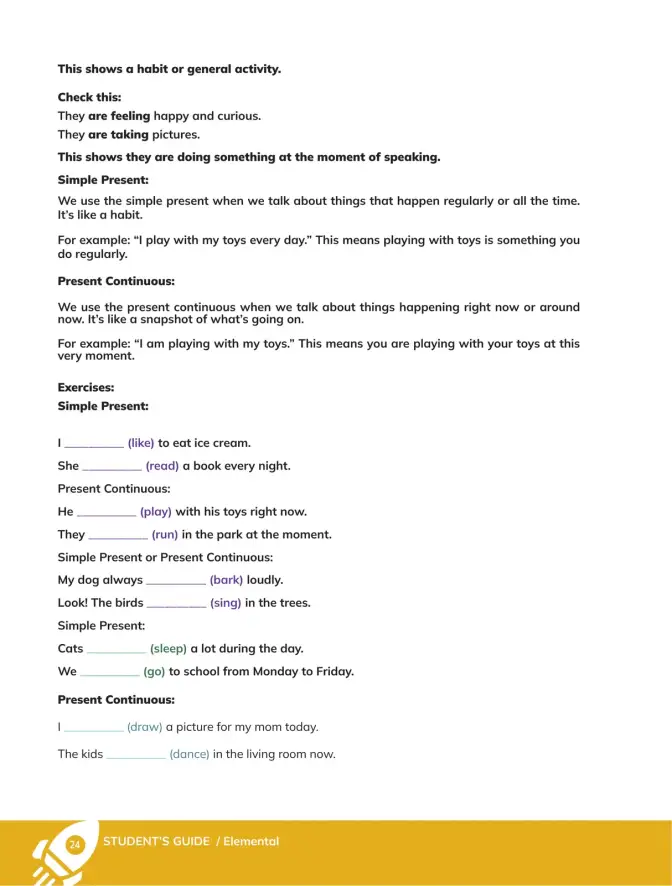
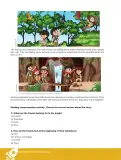
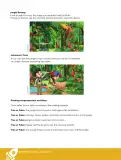
This shows a habit or general activity.

Check this:

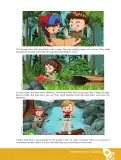
  • They are feeling happy and curious.
  • They are taking pictures.

This shows they are doing something at the moment of speaking.

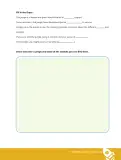
Simple Present:

We use the simple present when we talk about things that happen regularly or all the time. It's like a habit.

For example: "I play with my toys every day." This means playing with toys is something you do regularly.

Present Continuous:

We use the present continuous when we talk about things happening right now or around now. It's like a snapshot of what's going on.

For example: "I am playing with my toys." This means you are playing with your toys at this very moment.

Exercises:

Simple Present:

  • I ______ (like) to eat ice cream.
  • She ______ (read) a book every night.

Present Continuous:

  • He ______ (play) with his toys right now.
  • They ______ (run) in the park at the moment.

Simple Present or Present Continuous:

  • My dog always ______ (bark) loudly.
  • Look! The birds ______ (sing) in the trees.

Simple Present:

  • Cats ______ (sleep) a lot during the day.
  • We ______ (go) to school from Monday to Friday.

Present Continuous:

  • I ______ (draw) a picture for my mom today.
  • The kids ______ (dance) in the living room now.

Ejemplos resueltos

I ______ (play) with my toys every day.

  1. Señal temporal: "every day" indica un hábito → Present Simple.
  2. Sujeto: "I" (primera persona singular) → forma base del verbo, sin terminación -s.
  3. Resultado: I play with my toys every day.

She ______ (read) a book every night.

  1. Señal temporal: "every night" indica un hábito → Present Simple.
  2. Sujeto: "She" (tercera persona singular) → se agrega -s al verbo.
  3. Resultado: She reads a book every night.

Tabla

Tiempo verbal Uso Estructura Ejemplo
Simple Present Hábitos y actividades generales Verbo base (+ s en 3ra persona singular) She reads a book every night.
Present Continuous Acciones que ocurren ahora mismo am/is/are + verbo-ing He is playing with his toys right now.
Señal temporal Tiempo verbal sugerido Ejemplo
every day / every night / always Simple Present Cats sleep a lot during the day.
now / right now / at the moment / today Present Continuous The kids are dancing in the living room now.

Diagrama

flowchart TD
    A[¿La oración describe un hábito o algo que pasa ahora?] -->|Hábito / rutina| B[Simple Present]
    A -->|Acción en este momento| C[Present Continuous]
    B --> D[Verbo + s en 3ra persona: she reads / my dog barks]
    C --> E[am/is/are + verbo-ing: he is playing / they are running]
    D --> F[Señales: every day, always, at night]
    E --> G[Señales: now, right now, at the moment, today]

Fórmulas y ecuaciones

Simple Present 3ra persona: verbo + s (play → plays, read → reads, bark → barks)

Present Continuous: am/is/are + verbo-ing (he is playing, they are running, I am drawing)

\text{Simple Present (3ra persona singular)} = \text{verbo} + s

\text{Present Continuous} = \text{sujeto} + \text{am/is/are} + \text{verbo} + ing

\text{run} \rightarrow \text{running} \quad (\text{CVC: se duplica la consonante final})

\text{sing} \rightarrow \text{singing}

\text{dance} \rightarrow \text{dancing}

\text{play} \rightarrow \text{playing}

\text{draw} \rightarrow \text{drawing}

\text{bark} \rightarrow \text{barks} \quad (\text{Simple Present, 3ra persona singular})

\text{read} \rightarrow \text{reads} \quad (\text{Simple Present, 3ra persona singular})

Glosario (5)

Simple Present
Tiempo verbal usado para hablar de hábitos o cosas que ocurren regularmente o todo el tiempo.
Present Continuous
Tiempo verbal usado para hablar de acciones que están ocurriendo ahora mismo o en este momento.
Habit
Acción que una persona hace regularmente, como un hábito o rutina.
Snapshot
Foto o instantánea; en gramática, describe algo que ocurre en un momento específico.
Regular activity
Actividad que se repite con frecuencia, como ir a la escuela de lunes a viernes.

Preguntas para practicar

¿Cómo diferencias el Present Simple del Present Continuous en inglés? Da un ejemplo de cada uno.

El Present Simple se usa para hablar de hábitos o actividades que ocurren regularmente, como "I play with my toys every day". El Present Continuous se usa para acciones que están ocurriendo ahora mismo, como "I am playing with my toys". La diferencia principal es el tiempo: hábito vs. momento actual.

¿Qué palabras clave te ayudan a decidir si una oración es Simple Present o Present Continuous?

Para el Present Simple: every day, always, usually, from Monday to Friday (señalan hábitos). Para el Present Continuous: now, right now, at the moment, today (señalan que algo está ocurriendo ahora).

Temas y conceptos clave

Simple Present (hábitos y actividades generales)Present Continuous (acciones que ocurren ahora mismo)Señales temporales: every day, always, right now, now, at the moment, todayTerminación -s en tercera persona del Simple PresentTerminación -ing en el Present ContinuousEstructura am/is/are + verbo-ingPresent Simple: se usa para hábitos y cosas que ocurren regularmentePresent Continuous: se usa para acciones que están ocurriendo en el momento de hablarEstructura del Present Continuous: sujeto + am/is/are + verbo + -ingForma del Present Simple en tercera persona singular: verbo + sPalabras clave que señalan el tiempo verbal correcto
¿Te fue útil esta página?

Preguntas que la gente también hace

¿Cuándo se usa el Present Simple y cuándo el Present Continuous?
Consulta la solución completa arriba o explora el libro entero para temas relacionados.
¿Cómo se forma el Present Continuous con verbos como run o sing?
Consulta la solución completa arriba o explora el libro entero para temas relacionados.
¿Por qué se agrega -s al verbo en tercera persona del Simple Present?
Consulta la solución completa arriba o explora el libro entero para temas relacionados.
📌 Antes de leer esto
  • • Conocer los verbos básicos en inglés (like, read, play, run, sing, dance, go, sleep, draw, bark, bark)
  • • Reconocer los pronombres personales: I, he, she, they, we
  • • Entender el concepto de sujeto y verbo en una oración
Siguiente tema sugerido
Ejercicios de oraciones completas usando ambos tiempos verbales en contexto, o actividades de conversación para practicar Present Simple vs Present Continuous.
📝 Transcripción de la página (texto seleccionable) 1194 caracteres

This shows a habit or general activity.

Check this: They are feeling happy and curious. They are taking pictures.

This shows they are doing something at the moment of speaking. Simple Present:

We use the simple present when we talk about things that happen regularly or all the time. It’s like a habit.

For example: “I play with my toys every day.” This means playing with toys is something you do regularly.

Present Continuous:

We use the present continuous when we talk about things happening right now or around now. It's like a snapshot of what's going on.

For example: “Il am playing with my toys.” This means you are playing with your toys at this very moment.

Exercises: Simple Present:

I (like) to eat ice cream.

She_ (read) a book every night. Present Continuous:

He_____ (play) with his toys right now. They (run) in the park at the moment.

Simple Present or Present Continuous:

My dog always__ (bark) loudly.

Look! The birds ________ (sing) in the trees.

Simple Present:

Cats________ (sleep) a lot during the day. We__________ (go) to school from Monday to Friday.

Present Continuous:

Poo (draw) a picture for my mom today.

The kids (dance) in the living room now.

Ad

Otros libros recomendados

Ver todos →
Ad

Usamos cookies propias y de terceros para personalizar contenido, mostrar publicidad y analizar el tráfico. Las cookies necesarias siempre están activas.