
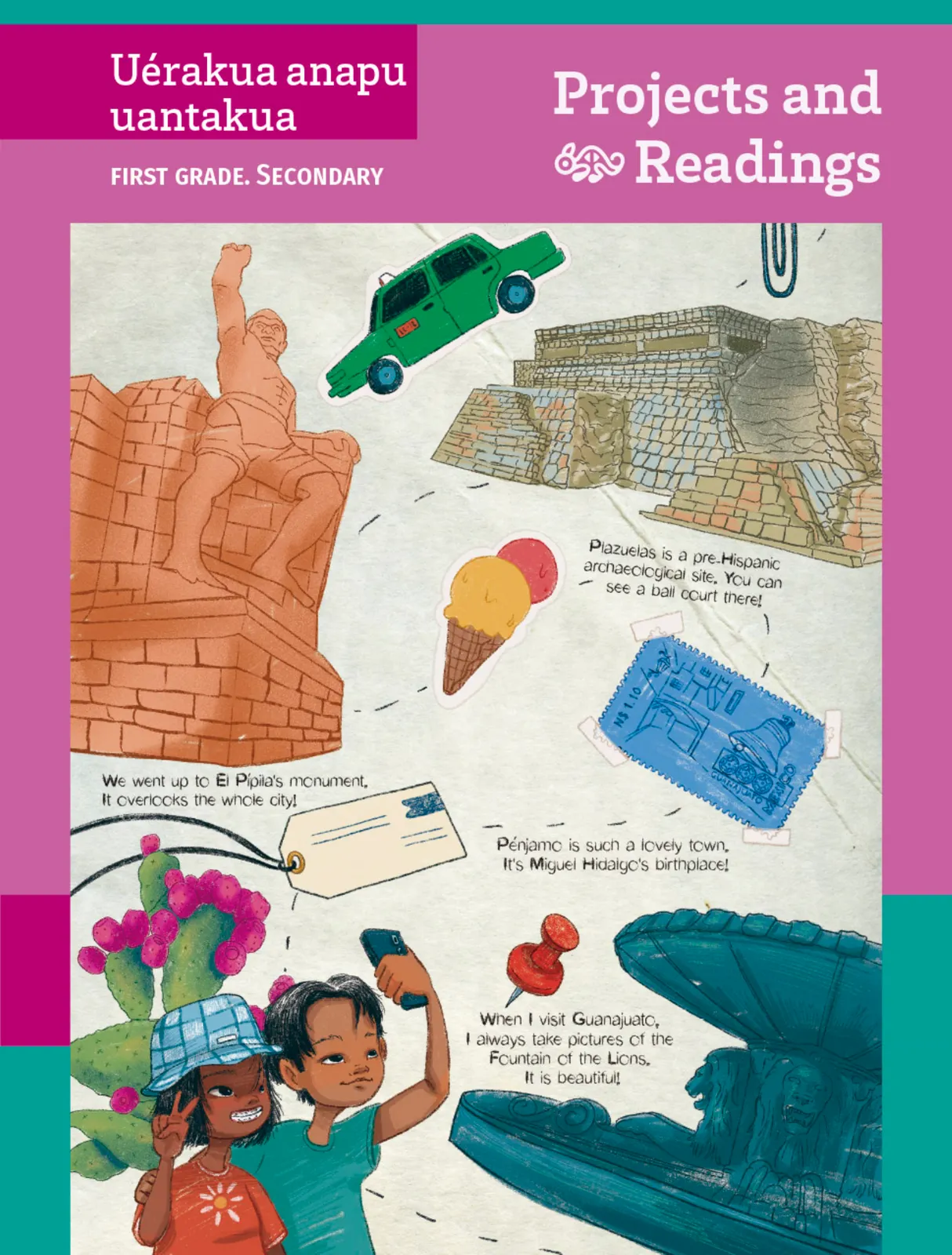
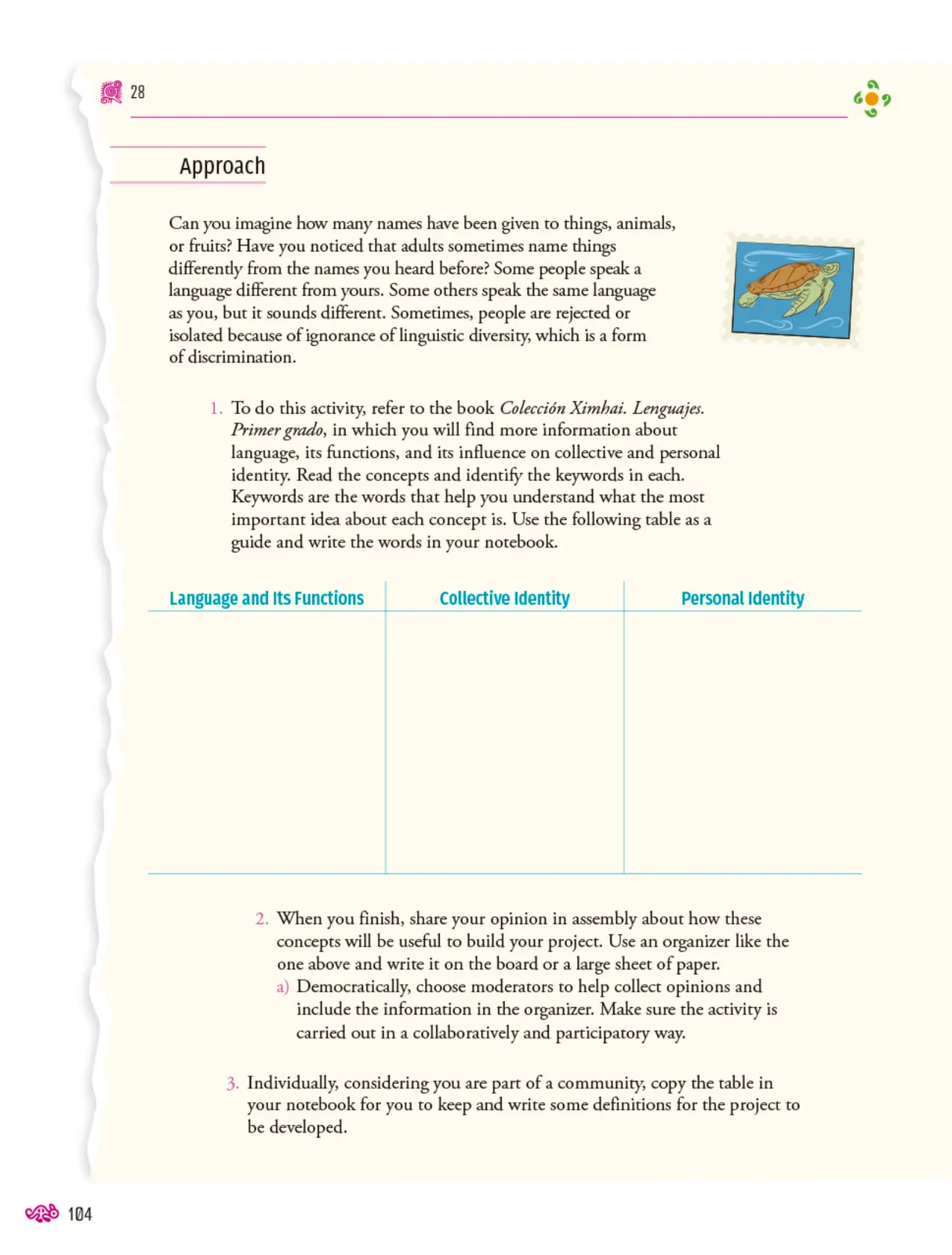
Página — Uerakua Anapu Uantakua Projects And Readings 1° Secundaria (pág. 104)
Solución no disponible aún
Esta página está en proceso de revisión.
Pídela y la resolveremos antes. Sin registro.
📝 Transcripción de la página (texto seleccionable) 2216 caracteres
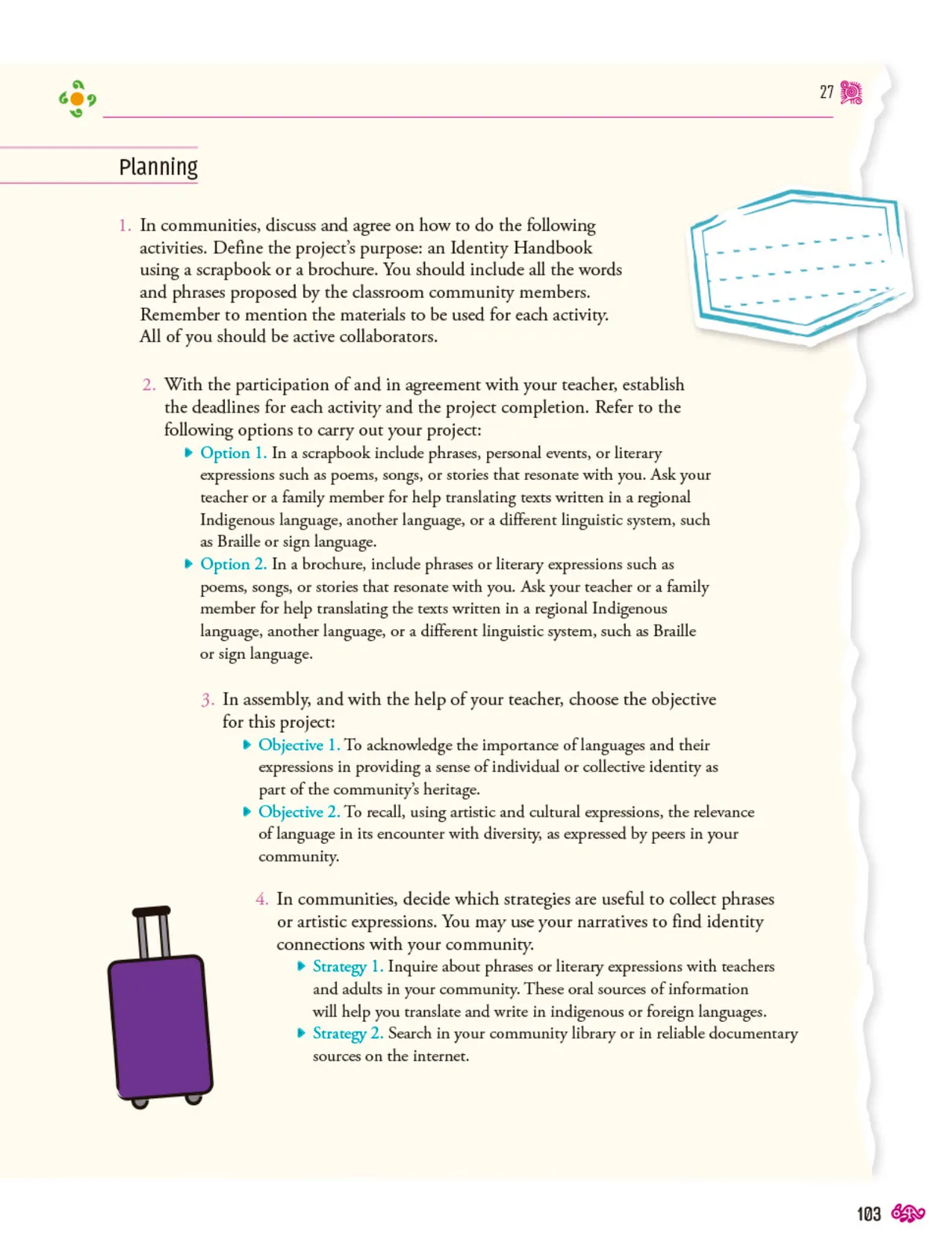
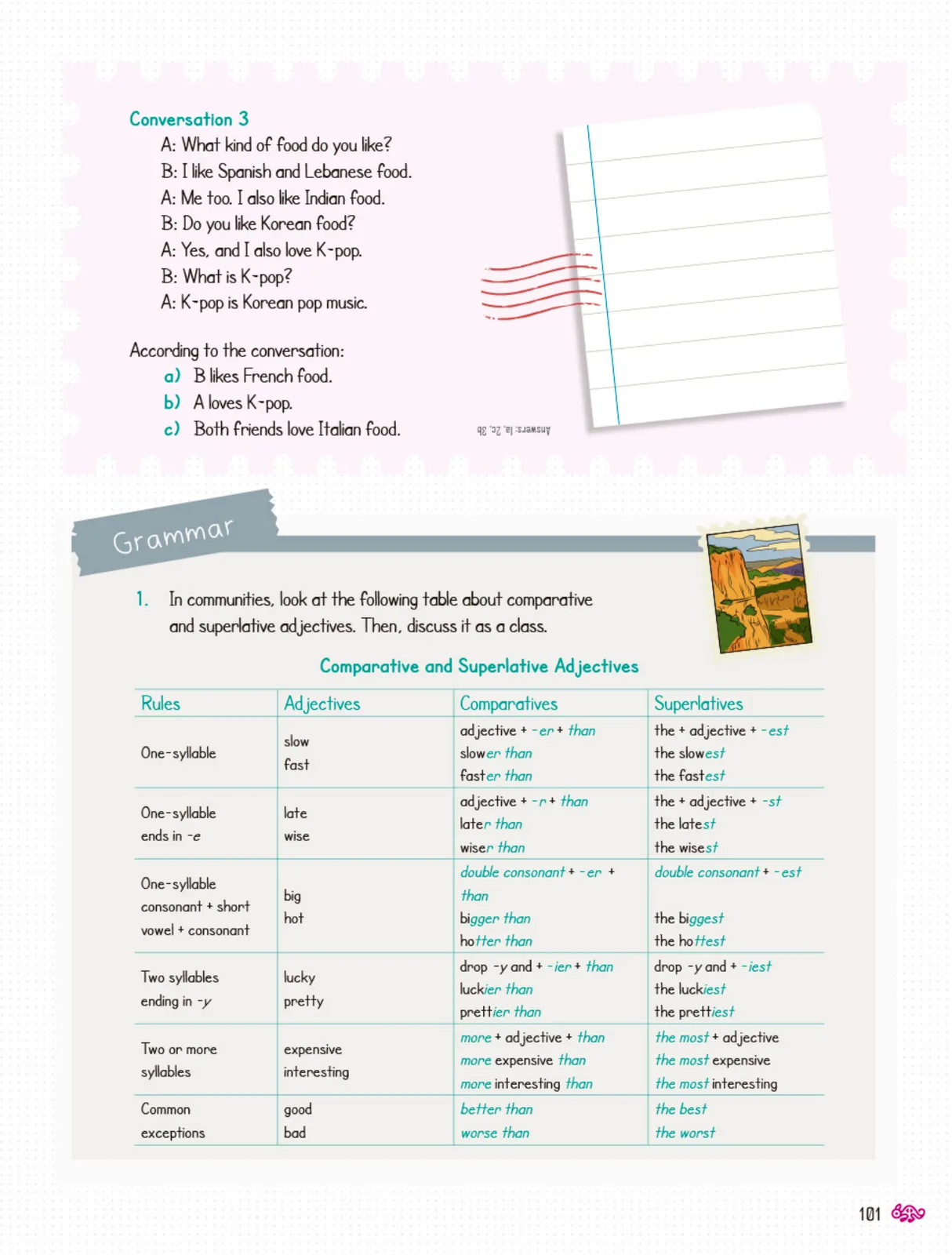
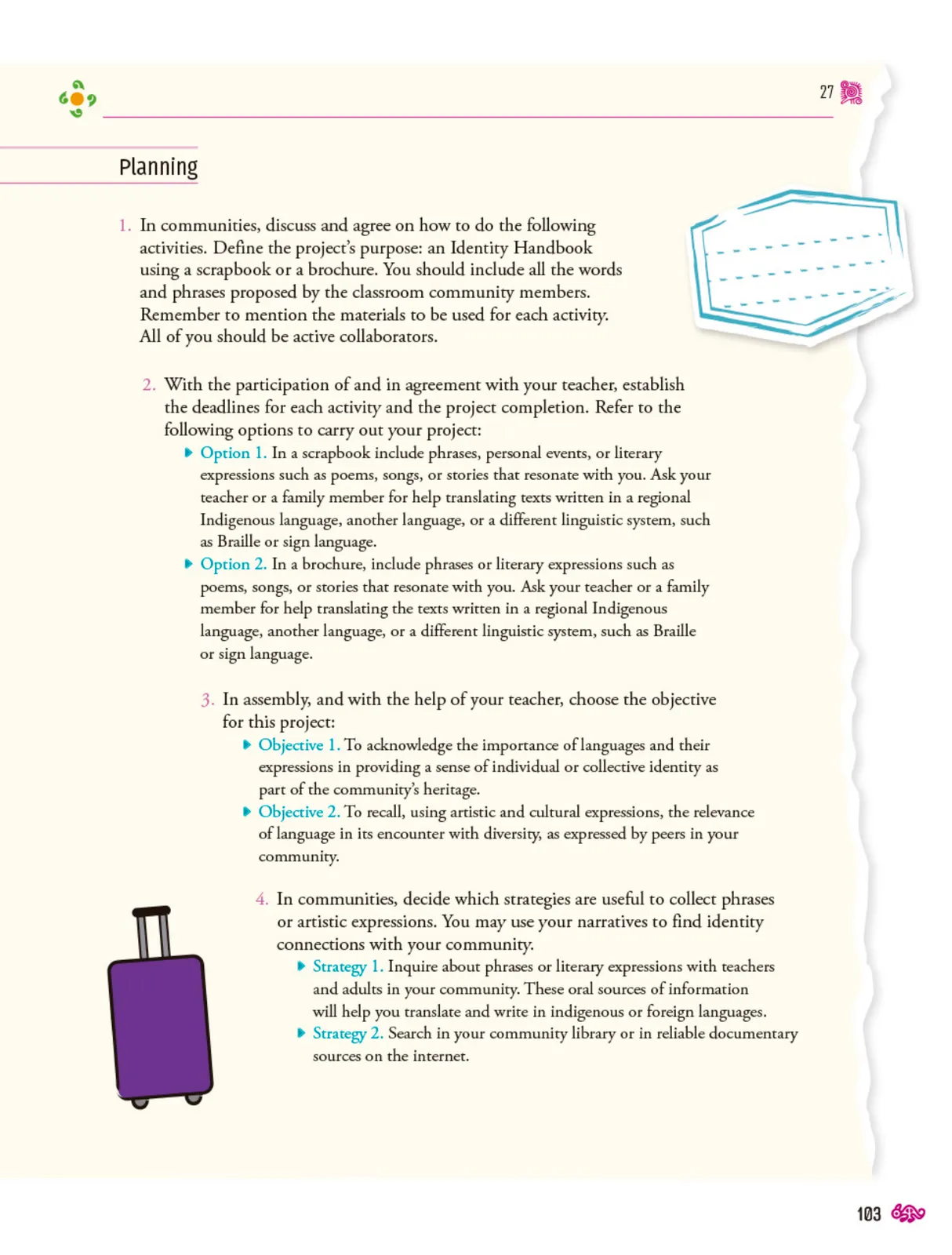
Planning
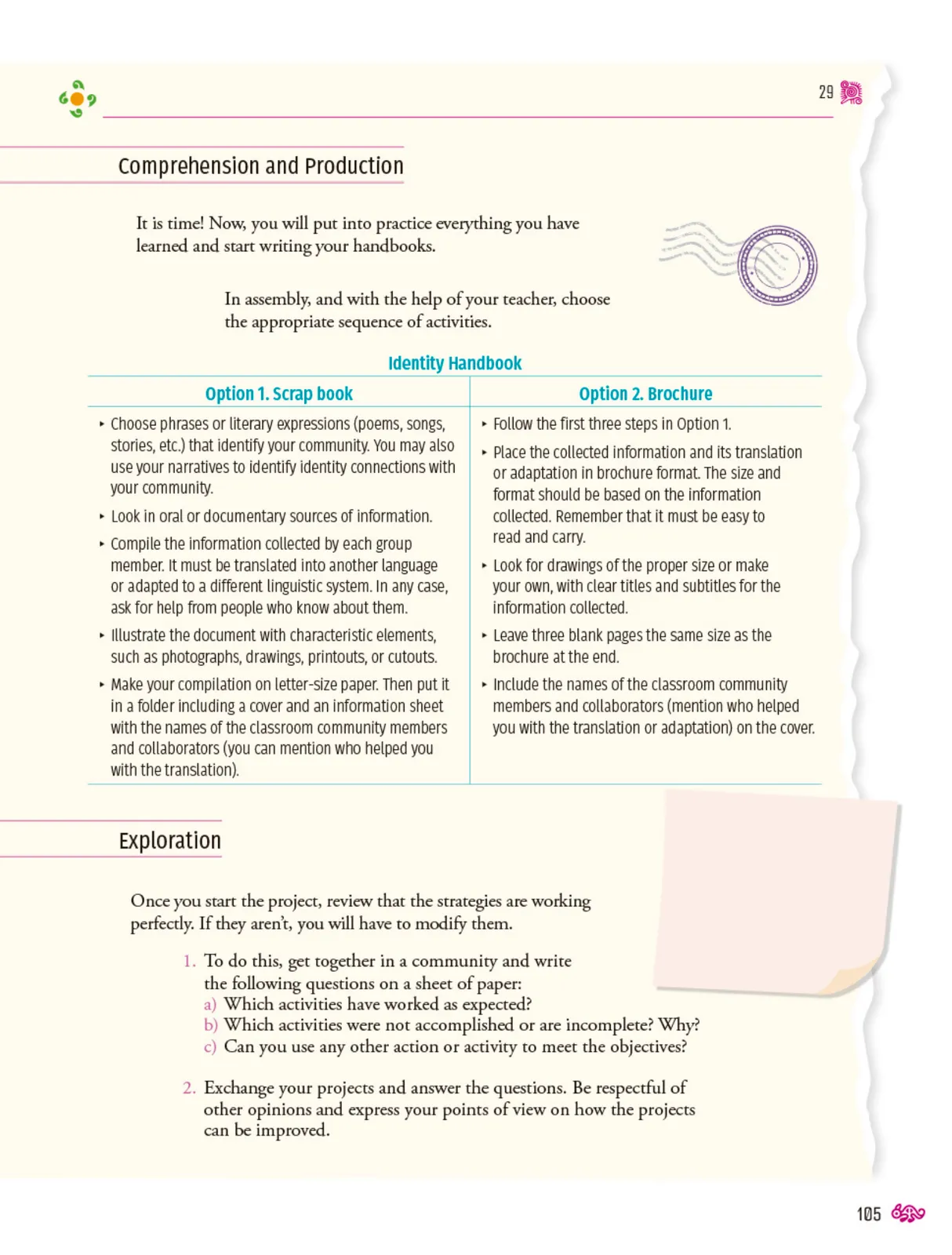
In communities, discuss and agree on how to do the following activities. Define the project's purpose: an Identity Handbook using a scrapbook or a brochure. You should include all the words and phrases proposed by the classroom community members.Remember to mention the materials to be used for each activity.All of you should be active collaborators.
With the participation of and in agreement with your teacher, establish the deadlines for each activity and the project completion. Refer to the following options to carry out your project:
Option 1. In a scrapbook include phrases, personal events, or literary expressions such as poems, songs, or stories that resonate with you. Ask your teacher or a family member for help translating texts written in a regional Indigenous language, another language, or a different linguistic system, such as Braille or sign language.
Option 2. In a brochure, include phrases or literary expressions such as poems, songs, or stories that resonate with you. Ask your teacher or a family member for help translating the texts written in a regional Indigenous language, another language, or a different linguistic system, such as Braille or sign language.
- In assembly, and with the help of your teacher, choose the objective for this project:
Objective 1. To acknowledge the importance of languages and their expressions in providing a sense of individual or collective identity as part of the community's heritage.
Objective 2. To recall, using artistic and cultural expressions, the relevance of language in its encounter with diversity, as expressed by peers in your community.
- In communities, decide which strategies are useful to collect phrases or artistic expressions. You may use your narratives to find identity connections with your community.
Strategy 1. Inquire about phrases or literary expressions with teachers and adults in your community. These oral sources of information will help you translate and write in indigenous or foreign languages.
Strategy 2. Search in your community library or in reliable documentary sources on the internet.
27


103
Otros libros recomendados
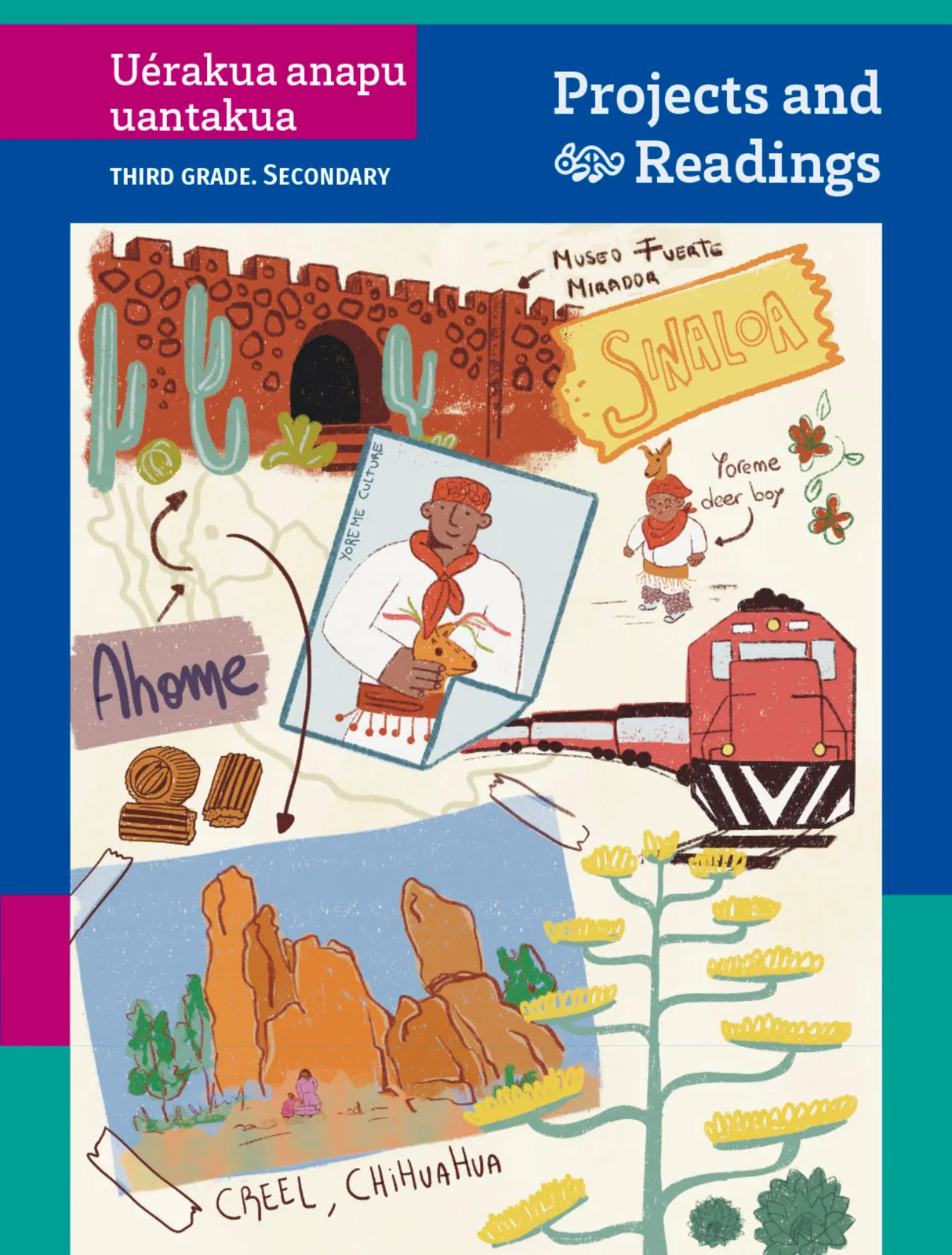
Uérakua anapu uantakua. Projects and Readings. Libro de Educación Secundaria Grado 3° Ciclo Escolar 2025 - 2026
SEP/CONALITEG
187 págs.
Uérakua anapu uantakua. Projects and Readings. Libro de Educación Secundaria Grado 2° Ciclo Escolar 2025 - 2026
SEP/CONALITEG
171 págs.
Colección Ximhai. De lo humano y lo comunitario. Libro de Educación Secundaria Grado 1° Ciclo Escolar 2025 - 2026
SEP/CONALITEG
259 págs.
Colección Ximhai. Nuestro libro de proyectos. Libro de Educación Secundaria Grado 1° Ciclo Escolar 2025 - 2026
SEP/CONALITEG
299 págs.
Un libro sin recetas para la maestra y el maestro. Fase 6. Libro de Educación Secundaria Grado 1°, 2°, 3° Ciclo Escolar 2025 - 2026
SEP/CONALITEG
202 págs.
Colección Ximhai. Saberes y pensamiento científico. Libro de Educación Secundaria Grado 1° Ciclo Escolar 2025 - 2026
SEP/CONALITEG
339 págs.
Colección Ximhai. Múltiples lenguajes. Libro de Educación Secundaria Grado 1° Ciclo Escolar 2025 - 2026
SEP/CONALITEG
163 págs.
Ciencias Naturales 9° · Secundaria Activa
MinEducación
318 págs.