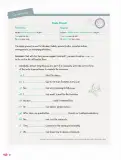
















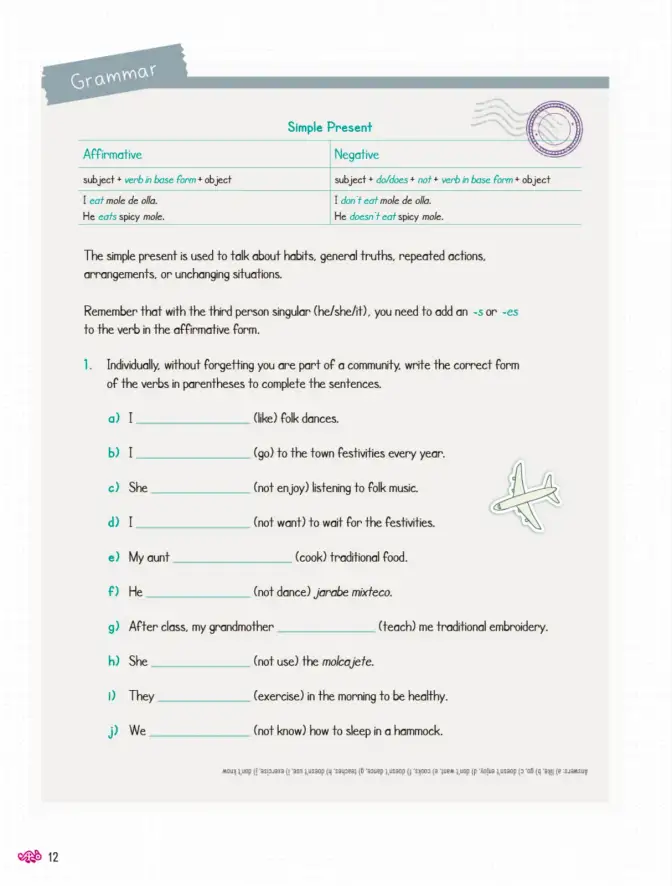
Individually, write the correct form of the verbs in parentheses to complete the sentences.
I ______ (like) folk dances.
- Sujeto I: no lleva -s.
- Verbo en forma base: like.
I like folk dances.
I ______ (go) to the town festivities every year.
- Sujeto I: forma base.
- go se mantiene igual.
I go to the town festivities every year.
She ______ (not enjoy) listening to folk music.
- Tercera persona singular she: auxiliar does.
- Negativa: does not / doesn't + verbo base enjoy.
She doesn't enjoy listening to folk music.
I ______ (not want) to wait for the festivities.
- Sujeto I: auxiliar do.
- Negativa: do not / don't + verbo base want.
I don't want to wait for the festivities.
My aunt ______ (cook) traditional food.
- My aunt = she (tercera persona singular).
- Se agrega -s al verbo: cook → cooks.
My aunt cooks traditional food.
He ______ (not dance) jarabe mixteco.
- Tercera persona singular he: auxiliar does.
- Negativa: doesn't + verbo base dance.
He doesn't dance jarabe mixteco.
After class, my grandmother ______ (teach) me traditional embroidery.
- My grandmother = she (tercera persona singular).
- teach termina en -ch: se agrega -es → teaches.
After class, my grandmother teaches me traditional embroidery.
She ______ (not use) the molcajete.
- Tercera persona singular she: auxiliar does.
- Negativa: doesn't + verbo base use.
She doesn't use the molcajete.
They ______ (exercise) in the morning to be healthy.
- Sujeto they: forma base.
- exercise se mantiene igual.
They exercise in the morning to be healthy.
We ______ (not know) how to sleep in a hammock.
- Sujeto we: auxiliar do.
- Negativa: don't + verbo base know.
We don't know how to sleep in a hammock.