














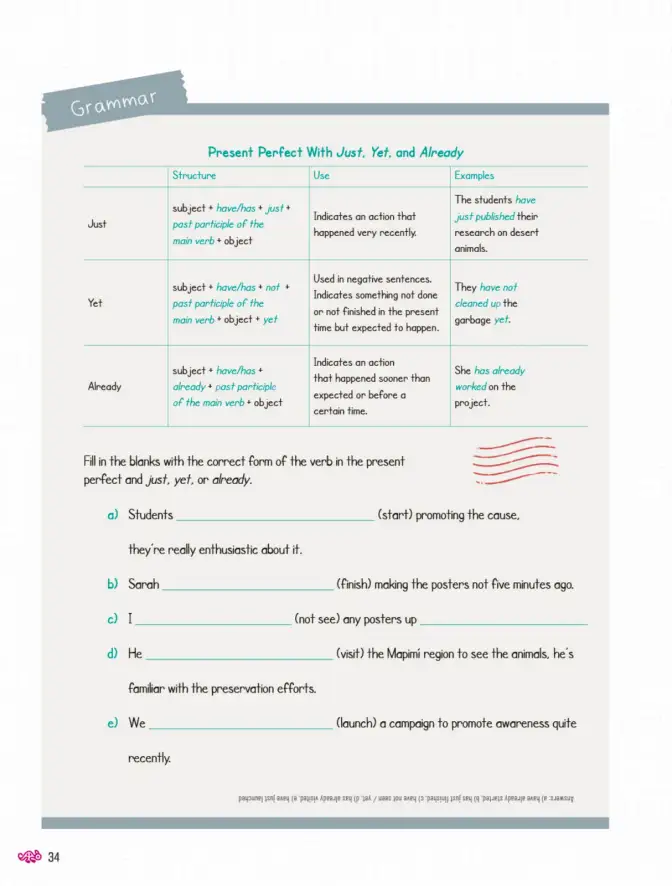
Ejercicio 1
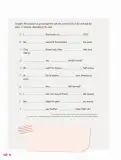
Fill in the blanks with the correct form of the verb in the present perfect and just, yet, or already.
Parte 1.a
Students ___ (start) promoting the cause, they're really enthusiastic about it.
- El sujeto Students es plural, así que el auxiliar es have.
- El verbo start es regular: participio started.
- La oración expresa entusiasmo por algo recién iniciado, por lo que corresponde already (acción que ocurrió antes de lo esperado).
- Estructura: subject + have + already + past participle + object.
Respuesta
Students have already started promoting the cause.
Parte 1.b
Sarah ___ (finish) making the posters not five minutes ago.
- Sarah es tercera persona singular: auxiliar has.
- Finish es regular: participio finished.
- La expresión not five minutes ago indica que la acción acaba de ocurrir, por lo que se usa just.
- Estructura: subject + has + just + past participle + object.
Respuesta
Sarah has just finished making the posters.
Parte 1.c
I ___ (not see) any posters up ___.
- El sujeto I toma el auxiliar have.
- See es irregular: participio seen.
- Es oración negativa y se espera que algo ocurra, por lo que se usa yet al final.
- Estructura: subject + have + not + past participle + object + yet.
Respuesta
I have not seen any posters up yet.
Parte 1.d
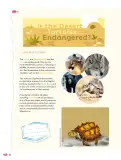
He ___ (visit) the Mapimí region to see the animals, he's familiar with the preservation efforts.
- He es tercera persona singular: auxiliar has.
- Visit es regular: participio visited.
- El contexto indica que ya conoce la zona, es decir, la visitó antes de lo previsto: already.
- Estructura: subject + has + already + past participle + object.
Respuesta
He has already visited the Mapimí region.
Parte 1.e
We ___ (launch) a campaign to promote awareness quite recently.
- El sujeto We toma el auxiliar have.
- Launch es regular: participio launched.
- Quite recently señala una acción muy reciente, por lo que corresponde just.
- Estructura: subject + have + just + past participle + object.
Respuesta
We have just launched a campaign to promote awareness.