

















Grammar Reference: Present Simple Verb to be y Present Simple
Respuesta rápida
Página de referencia gramatical. No contiene ejercicios. Explica el presente simple y el verbo to be con tablas de formas afirmativas, negativas, preguntas y respuestas cortas.
Solución — Página 69
Inglés – Séptimo Básico | Student’s Book MINEDUC – Descargar PDF · 2024
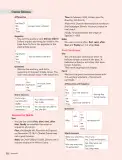
Present Simple Verb to be
Uso: se emplea para dar información sobre personas o cosas en presente.
Forma (afirmativo y negativo):
| Sujeto | Afirmativo | Negativo |
|---|---|---|
| I | am (I'm) | am not (I'm not) |
| He / She / It | is (He's/She's/It's) | is not (isn't) |
| We / You / They | are (We're/You're/They're) | are not (aren't) |
Ejemplo: I am at school. / He is not at school.
Preguntas: se invierte el orden sujeto-verbo. Where is the boy? / Why is free time important?
Respuestas cortas:
| Pregunta | Respuesta afirmativa | Respuesta negativa |
|---|---|---|
| Are you a student? | Yes, I am. | No, I am not (I'm not). |
| Is he a teacher? | Yes, he is. | No, he is not (isn't). |
| Are they students? | Yes, they are. | No, they are not (aren't). |
Present Simple
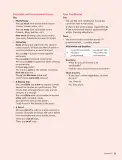
Uso: indica acciones habituales, situaciones permanentes y eventos programados.
- Hábito: I always do my homework.
- Situación permanente: I play video games on weekends.
- Evento programado: The train leaves at 6 o'clock.
Forma: solo cambia en tercera persona singular (he/she/it), agregando -s o -es.
| Sujeto | Afirmativo | Negativo |
|---|---|---|
| I / We / You / They | play tennis. | don't play tennis. |
| He / She / It | plays tennis. | doesn't play tennis. |
Preguntas: se usa el auxiliar do/does antes del sujeto.
| Where | do | I / we / you / they | hang out? |
|---|---|---|---|
| Where | does | he / she / it | hang out? |
Respuestas cortas:
| Pregunta | Afirmativa | Negativa |
|---|---|---|
| Do you study on the weekends? | Yes, I do. | No, I do not (don't). |
| Does she study on the weekends? | Yes, she does. | No, she does not (doesn't). |
Palabras interrogativas: what, where, which, how, who, when, why, whose.
Ejemplos: What do you do to rest and relax? / When do you rest and relax? / Why do you think free time is important? / How often do you practice sports?
Las preguntas sin palabra interrogativa se responden con yes o no.
Respuesta orientativa: Esta página es una referencia gramatical; no contiene ejercicios para resolver, sino explicaciones y tablas de estructura del presente simple y del verbo to be.
Contenido de la página
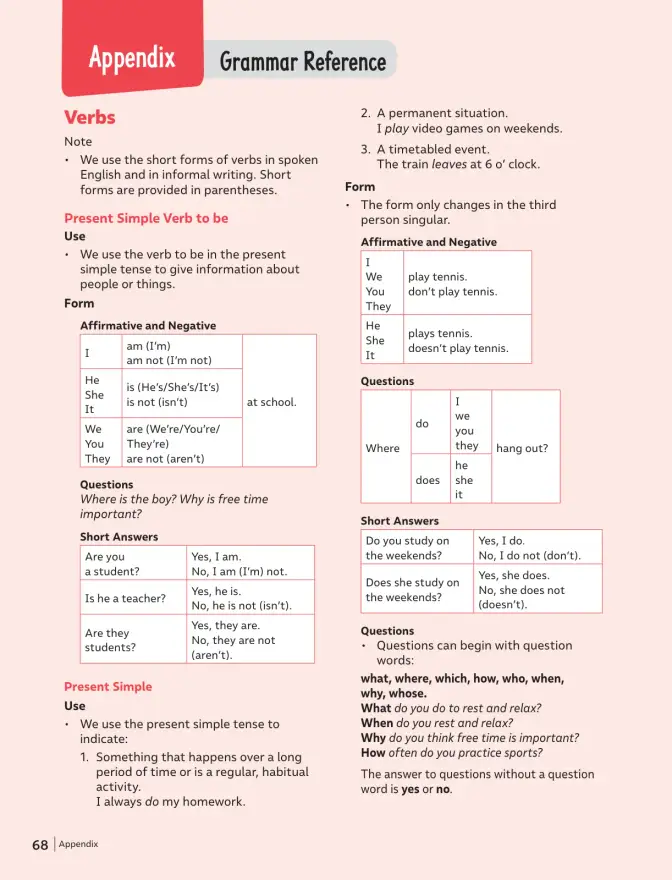
Appendix
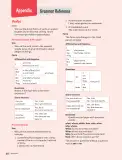
Grammar Reference
Verbs
Note
We use the short forms of verbs in spoken English and in informal writing. Short forms are provided in parentheses.
Present Simple Verb to be
Use
We use the verb to be in the present simple tense to give information about people or things.
Form
Affirmative and Negative
| Subject | Affirmative | Negative | Complement |
|---|---|---|---|
| I | am (I'm) | am not (I'm not) | at school. |
| He / She / It | is (He's/She's/It's) | is not (isn't) | at school. |
| We / You / They | are (We're/You're/They're) | are not (aren't) | at school. |
Questions
Where is the boy? Why is free time important?
Short Answers
| Question | Affirmative | Negative |
|---|---|---|
| Are you a student? | Yes, I am. | No, I am (I'm) not. |
| Is he a teacher? | Yes, he is. | No, he is not (isn't). |
| Are they students? | Yes, they are. | No, they are not (aren't). |
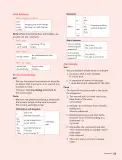
Present Simple
Use
We use the present simple tense to indicate:
- Something that happens over a long period of time or is a regular, habitual activity. I always do my homework.
- A permanent situation. I play video games on weekends.
- A timetabled event. The train leaves at 6 o'clock.
Form
The form only changes in the third person singular.
Affirmative and Negative
| Subject | Affirmative | Negative |
|---|---|---|
| I / We / You / They | play tennis. | don't play tennis. |
| He / She / It | plays tennis. | doesn't play tennis. |
Questions
| Where | do | I / we / you / they | hang out? |
|---|---|---|---|
| Where | does | he / she / it | hang out? |
Short Answers
| Question | Affirmative | Negative |
|---|---|---|
| Do you study on the weekends? | Yes, I do. | No, I do not (don't). |
| Does she study on the weekends? | Yes, she does. | No, she does not (doesn't). |
Questions
Questions can begin with question words: what, where, which, how, who, when, why, whose.
- What do you do to rest and relax?
- When do you rest and relax?
- Why do you think free time is important?
- How often do you practice sports?
The answer to questions without a question word is yes or no.
68 | Appendix
Ejemplos resueltos
Completa: She ___ (not / play) tennis on Mondays.
En tercera persona singular el negativo se forma con doesn't + verbo base: She doesn't play tennis on Mondays.
Convierte en pregunta: They hang out in the park.
Se usa el auxiliar do antes del sujeto: Where do they hang out?
Tablas (3)
| Subject | Affirmative | Negative |
|---|---|---|
| I | am (I'm) | am not (I'm not) |
| He / She / It | is (He's/She's/It's) | is not (isn't) |
| We / You / They | are (We're/You're/They're) | are not (aren't) |
| Subject | Affirmative | Negative |
|---|---|---|
| I / We / You / They | play tennis. | don't play tennis. |
| He / She / It | plays tennis. | doesn't play tennis. |
| Where | do | I / we / you / they | hang out? |
|---|---|---|---|
| Where | does | he / she / it | hang out? |
Glosario (5)
- short forms
- formas cortas o contracciones de los verbos, usadas en inglés hablado y escritura informal.
- present simple
- tiempo verbal que expresa hábitos, situaciones permanentes y eventos programados.
- third person singular
- tercera persona del singular (he, she, it), única forma que cambia en presente simple.
- timetabled event
- evento programado o con horario fijo, como la salida de un tren.
- short answers
- respuestas breves que confirman o niegan sin repetir toda la oración.
Preguntas para practicar
Why do you think free time is important?
Free time is important because it helps us rest, relax and do activities we enjoy. It also allows us to spend time with family and friends and to practice sports or hobbies. Having free time contributes to our physical and mental well-being.
What do you do to rest and relax?
I usually listen to music, read a book or play video games to rest and relax. On weekends I also go for a walk or practice sports with my friends. These activities help me feel calm and happy.
Temas y conceptos clave
Preguntas que la gente también hace
¿Cómo se forma el presente simple en inglés?
¿Cuándo se usa el verbo to be en presente simple?
¿Cómo se hacen preguntas y respuestas cortas en presente simple?
- • Reconocer pronombres personales en inglés
- • Identificar sujeto y verbo en una oración
- • Conocer vocabulario básico de rutinas
📝 Transcripción de la página (texto seleccionable) 2313 caracteres
Grammar Reference
Appendix
Verbs
Note
We use the short forms of verbs in spoken English and in informal writing. Short forms are provided in parentheses.
Present Simple Verb to be
Use
• We use the verb to be in the present simple tense to give information about people or things.
Form
Questions
Where is the boy? Why is free time important?
Present Simple
Use
, We use the present simple tense to indicate:
- Something that happens over a long period of time or is a regular, habitual activity.
I always do my homework.
- A permanent situation.
I play video games on weekends.
- A timetabled event.
The train leaves at 6 o' clock.
Form
The form only changes in the third person singular.
Questions
· Questions can begin with question words:
what, where, which, how, who, when,why, whose.
What do you do to rest and relax?
When do you rest and relax?
Why do you think free time is important?How often do you practice sports?
The answer to questions without a question word is yes or no.
Affirmative and Negative
| I | am (I'm) am not (I'm not) | at school. |
| He She It | is (He's/She's/It's) is not (isn't) | |
| We You They | are (We're/You're/ They're) are not (aren't) |
Short Answers
| Are you a student? | Yes, I am. No, I am (I'm) not. |
| Is he a teacher? | Yes, he is. No, he is not (isn't). |
| Are they students? | Yes, they are. No, they are not (aren't). |
Affirmative and Negative
| I We You They | play tennis. don't play tennis. |
| He She It | plays tennis. doesn't play tennis. |
Questions
| Where | do | I we you they | hang out? |
| does | he she it |
Short Answers
| Do you study on the weekends? | Yes, I do. No, I do not (don't). |
| Does she study on the weekends? | Yes, she does. No, she does not (doesn't). |
68
Appendix
Otros libros recomendados

Matemática – Séptimo Básico | Texto del Estudiante MINEDUC – Descargar PDF · 2024
MINEDUC
146 págs.
Inglés – Séptimo Básico | Student’s Book MINEDUC – Descargar PDF · 2024
MINEDUC
162 págs.
Inglés – Séptimo Básico | Student’s Book MINEDUC – Descargar PDF · 2024
MINEDUC
162 págs.

Inglés – Séptimo Básico | Student’s Book MINEDUC – Descargar PDF · 2024
MINEDUC
136 págs.

Ciencias Naturales – Séptimo Básico | Texto del Estudiante MINEDUC – Descargar PDF · 2024
MINEDUC
178 págs.

Ciencias Naturales – Séptimo Básico | Texto del Estudiante MINEDUC – Descargar PDF · 2024
MINEDUC
162 págs.

Ciencias Naturales – Séptimo Básico | Texto del Estudiante MINEDUC – Descargar PDF · 2024
MINEDUC
178 págs.
Historia, Geografía y Ciencias Sociales – Séptimo Básico | Texto del Estudiante MINEDUC – Descargar PDF · 2024
MINEDUC
146 págs.