Saltar al contenido
MisLibrosTexto
Ad
Inglés – Octavo Básico | Student’s Book MINEDUC – Descargar PDF · 2024
Libro de Inglés 8

MINEDUC

29/82

Lesson 4: Culture and Heritage - Alaska Natives and Mental Health

📄 ejercicios ingles 🎓 otro · 8° BASICA Chile 🇨🇱 CL 🗣 Español
Página 29
29 de 82
Página 29 de Inglés – Octavo Básico | Student’s Book MINEDUC – Descargar PDF · 2024
Anterior Página 29 / 82 Siguiente

Respuesta rápida

1.a: From ancestors and oral traditions. 1.b: Mental health problems. 1.c: A Yup'ik cultural toolkit. 1.d: By connecting youth with culture. 2: A-3, B-1, C-4, D-2. 3: Ability to recover from difficulties. 4: Open answer.

📚 exercise ingles ⭐⭐ Dificultad 2/5 ⏱ 15 min lectura

Solución — Página 29

Inglés – Octavo Básico | Student’s Book MINEDUC – Descargar PDF · 2024

1
Ejercicio 1

Listen to the recording and answer the questions.

a
Parte 1.a

How do Alaskan people get their knowledge?

  1. El texto indica que los pueblos nativos de Alaska transmiten sus conocimientos a través de las generaciones.
  2. La fuente principal son las tradiciones ancestrales, las historias orales y las prácticas culturales heredadas de sus mayores.
  3. También aprenden de la observación de la naturaleza y de la vida comunitaria en aldeas rurales.
Respuesta

Alaskan people get their knowledge from their ancestors through oral traditions, stories, and cultural practices passed down from generation to generation.

b
Parte 1.b

What kind of problems can be treated nowadays according to Alaskan native people?

  1. El audio menciona que las tradiciones ancestrales se usan para combatir problemas de salud mental.
  2. Entre ellos se incluyen la depresión, la ansiedad y el trauma.
  3. También se abordan problemas de identidad y bienestar emocional en las comunidades nativas.
Respuesta

Mental health problems such as depression, anxiety, trauma, and loss of cultural identity can be treated nowadays.

c
Parte 1.c

What is Qungasvik?

  1. Qungasvik es un término del pueblo Yup'ik.
  2. Se refiere a un programa o caja de herramientas culturales basado en tradiciones ancestrales.
  3. Su objetivo es prevenir el suicidio y promover la resiliencia entre los jóvenes nativos.
Respuesta

Qungasvik is a cultural toolkit or program based on Yup'ik traditions that helps prevent suicide and build resilience among young people.

d
Parte 1.d

How does Qungasvik help young people?

  1. Conecta a los jóvenes con sus raíces culturales y sus mayores.
  2. Les enseña prácticas tradicionales como la caza, la pesca y las historias orales.
  3. Fortalece su identidad y autoestima, reduciendo el riesgo de problemas de salud mental.
Respuesta

Qungasvik helps young people by connecting them with their culture, elders, and traditional practices, which builds resilience and reduces mental health risks.
2
Ejercicio 2

Listen again and match the words on the left with their meaning on the right.

  1. Leer cada palabra de la columna izquierda y cada definición de la derecha.
  2. Identificar el significado correcto según el contexto del audio.
  3. Emparejar: Yu'pik → The native people of Alaska; qasgiq → A house where many men lived and worked; Emmonak → The name of a rural town in southwestern Alaska; qungasvik → A toolbox.
Respuesta
Palabra Significado
A. Yu'pik The native people of Alaska.
B. qasgiq A house where many men lived and worked.
C. Emmonak The name of a rural town in southwestern, Alaska.
D. qungasvik A toolbox.
3
Ejercicio 3

Use a dictionary or search on the internet the meaning of the word below.

Resiliency:

  1. Buscar el término en un diccionario o en internet.
  2. Identificar que proviene del latín resilire, que significa 'saltar hacia atrás'.
  3. Aplicarlo al contexto: capacidad de recuperarse de situaciones difíciles.
Respuesta

Resiliency is the ability to recover quickly from difficulties, adapt to change, and keep going despite challenges.

Ad
4
Ejercicio 4

Discuss, with a partner, how you use resiliency in your life.

  1. Pensar en una situación difícil que hayas enfrentado.
  2. Identificar qué hiciste para superarla.
  3. Compartir con tu compañero cómo esa experiencia te ayudó a ser más fuerte.

Respuesta orientativa: I use resiliency when I face problems at school or with friends. Instead of giving up, I ask for help, stay positive, and keep trying until I find a solution. This helps me grow and learn from every challenge.

Contenido de la página

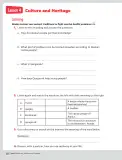
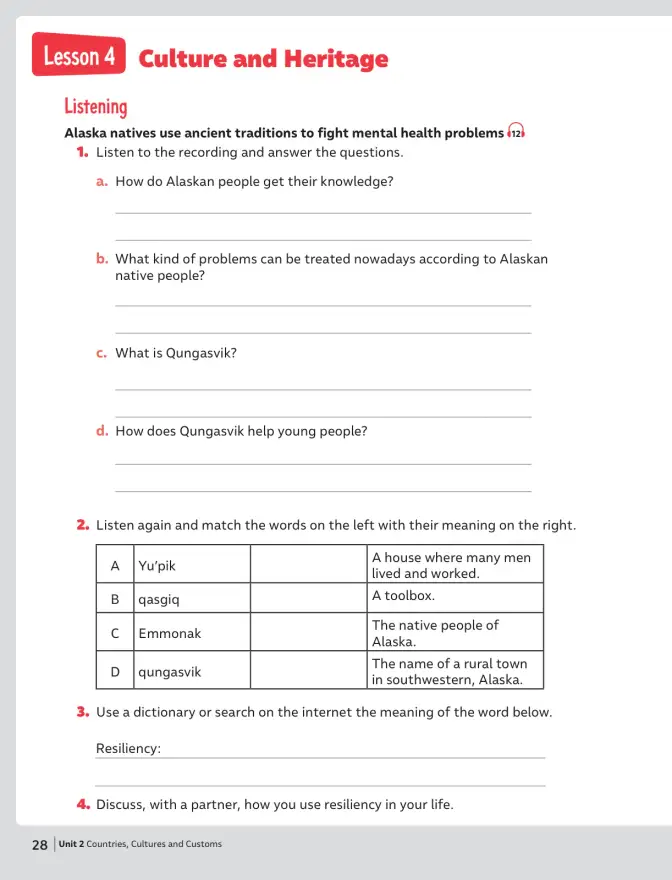
Lesson 4: Culture and Heritage

Listening

Alaska natives use ancient traditions to fight mental health problems

  1. Listen to the recording and answer the questions. a. How do Alaskan people get their knowledge? b. What kind of problems can be treated nowadays according to Alaskan native people? c. What is Qungasvik? d. How does Qungasvik help young people?

  2. Listen again and match the words on the left with their meaning on the right.

A Yu'pik A house where many men lived and worked.
B qasgiq A toolbox.
C Emmonak The native people of Alaska.
D qungasvik The name of a rural town in southwestern, Alaska.
  1. Use a dictionary or search on the internet the meaning of the word below.

Resiliency:

  1. Discuss, with a partner, how you use resiliency in your life.

28 | Unit 2 Countries, Cultures and Customs

Tabla

Palabra Significado
A. Yu'pik The native people of Alaska.
B. qasgiq A house where many men lived and worked.
C. Emmonak The name of a rural town in southwestern, Alaska.
D. qungasvik A toolbox.

Glosario (5)

Yu'pik
Pueblo nativo de Alaska.
qasgiq
Casa donde muchos hombres vivían y trabajaban.
Emmonak
Nombre de un pueblo rural en el suroeste de Alaska.
qungasvik
Caja de herramientas.
resiliency
Capacidad de recuperarse rápidamente de dificultades.

Preguntas para practicar

How do Alaskan people get their knowledge?

They get it from their ancestors through oral traditions and cultural practices.

What kind of problems can be treated nowadays according to Alaskan native people?

Mental health problems like depression, anxiety, and trauma.

What is Qungasvik?

A Yup'ik cultural toolkit or program for youth resilience.

How does Qungasvik help young people?

By connecting them with their culture, elders, and traditions.

Temas y conceptos clave

Cultura y patrimonioSalud mentalTradiciones ancestralesResilienciaYu'pikqasgiqEmmonakqungasvikresiliencymental healthancestral traditions
¿Te fue útil esta página?

Preguntas que la gente también hace

¿Qué es Qungasvik y cómo ayuda a los jóvenes nativos de Alaska?
Consulta la solución completa arriba o explora el libro entero para temas relacionados.
¿Cómo obtienen conocimiento los pueblos nativos de Alaska?
Consulta la solución completa arriba o explora el libro entero para temas relacionados.
¿Qué significa resiliency en inglés y cómo se aplica en la vida diaria?
Consulta la solución completa arriba o explora el libro entero para temas relacionados.
📌 Antes de leer esto
  • • Vocabulario básico en inglés
  • • Comprensión de preguntas WH (what, how, why)
  • • Habilidad para usar diccionario
Siguiente tema sugerido
Lesson 5: Traditions and Stories
📝 Transcripción de la página (texto seleccionable) 1026 caracteres

Lesson 4Culture and Heritage

Listening

Alaska natives use ancient traditions to fight mental health problems 121.Listen to the recording and answer the questions.

a. How do Alaskan people get their knowledge?

b.What kind of problems can be treated nowadays according to Alaskan native people?

c. What is Qungasvik?

d. How does Qungasvik help young people?

  1. Use a dictionary or search on the internet the meaning of the word below.Resiliency:

Discuss, with a partner, how you use resiliency in your life.

  1. Listen again and match the words on the left with their meaning on the right.
AYu'pikA house where many men lived and worked.
BqasgiqAtoolbox.
CEmmonakThe native people of Alaska.
DqungasvikThe name of a rural town in southwestern, Alaska.

28

Unit 2 Countries, Cultures and Customs

Ad

Otros libros recomendados

Ver todos →
Ad

Usamos cookies propias y de terceros para personalizar contenido, mostrar publicidad y analizar el tráfico. Las cookies necesarias siempre están activas.