Saltar al contenido
MisLibrosTexto
Ad
Inglés – Octavo Básico | Student’s Book MINEDUC – Descargar PDF · 2024
Libro de Inglés 8

MINEDUC

31/82

Reading and Vocabulary: Crossword and Language Focus

📄 ejercicios ingles 🎓 otro · 8° BASICA Chile 🇨🇱 CL 🗣 Español
Página 31
31 de 82
Página 31 de Inglés – Octavo Básico | Student’s Book MINEDUC – Descargar PDF · 2024
Anterior Página 31 / 82 Siguiente

Respuesta rápida

  1. Crucigrama: TRADITION, HERITAGE, CUSTOMS, BELIEFS, LIFESTYLE. 2. a. Portugal/Brazil; b. Chile y Argentina; c. 277 años; d. nacimiento o naturalización; e. 10 grupos. 3. Conocer lenguas, tradiciones e historia.
📚 exercise ingles ⭐⭐ Dificultad 2/5 ⏱ 10 min lectura

Solución — Página 31

Inglés – Octavo Básico | Student’s Book MINEDUC – Descargar PDF · 2024

1
Ejercicio 1

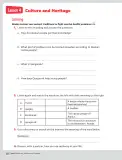
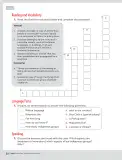
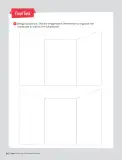
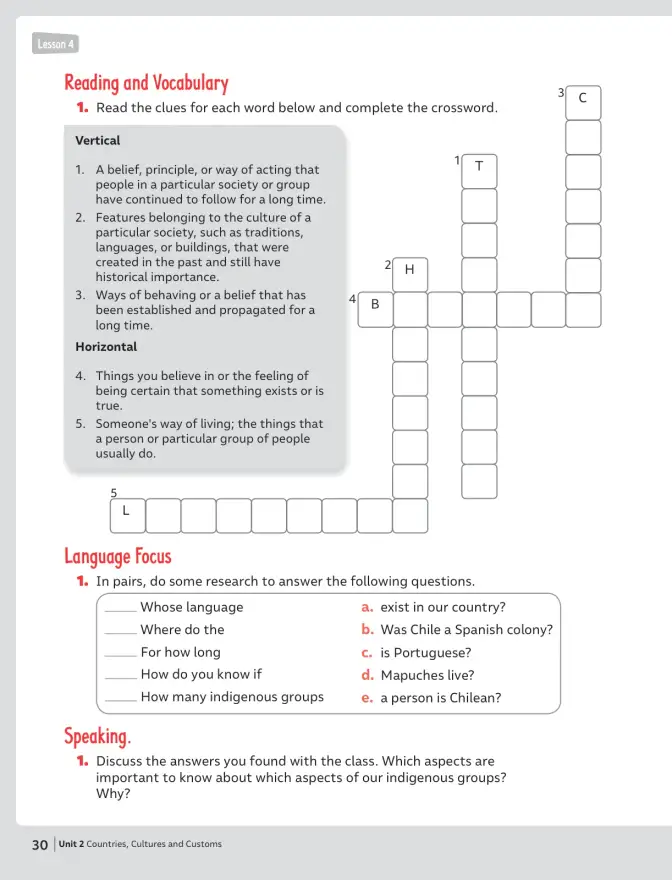
Read the clues for each word below and complete the crossword.

a
Parte 1.a

Vertical

  1. A belief, principle, or way of acting that people in a particular society or group have continued to follow for a long time.

  2. La pista define una creencia o forma de actuar que se sigue por mucho tiempo.

  3. La palabra debe empezar con T y tener 9 letras.

  4. La palabra es TRADITION.

Respuesta

TRADITION

b
Parte 1.b

Vertical

  1. Features belonging to the culture of a particular society, such as traditions, languages, or buildings, that were created in the past and still have historical importance.

  2. La pista describe elementos culturales del pasado con importancia histórica.

  3. La palabra debe empezar con H y tener 8 letras.

  4. La palabra es HERITAGE.

Respuesta

HERITAGE

c
Parte 1.c

Vertical

  1. Ways of behaving or a belief that has been established and propagated for a long time.

  2. La pista se refiere a costumbres establecidas.

  3. La palabra debe empezar con C y tener 7 letras.

  4. La palabra es CUSTOMS.

Respuesta

CUSTOMS

d
Parte 1.d

Horizontal

  1. Things you believe in or the feeling of being certain that something exists or is true.

  2. La pista define creencias o certeza sobre algo.

  3. La palabra debe empezar con B y tener 7 letras.

  4. La palabra es BELIEFS.

Respuesta

BELIEFS

e
Parte 1.e

Horizontal

  1. Someone's way of living; the things that a person or particular group of people usually do.

  2. La pista describe la forma de vida de una persona o grupo.

  3. La palabra debe empezar con L y tener 9 letras.

  4. La palabra es LIFESTYLE.

Respuesta

LIFESTYLE

2
Ejercicio 2

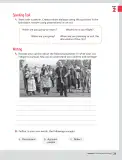
In pairs, do some research to answer the following questions.

a
Parte 2.a

Whose language is Portuguese?

  1. Portuguese is the official language of Portugal, Brazil, Angola, Mozambique, Cape Verde, Guinea-Bissau, and São Tomé and Príncipe.
  2. In South America, the largest Portuguese-speaking country is Brazil.
Respuesta

Portuguese is the language of Portugal and Brazil, among other countries.

b
Parte 2.b

Where do the Mapuches live?

  1. The Mapuche people live mainly in Chile and Argentina.
  2. In Chile, they are concentrated in the Araucanía region and also in Santiago and other cities.
Respuesta

The Mapuches live in Chile and Argentina.

c
Parte 2.c

For how long was Chile a Spanish colony?

  1. Chile was a Spanish colony from 1541, when Pedro de Valdivia founded Santiago, until 1818, when Chile declared independence.
  2. This period lasted approximately 277 years.
Respuesta

Chile was a Spanish colony for about 277 years, from 1541 to 1818.

d
Parte 2.d

How do you know if a person is Chilean?

  1. A person is Chilean if they were born in Chile or have Chilean parents.
  2. Nationality can also be acquired by naturalization after living in Chile for a certain period.
Respuesta

A person is Chilean if born in Chile or with Chilean parents, or by naturalization.

e
Parte 2.e

How many indigenous groups exist in our country?

  1. In Chile, there are 10 recognized indigenous groups: Mapuche, Aymara, Rapa Nui, Atacameño, Quechua, Colla, Diaguita, Kawésqar, Yagán, and Chango.
  2. The largest group is the Mapuche.
Respuesta

There are 10 indigenous groups in Chile.

3
Ejercicio 3

Discuss the answers you found with the class. Which aspects are important to know about our indigenous groups? Why?

  1. It is important to know their languages, traditions, and history.
  2. This helps to value cultural diversity and fight discrimination.
  3. Understanding indigenous cultures strengthens national identity.

Respuesta orientativa: Es importante conocer sus lenguas, tradiciones e historia para valorar la diversidad cultural y fortalecer la identidad nacional.

Contenido de la página

Reading and Vocabulary

  1. Read the clues for each word below and complete the crossword.

Vertical

  1. A belief, principle, or way of acting that people in a particular society or group have continued to follow for a long time.
  2. Features belonging to the culture of a particular society, such as traditions, languages, or buildings, that were created in the past and still have historical importance.
  3. Ways of behaving or a belief that has been established and propagated for a long time.

Horizontal

  1. Things you believe in or the feeling of being certain that something exists or is true.
  2. Someone's way of living; the things that a person or particular group of people usually do.

Language Focus

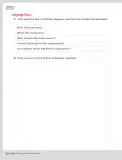
  1. In pairs, do some research to answer the following questions.
  • Whose language ... a. exist in our country?
  • Where do the ... b. Was Chile a Spanish colony?
  • For how long ... c. is Portuguese?
  • How do you know if ... d. Mapuches live?
  • How many indigenous groups ... e. a person is Chilean?

Speaking

  1. Discuss the answers you found with the class. Which aspects are important to know about our indigenous groups? Why?

Glosario (6)

tradition
A belief or way of acting that people have followed for a long time.
heritage
Features belonging to the culture of a society that have historical importance.
customs
Ways of behaving or beliefs established for a long time.
beliefs
Things you believe in or feel certain about.
lifestyle
Someone's way of living.
indigenous
Originating or occurring naturally in a particular place.

Preguntas para practicar

Which aspects are important to know about our indigenous groups? Why?

Es importante conocer sus lenguas, tradiciones e historia para valorar la diversidad cultural y fortalecer la identidad nacional.

Temas y conceptos clave

Reading and VocabularyLanguage FocusSpeakingtraditionheritagecustomsbeliefslifestyleindigenous groupsChilean identity
¿Te fue útil esta página?

Preguntas que la gente también hace

¿Cuáles son los 10 pueblos indígenas de Chile?
Consulta la solución completa arriba o explora el libro entero para temas relacionados.
¿Cuántos años fue Chile colonia española?
Consulta la solución completa arriba o explora el libro entero para temas relacionados.
¿Qué significa heritage en español?
Consulta la solución completa arriba o explora el libro entero para temas relacionados.
📌 Antes de leer esto
  • • Vocabulario básico en inglés sobre cultura
  • • Conocimiento general de la historia de Chile
  • • Uso de diccionario bilingüe
Siguiente tema sugerido
Writing: Describing cultural traditions
📝 Transcripción de la página (texto seleccionable) 1231 caracteres

Reading and Vocabulary

  1. Read the clues for each word below and complete the crossword.

Vertical

  1. A belief, principle, or way of acting that people in a particular society or group have continued to follow for a long time.

2.Features belonging to the culture of a particular society, such as traditions,languages, or buildings, that were created in the past and still have historical importance.

3.Ways of behaving or a belief that has been established and propagated for a long time.

Horizontal

  1. Things you believe in or the feeling of being certain that something exists or is true.

5.Someone's way of living; the things that a person or particular group of people usually do.

Language Focus

  1. In pairs, do some research to answer the following questions.

Whose language a. exist in our country? Where do the b. Was Chile a Spanish colony? For how long c. is Portuguese? How do you know if d. Mapuches live? How many indigenous groups e. a person is Chilean?

Speaking.

1.Discuss the answers you found with the class. Which aspects are important to know about which aspects of our indigenous groups?Why?

Lesson 4

![](page=0,bbox=[195, 883, 776, 969])

30

Unit 2 Countries, Cultures and Customs

Ad

Otros libros recomendados

Ver todos →
Ad

Usamos cookies propias y de terceros para personalizar contenido, mostrar publicidad y analizar el tráfico. Las cookies necesarias siempre están activas.