Saltar al contenido
MisLibrosTexto
Ad
Inglés – Octavo Básico | Student’s Book MINEDUC – Descargar PDF · 2024
Libro de Inglés 8

MINEDUC

37/82

Lesson 5 Sightseeing: The Grand Canyon Beyond Words

📄 ejercicios ingles 🎓 otro · 8° BASICA Chile 🇨🇱 CL 🗣 Español
Página 37
37 de 82
Página 37 de Inglés – Octavo Básico | Student’s Book MINEDUC – Descargar PDF · 2024
Anterior Página 37 / 82 Siguiente

Respuesta rápida

1.a vast, magnificent, breathtaking, ancient. 1.b altitud: fondo más cálido y seco. 1.c hábitat y corredor de aves. 1.d pueblos originarios hopi/navajo. 1.e paisajes y actividades. 2: A-2014, B-3000, C-2007, D-2500, E-2000.

📚 exercise ingles ⭐⭐ Dificultad 2/5 ⏱ 6 min lectura

Solución — Página 37

Inglés – Octavo Básico | Student’s Book MINEDUC – Descargar PDF · 2024

1
Ejercicio 1

Listen to the recording and answer the questions. / Escucha la grabación y responde las preguntas.

a
Parte 1.a

What words do writers use to describe the Grand Canyon?

  1. Los escritores suelen usar adjetivos de tamaño y asombro: vast, immense, magnificent, breathtaking.
  2. También emplean imágenes de color y tiempo geológico: reddish, layered, ancient, timeless.
  3. La idea central es que las palabras resultan insuficientes: beyond words, indescribable.
Respuesta

Writers use words like vast, magnificent, breathtaking, ancient and indescribable to describe the Grand Canyon.

b
Parte 1.b

Why is the weather different at the top and from the bottom of the canyon?

  1. El fondo del cañón está a unos 1\,600\,\text{m} bajo el borde, por lo que el aire desciende y se comprime.
  2. Al comprimirse, el aire se calienta (calentamiento adiabático) y pierde humedad.
  3. Por eso el fondo es más cálido y seco, mientras el borde es más frío y húmedo.
Respuesta

Because of the difference in altitude: the bottom is about 1\,600\,\text{m} lower, so the air is warmer and drier there, while the top is cooler and wetter.

c
Parte 1.c

Why was the Grand Canyon named a Globally Important Bird Area?

  1. El cañón es un corredor de migración para cientos de especies de aves.
  2. Alberga especies emblemáticas como el cóndor de California (Gymnogyps californianus).
  3. BirdLife International lo reconoció por su valor ecológico para la conservación de aves.
Respuesta

Because it is a key habitat and migration corridor for many bird species, including the California condor.

d
Parte 1.d

Who were the first people that occupied the Grand Canyon?

  1. Los primeros habitantes conocidos fueron pueblos indígenas ancestrales.
  2. Se los asocia con la cultura ancestral puebloana (anasazi) y luego con los pueblos hopi, navajo y havasupai.
  3. Habitaron la zona hace unos 4\,000 años según registros arqueológicos.
Respuesta

The first inhabitants were Native American peoples, ancestors of the Hopi, Navajo and Havasupai, who lived there thousands of years ago.

e
Parte 1.e

Why do tourists like visiting the Grand Canyon a lot?

  1. Ofrece paisajes únicos por sus capas de roca y colores cambiantes.
  2. Permite actividades como senderismo, rafting y el Skywalk.
  3. Es uno de los íconos naturales más famosos del mundo.
Respuesta

Because of its spectacular landscapes, outdoor activities and world-famous natural beauty.
2
Ejercicio 2

What do these numbers refer to? Match the numbers with the corresponding information. / ¿A qué se refieren estos números? Relaciona.

  1. Leer cada cifra y cada descripción.
  2. Asociar por significado: años con años, medidas con medidas, cantidades con cantidades.
  3. Verificar que cada cifra quede usada una sola vez.
Respuesta
Número Letra Información
2500 D The measurement of the Grand Canyon from the floor to the top.
2000 E The number of plant species.
2014 A The year the Grand Canyon was named a Globally Important Bird Area.
3000 B The years ago the first people occupied the Grand Canyon.
2007 C The year the Skywalk was opened.

Contenido de la página

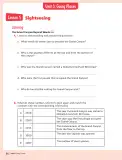
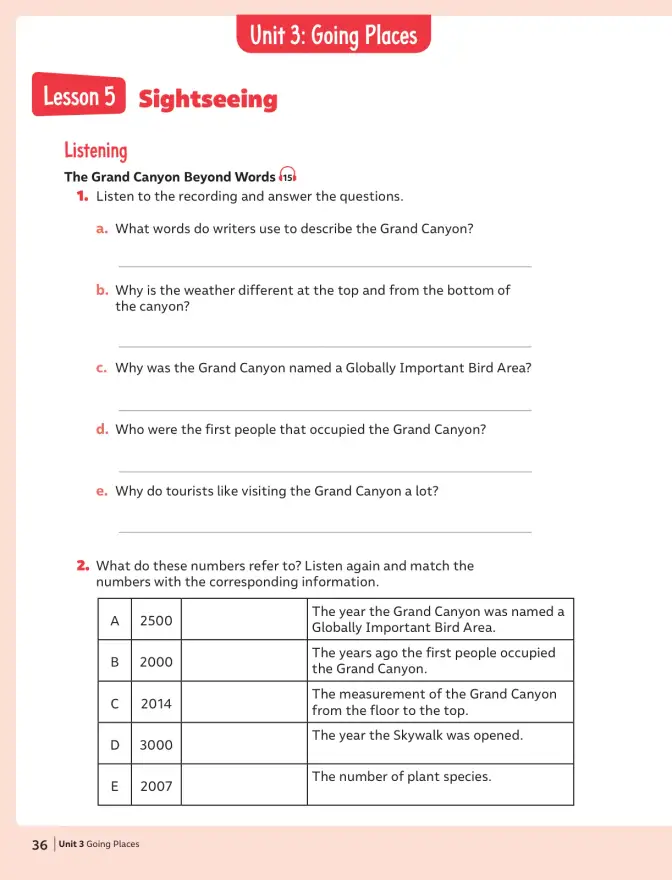
Unit 3: Going Places

Lesson 5 Sightseeing

Listening

The Grand Canyon Beyond Words (audio 15)

1. Listen to the recording and answer the questions.

a. What words do writers use to describe the Grand Canyon?

b. Why is the weather different at the top and from the bottom of the canyon?

c. Why was the Grand Canyon named a Globally Important Bird Area?

d. Who were the first people that occupied the Grand Canyon?

e. Why do tourists like visiting the Grand Canyon a lot?

2. What do these numbers refer to? Listen again and match the numbers with the corresponding information.

Número Información
A 2500 The year the Grand Canyon was named a Globally Important Bird Area.
B 2000 The years ago the first people occupied the Grand Canyon.
C 2014 The measurement of the Grand Canyon from the floor to the top.
D 3000 The year the Skywalk was opened.
E 2007 The number of plant species.

36 | Unit 3 Going Places

Tabla

Número Letra Información
2500 D The measurement of the Grand Canyon from the floor to the top.
2000 E The number of plant species.
2014 A The year the Grand Canyon was named a Globally Important Bird Area.
3000 B The years ago the first people occupied the Grand Canyon.
2007 C The year the Skywalk was opened.

Glosario (6)

sightseeing
visitar lugares de interés turístico
canyon
cañón, garganta profunda formada por un río
beyond words
más allá de las palabras, indescriptible
Globally Important Bird Area
Área Importante para las Aves a nivel global
Skywalk
pasarela de vidrio sobre el Gran Cañón
plant species
especies de plantas

Preguntas para practicar

What words do writers use to describe the Grand Canyon?

Writers use words like vast, magnificent, breathtaking, ancient and indescribable.

Why is the weather different at the top and from the bottom of the canyon?

Because of the altitude difference: the bottom is warmer and drier, the top is cooler and wetter.

Why was the Grand Canyon named a Globally Important Bird Area?

Because it is a key habitat and migration corridor for many bird species.

Who were the first people that occupied the Grand Canyon?

Native American peoples, ancestors of the Hopi, Navajo and Havasupai.

Why do tourists like visiting the Grand Canyon a lot?

Because of its spectacular landscapes, outdoor activities and world-famous beauty.

Temas y conceptos clave

SightseeingThe Grand CanyonListening comprehensionNumbers and informationListening for specific informationDescriptive adjectivesMatching numbers with factsNatural heritage

Fuentes y referencias

  • National Park Service – Grand Canyon National Park
  • BirdLife International – Important Bird Areas
¿Te fue útil esta página?

Preguntas que la gente también hace

¿Por qué el clima del Gran Cañón cambia entre el borde y el fondo?
Consulta la solución completa arriba o explora el libro entero para temas relacionados.
¿Cuándo fue nombrado el Gran Cañón área importante para las aves?
Consulta la solución completa arriba o explora el libro entero para temas relacionados.
¿Quiénes fueron los primeros habitantes del Gran Cañón?
Consulta la solución completa arriba o explora el libro entero para temas relacionados.
📌 Antes de leer esto
  • • Vocabulario básico de viajes y naturaleza en inglés
  • • Uso de adjetivos descriptivos
  • • Comprensión de números y años en inglés
Siguiente tema sugerido
Lesson 6: Describing places and writing a travel blog
📝 Transcripción de la página (texto seleccionable) 1146 caracteres

Unit 3: Going Places

Lesson 5Sightseeing

Listening

The Grand Canyon Beyond Words15

  1. Listen to the recording and answer the questions.

a. What words do writers use to describe the Grand Canyon?

b.Why is the weather different at the top and from the bottom of the canyon?

C. Why was the Grand Canyon named a Globally Important Bird Area?

d. Who were the first people that occupied the Grand Canyon?

e.Why do tourists like visiting the Grand Canyon a lot?

  1. What do these numbers refer to? Listen again and match the numbers with the corresponding information.
A2500The year the Grand Canyon was named a Globally Important Bird Area.
B2000The years ago the first people occupied the Grand Canyon.
C2014The measurement of the Grand Canyon from the floor to the top.
D3000The year the Skywalk was opened.
E2007The number of plant species.

36

Unit 3 Going Places

Ad

Otros libros recomendados

Ver todos →
Ad

Usamos cookies propias y de terceros para personalizar contenido, mostrar publicidad y analizar el tráfico. Las cookies necesarias siempre están activas.