Saltar al contenido
MisLibrosTexto
Ad
Inglés – Octavo Básico | Student’s Book MINEDUC – Descargar PDF · 2024
Libro de Inglés 8

MINEDUC

70/82

Be going to y Will: usos, formas y preguntas

📄 teoria ingles 🎓 otro · 8° BASICA Chile 🇨🇱 CL 🗣 Español
Página 70
70 de 82
Página 70 de Inglés – Octavo Básico | Student’s Book MINEDUC – Descargar PDF · 2024
Anterior Página 70 / 82 Siguiente

Respuesta rápida

Be going to: planes previos y predicciones con evidencia. Will: decisiones espontáneas, hechos y predicciones por opinión. Estructuras: am/is/are + going to + verbo; will + verbo.

📚 theory ingles ⭐⭐ Dificultad 2/5 ⏱ 6 min lectura

Solución — Página 70

Inglés – Octavo Básico | Student’s Book MINEDUC – Descargar PDF · 2024

1
Ejercicio 1

Explicación de la página

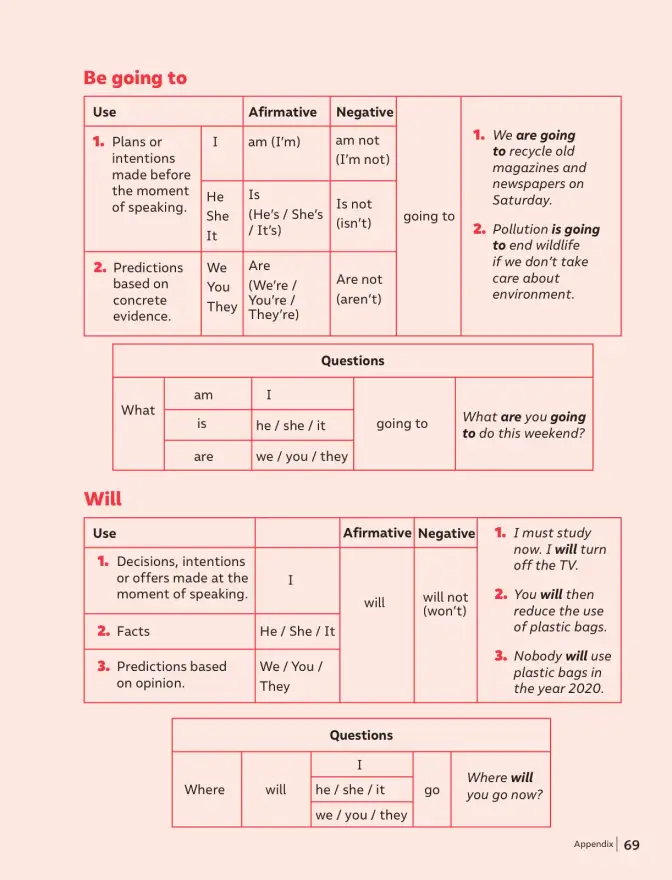
Esta página es una tabla de referencia gramatical (Appendix) sobre dos formas de expresar el futuro en inglés: be going to y will. No contiene ejercicios con enunciados numerados; su función es servir de consulta.
1
Ejercicio 1

Be going to

Usos:

  1. Planes o intenciones decididos antes del momento de hablar.
  2. Predicciones basadas en evidencia concreta.

Estructura: sujeto + am/is/are + going to + verbo en infinitivo.

Sujeto Afirmativa Negativa
I am (I'm) going to am not (I'm not) going to
He / She / It is (He's / She's / It's) going to is not (isn't) going to
We / You / They are (We're / You're / They're) going to are not (aren't) going to

Ejemplos del libro:

  • We are going to recycle old magazines and newspapers on Saturday. → Plan decidido antes de hablar.
  • Pollution is going to end wildlife if we don't take care about environment. → Predicción con evidencia concreta.

Preguntas: What + am/is/are + sujeto + going to + verbo?

  • What are you going to do this weekend?
2
Ejercicio 2

Will

Usos:

  1. Decisiones, intenciones u ofrecimientos hechos en el momento de hablar.
  2. Hechos.
  3. Predicciones basadas en opinión.

Estructura: sujeto + will + verbo en infinitivo.

Sujeto Afirmativa Negativa
I / He / She / It / We / You / They will will not (won't)

Ejemplos del libro:

  • I must study now. I will turn off the TV. → Decisión tomada en el momento.
  • You will then reduce the use of plastic bags. → Hecho.
  • Nobody will use plastic bags in the year 2020. → Predicción basada en opinión.

Preguntas: Where + will + sujeto + verbo?

  • Where will you go now?
Ad
3
Ejercicio 3

Diferencia clave

Criterio Be going to Will
Momento de la decisión Antes de hablar En el momento de hablar
Tipo de predicción Con evidencia concreta Basada en opinión
Forma am/is/are + going to + verbo will + verbo

Respuesta orientativa: Be going to se usa para planes ya decididos y predicciones con evidencia visible; will se usa para decisiones espontáneas, hechos y predicciones basadas en opinión personal.

Contenido de la página

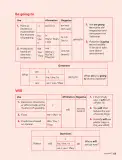
Be going to

Use Sujeto Affirmative Negative Auxiliar Ejemplos
1. Plans or intentions made before the moment of speaking. I am (I'm) am not (I'm not) going to 1. We are going to recycle old magazines and newspapers on Saturday.
1. Plans or intentions made before the moment of speaking. He / She / It is (He's / She's / It's) is not (isn't) going to 2. Pollution is going to end wildlife if we don't take care about environment.
2. Predictions based on concrete evidence. We / You / They are (We're / You're / They're) are not (aren't) going to

Questions (Be going to)

What am I going to What are you going to do this weekend?
is he / she / it going to
are we / you / they going to

Will

Use Sujeto Affirmative Negative Ejemplos
1. Decisions, intentions or offers made at the moment of speaking. I will will not (won't) 1. I must study now. I will turn off the TV.
2. Facts He / She / It will will not (won't) 2. You will then reduce the use of plastic bags.
3. Predictions based on opinion. We / You / They will will not (won't) 3. Nobody will use plastic bags in the year 2020.

Questions (Will)

Where will I / he / she / it / we / you / they go Where will you go now?

Ejemplos resueltos

We ___ (recycle) old magazines and newspapers on Saturday. (plan decidido antes de hablar)

Es un plan decidido antes del momento de hablar → be going to. Sujeto We → are. Resultado: We are going to recycle old magazines and newspapers on Saturday.

Pollution ___ (end) wildlife if we don't take care about environment. (predicción con evidencia)

Predicción basada en evidencia concreta → be going to. Sujeto Pollution (singular) → is. Resultado: Pollution is going to end wildlife if we don't take care about environment.

I must study now. I ___ (turn) off the TV. (decisión en el momento)

Decisión tomada en el momento de hablar → will. Resultado: I must study now. I will turn off the TV.

Nobody ___ (use) plastic bags in the year 2020. (predicción por opinión)

Predicción basada en opinión → will. Resultado: Nobody will use plastic bags in the year 2020.

___ you ___ (do) this weekend?

Pregunta con be going to: What + are + you + going to + do. Resultado: What are you going to do this weekend?

Where ___ you ___ (go) now?

Pregunta con will: Where + will + you + go. Resultado: Where will you go now?

Tabla

Criterio Be going to Will
Momento de la decisión Antes de hablar En el momento de hablar
Tipo de predicción Con evidencia concreta Basada en opinión
Forma am/is/are + going to + verbo will + verbo
Negativa am not / is not / are not + going to will not (won't)
Pregunta What + am/is/are + sujeto + going to + verbo? Where + will + sujeto + verbo?

Diagrama

graph TD
  A[Futuro en inglés] --> B[Be going to]
  A --> C[Will]
  B --> B1[Planes previos]
  B --> B2[Predicciones con evidencia]
  C --> C1[Decisiones espontáneas]
  C --> C2[Hechos]
  C --> C3[Predicciones por opinión]

Fórmulas y ecuaciones

Sujeto + am/is/are + going to + verbo

Sujeto + will + verbo

What + am/is/are + sujeto + going to + verbo?

Where + will + sujeto + verbo?

Glosario (8)

Plans
Planes: intenciones organizadas con antelación.
Intentions
Intenciones: propósitos que se tienen respecto a algo.
Predictions
Predicciones: suposiciones sobre lo que ocurrirá.
Evidence
Evidencia: prueba o señal concreta que permite afirmar algo.
Recycle
Reciclar: reutilizar materiales para reducir residuos.
Pollution
Contaminación: presencia de sustancias dañinas en el ambiente.
Wildlife
Vida silvestre: conjunto de animales y plantas en su hábitat natural.
Facts
Hechos: situaciones reales y comprobables.

Preguntas para practicar

¿Cuál es la diferencia principal entre 'be going to' y 'will'?

'Be going to' se usa para planes o intenciones decididos antes del momento de hablar y para predicciones basadas en evidencia concreta. 'Will' se usa para decisiones espontáneas tomadas al momento de hablar, para hechos y para predicciones basadas en opinión personal.

¿Cómo se forma una pregunta con 'be going to'?

Se coloca la palabra interrogativa (What, Where, etc.), luego el verbo to be conjugado (am/is/are), después el sujeto, luego 'going to' y finalmente el verbo en infinitivo. Ejemplo: What are you going to do this weekend?

Temas y conceptos clave

Be going toWillPlanes e intencionesPrediccionesDecisiones espontáneasPreguntas en futuroPlans or intentions made before the moment of speakingPredictions based on concrete evidenceDecisions, intentions or offers made at the moment of speakingFactsPredictions based on opinionAffirmative, negative and question forms
¿Te fue útil esta página?

Preguntas que la gente también hace

¿Cuál es la diferencia entre 'be going to' y 'will' en inglés?
Consulta la solución completa arriba o explora el libro entero para temas relacionados.
¿Cómo se forman las preguntas con 'be going to'?
Consulta la solución completa arriba o explora el libro entero para temas relacionados.
¿Cuándo se usa 'will' para hacer predicciones?
Consulta la solución completa arriba o explora el libro entero para temas relacionados.
📌 Antes de leer esto
  • • Verbo to be en presente (am, is, are)
  • • Pronombres personales en inglés
  • • Formación de oraciones afirmativas, negativas e interrogativas
  • • Vocabulario básico de acciones cotidianas
Siguiente tema sugerido
Futuro continuo y presente continuo con valor de futuro
📝 Transcripción de la página (texto seleccionable) 1689 caracteres

Be going to

UseAfirmativeNegativegoing to1. We are going to recycle old magazines and newspapers on Saturday. 2. Pollution is going to end wildlife if we don't take care about environment.
1. Plans or intentions made before the moment of speaking.Iam (I'm)am not (I'm not)
He She ItIs (He's / She's / It's)Is not (isn't)
2. Predictions based on concrete evidence.We You TheyAre (We're/ You're/ They're)Are not (aren't)
Questions
WhatamIgoing toWhat are you going to do this weekend?
ishe/she/it
arewe /you / they

will

Use1.I must study now. I will turn off the TV. 2.You will then reduce the use of plastic bags. 3. Nobody will use plastic bags in the year 2020.
1. Decisions, intentions or offers made at the moment of speaking.I
2.Facts 3. Predictions based on opinion.He/ She/It
Questions
WherewillI he/ she/it we/you/ theyWhere will you go now?go

Appendix|

169

Ad

Otros libros recomendados

Ver todos →
Ad

Usamos cookies propias y de terceros para personalizar contenido, mostrar publicidad y analizar el tráfico. Las cookies necesarias siempre están activas.