


















Grammar Reference: Possessive Adjectives and Possessive Pronouns
Respuesta rápida
Adjetivos posesivos: my, your, his, her, its, our, their (van antes del sustantivo). Pronombres posesivos: mine, yours, his, hers, ours, theirs (van solos, sin sustantivo).
Solución — Página 69
Inglés – Octavo Básico | Student’s Book MINEDUC – Descargar PDF · 2024
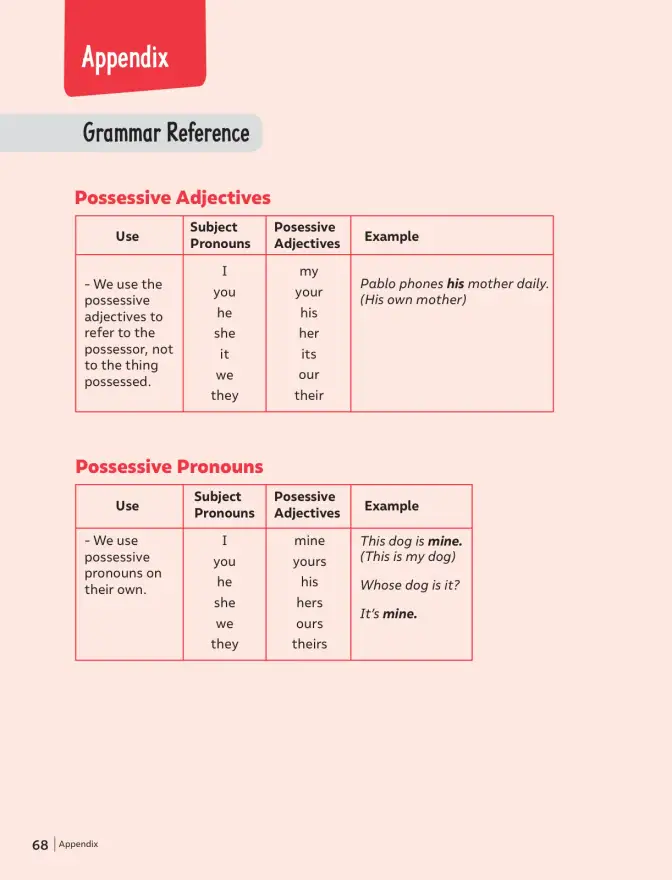
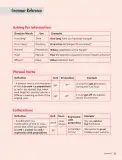
Página de referencia gramatical
Esta página no contiene ejercicios; es una tabla de consulta (Grammar Reference) sobre posesivos en inglés. Se explica y ejemplifica cada forma.
Possessive Adjectives (Adjetivos posesivos)
Se usan antes de un sustantivo para indicar a quién pertenece algo. Señalan al poseedor, no a la cosa poseída.
| Subject Pronouns | Possessive Adjectives | Ejemplo |
|---|---|---|
| I | my | This is my book. |
| you | your | Your dog is friendly. |
| he | his | Pablo phones his mother daily. |
| she | her | Her name is Ana. |
| it | its | The cat licks its paw. |
| we | our | Our school is big. |
| they | their | Their house is new. |
Regla clave: el adjetivo posesivo concuerda con el poseedor, no con el objeto. Ejemplo: Pablo phones his mother → his se refiere a Pablo (poseedor masculino), aunque mother sea femenino.
Possessive Pronouns (Pronombres posesivos)
Sustituyen al adjetivo posesivo + sustantivo. Se usan solos, sin sustantivo detrás.
| Subject Pronouns | Possessive Pronouns | Ejemplo |
|---|---|---|
| I | mine | This dog is mine. (= This is my dog) |
| you | yours | Is this pen yours? |
| he | his | The car is his. |
| she | hers | The idea was hers. |
| we | ours | That table is ours. |
| they | theirs | The books are theirs. |
Diferencia esencial:
- This is my dog. → adjetivo posesivo + sustantivo.
- This dog is mine. → pronombre posesivo, reemplaza a my dog.
Respuesta orientativa: Los adjetivos posesivos acompañan al sustantivo; los pronombres posesivos lo reemplazan. Ambos indican pertenencia y concuerdan con el poseedor, no con lo poseído.
Contenido de la página
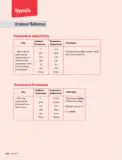
Appendix
Grammar Reference
Possessive Adjectives
| Use | Subject Pronouns | Possessive Adjectives | Example |
|---|---|---|---|
| - We use the possessive adjectives to refer to the possessor, not to the thing possessed. | I | my | Pablo phones his mother daily. (His own mother) |
| you | your | ||
| he | his | ||
| she | her | ||
| it | its | ||
| we | our | ||
| they | their |
Possessive Pronouns
| Use | Subject Pronouns | Possessive Pronouns | Example |
|---|---|---|---|
| - We use possessive pronouns on their own. | I | mine | This dog is mine. (This is my dog) |
| you | yours | Whose dog is it? | |
| he | his | It's mine. | |
| she | hers | ||
| we | ours | ||
| they | theirs |
68 | Appendix
Ejemplos resueltos
Pablo phones his mother daily. (His own mother)
his es adjetivo posesivo de he. Concuerda con el poseedor (Pablo = he), no con mother. Traducción: Pablo llama a su mamá todos los días.
This dog is mine. (This is my dog)
mine es pronombre posesivo de I. Reemplaza a my dog. Traducción: Este perro es mío.
Whose dog is it? It's mine.
Whose pregunta por el poseedor. La respuesta usa el pronombre posesivo mine en lugar de repetir my dog. Traducción: ¿De quién es el perro? Es mío.
Tabla
| Subject Pronouns | Possessive Adjectives | Possessive Pronouns |
|---|---|---|
| I | my | mine |
| you | your | yours |
| he | his | his |
| she | her | hers |
| it | its | — |
| we | our | ours |
| they | their | theirs |
Diagrama
graph TD
  A[Posesivos en inglés] --> B[Possessive Adjectives]
  A --> C[Possessive Pronouns]
  B --> B1[my, your, his, her, its, our, their]
  B --> B2[Van antes de un sustantivo]
  C --> C1[mine, yours, his, hers, ours, theirs]
  C --> C2[Van solos, sin sustantivo]
  B2 --> D[Concuerdan con el poseedor]
  C2 --> D
Glosario (4)
- possessive adjective
- Palabra que indica pertenencia y va antes de un sustantivo (my, your, his, her, its, our, their).
- possessive pronoun
- Palabra que indica pertenencia y reemplaza al adjetivo posesivo + sustantivo (mine, yours, his, hers, ours, theirs).
- subject pronoun
- Pronombre que cumple la función de sujeto: I, you, he, she, it, we, they.
- possessor
- Persona o cosa a la que pertenece algo; determina la forma del posesivo.
Preguntas para practicar
¿Cuál es la diferencia entre un adjetivo posesivo y un pronombre posesivo?
El adjetivo posesivo (my, your, his...) siempre acompaña a un sustantivo: *my book*. El pronombre posesivo (mine, yours, his...) lo reemplaza y aparece solo: *It's mine*. Ambos indican pertenencia y concuerdan con el poseedor, no con la cosa poseída.
¿Por qué en 'Pablo phones his mother' se usa 'his' y no 'her', si mother es femenino?
Porque el posesivo concuerda con el poseedor, no con lo poseído. Pablo es el poseedor (he), por eso se usa *his*, aunque *mother* sea femenino.
Temas y conceptos clave
Preguntas que la gente también hace
¿Cuál es la diferencia entre possessive adjectives y possessive pronouns?
¿Cómo se usan my, your, his, her, its, our, their en inglés?
¿Cuándo se usa mine, yours, his, hers, ours, theirs?
- • Reconocer los pronombres personales sujeto en inglés (I, you, he, she, it, we, they)
- • Identificar sustantivos y su función en la oración
- • Nociones básicas de pertenencia en español (mi, tu, su, nuestro)
📝 Transcripción de la página (texto seleccionable) 792 caracteres
Appendix
Grammar Reference
Possessive Adjectives
| Use | Subject Pronouns | Posessive Adjectives | Example |
| - We use the possessive adjectives to refer to the possessor, not to the thing possessed. | I you he she it we they | my your his her its our their | Pablo phones his mother daily. (His own mother) |
Possessive Pronouns
| Use | Subject Pronouns | Posessive Adjectives | Example |
| - We use possessive pronouns on their own. | I you he she we they | mine yours his hers ours theirs | This dog is mine. (This is my dog) Whose dog is it? It's mine. |
68
Appendix
Otros libros recomendados
Lengua y Literatura – Octavo Básico | Texto del Estudiante MINEDUC – Descargar PDF · 2024
MINEDUC
243 págs.
Lengua y Literatura – Octavo Básico | Texto del Estudiante MINEDUC – Descargar PDF · 2024
MINEDUC
249 págs.

Matemática – Octavo Básico | Texto del Estudiante MINEDUC – Descargar PDF · 2024
MINEDUC
155 págs.
Matemática – Octavo Básico | Texto del Estudiante MINEDUC – Descargar PDF · 2024
MINEDUC
235 págs.
Matemática – Octavo Básico | Texto del Estudiante MINEDUC – Descargar PDF · 2024
MINEDUC
211 págs.

Inglés – Octavo Básico | Student’s Book MINEDUC – Descargar PDF · 2024
MINEDUC
124 págs.

Inglés – Octavo Básico | Student’s Book MINEDUC – Descargar PDF · 2024
MINEDUC
162 págs.

Inglés – Octavo Básico | Student’s Book MINEDUC – Descargar PDF · 2024
MINEDUC
162 págs.