
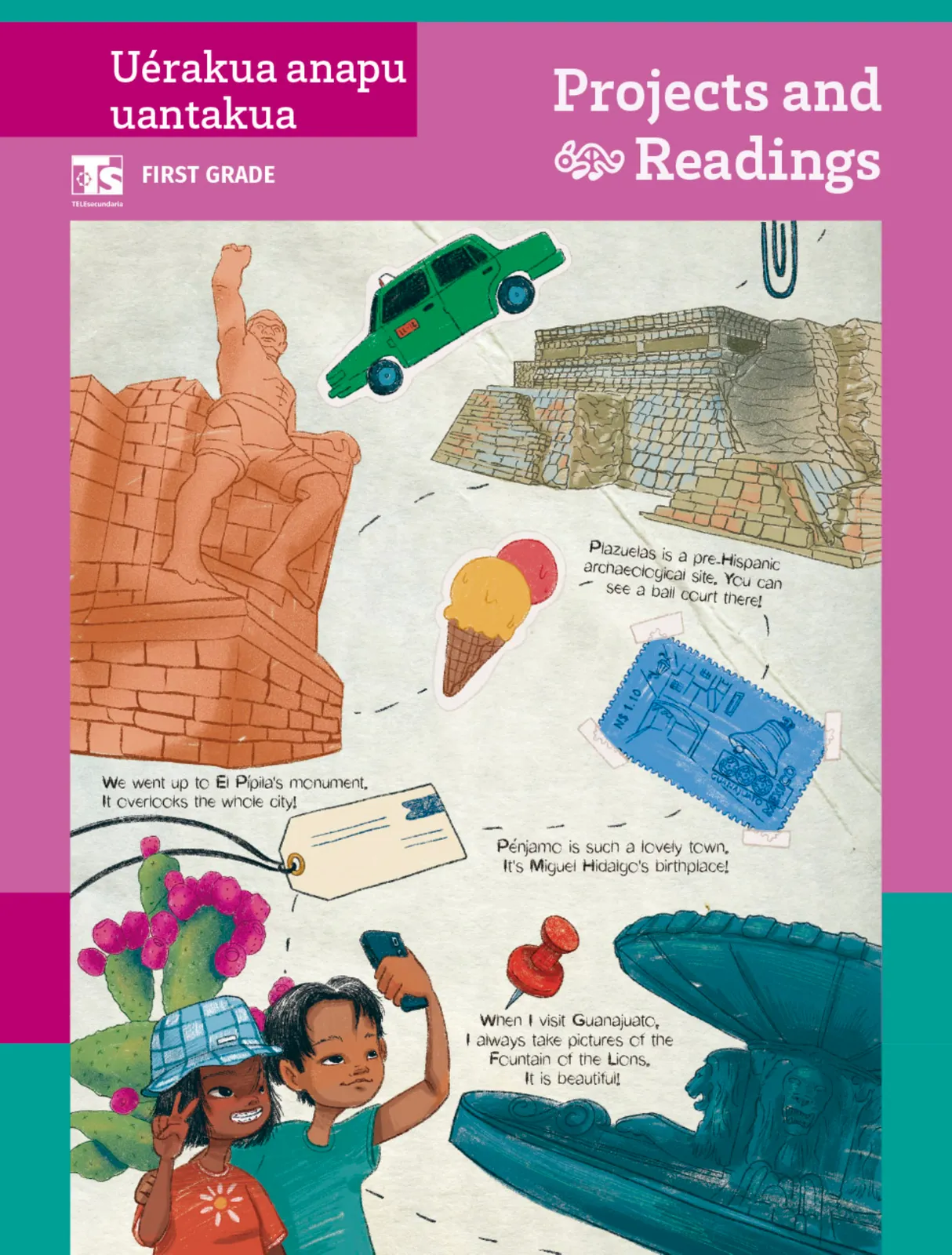
Página — Uerakua Anapu Uantakua Projects And Readings 1 (pág. 12)
Solución no disponible aún
Esta página está en proceso de revisión.
Pídela y la resolveremos antes. Sin registro.
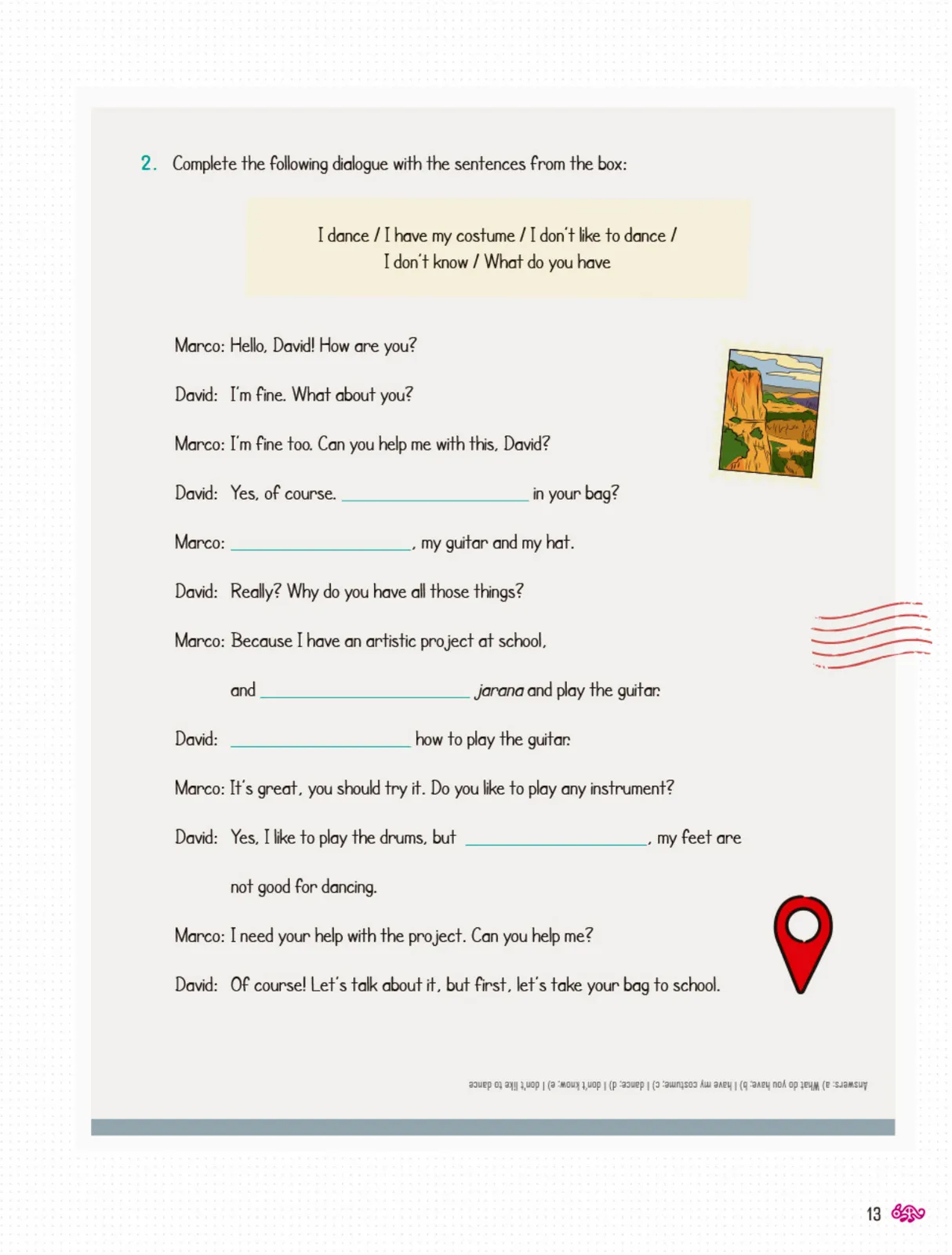
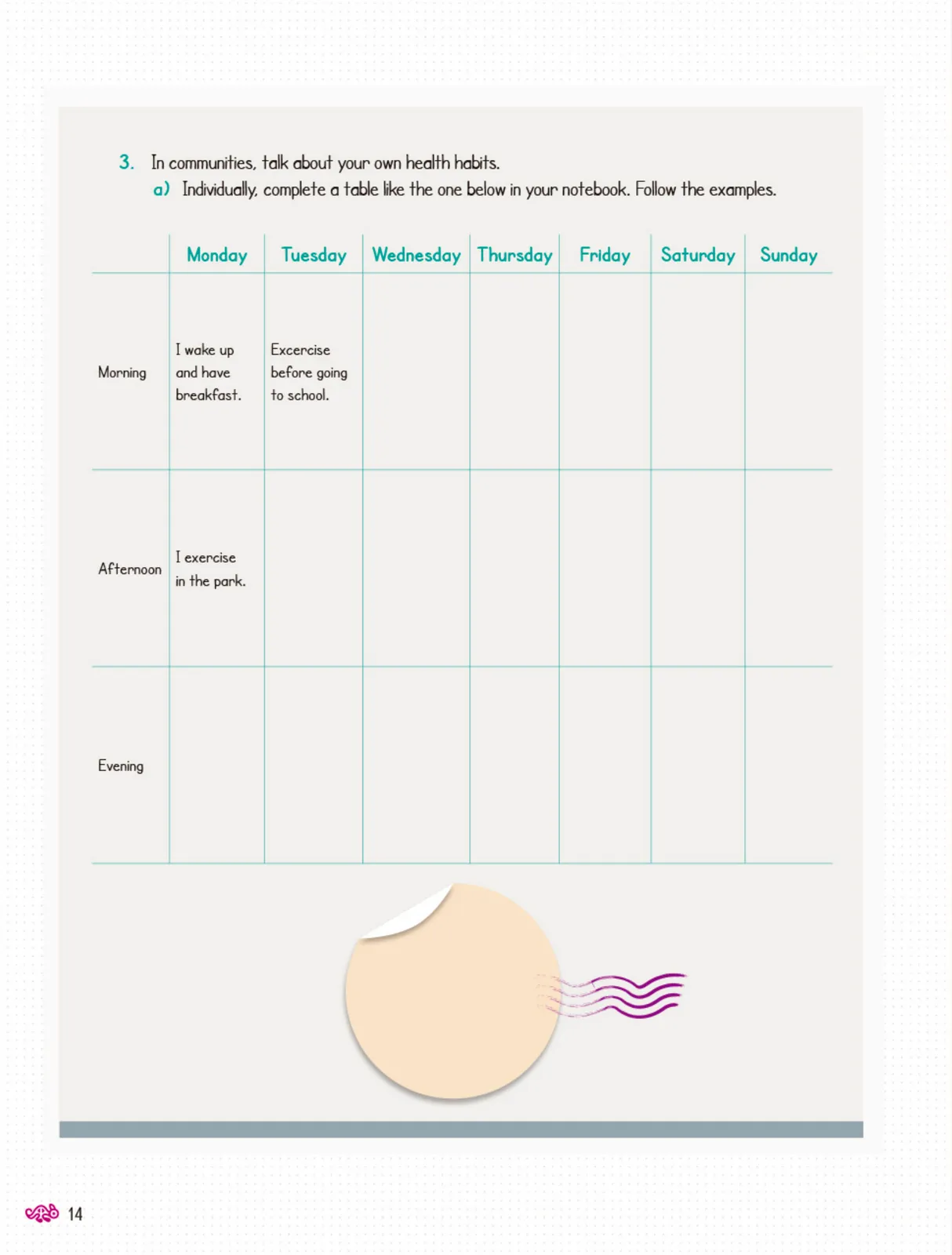
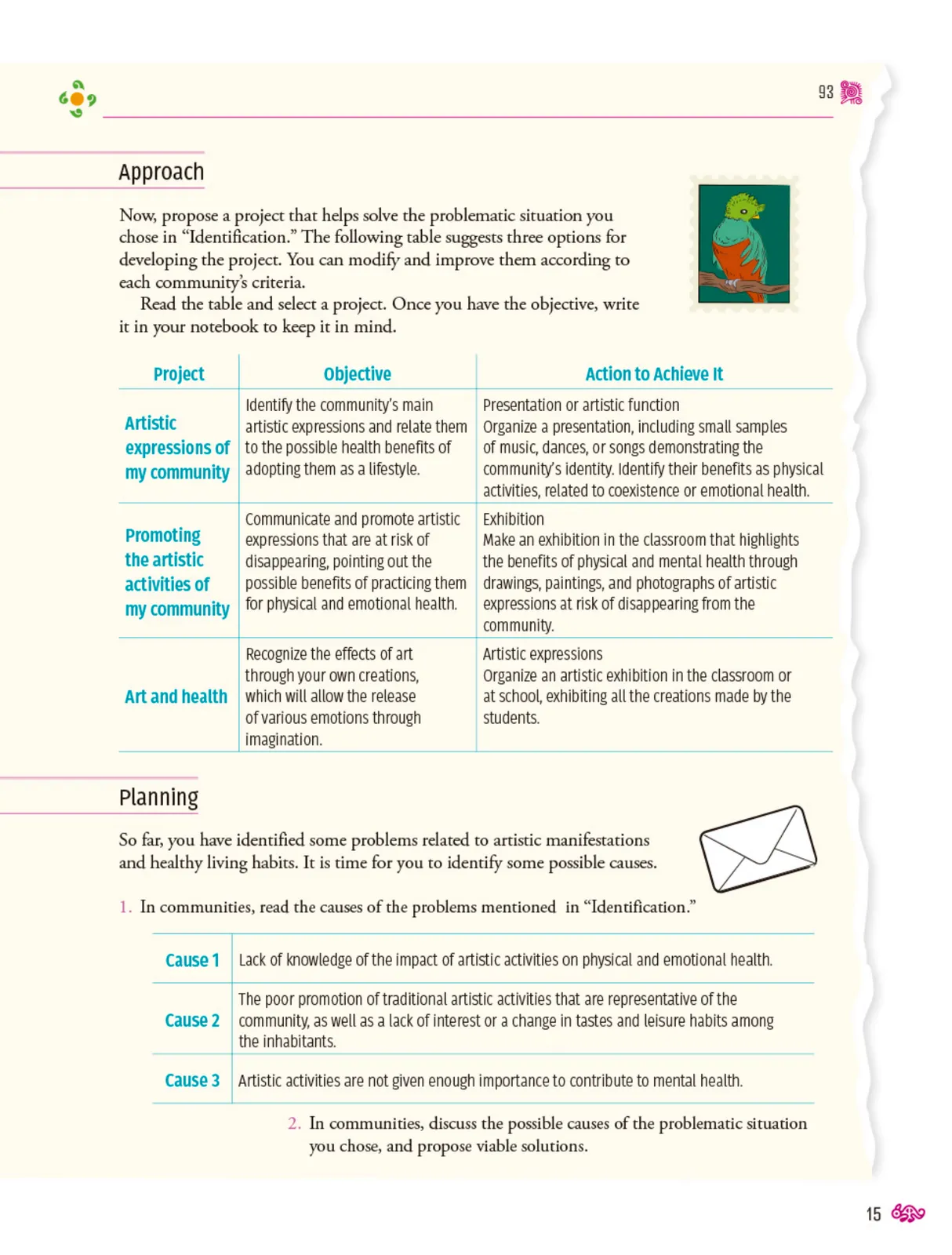
📝 Transcripción de la página (texto seleccionable) 2639 caracteres
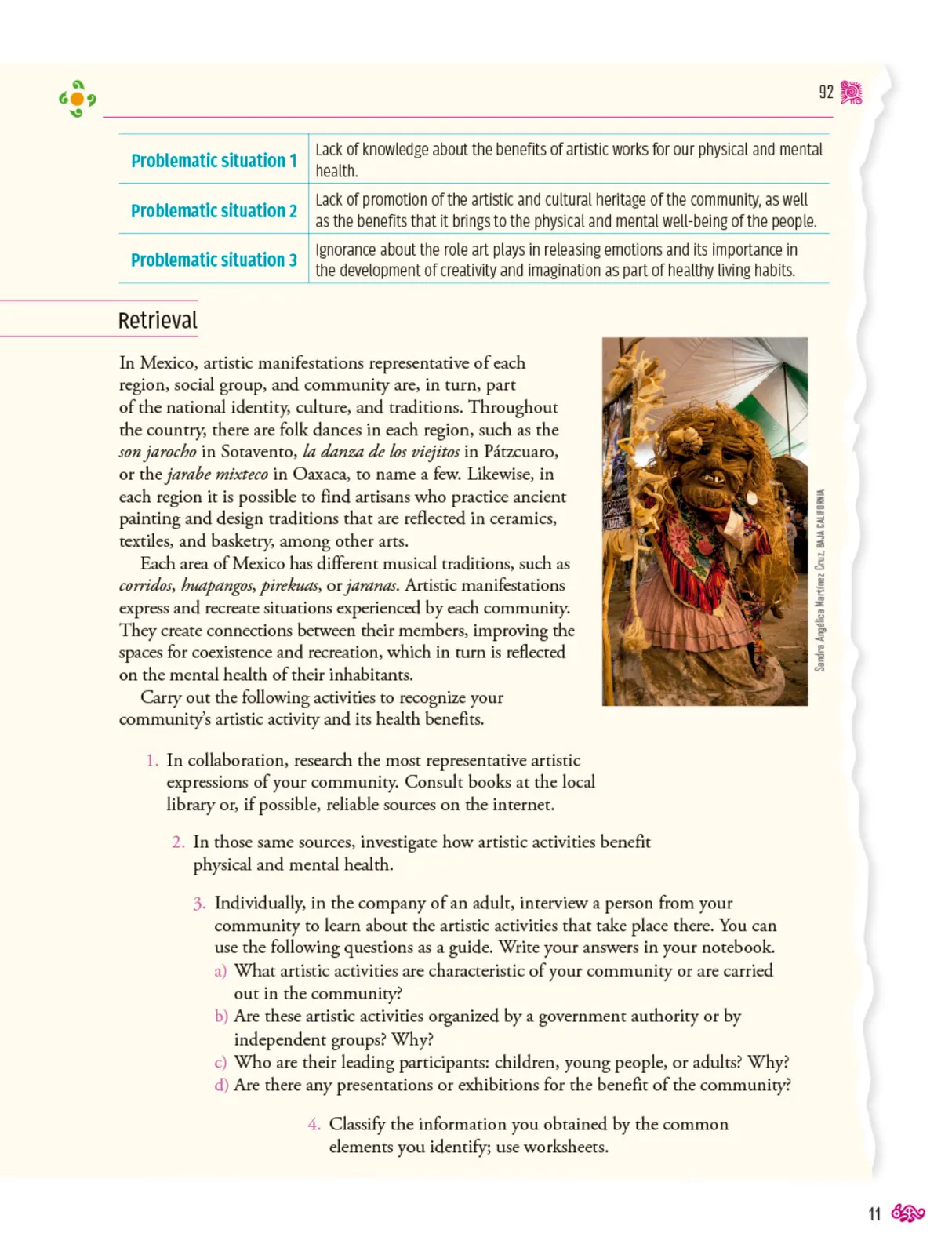
Retrieval
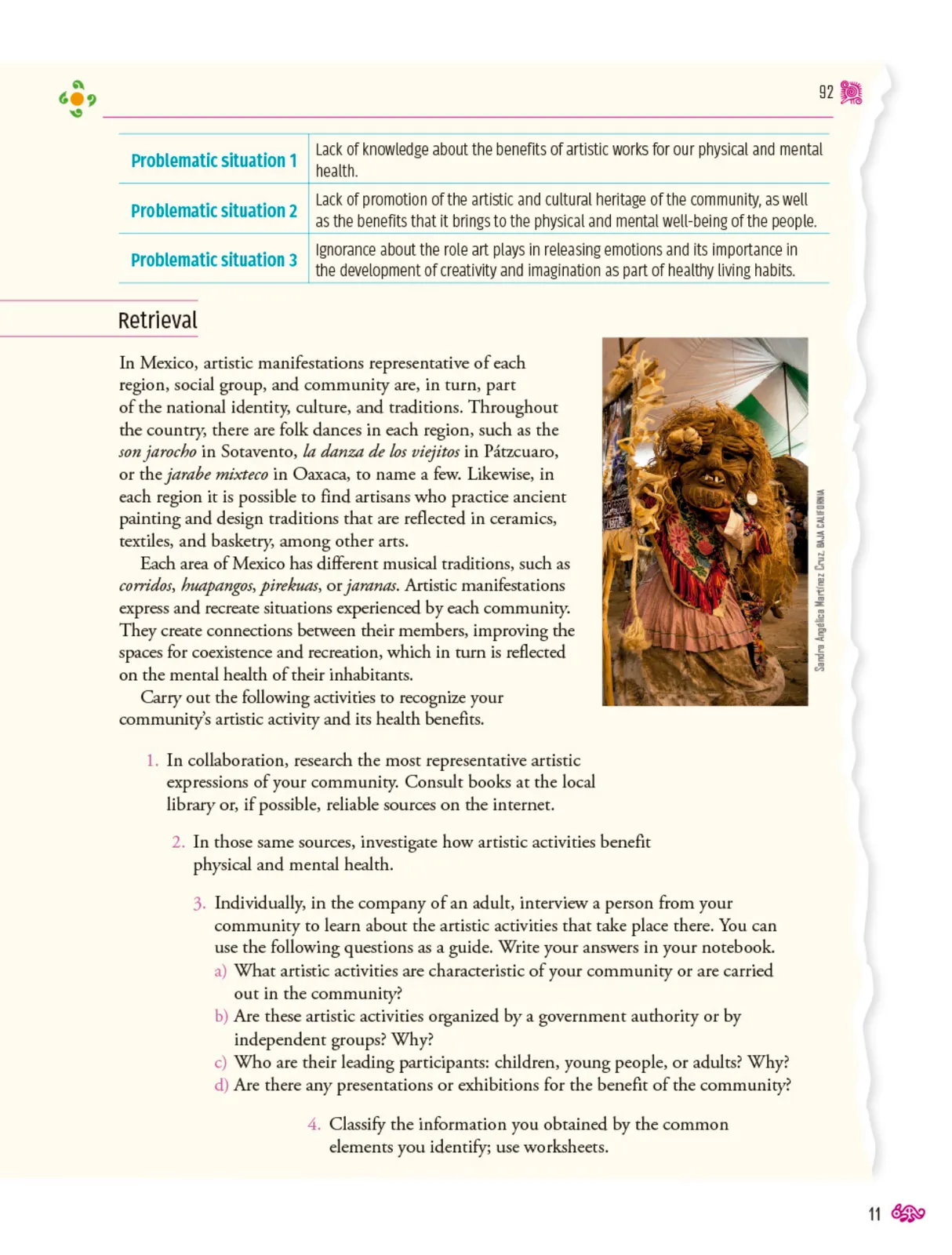
In Mexico, artistic manifestations representative of each region, social group, and community are, in turn, part of the national identity, culture, and traditions. Throughout the country, there are folk dances in each region, such as the son jarocho in Sotavento, la danza de los viejitos in Pátzcuaro,or the jarabe mixteco in Oaxaca, to name a few. Likewise, in each region it is possible to find artisans who practice ancient painting and design traditions that are reflected in ceramics,textiles, and basketry, among other arts.
Each area of Mexico has different musical traditions, such as corridos, huapangos, pirekuas, or jaranas. Artistic manifestations express and recreate situations experienced by each community.They create connections between their members, improving the spaces for coexistence and recreation, which in turn is reflected on the mental health of their inhabitants.
Carry out the following activities to recognize your community's artistic activity and its health benefits.
In collaboration, research the most representative artistic expressions of your community. Consult books at the local library or, if possible, reliable sources on the internet.
In those same sources, investigate how artistic activities benefit physical and mental health.
Individually, in the company of an adult, interview a person from your community to learn about the artistic activities that take place there. You can use the following questions as a guide. Write your answers in your notebook.a)What artistic activities are characteristic of your community or are carried out in the community?
b) Are these artistic activities organized by a government authority or by independent groups? Why?
c Who are their leading participants: children, young people, or adults? Why?d) Are there any presentations or exhibitions for the benefit of the community?
4..Classify the information you obtained by the common elements you identify; use worksheets.
92
| Problematic situation 1 | Lack of knowledge about the benefits of artistic works for our physical and mental health. |
| Problematic situation 2 | Lack of promotion of the artistic and cultural heritage of the community, as well as the benefits that it brings to the physical and mental well-being of the people. |
| Problematic situation 3 | Ignorance about the role art plays in releasing emotions and its importance in the development of creativity and imagination as part of healthy living habits. |

11
8
Otros libros recomendados
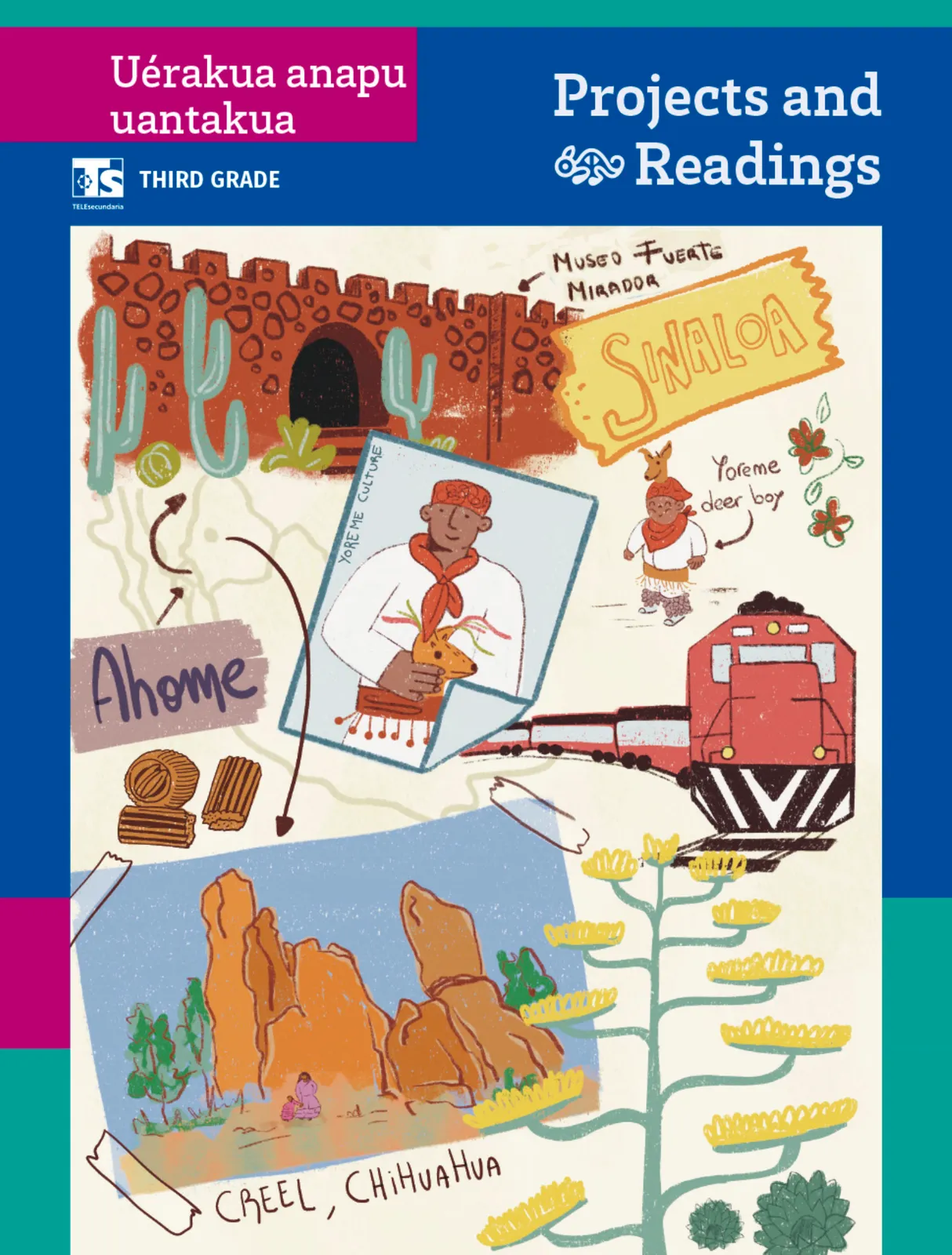
Uérakua anapu uantakua. Projects and Readings. Libro de Educación Telesecundaria Grado 3° Ciclo Escolar 2025 - 2026
SEP/CONALITEG
187 págs.
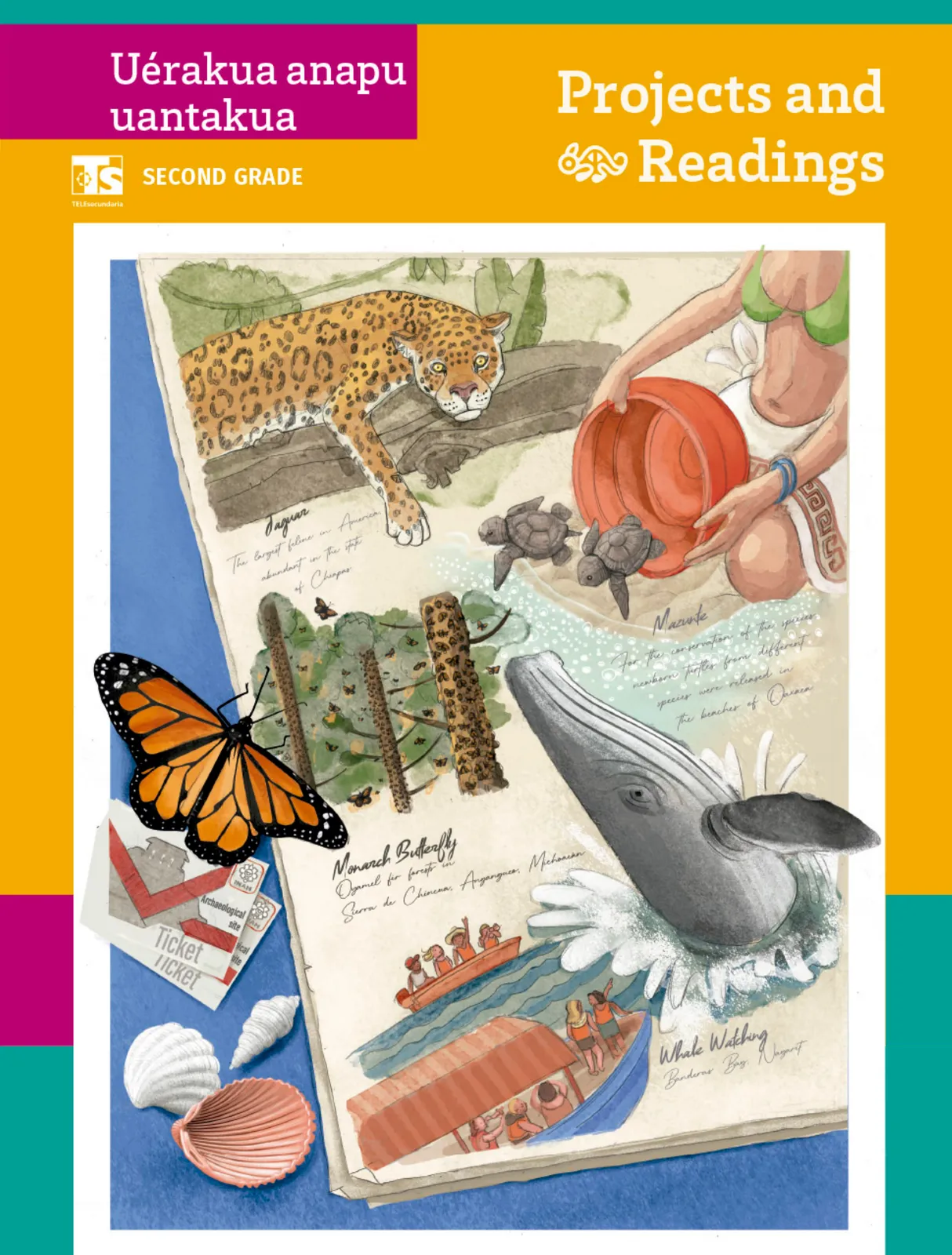
Uérakua anapu uantakua. Projects and Readings. Libro de Educación Telesecundaria Grado 2° Ciclo Escolar 2025 - 2026
SEP/CONALITEG
171 págs.
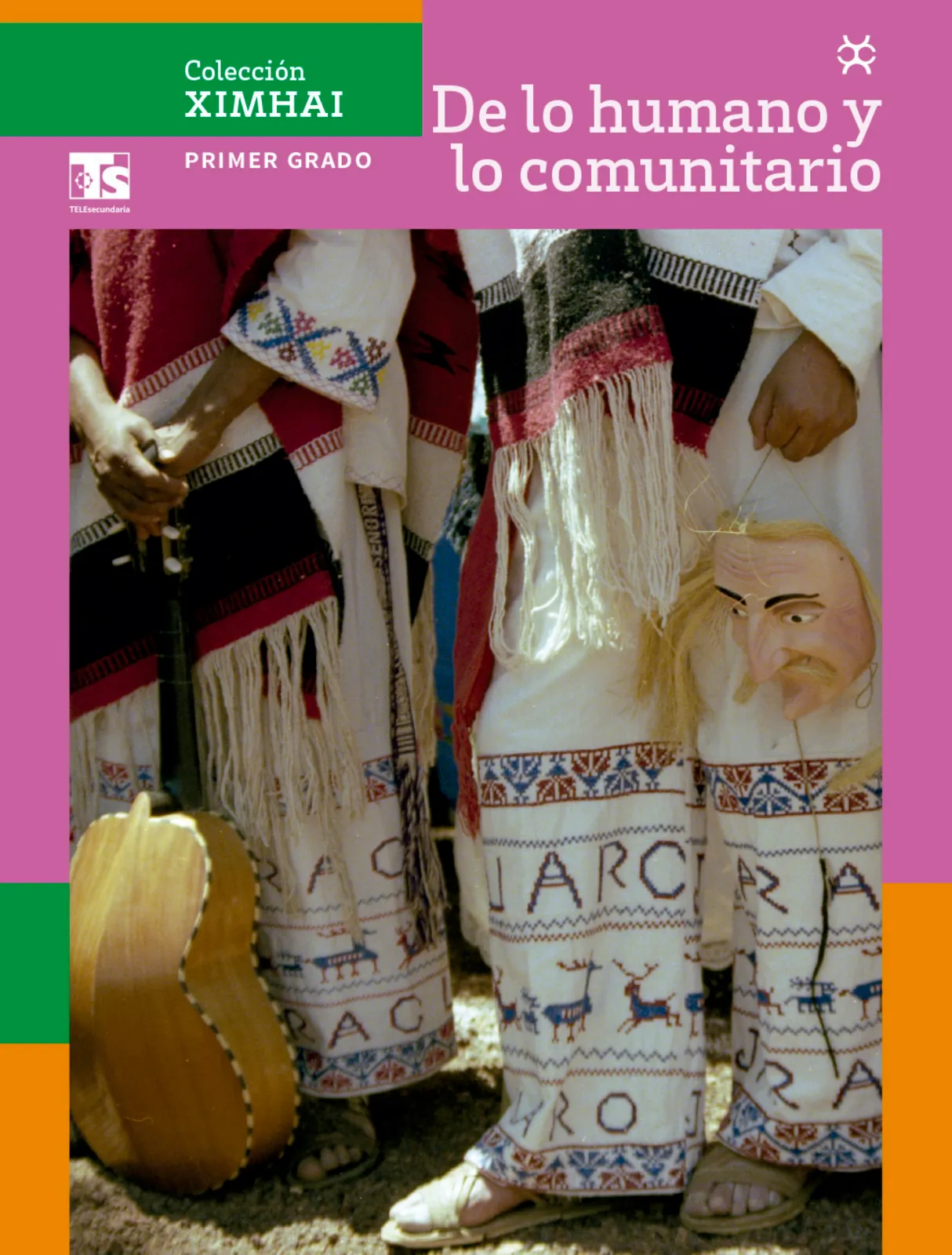
Colección Ximhai. De lo humano y lo comunitario. Libro de Educación Telesecundaria Grado 1° Ciclo Escolar 2025 - 2026
SEP/CONALITEG
259 págs.
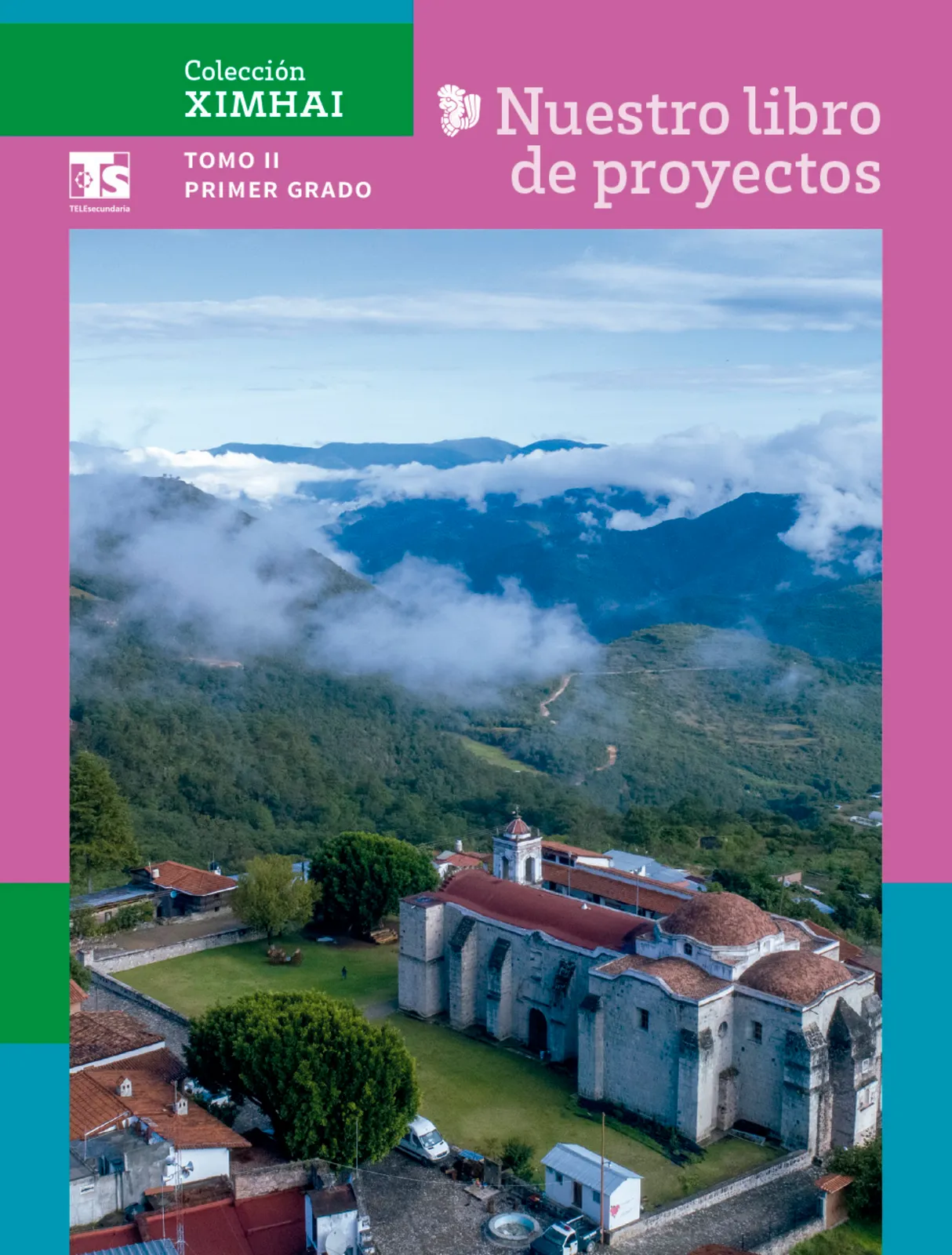
Colección Ximhai. Nuestro libro de Proyectos. Tomo II. Libro de Educación Telesecundaria Grado 1° Ciclo Escolar 2025 - 2026
SEP/CONALITEG
267 págs.
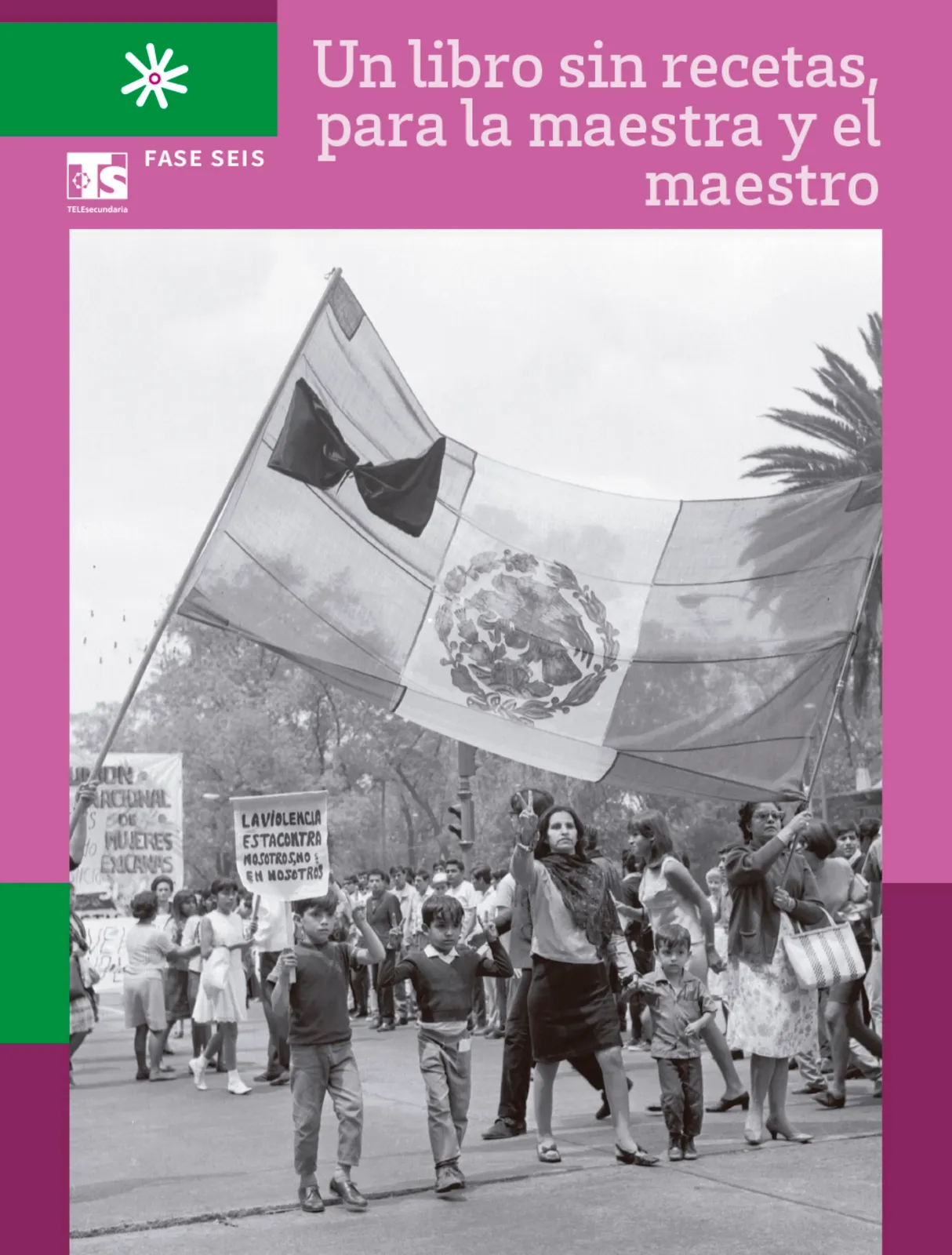
Un libro sin recetas para la maestra y el maestro. Fase 6. Libro de Educación Telesecundaria Grado 1°, 2°, 3° Ciclo Escolar 2025 - 2026
SEP/CONALITEG
203 págs.
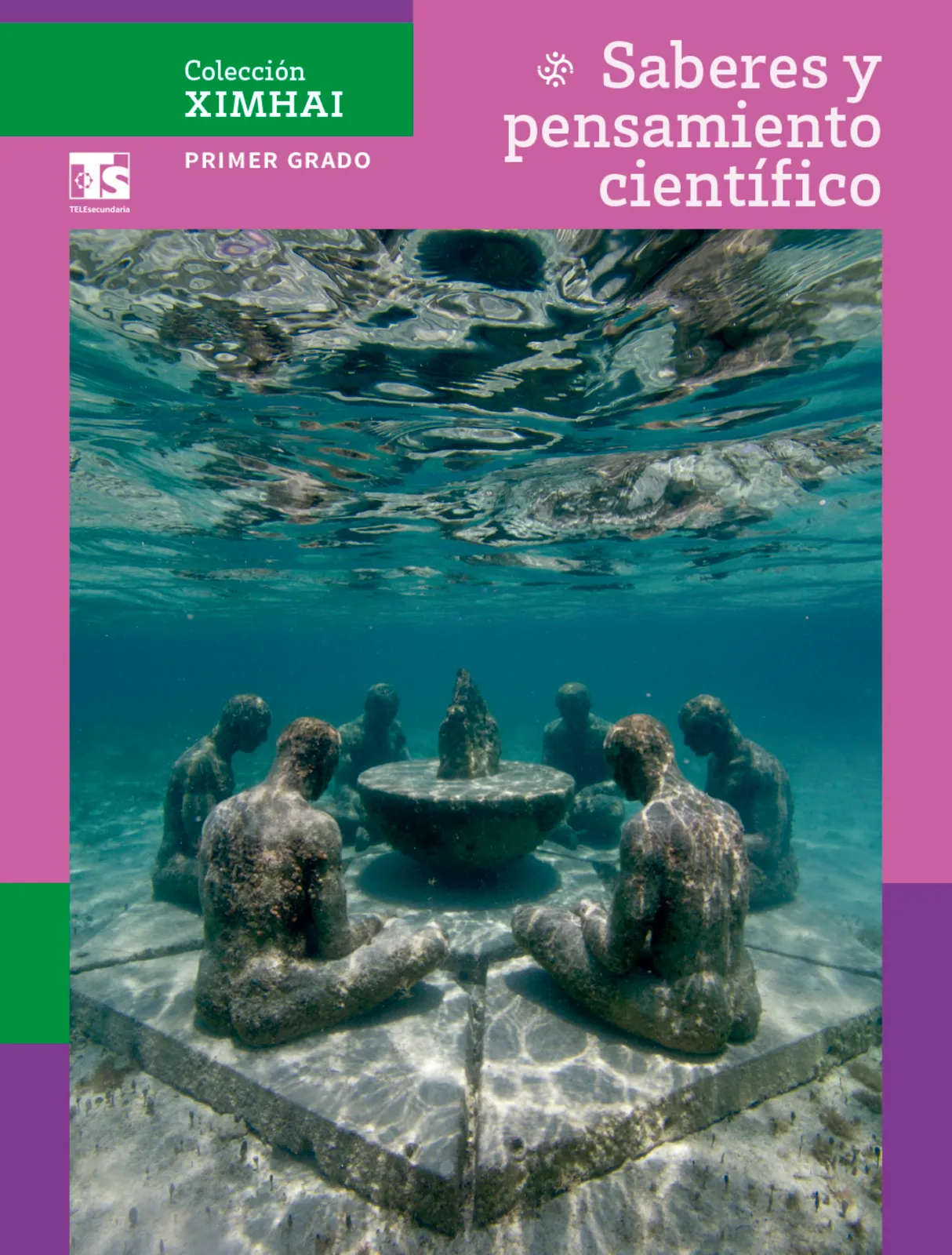
Colección Ximhai. Saberes y pensamiento científico. Libro de Educación Telesecundaria Grado 1° Ciclo Escolar 2025 - 2026
SEP/CONALITEG
339 págs.
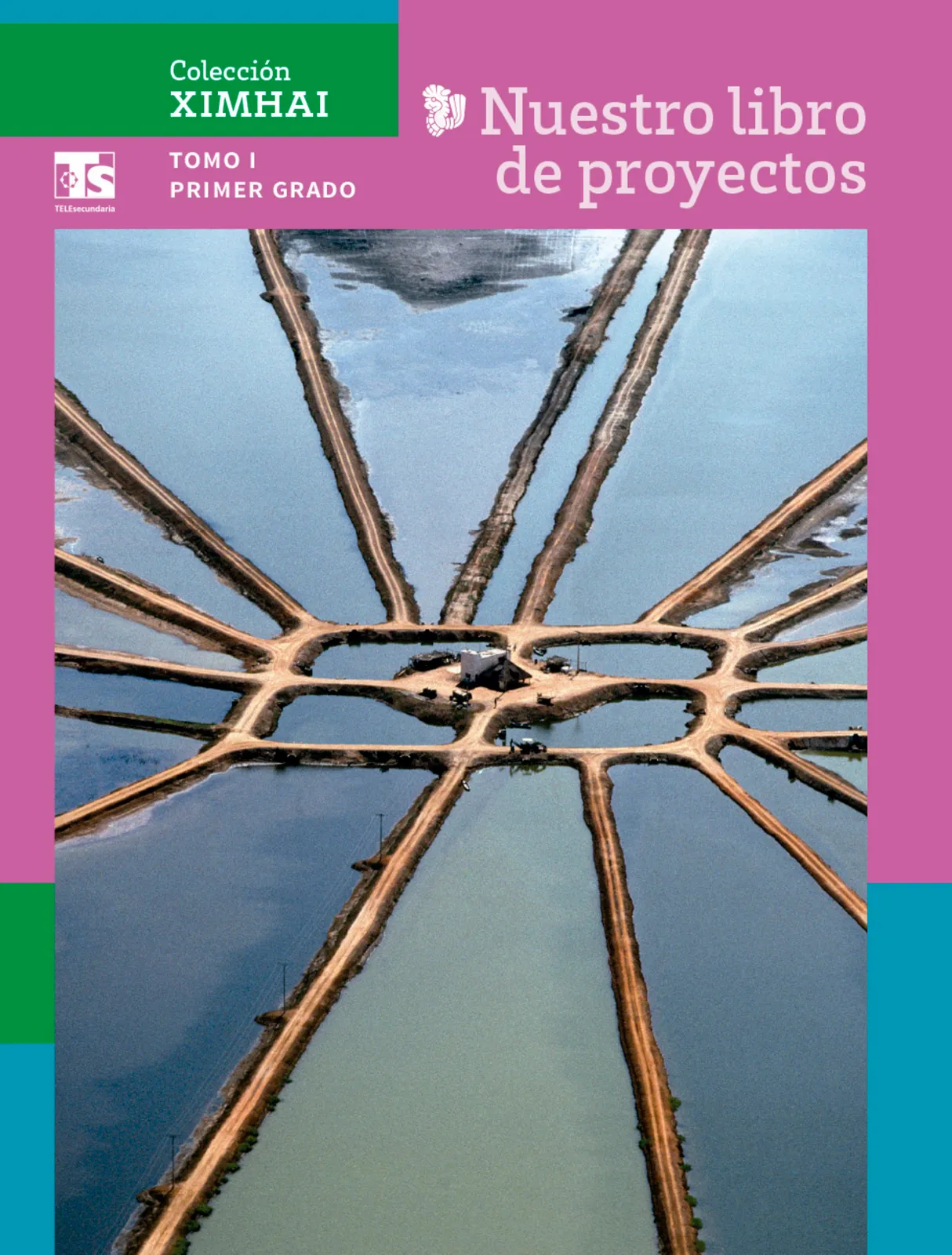
Colección Ximhai. Nuestro libro de Proyectos. Tomo I. Libro de Educación Telesecundaria Grado 1° Ciclo Escolar 2025 - 2026
SEP/CONALITEG
307 págs.
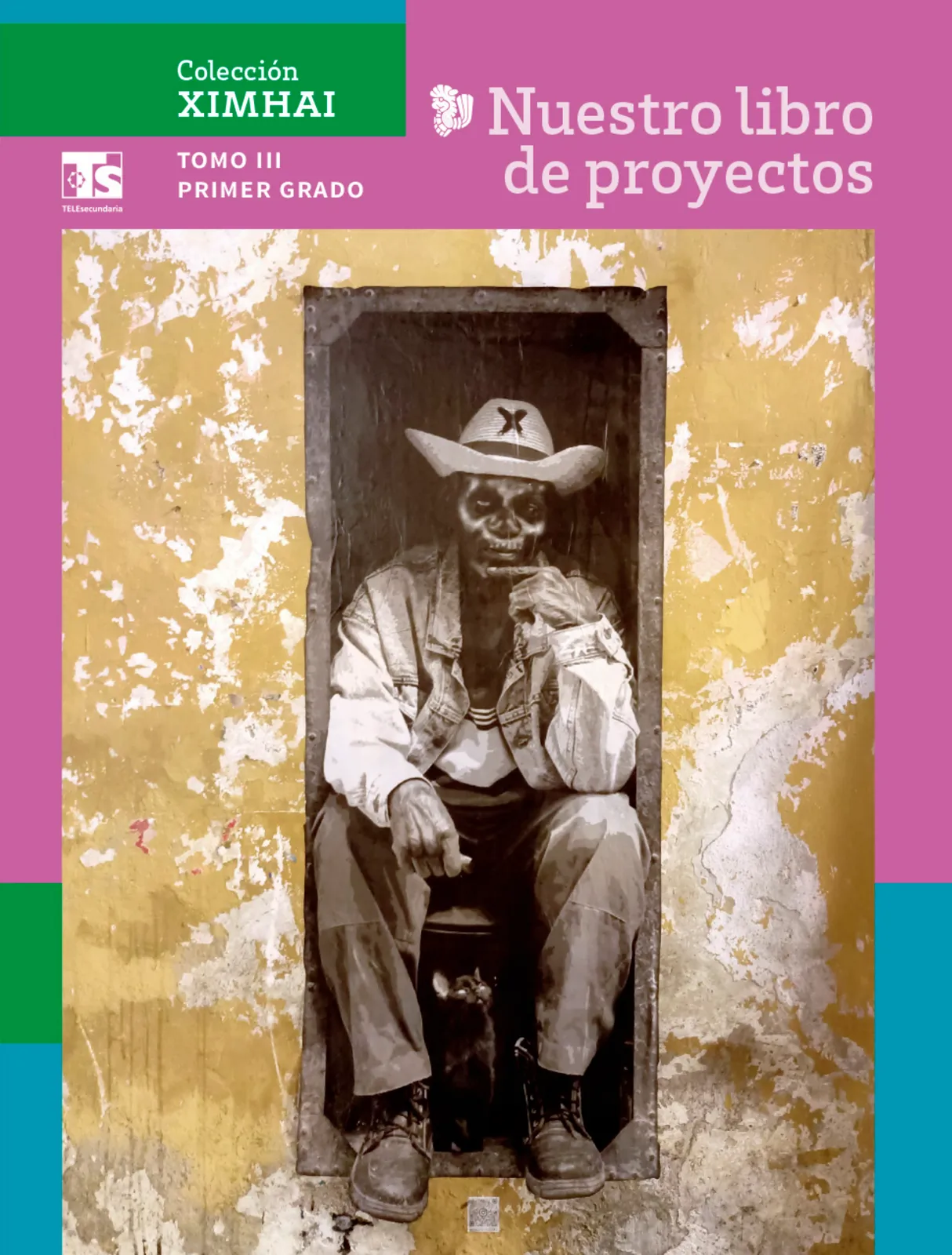
Colección Ximhai. Nuestro libro de Proyectos. Tomo III. Libro de Educación Telesecundaria Grado 1° Ciclo Escolar 2025 - 2026
SEP/CONALITEG
275 págs.