


















Balanceo de ecuaciones químicas por el método de tanteo
Respuesta rápida
Ejemplo 3: 2\mathrm{H_2O} \rightarrow 2\mathrm{H_2} + \mathrm{O_2}. Ejemplo 4: 2\mathrm{HgO} \rightarrow 2\mathrm{Hg} + \mathrm{O_2}.
Solución — Página 215
Colección Nanahuatzin. Saberes y pensamiento científico. Libro de Educación Secundaria Grado 3° Ciclo Escolar 2025 - 2026
Ejemplo 3: Electrólisis del agua
Ecuación inicial: \mathrm{H_2O_{(l)}} \xrightarrow{\text{electricidad}} \mathrm{H_{2(g)}} + \mathrm{O_{2(g)}}
Conteo inicial de átomos:
- Reactivos: H = 2, O = 1
- Productos: H = 2, O = 2 El oxígeno está desbalanceado.
Se coloca coeficiente 2 al agua para igualar el oxígeno: 2\mathrm{H_2O_{(l)}} \xrightarrow{\text{electricidad}} \mathrm{H_{2(g)}} + \mathrm{O_{2(g)}} Nuevo conteo: H = 4, O = 2 en reactivos; H = 2, O = 2 en productos.
El hidrógeno queda desbalanceado; se coloca coeficiente 2 al hidrógeno molecular: 2\mathrm{H_2O_{(l)}} \xrightarrow{\text{electricidad}} 2\mathrm{H_{2(g)}} + \mathrm{O_{2(g)}}
Verificación final:
- Reactivos: H = 2 \times 2 = 4, O = 2 \times 1 = 2
- Productos: H = 2 \times 2 = 4, O = 2 (en O_2) La ecuación está balanceada.
Respuesta: 2\mathrm{H_2O_{(l)}} \xrightarrow{\text{electricidad}} 2\mathrm{H_{2(g)}} + \mathrm{O_{2(g)}}
Ejemplo 4: Descomposición del óxido de mercurio(II)
Ecuación inicial: \mathrm{HgO_{(s)}} \xrightarrow{\Delta} \mathrm{Hg_{(l)}} + \mathrm{O_{2(g)}}
Conteo inicial de átomos:
- Reactivos: Hg = 1, O = 1
- Productos: Hg = 1, O = 2 El oxígeno está desbalanceado.
Se coloca coeficiente 2 al HgO para igualar el oxígeno: 2\mathrm{HgO_{(s)}} \xrightarrow{\Delta} \mathrm{Hg_{(l)}} + \mathrm{O_{2(g)}} Nuevo conteo: Hg = 2, O = 2 en reactivos; Hg = 1, O = 2 en productos.
El mercurio queda desbalanceado; se coloca coeficiente 2 al Hg: 2\mathrm{HgO_{(s)}} \xrightarrow{\Delta} 2\mathrm{Hg_{(l)}} + \mathrm{O_{2(g)}}
Verificación final:
- Reactivos: Hg = 2, O = 2
- Productos: Hg = 2, O = 2 La ecuación está balanceada.
Respuesta: 2\mathrm{HgO_{(s)}} \xrightarrow{\Delta} 2\mathrm{Hg_{(l)}} + \mathrm{O_{2(g)}}
Contenido de la página
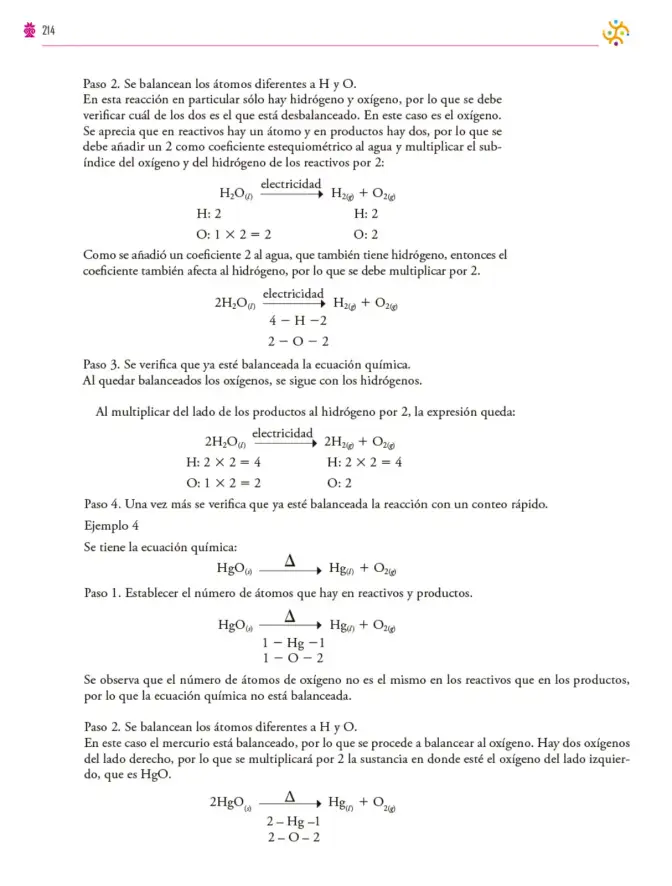
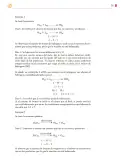
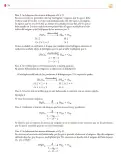
Paso 2. Se balancean los átomos diferentes a H y O.
En esta reacción en particular sólo hay hidrógeno y oxígeno, por lo que se debe verificar cuál de los dos es el que está desbalanceado. En este caso es el oxígeno. Se aprecia que en reactivos hay un átomo y en productos hay dos, por lo que se debe añadir un 2 como coeficiente estequiométrico al agua y multiplicar el subíndice del oxígeno y del hidrógeno de los reactivos por 2:
\mathrm{H_2O_{(l)}} \xrightarrow{\text{electricidad}} \mathrm{H_{2(g)}} + \mathrm{O_{2(g)}}
\mathrm{H}: 2 \quad \mathrm{H}: 2 \mathrm{O}: 1 \times 2 = 2 \quad \mathrm{O}: 2
Como se añadió un coeficiente 2 al agua, que también tiene hidrógeno, entonces el coeficiente también afecta al hidrógeno, por lo que se debe multiplicar por 2.
2\mathrm{H_2O_{(l)}} \xrightarrow{\text{electricidad}} \mathrm{H_{2(g)}} + \mathrm{O_{2(g)}}
Paso 3. Se verifica que ya esté balanceada la ecuación química. Al quedar balanceados los oxígenos, se sigue con los hidrógenos.
Al multiplicar del lado de los productos al hidrógeno por 2, la expresión queda:
2\mathrm{H_2O_{(l)}} \xrightarrow{\text{electricidad}} 2\mathrm{H_{2(g)}} + \mathrm{O_{2(g)}}
\mathrm{H}: 2 \times 2 = 4 \quad \mathrm{H}: 2 \times 2 = 4 \mathrm{O}: 1 \times 2 = 2 \quad \mathrm{O}: 2
Paso 4. Una vez más se verifica que ya esté balanceada la reacción con un conteo rápido.
Ejemplo 4
Se tiene la ecuación química:
\mathrm{HgO_{(s)}} \xrightarrow{\Delta} \mathrm{Hg_{(l)}} + \mathrm{O_{2(g)}}
Paso 1. Establecer el número de átomos que hay en reactivos y productos.
\mathrm{HgO_{(s)}} \xrightarrow{\Delta} \mathrm{Hg_{(l)}} + \mathrm{O_{2(g)}}
1 - \mathrm{Hg} - 1 1 - \mathrm{O} - 2
Se observa que el número de átomos de oxígeno no es el mismo en los reactivos que en los productos, por lo que la ecuación química no está balanceada.
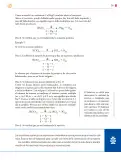
Paso 2. Se balancean los átomos diferentes a H y O.
En este caso el mercurio está balanceado, por lo que se procede a balancear al oxígeno. Hay dos oxígenos del lado derecho, por lo que se multiplicará por 2 la sustancia en donde esté el oxígeno del lado izquierdo, que es HgO.
2\mathrm{HgO_{(s)}} \xrightarrow{\Delta} \mathrm{Hg_{(l)}} + \mathrm{O_{2(g)}}
2 - \mathrm{Hg} - 1 2 - \mathrm{O} - 2
Ejemplos resueltos
Balancear la ecuación de la electrólisis del agua: \mathrm{H_2O_{(l)}} \xrightarrow{\text{electricidad}} \mathrm{H_{2(g)}} + \mathrm{O_{2(g)}}
- Conteo inicial: H=2, O=1 en reactivos; H=2, O=2 en productos. Oxígeno desbalanceado.
- Colocar coeficiente 2 al agua: 2\mathrm{H_2O} \rightarrow \mathrm{H_2} + \mathrm{O_2}. Ahora H=4, O=2 en reactivos.
- Colocar coeficiente 2 al hidrógeno: 2\mathrm{H_2O} \rightarrow 2\mathrm{H_2} + \mathrm{O_2}.
- Verificar: H=4, O=2 en ambos lados. Balanceada.
Balancear la ecuación de descomposición del óxido de mercurio(II): \mathrm{HgO_{(s)}} \xrightarrow{\Delta} \mathrm{Hg_{(l)}} + \mathrm{O_{2(g)}}
- Conteo inicial: Hg=1, O=1 en reactivos; Hg=1, O=2 en productos. Oxígeno desbalanceado.
- Colocar coeficiente 2 al HgO: 2\mathrm{HgO} \rightarrow \mathrm{Hg} + \mathrm{O_2}. Ahora Hg=2, O=2 en reactivos.
- Colocar coeficiente 2 al Hg: 2\mathrm{HgO} \rightarrow 2\mathrm{Hg} + \mathrm{O_2}.
- Verificar: Hg=2, O=2 en ambos lados. Balanceada.
Fórmulas y ecuaciones
2\mathrm{H_2O} \rightarrow 2\mathrm{H_2} + \mathrm{O_2}
2\mathrm{HgO} \rightarrow 2\mathrm{Hg} + \mathrm{O_2}
\mathrm{H_2O_{(l)}} \xrightarrow{\text{electricidad}} \mathrm{H_{2(g)}} + \mathrm{O_{2(g)}}
2\mathrm{H_2O_{(l)}} \xrightarrow{\text{electricidad}} 2\mathrm{H_{2(g)}} + \mathrm{O_{2(g)}}
\mathrm{HgO_{(s)}} \xrightarrow{\Delta} \mathrm{Hg_{(l)}} + \mathrm{O_{2(g)}}
2\mathrm{HgO_{(s)}} \xrightarrow{\Delta} 2\mathrm{Hg_{(l)}} + \mathrm{O_{2(g)}}
Glosario (3)
- Coeficiente estequiométrico
- Número que se coloca delante de una fórmula química para indicar la cantidad de moléculas o moles que participan en una reacción.
- Subíndice
- Número que se escribe a la derecha y debajo de un símbolo químico para indicar el número de átomos de ese elemento en una molécula.
- Balanceo
- Proceso de ajustar los coeficientes de una ecuación química para que el número de átomos de cada elemento sea igual en reactivos y productos.
Temas y conceptos clave
Preguntas que la gente también hace
¿Cómo se balancea una ecuación química por tanteo?
¿Qué es un coeficiente estequiométrico y cómo se usa?
¿Por qué es importante balancear las ecuaciones químicas?
- • Símbolos y fórmulas químicas
- • Ley de conservación de la masa
- • Conteo de átomos en una ecuación química
📝 Transcripción de la página (texto seleccionable) 9170 caracteres
Paso 2. Se balancean los átomos diferentes a H \mathrm{y}\mathrm{O}
En esta reacción en particular sólo hay hidrógeno y oxigeno, por lo que se debe verifi car cuál de los dos es el que está desbalanceado. En este caso es el oxígeno.Se aprecia que en reactivos hay un átomo y en productos hay dos, por lo que se debe anadir un 2 como coefi ciente estequiométrico al agua y multiplicar el subindice del oxígeno y del hidrógeno de los reactivos por 2:
\begin{aligned}\mathrm{H}_{2}\mathrm{O}_{(l)}&\xrightarrow{\mathrm{electricid}}\mathrm{H}_{2(g)}+\mathrm{O}_{2(g)}\\\mathrm{H}:2&\quad\mathrm{H}:2\\\mathrm{O}:1\times2&=2\quad\mathrm{O}:2\end{aligned}
Como se anadió un coeficiente 2 al agua, que también tiene hidrógeno, entonces el coeficiente también afecta al hidrógeno, por lo que se debe multiplicar por 2.
2H_{2}O_{(l)}\xrightarrow{\mathrm{electricidad}}H_{2(g)}+O_{2(g)}
Paso 3. Se verifica que ya esté balanceada la ecuación química.Al quedar balanceados los oxígenos, se sigue con los hidrógenos.
Al multiplicar del lado de los productos al hidrógeno por 2, la expresión queda:
2H_{2}O_{(l)}\xrightarrow{\mathrm{electricidad}}2H_{2(g)}+O_{2(g)}\xrightarrow{\mathrm{H}}2H_{2(g)}+O_{2(g)}\xrightarrow{\mathrm{H}}2H_{2(g)}+O_{2(g)}\xrightarrow{\mathrm{H}}2H_{2(g)}+O_{2(g)}\xrightarrow{\mathrm{H}}2H_{2(g)}+O_{2(g)}\xrightarrow{\mathrm{H}}2H_{2(g)}+O_{2(g)}\xrightarrow{\mathrm{H}}2H_{2(g)}+O_{2(g)}\xrightarrow{\mathrm{H}}2H_{2(g)}+O_{2(g)}\xrightarrow{\mathrm{H}}2H_{2(g)}+O_{2(g)}\xrightarrow{\mathrm{H}}2H_{2(g)}+O_{2(g)}\xrightarrow{\mathrm{H}}2H_{2(g)}+O_{2(g)}\xrightarrow{\mathrm{H}}2H_{2(g)}+O_{2(g)}\xrightarrow{\mathrm{H}}2H_{2(g)}+O_{2(g)}\xrightarrow{\mathrm{H}}2H_{2(g)}+O_{2(g)}\xrightarrow{\mathrm{H}}2H_{2(g)}+O_{2(g)}\xrightarrow{\mathrm{H}}2H_{2(g)}+O_{2(g)}\xrightarrow{\mathrm{H}}2H_{2(g)}+O_{2(g)}\xrightarrow{\mathrm{H}}2H_{2(g)}+O_{2(g)}\xrightarrow{\mathrm{H}}2H_{2(g)}+O_{2(g)}\xrightarrow{\mathrm{H}}2H_{2(g)}+O_{2(g)}\xrightarrow{\mathrm{H}}2H_{2(g)}+O_{2(g)}\xrightarrow{\mathrm{H}}2H_{2(g)}+O_{2(g)}\xrightarrow{\mathrm{H}}2H_{2(g)}+O_{2(g)}\xrightarrow{\xrightarrow{H}}2H_{2(g)}+O_{2(g)}\xrightarrow{\xrightarrow{H}}2H_{2(g)}+O_{2(g)}\xrightarrow{\xrightarrow{H}}2H_{2(g)}+O_{2(g)}\xrightarrow{\xrightarrow{H}}2H_{2(g)}+O_{2(g)}\xrightarrow{\xrightarrow{H}}2H_{2(g)}+O_{2(g)}\xrightarrow{\xrightarrow{H}}2H_{\xrightarrow{\xrightarrow{H}}}2H_{2H_{2(g)}}+O_{\xrightarrow{\xrightarrow{\xrightarrow{\xrightarrow{H}}}}}2H_{\xrightarrow{\xrightarrow{\xrightarrow{\xrightarrow{H}}}}}2H_{\xrightarrow{\xrightarrow{\xrightarrow{\xrightarrow{H}}}}}2H_{\xrightarrow{\xrightarrow{\xrightarrow{\xrightarrow{H}}}}}2H_{\xrightarrow{\xrightarrow{\xrightarrow{\xrightarrow{\xrightarrow{\xrightarrow{\xrightarrow{H}}}}}}}}2H_{\xrightarrow{\xrightarrow{\xrightarrow{\xrightarrow{\xrightarrow{\xrightarrow{\xrightarrow{\xrightarrow{\xrightarrow{\xrightarrow{}}}}}}}}}}2H_{\xrightarrow{\xrightarrow{\xrightarrow{\xrightarrow{\xrightarrow{\xrightarrow{\xrightarrow{\xrightarrow{\xrightarrow{\xrightarrow{}}}}}}}}}}}2H_{\xrightarrow{\xrightarrow{\xrightarrow{\xrightarrow{\xrightarrow{\xrightarrow{\xrightarrow{\xrightarrow{\xrightarrow{\xrightarrow{\xrightarrow{}}}}}}}}}}}2H_{\xrightarrow{\xrightarrow{\xrightarrow{\xrightarrow{\xrightarrow{\xrightarrow{\xrightarrow{\xrightarrow{\xrightarrow{\xrightarrow{}}}}}}}}}}}\xrightarrow{\xrightarrow{\xrightarrow{\xrightarrow{\xrightarrow{\xrightarrow{\xrightarrow{\xrightarrow{\xrightarrow{\xrightarrow{\xrightarrow{\xrightarrow{}}}}}}}}}}}}\xrightarrow{\xrightarrow{\xrightarrow{\xrightarrow{\xrightarrow{\xrightarrow{\xrightarrow{\xrightarrow{\xrightarrow{\xrightarrow{\xrightarrow{\xrightarrow{}}}}}}}}}}}\xrightarrow{\xrightarrow{\xrightarrow{\xrightarrow{\xrightarrow{\xrightarrow{\xrightarrow{\xrightarrow{\xrightarrow{\xrightarrow{\xrightarrow{\xrightarrow{}}}}}}}}}}\xrightarrow{\xrightarrow{\xrightarrow{\xrightarrow{\xrightarrow{\xrightarrow{\xrightarrow{\xrightarrow{\xrightarrow{\xrightarrow{}}}}}}}}\xrightarrow{\xrightarrow{\xrightarrow{\xrightarrow{\xrightarrow{\xrightarrow{\xrightarrow{\xrightarrow{\xrightarrow{}}}}}}}}}\xrightarrow{\xrightarrow{\xrightarrow{\xrightarrow{\xrightarrow{\xrightarrow{\xrightarrow{\xrightarrow{\xrightarrow{\xrightarrow{}}}}}}}}\xrightarrow{\xrightarrow{\xrightarrow{\xrightarrow{\xrightarrow{\xrightarrow{\xrightarrow{\xrightarrow{\xrightarrow{}}}}}}}}\xrightarrow{\xrightarrow{\xrightarrow{\xrightarrow{\xrightarrow{\xrightarrow{\xrightarrow{\xrightarrow{\xrightarrow{}}}}}}}}\xrightarrow{\xrightarrow{\xrightarrow{\xrightarrow{\xrightarrow{\xrightarrow{\xrightarrow{\xrightarrow{}}}}}}\xrightarrow{\xrightarrow{\xrightarrow{\xrightarrow{\xrightarrow{\xrightarrow{\xrightarrow{}}}}}}}}\xrightarrow{\xrightarrow{\xrightarrow{\xrightarrow{\xrightarrow{\xrightarrow{\xrightarrow{\xrightarrow{}}}}}}\xrightarrow{\xrightarrow{\xrightarrow{\xrightarrow{\xrightarrow{\xrightarrow{\xrightarrow{\xrightarrow{}}}}}}\xrightarrow{\xrightarrow{\xrightarrow{\xrightarrow{\xrightarrow{\xrightarrow{}}}}}}\xrightarrow{\xrightarrow{\xrightarrow{\xrightarrow{\xrightarrow{\xrightarrow{}}}}}\xrightarrow{\xrightarrow{\xrightarrow{\xrightarrow{\xrightarrow{\xrightarrow{\xrightarrow{}}}}}}}\xrightarrow{\xrightarrow{\xrightarrow{\xrightarrow{\xrightarrow{\xrightarrow{\xrightarrow{}}}}}\xrightarrow{\xrightarrow{\xrightarrow{\xrightarrow{\xrightarrow{\xrightarrow{\xrightarrow{}}}}}}\xrightarrow{\xrightarrow{\xrightarrow{\xrightarrow{\xrightarrow{\xrightarrow{}}}}}}\xrightarrow{\xrightarrow{\xrightarrow{\xrightarrow{\xrightarrow{\xrightarrow{\xrightarrow{}}}}}\xrightarrow{\xrightarrow{\xrightarrow{\xrightarrow{\xrightarrow{\xrightarrow{}}}}}\xrightarrow{\xrightarrow{\xrightarrow{\xrightarrow{\xrightarrow{}}}}}\xrightarrow{\xrightarrow{\xrightarrow{\xrightarrow{\xrightarrow{\xrightarrow{\xrightarrow{}}}}}}\xrightarrow{\xrightarrow{\xrightarrow{\xrightarrow{\xrightarrow{\xrightarrow{}}}}}\xrightarrow{\xrightarrow{\xrightarrow{\xrightarrow{\xrightarrow{}}}}\xrightarrow{\xrightarrow{\xrightarrow{\xrightarrow{\xrightarrow{}}}\xrightarrow{\xrightarrow{\xrightarrow{\xrightarrow{\xrightarrow{}}}}}\xrightarrow{\xrightarrow{\xrightarrow{\xrightarrow{\xrightarrow{}}}}\xrightarrow{\xrightarrow{\xrightarrow{\xrightarrow{\xrightarrow{}}}}\xrightarrow{\xrightarrow{\xrightarrow{\xrightarrow{}}}}\xrightarrow{\xrightarrow{\xrightarrow{\xrightarrow{\xrightarrow{\xrightarrow{}}}}}\xrightarrow{\xrightarrow{\xrightarrow{\xrightarrow{\xrightarrow{}}}\xrightarrow{\xrightarrow{\xrightarrow{}}}\xrightarrow{\xrightarrow{\xrightarrow{\xrightarrow{\xrightarrow{}}}\xrightarrow{\xrightarrow{\xrightarrow{}}}\xrightarrow{\xrightarrow{\xrightarrow{}}\xrightarrow{\xrightarrow{\xrightarrow{\xrightarrow{}}}}\xrightarrow{\xrightarrow{\xrightarrow{\xrightarrow{\xrightarrow{}}}\xrightarrow{\xrightarrow{\xrightarrow{}}\xrightarrow{\xrightarrow{\xrightarrow{\xrightarrow{}}}}\xrightarrow{\xrightarrow{\xrightarrow{\xrightarrow{\xrightarrow{}}}\xrightarrow{\xrightarrow{\xrightarrow{}}\xrightarrow{\xrightarrow{\xrightarrow{}}\xrightarrow{\xrightarrow{\xrightarrow{}}}\xrightarrow{\xrightarrow{}\xrightarrow{\xrightarrow{}\xrightarrow{\xrightarrow{\xrightarrow{}}\xrightarrow{\xrightarrow{}}}\xrightarrow{\xrightarrow{\xrightarrow{\xrightarrow{\xrightarrow{}\xrightarrow{\xrightarrow{}}\xrightarrow{}}\xrightarrow{\xrightarrow{}\xrightarrow{\xrightarrow{}\xrightarrow{}\xrightarrow{}\xrightarrow{\xrightarrow{\xrightarrow{}\xrightarrow{}\xrightarrow{\xrightarrow{\xrightarrow{}}}\xrightarrow{\xrightarrow{\xrightarrow{}}}\xrightarrow{\xrightarrow{\xrightarrow{\xrightarrow{\xrightarrow{}}}}\xrightarrow{\xrightarrow{\xrightarrow{\xrightarrow{}}\xrightarrow{\xrightarrow{\xrightarrow{}\xrightarrow{}}\xrightarrow{\xrightarrow{\xrightarrow{\xrightarrow{}}}\xrightarrow{\xrightarrow{\xrightarrow{}\xrightarrow{}}\xrightarrow{}\xrightarrow{\xrightarrow{\xrightarrow{}}\xrightarrow{\xrightarrow{}}\xrightarrow{\xrightarrow{}}\xrightarrow{\xrightarrow{\xrightarrow{}}\xrightarrow{\xrightarrow{}}\xrightarrow{\xrightarrow{}}\xrightarrow{\xrightarrow{\xrightarrow{\xrightarrow{}}}\xrightarrow{\xrightarrow{\xrightarrow{}}}\xrightarrow{\xrightarrow{\xrightarrow{}}\xrightarrow{\xrightarrow{\xrightarrow{\xrightarrow{}}}}\xrightarrow{\xrightarrow{
Paso 4. Una vez más se verifica que ya esté balanceada la reacción con un conteo rápido.Ejemplo4
Se tiene la ecuación química:
Se tiene la ecuación química:\mathrm{HgO_{(s)}}\xrightarrow{\Delta}\mathrm{Hg_{(l)}}+\mathrm{O_{2(e)}}
Paso 1. Establecer el número de átomos que hay en reactivos y productos.
\mathrm{HgO}_{(s)}\xrightarrow{\Delta}\mathrm{Hg}_{(l)}+\mathrm{O}_{2(g)}
Se observa que el número de átomos de oxígeno no es el mismo en los reactivos que en los productos,por lo que la ecuación química no está balanceada.
Paso 2. Se balancean los átomos diferentes a H y O.
En este caso el mercurio está balanceado, por lo que se procede a balancear al oxígeno. Hay dos oxigenos del lado derecho, por lo que se multiplicará por 2 la sustancia en donde esté el oxígeno del lado izquierdo, que es HgO.
2\mathrm{HgO}_{(s)}\xrightarrow[2-\mathrm{O}-2]{\Delta}\mathrm{Hg}_{(l)}+\mathrm{O}_{2(g)}
214

Otros libros recomendados

Colección Sk´asolil. Saberes y pensamiento científico. Libro de Educación Secundaria Grado 2° Ciclo Escolar 2025 - 2026
SEP/CONALITEG
339 págs.

Colección Sk´asolil. Saberes y pensamiento científico. Libro de Educación Telesecundaria Grado 2° Ciclo Escolar 2025 - 2026
SEP/CONALITEG
339 págs.

Colección Nanahuatzin. Saberes y pensamiento científico. Libro de Educación Telesecundaria Grado 3° Ciclo Escolar 2025 - 2026
SEP/CONALITEG
339 págs.
Colección Ximhai. Saberes y pensamiento científico. Libro de Educación Telesecundaria Grado 1° Ciclo Escolar 2025 - 2026
SEP/CONALITEG
339 págs.

Colección Ximhai. Saberes y pensamiento científico. Libro de Educación Secundaria Grado 1° Ciclo Escolar 2025 - 2026
SEP/CONALITEG
339 págs.
Colección Ximhai. Múltiples lenguajes. Libro de Educación Secundaria Grado 1° Ciclo Escolar 2025 - 2026
SEP/CONALITEG
163 págs.

Matematica 9° · Secundaria Activa
MinEducación
218 págs.
Ciencias Naturales 9° · Secundaria Activa
MinEducación
318 págs.