















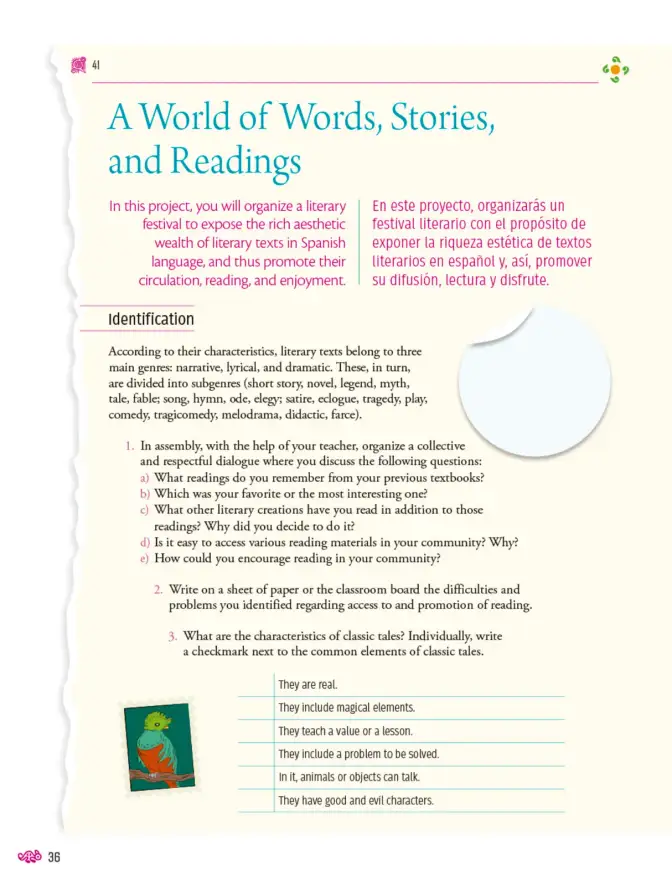
In assembly, with the help of your teacher, organize a collective and respectful dialogue where you discuss the following questions.
What readings do you remember from your previous textbooks?
Respuesta orientativa: De los libros de primaria se recuerdan lecturas como El gato con botas, Caperucita Roja, La liebre y la tortuga, poemas de Amado Nervo y leyendas como La llorona. Estas lecturas pertenecen a los géneros narrativo, lírico y dramático.
Which was your favorite or the most interesting one?
Respuesta orientativa: La favorita suele ser La liebre y la tortuga porque enseña que la constancia vence al exceso de confianza; es una fábula breve, con animales que hablan y una moraleja clara.
What other literary creations have you read in addition to those readings? Why did you decide to do it?
Respuesta orientativa: Además de las lecturas escolares, se leen cómics, novelas juveniles, canciones y obras de teatro. Se eligen porque conectan con gustos personales, son recomendadas por amigos o están disponibles en la biblioteca y en internet.
Is it easy to access various reading materials in your community? Why?
Respuesta orientativa: El acceso no siempre es fácil: en algunas comunidades faltan bibliotecas, librerías o conexión a internet, y los materiales son costosos. Sin embargo, existen alternativas como bibliotecas escolares, ferias del libro, préstamo entre vecinos y textos digitales gratuitos.
How could you encourage reading in your community?
Respuesta orientativa: Se puede fomentar la lectura con un festival literario, clubes de lectura, lecturas en voz alta, intercambio de libros, carteles con recomendaciones y visitas de narradores o escritores locales.