















Ejercicio 1
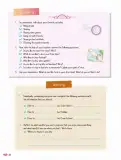
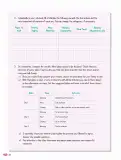
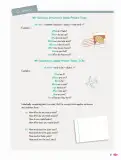
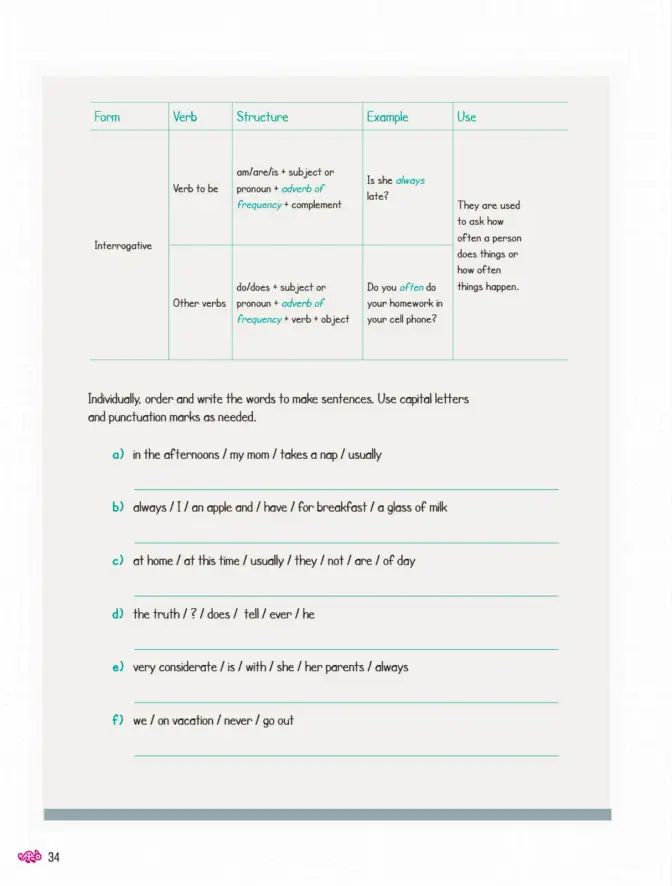
Individually, order and write the words to make sentences. Use capital letters and punctuation marks as needed.
Parte 1.a
Palabras: in the afternoons / my mom / takes a nap / usually
- Identifico el sujeto: my mom.
- El verbo es takes a nap (tercera persona singular).
- El adverbio de frecuencia usually se coloca antes del verbo principal.
- El complemento de tiempo in the afternoons va al final.
- Orden: Sujeto + adverbio + verbo + complemento.
Respuesta
My mom usually takes a nap in the afternoons.
Parte 1.b
Palabras: always / I / an apple and / have / for breakfast / a glass of milk
- Sujeto: I.
- Adverbio de frecuencia always antes del verbo.
- Verbo have.
- Objeto: an apple and a glass of milk.
- Complemento: for breakfast.
Respuesta
I always have an apple and a glass of milk for breakfast.
Parte 1.c
Palabras: at home / at this time / usually / they / not / are / of day
- Sujeto: they.
- Verbo to be: are.
- En negativo se agrega not después de are.
- Adverbio usually va después de not.
- Complemento: at home at this time of day.
Respuesta
They are not usually at home at this time of day.
Parte 1.d
Palabras: the truth / ? / does / tell / ever / he
- Es una pregunta con does (auxiliar para tercera persona).
- Estructura: Does + sujeto + adverbio + verbo + objeto + ?.
- Sujeto: he; adverbio: ever; verbo: tell; objeto: the truth.
Respuesta
Does he ever tell the truth?
Parte 1.e
Palabras: very considerate / is / with / she / her parents / always
- Sujeto: she.
- Verbo to be: is.
- Adverbio always después de is.
- Adjetivo: very considerate.
- Complemento: with her parents.
Respuesta
She is always very considerate with her parents.
Parte 1.f
Palabras: we / on vacation / never / go out
- Sujeto: we.
- Adverbio never antes del verbo.
- Verbo: go out.
- Complemento: on vacation.
Respuesta
We never go out on vacation.