















Saltar al contenido
MisLibrosTexto
Ad

Technical advances: instruments, tools and machines

📄 ejercicios ciencias-naturales 🎓 otro · 2° TELESECUNDARIA México 🇲🇽 MX 🗣 Español
Página 112
112 de 171
Página 112 de Uérakua anapu uantakua. Projects and Readings.  Libro de Educación Telesecundaria Grado 2°  Ciclo Escolar 2025 - 2026
Anterior Página 112 / 171 Siguiente

Respuesta rápida

1.a Tecnología: conocimientos y artefactos para resolver necesidades. 1.b Conservación: secado, sal, humo, fermentación, frío. 1.c Agua: vasijas de barro al fuego o piedras calientes. 1.d Pirámides: rampas, trineos, rodillos, palancas. 1.e Espacio: cohetes, satélites, sondas. 1.f Comunicación: oral, escritura, imprenta, teléfono, internet.

📚 exercise ciencias-naturales ⭐⭐ Dificultad 2/5 ⏱ 8 min lectura

Solución — Página 112

Uérakua anapu uantakua. Projects and Readings. Libro de Educación Telesecundaria Grado 2° Ciclo Escolar 2025 - 2026

1
Ejercicio 1

Reflect on how human beings have enhanced their capabilities by using tools, machines, or instruments. Answer the questions.

a
Parte 1.a

What is technology?

  1. Technology is the set of knowledge, techniques, and artifacts created to satisfy human needs.
  2. It includes both the objects (tools, machines) and the processes or methods used to make them.
  3. It is not only modern devices: it begins with the first stone tools.
Respuesta

Technology is the knowledge, techniques and artifacts that humans design to solve problems and satisfy needs, from a stone axe to a satellite.

b
Parte 1.b

How was food preserved before refrigeration processes were invented?

  1. Drying or dehydration: removing water prevents microorganisms from growing.
  2. Salting and smoking: salt and smoke stop decomposition (e.g., salted fish, smoked meat).
  3. Fermentation: milk became cheese or yogurt, cabbage became sauerkraut.
  4. Other methods: burying in cold ground, storing in caves, using ice and snow, or keeping food in honey or oil.
Respuesta

By drying, salting, smoking, fermenting, and storing in cold places such as caves or with ice and snow.

c
Parte 1.c

How was water heated before metal containers existed?

  1. Water was heated in clay or ceramic pots placed over fire.
  2. Hot stones were dropped into water held in wooden or leather containers.
  3. In some places, water was heated in hollowed stone or in animal-skin bags.
Respuesta

In clay or ceramic pots over fire, or by dropping heated stones into water inside wood, leather or stone containers.

d
Parte 1.d

How were large buildings, such as pyramids, built with no heavy machinery like cranes?

  1. Ramps of earth or sand were built to drag stone blocks upward.
  2. Wooden sleds, rollers and levers moved the blocks.
  3. Thousands of workers used ropes, pulleys and coordinated physical force.
  4. Water or sand was used to reduce friction under the sleds.
Respuesta

With ramps, sleds, rollers, levers, ropes and the coordinated work of many people, using only human and animal strength.

e
Parte 1.e

How has it been possible to explore space?

  1. Rockets use chemical fuel to overcome Earth's gravity.
  2. Telescopes and satellites observe space from Earth's orbit.
  3. Spacecraft, probes and robots travel to other planets.
  4. Life-support systems allow astronauts to survive in space.
Respuesta

Thanks to rockets, satellites, telescopes, probes and life-support systems that let humans and robots travel and work outside Earth.

f
Parte 1.f

How have the ways of communicating changed?

  1. From oral language and signals to writing.
  2. From handwritten letters carried by messengers to the printing press.
  3. From telegraph and telephone to radio, television, internet and smartphones.
  4. Today communication is instant, global and multimedia.
Respuesta

From oral language and writing to printing, telegraph, telephone, radio, TV, internet and instant mobile communication.
2
Ejercicio 2

Write the answers in your notebook. You can revise these reflections during your project.

Respuesta orientativa: The answers above can be copied and expanded in the notebook, adding local examples of instruments, tools and machines used in the community.

Cuadro comparativo: Instruments, Tools and Machines

Category What Are They? Examples
Instruments Objects manufactured or made up of a combination of pieces which are used to perform a job or an activity. They are useful for measuring or exploring some phenomena or processes in greater detail. Microscopes, magnifying glasses, needles, thermometers, scales, clocks
Tools Devices used in mechanical work that requires the exertion of some physical force to execute tasks with greater precision and dexterity. Scissors, tweezers, scalpels, screwdrivers, hammers
Machines Set of mobile and fixed elements which operation makes it possible to harness, direct, regulate, or transform energy. They enhance physical strength to move heavy objects, and to fix, measure or record data or events. Pulleys, stretchers, wheelbarrows, motor vehicles, meters, monitors

Contenido de la página

  1. To start the discussion and understand that technical advances have helped humanity from the beginning, in communities and with the help of your teacher, reflect on how human beings have enhanced their capabilities by using tools, machines, or instruments. Ask yourselves questions such as:

a) What is technology?

b) How was food preserved before refrigeration processes were invented?

c) How was water heated before metal containers existed?

d) How were large buildings, such as pyramids, built with no heavy machinery like cranes?

e) How has it been possible to explore space?

f) How have the ways of communicating changed?

  1. Write the answers in your notebook. You can revise these reflections during your project.

It's worth acknowledging that technical advances not only respond to technological devices such as computers, sensors, robots, or satellites, but they are also part of the history of humanity and have allowed us to solve endless problems.

The information included in the table below will help you identify the characteristics of instruments, tools, and machines.

What Are They? Examples
Instruments Objects manufactured or made up of a combination of pieces which are used to perform a job or an activity. They are useful for measuring or exploring some phenomena or processes in greater detail. Microscopes, magnifying glasses, needles, thermometers, scales, clocks
Tools Devices used in mechanical work that requires the exertion of some physical force to execute tasks with greater precision and dexterity. Scissors, tweezers, scalpels, screwdrivers, hammers
Machines Set of mobile and fixed elements which operation makes it possible to harness, direct, regulate, or transform energy. They enhance physical strength to move heavy objects, and to fix, measure or record data or events. Pulleys, stretchers, wheelbarrows, motor vehicles, meters, monitors

Ejemplos resueltos

Classify a thermometer according to the table.

A thermometer is an instrument because it is used to measure temperature with greater detail; it does not require great physical force and it is not a set of mobile and fixed elements that transforms energy.

Classify a wheelbarrow according to the table.

A wheelbarrow is a machine because it combines fixed and mobile elements (wheel, lever, container) that enhance physical strength to move heavy objects.

Tabla

Category What Are They? Examples
Instruments Objects manufactured or made up of a combination of pieces which are used to perform a job or an activity. They are useful for measuring or exploring some phenomena or processes in greater detail. Microscopes, magnifying glasses, needles, thermometers, scales, clocks
Tools Devices used in mechanical work that requires the exertion of some physical force to execute tasks with greater precision and dexterity. Scissors, tweezers, scalpels, screwdrivers, hammers
Machines Set of mobile and fixed elements which operation makes it possible to harness, direct, regulate, or transform energy. They enhance physical strength to move heavy objects, and to fix, measure or record data or events. Pulleys, stretchers, wheelbarrows, motor vehicles, meters, monitors

Diagrama

graph TD
  A[Technical advances] --> B[Instruments]
  A --> C[Tools]
  A --> D[Machines]
  B --> B1[Measure or explore phenomena]
  B --> B2[Microscopes, thermometers, clocks]
  C --> C1[Require physical force]
  C --> C2[Scissors, screwdrivers, hammers]
  D --> D1[Transform or direct energy]
  D --> D2[Pulleys, wheelbarrows, vehicles]

Glosario (7)

Technology
Conjunto de conocimientos, técnicas y artefactos creados para resolver necesidades humanas.
Instrument
Objeto fabricado o formado por piezas que sirve para realizar un trabajo o actividad, especialmente para medir o explorar fenómenos.
Tool
Dispositivo usado en trabajo mecánico que requiere aplicar fuerza física para ejecutar tareas con precisión y destreza.
Machine
Conjunto de elementos móviles y fijos que permite aprovechar, dirigir, regular o transformar energía.
Refrigeration
Proceso de enfriamiento para conservar alimentos.
Dexterity
Destreza o habilidad manual.
Harness
Aprovechar o controlar una fuerza o energía.

Preguntas para practicar

What is technology?

Technology is the set of knowledge, techniques and artifacts that humans create to solve problems and satisfy needs, from a stone axe to a satellite.

How was food preserved before refrigeration processes were invented?

By drying, salting, smoking, fermenting, and storing in cold places such as caves or with ice and snow.

How was water heated before metal containers existed?

In clay or ceramic pots over fire, or by dropping heated stones into water inside wood, leather or stone containers.

How were large buildings, such as pyramids, built with no heavy machinery like cranes?

With ramps, sleds, rollers, levers, ropes and the coordinated work of many people, using only human and animal strength.

How has it been possible to explore space?

Thanks to rockets, satellites, telescopes, probes and life-support systems that let humans and robots travel and work outside Earth.

How have the ways of communicating changed?

From oral language and writing to printing, telegraph, telephone, radio, TV, internet and instant mobile communication.
Temas y conceptos clave

Avances técnicos a lo largo de la historiaInstrumentos, herramientas y máquinasReflexión sobre tecnología y capacidades humanasTecnologíaInstrumentoHerramientaMáquinaAvance técnicoEnergíaPrecisiónDestreza
¿Te fue útil esta página?

Figuras de la página (1)

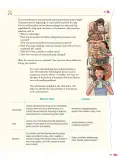
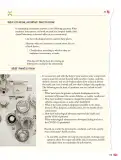
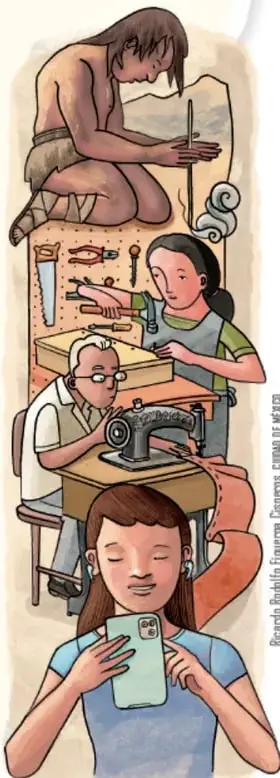
Ilustración vertical con cuatro escenas históricas: un hombre primitivo tallando piedra, una persona usando herramientas de carpintería, una persona cosiendo con máquina de coser y una joven usando un teléfono inteligente. Muestra la evolución de la tecnología.
Figura 1 image

Preguntas que la gente también hace

¿Cuál es la diferencia entre un instrumento, una herramienta y una máquina?
Consulta la solución completa arriba o explora el libro entero para temas relacionados.
¿Cómo se conservaban los alimentos antes de la refrigeración?
Consulta la solución completa arriba o explora el libro entero para temas relacionados.
¿Cómo se construyeron las pirámides sin grúas?
Consulta la solución completa arriba o explora el libro entero para temas relacionados.
📌 Antes de leer esto
  • • Vocabulario básico en inglés sobre objetos y acciones
  • • Noción de necesidad humana y satisfacción de necesidades
  • • Conocimiento elemental de máquinas simples (palanca, polea, plano inclinado)
Siguiente tema sugerido
Clasificación y uso de instrumentos, herramientas y máquinas en el proyecto técnico
📝 Transcripción de la página (texto seleccionable) 2117 caracteres
  1. To start the discussion and understand that technical advances have helped humanity from the beginning, in communities and with the help of your teacher, reflect on how human beings have enhanced their capabilities by using tools, machines, or instruments. Ask yourselves questions such as:

a What is technology?

b) How was food preserved before refrigeration processes were invented?

c) How was water heated before metal containers existed?

d) How were large buildings, such as pyramids, built with no heavy machinery like cranes?

e) How has it been possible to explore space?

f) How have the ways of communicating changed?

  1. Write the answers in your notebook. You can revise these reflections during your project.

It's worth acknowledging that technical advances not only respond to technological devices such as computers, sensors, robots, or satellites, but they are also part of the history of humanity and have allowed us to solve endless problems.

The information included in the table below will help you identify the characteristics of instruments,tools, and machines.

×

214

![](page=0,bbox=[860, 176, 1140, 954])

What Are They?Examples
InstrumentsObjects manufactured or made up of a combination of pieces which are used to perform a job or an activity. They are useful for measuring or exploring some phenomena or processes in greater detail.Microscopes, magnifying glasses, needles, thermometers, scales, clocks
ToolsDevices used in mechanical work that requires the exertion of some physical force to execute tasks with greater precision and dexterity.Scissors, tweezers, scalpels, screwdrivers, hammers
MachinesSet of mobile and fixed elements which operation makes it possible to harness, direct, regulate, or transform energy. They enhance physical strength to move heavy objects, and to fix, measure or record data or events.Pulleys, stretchers, wheelbarrows, motor vehicles, meters, monitors

111

中

Ad

Otros libros recomendados

Ver todos →
Ad

Usamos cookies propias y de terceros para personalizar contenido, mostrar publicidad y analizar el tráfico. Las cookies necesarias siempre están activas.