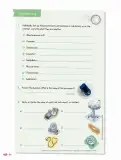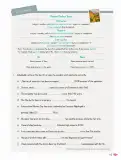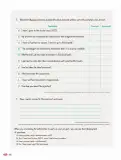















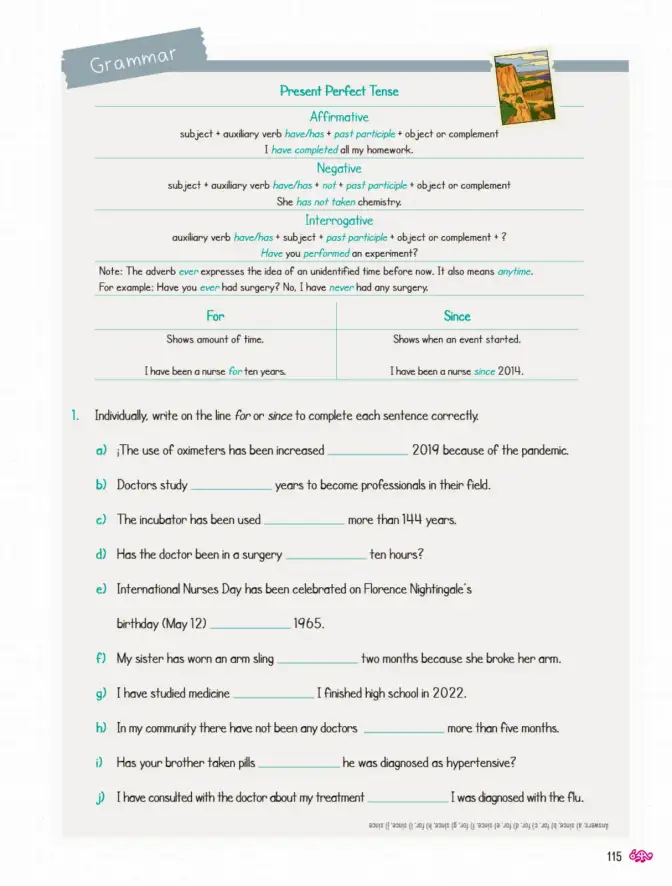
Individually, write on the line for or since to complete each sentence correctly.
Regla: for + período de tiempo (amount of time); since + punto de inicio (when an event started).
"The use of oximeters has been increased ___ 2019 because of the pandemic."
- "2019" es un año, es decir, un punto de inicio en el tiempo.
- Por lo tanto corresponde since.
since
"Doctors study ___ years to become professionals in their field."
- "years" es una cantidad o período de tiempo.
- Corresponde for.
for
"The incubator has been used ___ more than 144 years."
- "more than 144 years" es una duración.
- Corresponde for.
for
"Has the doctor been in a surgery ___ ten hours?"
- "ten hours" es un período de tiempo.
- Corresponde for.
for
"International Nurses Day has been celebrated on Florence Nightingale's birthday (May 12) ___ 1965."
- "1965" es un año, un punto de inicio.
- Corresponde since.
since
"My sister has worn an arm sling ___ two months because she broke her arm."
- "two months" es una duración.
- Corresponde for.
for
"I have studied medicine ___ I finished high school in 2022."
- La cláusula "I finished high school in 2022" marca el momento en que empezó la acción.
- Corresponde since.
since
"In my community there have not been any doctors ___ more than five months."
- "more than five months" es un período.
- Corresponde for.
for
"Has your brother taken pills ___ he was diagnosed as hypertensive?"
- "he was diagnosed" es el punto de inicio de la acción.
- Corresponde since.
since
"I have consulted with the doctor about my treatment ___ I was diagnosed with the flu."
- "I was diagnosed with the flu" indica cuándo comenzó la acción.
- Corresponde since.
since