Saltar al contenido
MisLibrosTexto
Ad

Vocabulary: Science and News

📄 ejercicios ingles 🎓 otro · 2° TELESECUNDARIA México 🇲🇽 MX 🗣 Español
Página 13
13 de 171
Página 13 de Uérakua anapu uantakua. Projects and Readings.  Libro de Educación Telesecundaria Grado 2°  Ciclo Escolar 2025 - 2026
Anterior Página 13 / 171 Siguiente

Respuesta rápida

I-h, II-l, III-k, IV-a, V-i, VI-c, VII-d, VIII-f, IX-b, X-g, XI-e, XII-j. La información pseudocientífica genera desinformación; hay que verificar fuentes.

📚 exercise ingles ⭐⭐ Dificultad 2/5 ⏱ 8 min lectura

Solución — Página 13

Uérakua anapu uantakua. Projects and Readings. Libro de Educación Telesecundaria Grado 2° Ciclo Escolar 2025 - 2026

1
Ejercicio 1

Match the word on the left with its definition on the right.

  1. Scientist → h) Someone who studies the world and carries out different experiments.
  2. Journalist → l) Someone who reports current and recent events.
  3. Facts → k) Information that can be proven true.
  4. Opinions → a) Personal convictions or feelings.
  5. Evidence → i) Information that supports a fact.
  6. Beliefs → c) What you think is true without any proof.
  7. Diagram → d) A drawing that shows the parts of something and how they relate.
  8. Stories → f) Narratives that may be true or fictional.
  9. Charts → b) Visual representations of data using bars or lines.
  10. Pictures → g) Images that show something.
  11. Current events → e) Situations that are happening right now.
  12. Old incidents → j) Events that happened in the past.
Respuesta

I-h, II-l, III-k, IV-a, V-i, VI-c, VII-d, VIII-f, IX-b, X-g, XI-e, XII-j.

2
Ejercicio 2

Problematic situation 2: information considered scientific but not based on science causes disagreement and misinformation.

  1. Se identifica el problema: circula información pseudocientífica por distintos medios.
  2. Se reconoce la causa: no toda la información compartida tiene respaldo científico.
  3. Se reconoce el efecto: surgen desacuerdos y desinformación en la comunidad.

Respuesta orientativa: Es importante verificar las fuentes y distinguir entre información comprobada y creencias antes de compartirla.

3
Ejercicio 3

Retrieval: popular science texts vs. news articles.

  1. Popular science texts: su propósito es compartir avances científicos y aumentar el conocimiento del público.
  2. News articles: su propósito es informar sobre eventos de interés colectivo.
  3. Ambos permiten al lector formar su propio punto de vista.

Respuesta orientativa: Los textos de divulgación explican ciencia para el público general; los artículos periodísticos informan sobre hechos de interés colectivo para que el lector forme su opinión.

Contenido de la página

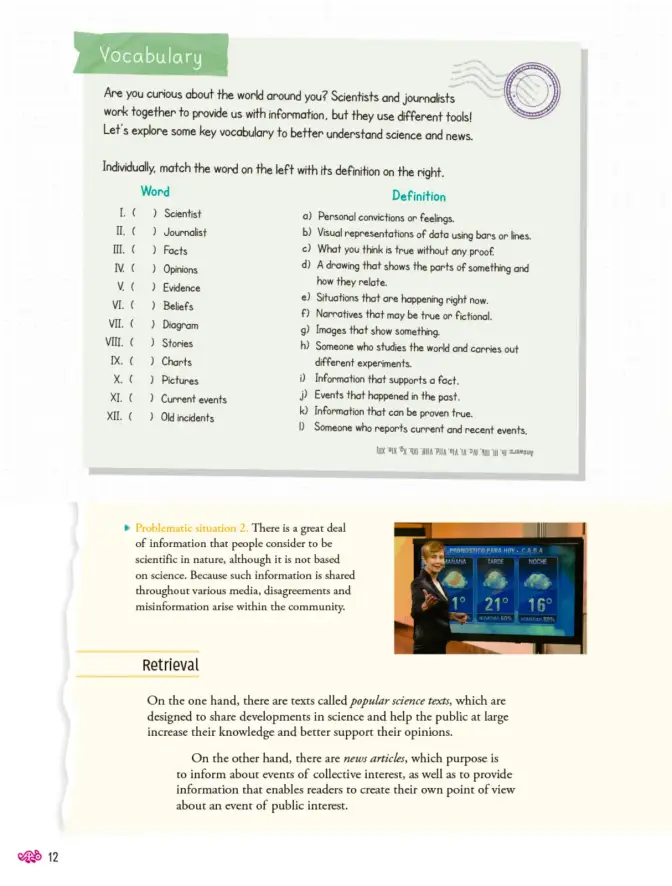
Vocabulary

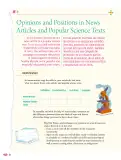
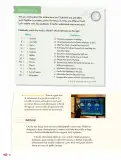
Are you curious about the world around you? Scientists and journalists work together to provide us with information, but they use different tools! Let's explore some key vocabulary to better understand science and news.

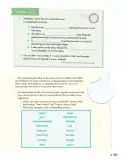
Individually, match the word on the left with its definition on the right.

Word

I. ( ) Scientist II. ( ) Journalist III. ( ) Facts IV. ( ) Opinions V. ( ) Evidence VI. ( ) Beliefs VII. ( ) Diagram VIII. ( ) Stories IX. ( ) Charts X. ( ) Pictures XI. ( ) Current events XII. ( ) Old incidents

Definition

a) Personal convictions or feelings. b) Visual representations of data using bars or lines. c) What you think is true without any proof. d) A drawing that shows the parts of something and how they relate. e) Situations that are happening right now. f) Narratives that may be true or fictional. g) Images that show something. h) Someone who studies the world and carries out different experiments. i) Information that supports a fact. j) Events that happened in the past. k) Information that can be proven true. l) Someone who reports current and recent events.


Problematic situation 2

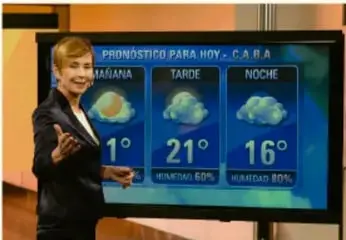
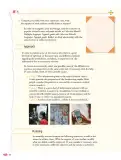
There is a great deal of information that people consider to be scientific in nature, although it is not based on science. Because such information is shared throughout various media, disagreements and misinformation arise within the community.


Retrieval

On the one hand, there are texts called popular science texts, which are designed to share developments in science and help the public at large increase their knowledge and better support their opinions.

On the other hand, there are news articles, which purpose is to inform about events of collective interest, as well as to provide information that enables readers to create their own point of view about an event of public interest.

Tabla

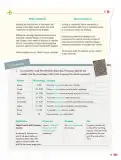
Word Definition
Scientist h) Someone who studies the world and carries out different experiments.
Journalist l) Someone who reports current and recent events.
Facts k) Information that can be proven true.
Opinions a) Personal convictions or feelings.
Evidence i) Information that supports a fact.
Beliefs c) What you think is true without any proof.
Diagram d) A drawing that shows the parts of something and how they relate.
Stories f) Narratives that may be true or fictional.
Charts b) Visual representations of data using bars or lines.
Pictures g) Images that show something.
Current events e) Situations that are happening right now.
Old incidents j) Events that happened in the past.

Glosario (12)

Scientist
Someone who studies the world and carries out different experiments.
Journalist
Someone who reports current and recent events.
Facts
Information that can be proven true.
Opinions
Personal convictions or feelings.
Evidence
Information that supports a fact.
Beliefs
What you think is true without any proof.
Diagram
A drawing that shows the parts of something and how they relate.
Stories
Narratives that may be true or fictional.
Charts
Visual representations of data using bars or lines.
Pictures
Images that show something.
Current events
Situations that are happening right now.
Old incidents
Events that happened in the past.

Preguntas para practicar

Why is it important to distinguish scientific information from pseudoscientific information?

Porque la información pseudocientífica puede generar desinformación y desacuerdos en la comunidad. Verificar las fuentes ayuda a tomar decisiones informadas.

What tools do scientists and journalists use to share information?

Los científicos usan experimentos, datos y evidencia; los periodistas usan reportajes, entrevistas y artículos para informar sobre eventos actuales.

Temas y conceptos clave

VocabularyScience and newsMisinformationTypes of textsscientistjournalistfactsopinionsevidencebeliefsdiagramstorieschartspicturescurrent eventsold incidentspopular science textsnews articles
¿Te fue útil esta página?

Figuras de la página (1)

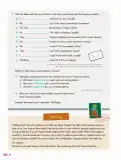
Sello postal con líneas onduladas y un globo terráqueo estilizado.
Figura 1 image

Preguntas que la gente también hace

¿Qué diferencia hay entre un texto de divulgación científica y un artículo periodístico?
Consulta la solución completa arriba o explora el libro entero para temas relacionados.
¿Cómo se puede identificar información pseudocientífica?
Consulta la solución completa arriba o explora el libro entero para temas relacionados.
¿Qué herramientas usan científicos y periodistas para informar?
Consulta la solución completa arriba o explora el libro entero para temas relacionados.
📌 Antes de leer esto
  • • Vocabulario básico en inglés
  • • Identificar sustantivos y adjetivos en inglés
  • • Nociones de ciencia y medios de comunicación
Siguiente tema sugerido
Reading comprehension: popular science texts and news articles
📝 Transcripción de la página (texto seleccionable) 1850 caracteres

Vocabulary

Ane you cunious about the world around you? Scientists and journalists wonk together to provide us with information, but they use different tools!Let's explore some key vocabulary to better understand science and news.

Individually, match the word on the left with its definition on the right.

Word

Definition

I.( ) Scientist a) Personal convictions or feelings. II.( ) Journalist b)Visual representations of data using bars or lines. III.()facts c) What you think is true without any proof. IV.()Opinions d) A drawing that shows the parts of something and V.()Evidence how they relate.

VI.()Beliefs e) Situations that are hoppening right now. f)Nannatives that may be true on fictional. VII.()Diagram g) Images that show something. VI.()Stories h) Someone who studies the world and carries out IX.()Charts different experiments. X.()Pictures i)Information that supports a fact. XI.( ) Current events j) Events that happened in the past. XII.( )Old incidents k) Information that can be proven true.

  1. Someone who reports current and recent events.

A

Problematic situation 2. There is a great deal of information that people consider to be scientific in nature, although it is not based on science. Because such information is shared throughout various media, disagreements and misinformation arise within the community.

Retrieval

On the one hand, there are texts called popular science texts, which are designed to share developments in science and help the public at large increase their knowledge and better support their opinions.

On the other hand, there are news articles, which purpose is to inform about events of collective interest, as well as to provide information that enables readers to create their own point of view about an event of public interest.

![](page=0,bbox=[710, 940, 1056, 1180])

乐

12
Ad

Otros libros recomendados

Ver todos →
Ad

Usamos cookies propias y de terceros para personalizar contenido, mostrar publicidad y analizar el tráfico. Las cookies necesarias siempre están activas.