Saltar al contenido
MisLibrosTexto
Ad

Inquiry Design and Development: That's the Question!

📄 ejercicios ciencias-naturales 🎓 otro · 2° TELESECUNDARIA México 🇲🇽 MX 🗣 Español
Página 76
76 de 171
Página 76 de Uérakua anapu uantakua. Projects and Readings.  Libro de Educación Telesecundaria Grado 2°  Ciclo Escolar 2025 - 2026
Anterior Página 76 / 171 Siguiente

Respuesta rápida

Se completan la tabla y la columna de cantidades; se responden a, b y c con notación científica; hipótesis: toda cifra puede escribirse con potencias de 10.

📚 exercise ciencias-naturales ⭐⭐ Dificultad 2/5 ⏱ 8 min lectura

Solución — Página 76

Uérakua anapu uantakua. Projects and Readings. Libro de Educación Telesecundaria Grado 2° Ciclo Escolar 2025 - 2026

2
Ejercicio 2

Now, gathered in communities, comment on your answers and complete the table with the instruments of your interest.

  1. Reúnanse en comunidades y compartan las respuestas de la actividad anterior.
  2. Completen una tabla con los instrumentos de su interés; por ejemplo:
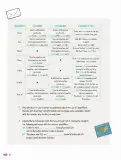
Instrumento ¿Qué mide? Unidad
Balanza masa kg, g
Regla longitud cm, mm
Termómetro temperatura °C
Probeta volumen mL
Respuesta

tabla completada con al menos tres instrumentos, su magnitud y unidad.

3
Ejercicio 3

Next, write each of the instruments you investigated on pieces of paper and put them in a bag, close it, and shake it to stir the papers.

  1. Escriban cada instrumento en un papelito.
  2. Guárdenlos en una bolsa, ciérrenla y agítenla para mezclarlos.
Respuesta

bolsa con los papelitos de los instrumentos investigados, lista para el sorteo.

4
Ejercicio 4

In assembly, each student will take a piece of paper and comment on some moments in their life when they had used that instrument. If they have never used it, they could explain what it can be used for in the future.

  1. En asamblea, cada estudiante saca un papelito.
  2. Comenta una situación de su vida en la que usó ese instrumento.
  3. Si nunca lo usó, explica para qué podría servir en el futuro.

Respuesta orientativa: por ejemplo, si sale "balanza", el estudiante puede contar que la usó en la cocina para pesar harina; si sale "microscopio", puede decir que le gustaría usarlo para observar células.

Ad
5
Ejercicio 5

Add a column titled "Large or Small Quantities" to your table and estimate whether the quantities measured by the instruments seem to be large or small.

  1. Agreguen la columna "Large or Small Quantities" a la tabla.
  2. Estimen si las cantidades que miden esos instrumentos son grandes o pequeñas.
Instrumento ¿Qué mide? Unidad Large or Small Quantities
Balanza masa kg, g grande (kg) / pequeña (g)
Regla longitud cm, mm pequeña
Termómetro temperatura °C pequeña
Probeta volumen mL pequeña
Respuesta

columna agregada con la estimación de cada instrumento.

6
Ejercicio 6

Reflect on small or big things that you can measure with the instruments written on your table.

  1. Piensen en objetos o fenómenos grandes y pequeños que se puedan medir con cada instrumento.
  2. Escriban ejemplos en el cuaderno.

Respuesta orientativa: con la balanza se puede medir desde un grano de arroz (pequeño) hasta un costal de cemento (grande); con la regla, desde un cabello (pequeño) hasta una cancha (grande).

7
Ejercicio 7

Find out how to measure small or large quantities, and how to write these data, in case you have ever seen them or if you know their existence through videos, photographs, magazines, or books.

  1. Investiguen cómo se miden cantidades muy pequeñas o muy grandes.
  2. Indaguen cómo se escriben esos datos (notación científica, múltiplos y submúltiplos).
  3. Registren la información en el cuaderno.

Respuesta orientativa: las cantidades muy grandes o muy pequeñas se escriben con notación científica, por ejemplo 6.02 \times 10^{23} o 1.5 \times 10^{-9}\,\text{m}, y se miden con instrumentos especializados como el microscopio, el espectrómetro o el telescopio.

Ad
1
Ejercicio 1

(That's the Question!)

Individually, without forgetting you are part of a community, answer the following questions in your notebook:

a
Parte 1.a

Could you take those measurements?

  1. Reflexiona si es posible pesar toda la arena de un montículo o medir un grano de arena.
  2. Considera que para cantidades enormes o ínfimas se necesitan métodos indirectos.
Respuesta

sí es posible, pero no de forma directa; se requieren estimaciones, cálculos o instrumentos especializados.

b
Parte 1.b

Would you need any special instrument?

  1. Piensa en instrumentos para medir masas grandes y muy pequeñas.
  2. Relaciona cada caso con el instrumento adecuado.
Respuesta

sí; para grandes cantidades una balanza industrial o cálculos geométricos, y para pequeñas un microscopio, una balanza analítica o un espectrómetro.

c
Parte 1.c

How would you read or write those quantities?

  1. Identifica que las cantidades extremas se expresan con potencias de 10.
  2. Escribe ejemplos de notación científica.
Respuesta

se leen y escriben con notación científica, por ejemplo 6.02 \times 10^{23} partículas o 2.5 \times 10^{-3}\,\text{g}.

2
Ejercicio 2

(That's the Question!)

In community, discuss how to define a general idea that allows you to create a strategy for reading and writing very large or very small figures, such as those expressed when measuring the weight of the mound of sand or when counting grains of sand.

  1. Dialoguen sobre una idea general para leer y escribir cifras muy grandes o muy pequeñas.
  2. Formulen una estrategia común.
  3. Redacten una hipótesis, por ejemplo: "Es posible escribir cualquier cifra, sin importar qué tan grande o pequeña sea".

Respuesta orientativa: la idea general es usar la notación científica y los múltiplos y submúltiplos del Sistema Internacional; así, cualquier cantidad, por extrema que parezca, puede expresarse de forma abreviada y comparable.

Contenido de la página

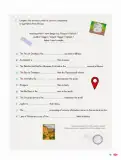
  1. Now, gathered in communities, comment on your answers and complete the table with the instruments of your interest.

  2. Next, write each of the instruments you investigated on pieces of paper and put them in a bag, close it, and shake it to stir the papers.

  3. In assembly, each student will take a piece of paper and comment on some moments in their life when they had used that instrument. If they have never used it, they could explain what it can be used for in the future.

  4. Add a column titled "Large or Small Quantities" to your table and estimate whether the quantities measured by the instruments seem to be large or small.

  5. Reflect on small or big things that you can measure with the instruments written on your table.

  6. Find out how to measure small or large quantities, and how to write these data, in case you have ever seen them or if you know their existence through videos, photographs, magazines, or books.

INQUIRY DESIGN AND DEVELOPMENT

That's the Question!

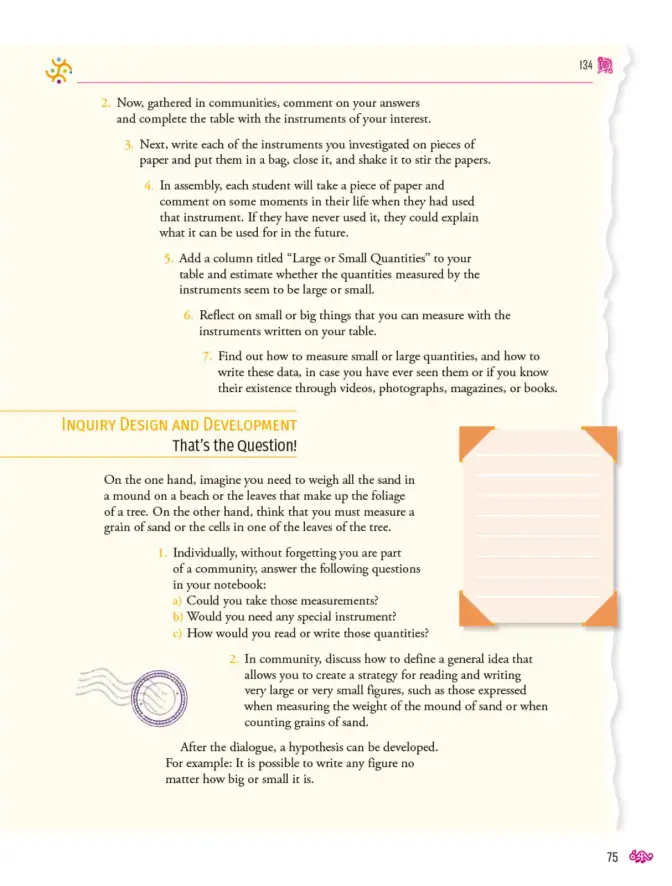
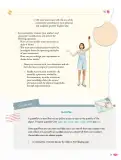
On the one hand, imagine you need to weigh all the sand in a mound on a beach or the leaves that make up the foliage of a tree. On the other hand, think that you must measure a grain of sand or the cells in one of the leaves of the tree.

  1. Individually, without forgetting you are part of a community, answer the following questions in your notebook:

a) Could you take those measurements?

b) Would you need any special instrument?

c) How would you read or write those quantities?

  1. In community, discuss how to define a general idea that allows you to create a strategy for reading and writing very large or very small figures, such as those expressed when measuring the weight of the mound of sand or when counting grains of sand.

After the dialogue, a hypothesis can be developed. For example: It is possible to write any figure no matter how big or small it is.

Ejemplos resueltos

Escribe la masa de un grano de arena, aproximadamente 0.0000025\,\text{g}, en notación científica.

  1. Se identifica el factor entre 1 y 10: 2.5.
  2. Se cuenta cuántos lugares se recorrió el punto decimal: 6 lugares hacia la derecha.
  3. Se escribe como potencia de 10 con exponente negativo: 2.5 \times 10^{-6}\,\text{g}.

Respuesta: 2.5 \times 10^{-6}\,\text{g}.

Tabla

Instrumento ¿Qué mide? Unidad Large or Small Quantities
Balanza masa kg, g grande / pequeña
Regla longitud cm, mm pequeña
Termómetro temperatura °C pequeña
Probeta volumen mL pequeña

Diagrama

mindmap
  root((Medición))
    Cantidades grandes
      Balanza industrial
      Notación científica
    Cantidades pequeñas
      Microscopio
      Balanza analítica
    Estrategia
      Potencias de 10
      Unidades del SI

Fórmulas y ecuaciones

a \times 10^{n}, \quad 1 \le a < 10

6.02 \times 10^{23}

1.5 \times 10^{-9}\,\text{m}

2.5 \times 10^{-3}\,\text{g}

Glosario (6)

Inquiry
Indagación; proceso de investigar y formular preguntas.
Mound
Montículo o montón.
Foliage
Follaje; conjunto de hojas de un árbol.
Grain of sand
Grano de arena.
Hypothesis
Hipótesis; explicación provisional que se pone a prueba.
Large or Small Quantities
Cantidades grandes o pequeñas.

Preguntas para practicar

¿Se pueden medir todas las cantidades, por grandes o pequeñas que sean?

Sí, aunque no siempre de forma directa. Las cantidades extremas se miden con métodos indirectos o instrumentos especializados y se expresan con notación científica.

¿Qué instrumentos permiten medir cantidades muy pequeñas?

El microscopio, la balanza analítica, el espectrómetro y el calibrador vernier permiten medir longitudes, masas o concentraciones muy pequeñas.

Temas y conceptos clave

Medición de cantidades grandes y pequeñasInstrumentos de mediciónNotación científicaIndagación y formulación de hipótesisCantidad grandeCantidad pequeñaInstrumento de mediciónNotación científicaHipótesis
¿Te fue útil esta página?

Figuras de la página (2)

Número de página 134 con un glifo decorativo.
Figura 1 image
Hoja de papel con líneas y esquinas naranjas, tipo nota.
Figura 2 image

Preguntas que la gente también hace

¿Cómo se miden cantidades muy grandes o muy pequeñas?
Consulta la solución completa arriba o explora el libro entero para temas relacionados.
¿Qué instrumentos se usan para medir un grano de arena?
Consulta la solución completa arriba o explora el libro entero para temas relacionados.
¿Cómo se escribe un número en notación científica?
Consulta la solución completa arriba o explora el libro entero para temas relacionados.
📌 Antes de leer esto
  • • Conocer las magnitudes físicas básicas (masa, longitud, volumen, temperatura)
  • • Identificar instrumentos de medición sencillos
  • • Manejar potencias de base 10
Siguiente tema sugerido
Notación científica y múltiplos y submúltiplos del Sistema Internacional
📝 Transcripción de la página (texto seleccionable) 1954 caracteres
  1. Now, gathered in communities, comment on your answers and complete the table with the instruments of your interest.

  2. Next, write each of the instruments you investigated on pieces of paper and put them in a bag, close it, and shake it to stir the papers.

  3. In assembly, each student will take a piece of paper and comment on some moments in their life when they had used that instrument. If they have never used it, they could explain what it can be used for in the future.

5.Add a column titled "Large or Small Quantities"” to your table and estimate whether the quantities measured by the instruments seem to be large or small.

6.Reflect on small or big things that you can measure with the instruments written on your table.

  1. Find out how to measure small or large quantities, and how to write these data, in case you have ever seen them or if you know their existence through videos, photographs, magazines, or books

INQUIRY DESIGN AND DEVELOPMENT That's the Question!

On the one hand, imagine you need to weigh all the sand in a mound on a beach or the leaves that make up the foliage of a tree. On the other hand, think that you must measure a grain of sand or the cells in one of the leaves of the tree.

  1. Individually, without forgetting you are part of a community, answer the following questions in your notebook:

a) Could you take those measurements? b) Would you need any special instrument? c) How would you read or write those quantities?

  1. In community, discuss how to define a general idea that allows you to create a strategy for reading and writing very large or very small figures, such as those expressed when measuring the weight of the mound of sand or when counting grains of sand.

After the dialogue, a hypothesis can be developed.For example: It is possible to write any figure no matter how big or small it is.

次

134

![](page=0,bbox=[826, 765, 1118, 1135])

![](page=0,bbox=[134, 1202, 339, 1311])

75
Ad

Otros libros recomendados

Ver todos →
Ad

Usamos cookies propias y de terceros para personalizar contenido, mostrar publicidad y analizar el tráfico. Las cookies necesarias siempre están activas.