















In assembly, choose one of the following problems, solve it, and test the hypothesis. Then design a poster with the data collected and present it to the community.
Problema 1: medir el diámetro y la masa de un planeta del Sistema Solar
- Elegimos Júpiter como ejemplo. Datos de referencia: diámetro D = 139{,}820 \, \text{km} y masa M = 1{,}898 \times 10^{27} \, \text{kg}.
- Convertimos el diámetro a metros: 139{,}820 \, \text{km} \times 10^{3} = 1{,}3982 \times 10^{8} \, \text{m}.
- Expresamos la masa en notación científica: 1{,}898 \times 10^{27} \, \text{kg}.
- Hipótesis: si conocemos el diámetro angular y la distancia al planeta, entonces podemos calcular su diámetro real con D = 2d\tan(\theta/2).
- Comprobación: con d = 6{,}29 \times 10^{11} \, \text{m} y \theta \approx 0{,}0125^\circ, se obtiene D \approx 1{,}37 \times 10^{8} \, \text{m}, cercano al valor real.
Júpiter mide aproximadamente 1{,}3982 \times 10^{8} \, \text{m} de diámetro y tiene una masa de 1{,}898 \times 10^{27} \, \text{kg}.
Problema 2: medir el tamaño y la masa de una célula, un virus o una bacteria
- Elegimos una bacteria típica, Escherichia coli. Tamaño aproximado: 2 \, \mu\text{m} de largo y 0{,}5 \, \mu\text{m} de ancho.
- Convertimos a metros: 2 \, \mu\text{m} = 2 \times 10^{-6} \, \text{m} y 0{,}5 \, \mu\text{m} = 5 \times 10^{-7} \, \text{m}.
- Masa aproximada de una bacteria: 1 \times 10^{-15} \, \text{kg}.
- Hipótesis: si usamos un microscopio óptico con aumento de 1000\times, entonces podemos estimar el tamaño real dividiendo la medida observada entre el aumento.
- Comprobación: una bacteria observada mide 2 \, \text{mm} con aumento 1000\times; su tamaño real es 2 \, \text{mm} / 1000 = 2 \times 10^{-6} \, \text{m}.
Estrategias sugeridas
Estrategia 1
Identificar múltiplos y submúltiplos de las unidades de masa y longitud para expresar los resultados y acortar la escritura de los números.
Estrategia 2
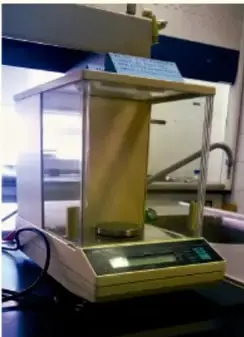
Recordar que se usan instrumentos especiales para medir cantidades muy grandes y muy pequeñas, e incluirlos en el póster.
Seek and Find (Buscar y encontrar)
Fuentes confiables para consultar:
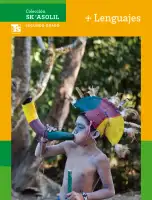
- Colección Sk'asolil. Saberes y pensamiento científico. Segundo grado.
- Libros de conocimiento disciplinar de otros Campos Formativos.
- Libros o revistas de divulgación científica.
- Fuentes digitales confiables.
- Biblioteca de aula, escolar o pública.
- Personas de la comunidad.
Find and Learn (Encontrar y aprender)
Puntos para diseñar el póster:
a) Escribir los resultados usando múltiplos, submúltiplos y notación científica. b) Incluir las unidades: metros para longitud, kilogramos para masa; convertir equivalentes si es necesario. c) Incluir los instrumentos o técnicas de medición utilizados. d) Analizar el desarrollo y la aplicación de diversos instrumentos de medición. e) Investigar más datos si se necesitan e incorporarlos al trabajo.
Respuesta orientativa: El póster debe presentar el problema elegido, la hipótesis, los datos obtenidos en notación científica con unidades, los instrumentos usados y una conclusión que valide o refute la hipótesis.
La bacteria mide del orden de 10^{-6} \, \text{m} y su masa es del orden de 10^{-15} \, \text{kg}.