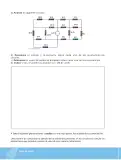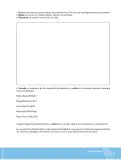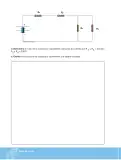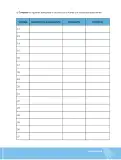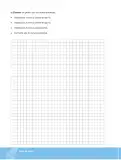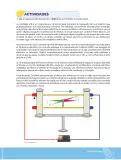

















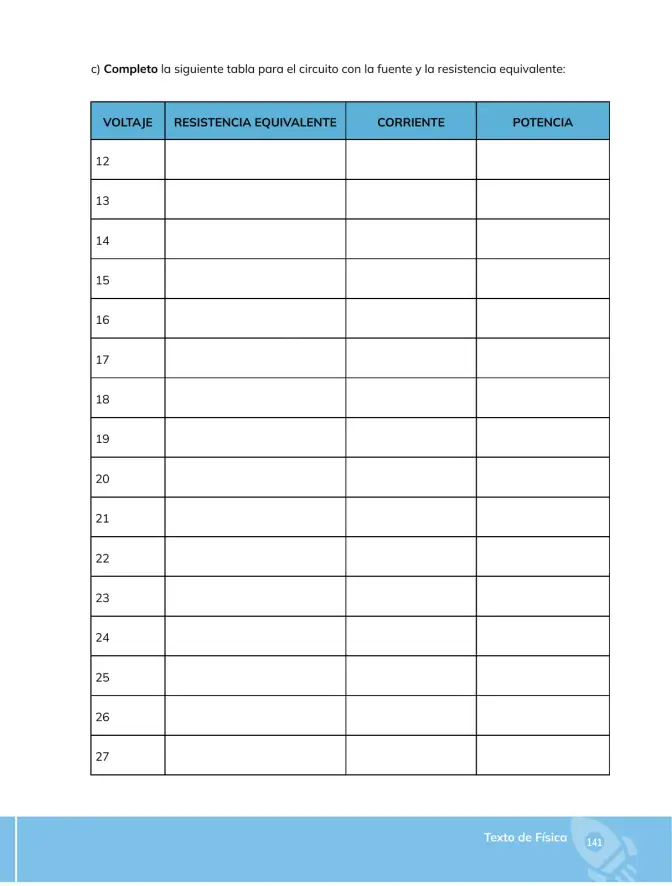
Parte c): Completo la tabla para el circuito constituido por la fuente y la resistencia equivalente R_{eq} (obtenida en el paso b).
Datos y fórmulas
El circuito tiene únicamente la fuente V y la resistencia equivalente R_{eq} en serie. Por lo tanto:
- La corriente que circula es la misma en todo el circuito, y se calcula con la Ley de Ohm:
I = \frac{V}{R_{eq}}
- La potencia entregada por la fuente es:
P = V \cdot I = V \cdot \frac{V}{R_{eq}} = \frac{V^{2}}{R_{eq}}
- Como R_{eq} es una propiedad del circuito, no cambia al variar el voltaje: en todas las filas debe escribirse el mismo valor de resistencia equivalente.
Desarrollo fila por fila (ejemplo con R_{eq} = 12 \, \Omega)
Tomemos un valor representativo, R_{eq} = 12 \, \Omega (en la práctica se debe usar el valor obtenido en el paso b):
- V = 12 \, \text{V}: I = \frac{12}{12} = 1{,}00 \, \text{A}; P = 12 \cdot 1{,}00 = 12{,}0 \, \text{W}
- V = 13 \, \text{V}: I = \frac{13}{12} = 1{,}08 \, \text{A}; P = 13 \cdot 1{,}08 = 14{,}1 \, \text{W}
- V = 14 \, \text{V}: I = \frac{14}{12} = 1{,}17 \, \text{A}; P = 14 \cdot 1{,}17 = 16{,}3 \, \text{W}
- V = 15 \, \text{V}: I = \frac{15}{12} = 1{,}25 \, \text{A}; P = 15 \cdot 1{,}25 = 18{,}8 \, \text{W}
- V = 16 \, \text{V}: I = \frac{16}{12} = 1{,}33 \, \text{A}; P = 16 \cdot 1{,}33 = 21{,}3 \, \text{W}
- V = 17 \, \text{V}: I = \frac{17}{12} = 1{,}42 \, \text{A}; P = 17 \cdot 1{,}42 = 24{,}1 \, \text{W}
- V = 18 \, \text{V}: I = \frac{18}{12} = 1{,}50 \, \text{A}; P = 18 \cdot 1{,}50 = 27{,}0 \, \text{W}
- V = 19 \, \text{V}: I = \frac{19}{12} = 1{,}58 \, \text{A}; P = 19 \cdot 1{,}58 = 30{,}1 \, \text{W}
- V = 20 \, \text{V}: I = \frac{20}{12} = 1{,}67 \, \text{A}; P = 20 \cdot 1{,}67 = 33{,}3 \, \text{W}
- V = 21 \, \text{V}: I = \frac{21}{12} = 1{,}75 \, \text{A}; P = 21 \cdot 1{,}75 = 36{,}8 \, \text{W}
- V = 22 \, \text{V}: I = \frac{22}{12} = 1{,}83 \, \text{A}; P = 22 \cdot 1{,}83 = 40{,}3 \, \text{W}
- V = 23 \, \text{V}: I = \frac{23}{12} = 1{,}92 \, \text{A}; P = 23 \cdot 1{,}92 = 44{,}1 \, \text{W}
- V = 24 \, \text{V}: I = \frac{24}{12} = 2{,}00 \, \text{A}; P = 24 \cdot 2{,}00 = 48{,}0 \, \text{W}
- V = 25 \, \text{V}: I = \frac{25}{12} = 2{,}08 \, \text{A}; P = 25 \cdot 2{,}08 = 52{,}1 \, \text{W}
- V = 26 \, \text{V}: I = \frac{26}{12} = 2{,}17 \, \text{A}; P = 26 \cdot 2{,}17 = 56{,}3 \, \text{W}
- V = 27 \, \text{V}: I = \frac{27}{12} = 2{,}25 \, \text{A}; P = 27 \cdot 2{,}25 = 60{,}8 \, \text{W}
Tabla completada (ejemplo con R_{eq} = 12 \, \Omega)
| VOLTaje (V) | R_{eq} (\Omega) | Corriente (A) | Potencia (W) |
|---|---|---|---|
| 12 | 12 | 1,00 | 12,0 |
| 13 | 12 | 1,08 | 14,1 |
| 14 | 12 | 1,17 | 16,3 |
| 15 | 12 | 1,25 | 18,8 |
| 16 | 12 | 1,33 | 21,3 |
| 17 | 12 | 1,42 | 24,1 |
| 18 | 12 | 1,50 | 27,0 |
| 19 | 12 | 1,58 | 30,1 |
| 20 | 12 | 1,67 | 33,3 |
| 21 | 12 | 1,75 | 36,8 |
| 22 | 12 | 1,83 | 40,3 |
| 23 | 12 | 1,92 | 44,1 |
| 24 | 12 | 2,00 | 48,0 |
| 25 | 12 | 2,08 | 52,1 |
| 26 | 12 | 2,17 | 56,3 |
| 27 | 12 | 2,25 | 60,8 |
Patrón de respuesta general: para cualquier valor de R_{eq} = R, se escribe R en la segunda columna, I = V/R en la tercera y P = V^{2}/R en la cuarta.
Tabla completada con R_{eq} constante, I = \frac{V}{R_{eq}} y P = \frac{V^{2}}{R_{eq}}; para el ejemplo R_{eq} = 12 \, \Omega la corriente varía de 1{,}00 \, \text{A} a 2{,}25 \, \text{A} y la potencia de 12{,}0 \, \text{W} a 60{,}8 \, \text{W}.