
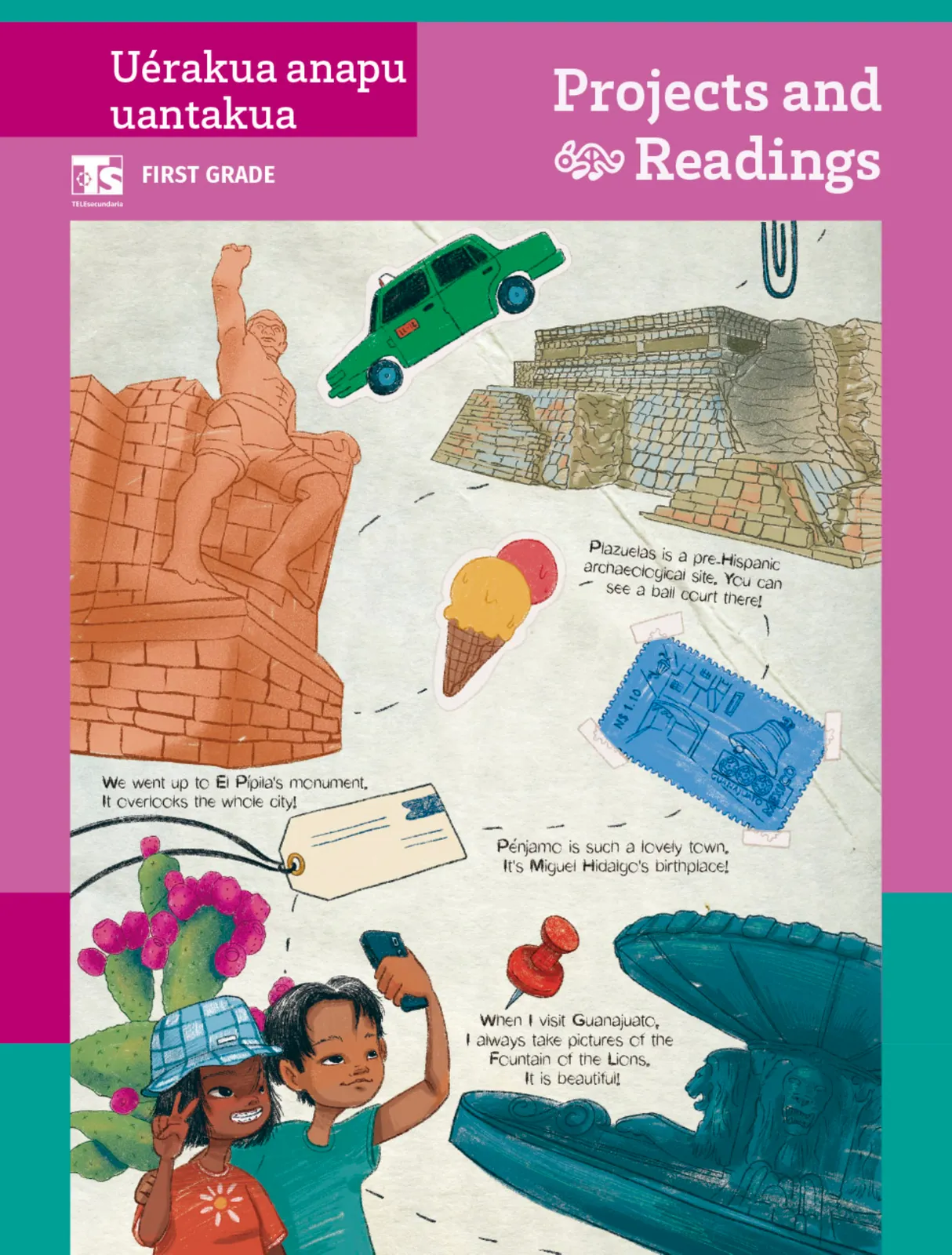
Página — Uerakua Anapu Uantakua Projects And Readings 1 (pág. 47)
Solución no disponible aún
Esta página está en proceso de revisión.
Pídela y la resolveremos antes. Sin registro.
📝 Transcripción de la página (texto seleccionable) 2147 caracteres
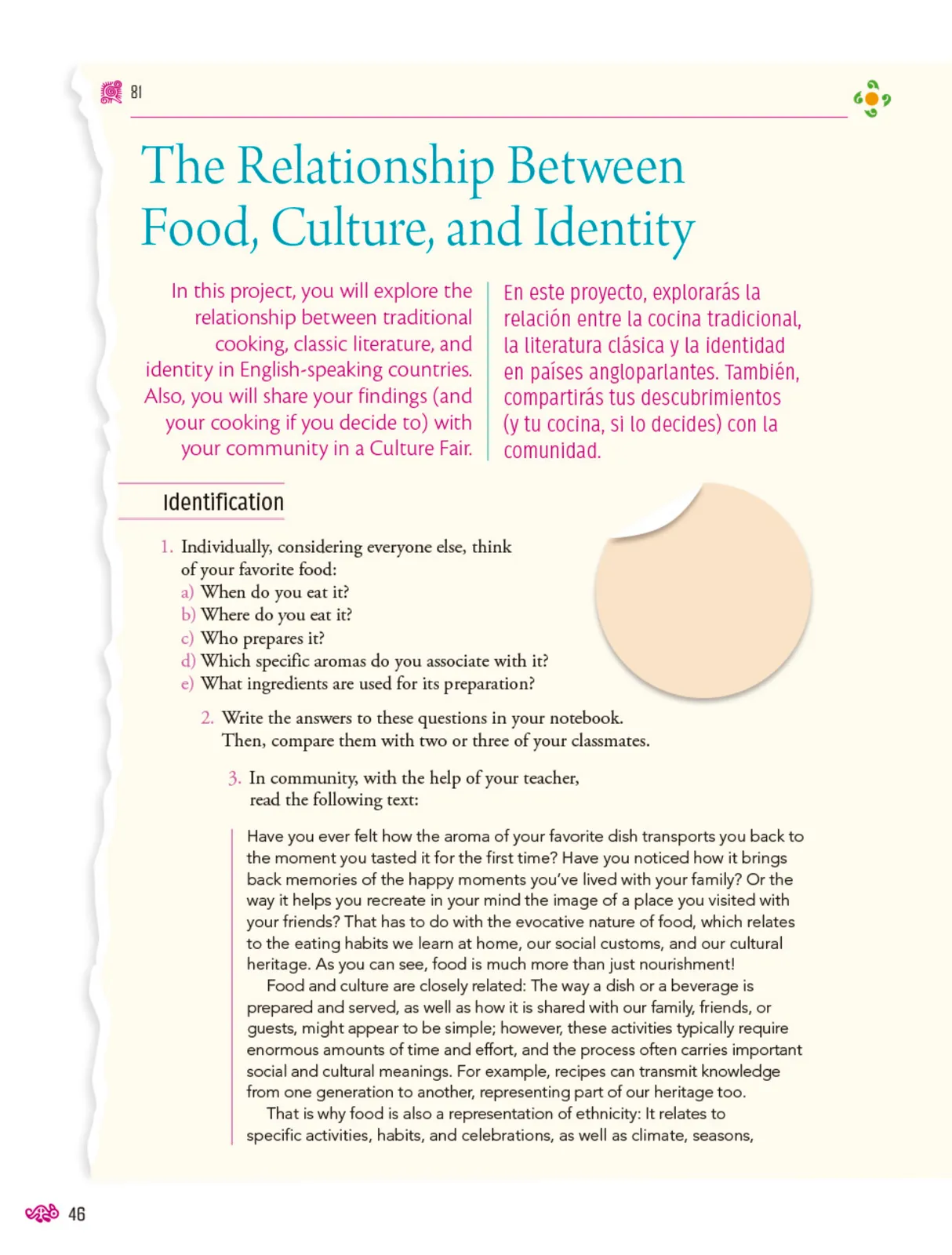
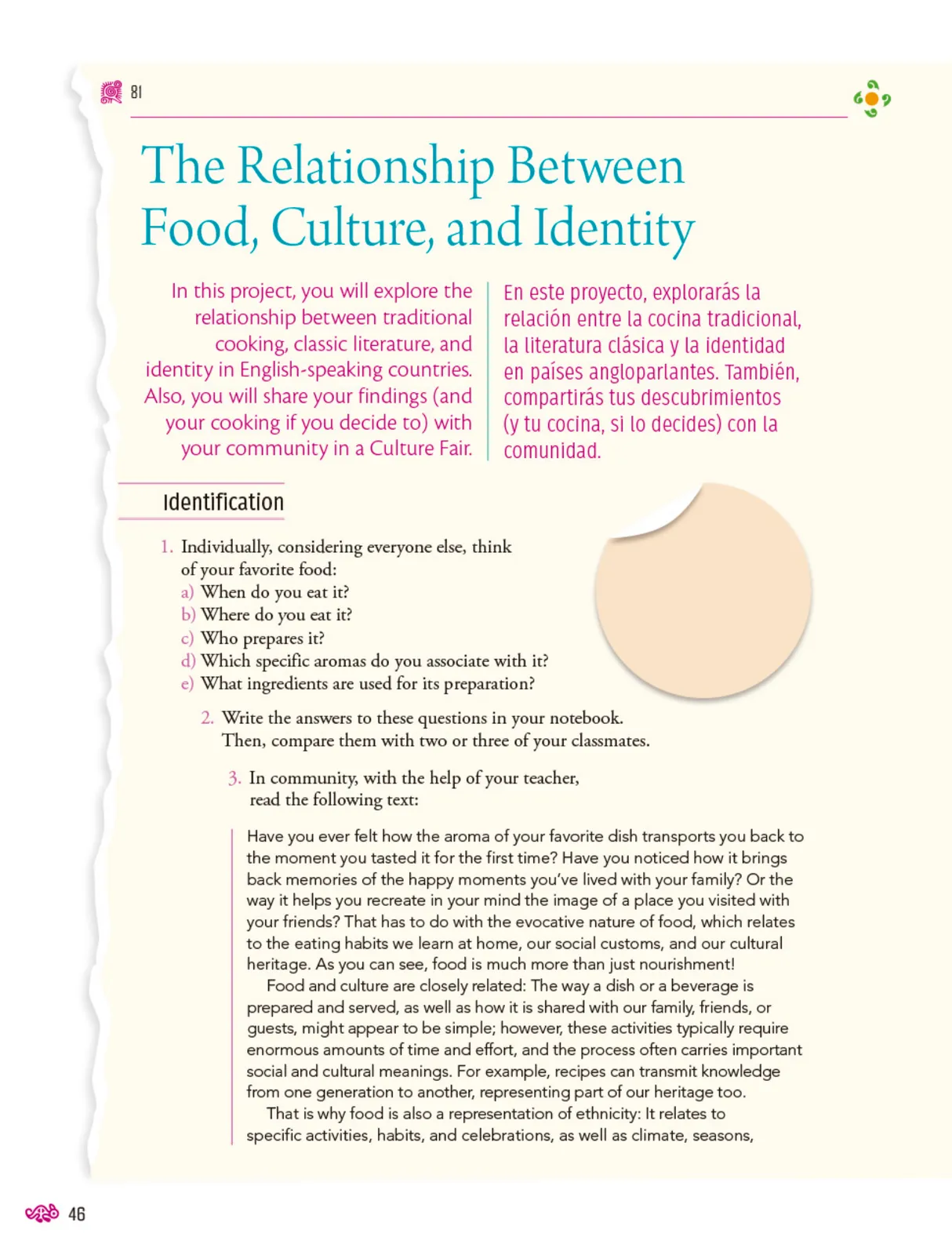
The Relationship Between Food, Culture, and Identity
In this project, you will explore the relationship between traditional cooking, classic literature, and identity in English-speaking countries.Also, you will share your findings (and your cooking if you decide to) with your community in a Culture Fair.
En este proyecto, explorarás la relación entre la cocina tradicional,la literatura clásica y la identidad en paises angloparlantes. También,compartirás tus descubrimientos (y tu cocina, si lo decides) con la comunidad.
Have you ever felt how the aroma of your favorite dish transports you back to the moment you tasted it for the first time? Have you noticed how it brings back memories of the happy moments you've lived with your family? Or the way it helps you recreate in your mind the image of a place you visited with your friends? That has to do with the evocative nature of food, which relates to the eating habits we learn at home, our social customs, and our cultural heritage. As you can see, food is much more than just nourishment!
Food and culture are closely related: The way a dish or a beverage is prepared and served, as well as how it is shared with our family, friends, or guests, might appear to be simple; however, these activities typically require enormous amounts of time and effort, and the process often carries important social and cultural meanings. For example, recipes can transmit knowledge from one generation to another, representing part of our heritage too.
That is why food is also a representation of ethnicity: It relates to specific activities, habits, and celebrations, as well as climate, seasons,
Identification
Individually, considering everyone else, think of your favorite food:a) When do you eat it? b) Where do you eat it? c)Who prepares it? d) Which specific aromas do you associate with it? e)What ingredients are used for its preparation?
Write the answers to these questions in your notebook.Then, compare them with two or three of your classmates.
In community, with the help of your teacher,read the following text:
81

乐
46
Otros libros recomendados
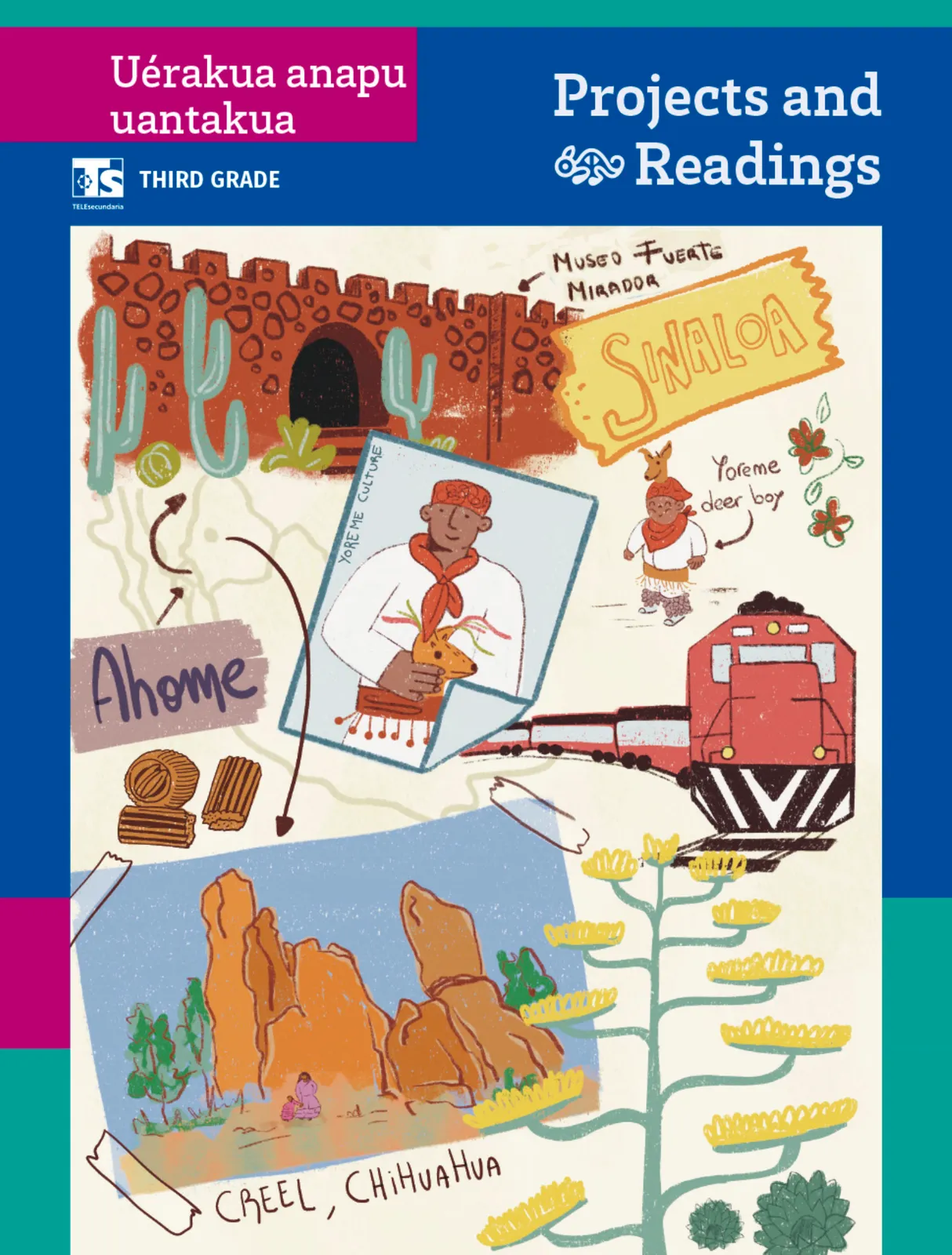
Uérakua anapu uantakua. Projects and Readings. Libro de Educación Telesecundaria Grado 3° Ciclo Escolar 2025 - 2026
SEP/CONALITEG
187 págs.
Uérakua anapu uantakua. Projects and Readings. Libro de Educación Telesecundaria Grado 2° Ciclo Escolar 2025 - 2026
SEP/CONALITEG
171 págs.
Colección Ximhai. De lo humano y lo comunitario. Libro de Educación Telesecundaria Grado 1° Ciclo Escolar 2025 - 2026
SEP/CONALITEG
259 págs.
Colección Ximhai. Nuestro libro de Proyectos. Tomo II. Libro de Educación Telesecundaria Grado 1° Ciclo Escolar 2025 - 2026
SEP/CONALITEG
267 págs.
Un libro sin recetas para la maestra y el maestro. Fase 6. Libro de Educación Telesecundaria Grado 1°, 2°, 3° Ciclo Escolar 2025 - 2026
SEP/CONALITEG
203 págs.
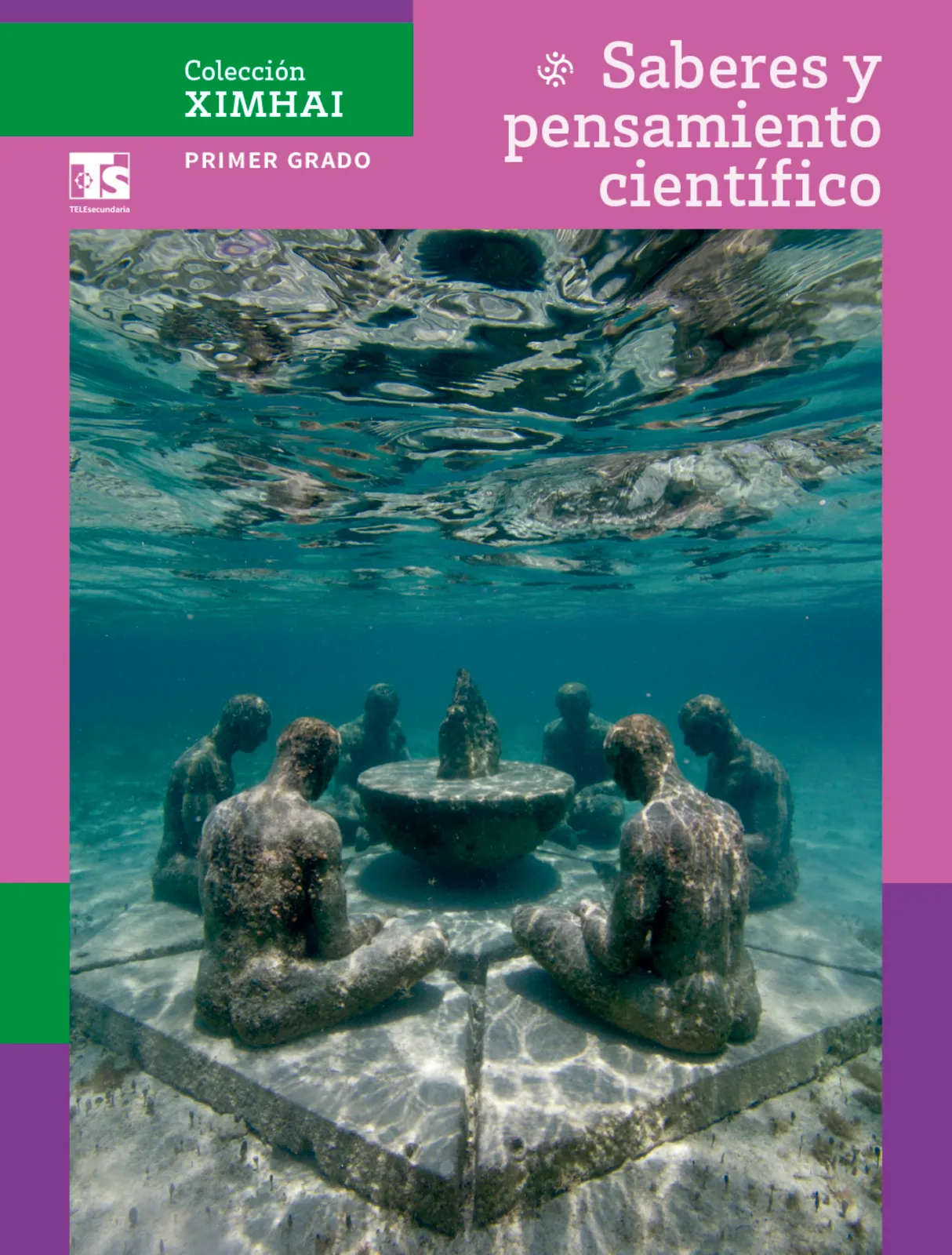
Colección Ximhai. Saberes y pensamiento científico. Libro de Educación Telesecundaria Grado 1° Ciclo Escolar 2025 - 2026
SEP/CONALITEG
339 págs.
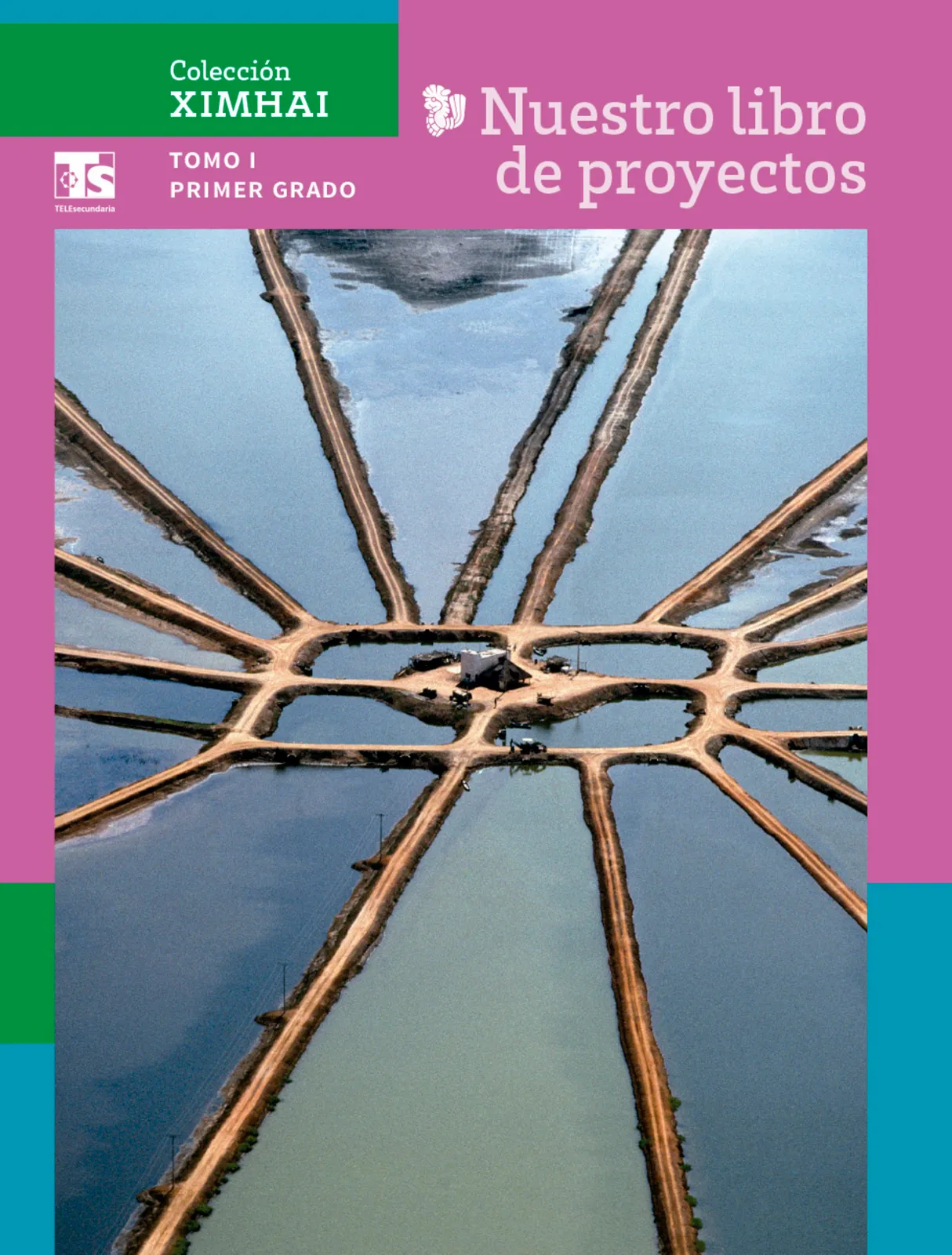
Colección Ximhai. Nuestro libro de Proyectos. Tomo I. Libro de Educación Telesecundaria Grado 1° Ciclo Escolar 2025 - 2026
SEP/CONALITEG
307 págs.
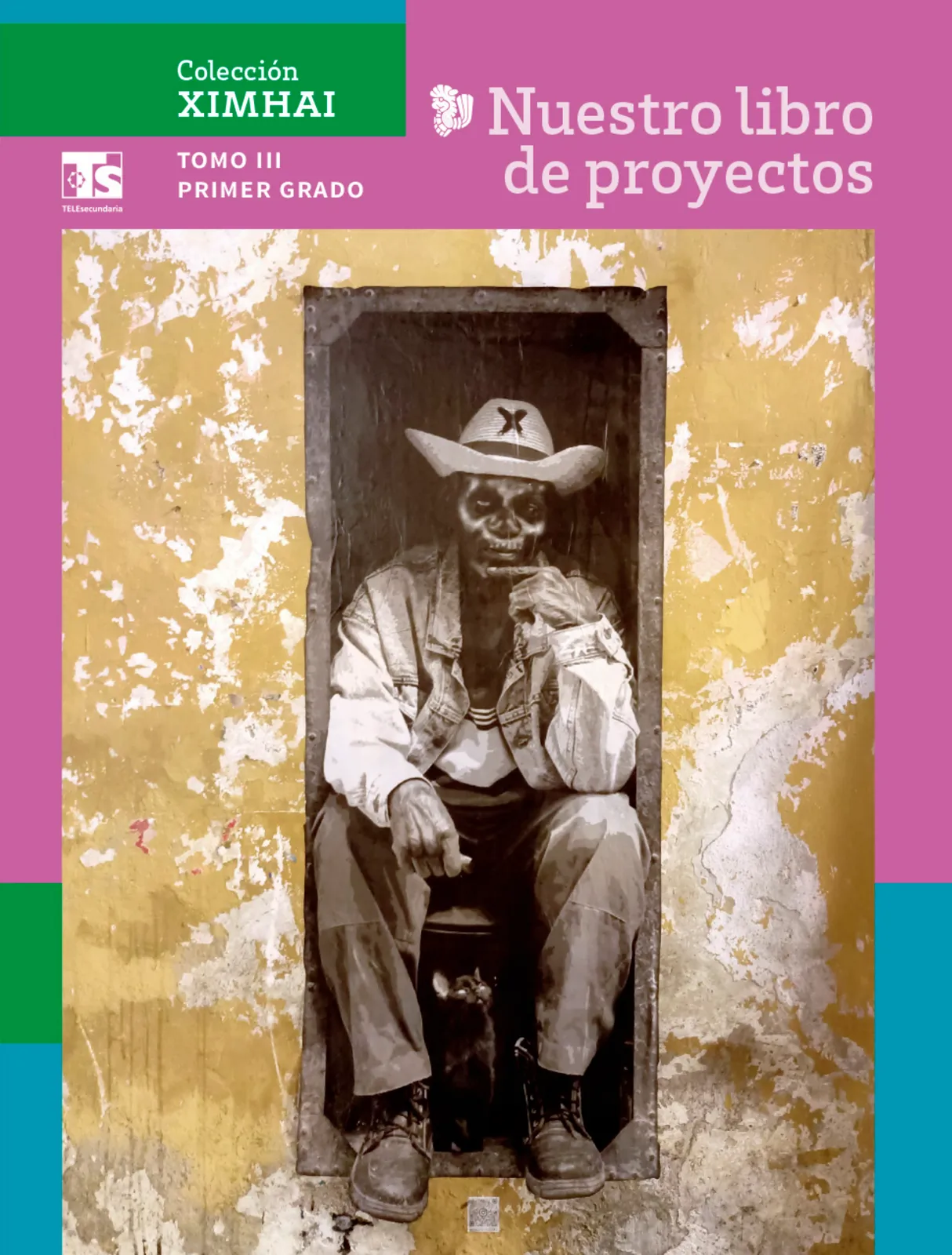
Colección Ximhai. Nuestro libro de Proyectos. Tomo III. Libro de Educación Telesecundaria Grado 1° Ciclo Escolar 2025 - 2026
SEP/CONALITEG
275 págs.