













In your notebook, answer the following questions.
Enunciado: Who prepares food in your family?
- Identifico a las personas que cocinan en casa (madre, padre, abuela, tíos, hermanos).
- Menciono si es una tarea compartida o individual.
- Redacto una respuesta breve en inglés usando el presente simple.
Respuesta orientativa: In my family, my mother and my grandmother usually prepare the food. Sometimes my father cooks on weekends, and I help by washing vegetables and setting the table.
Enunciado: How do you participate in the cooking process?
- Enumero las acciones concretas que realizo: lavar, picar, revolver, servir, limpiar.
- Uso adverbios de frecuencia (always, sometimes, never).
- Construyo oraciones en presente simple.
Respuesta orientativa: I participate by washing the vegetables, cutting the fruit, and helping my mother stir the soup. I also set the table and wash the dishes after we eat.
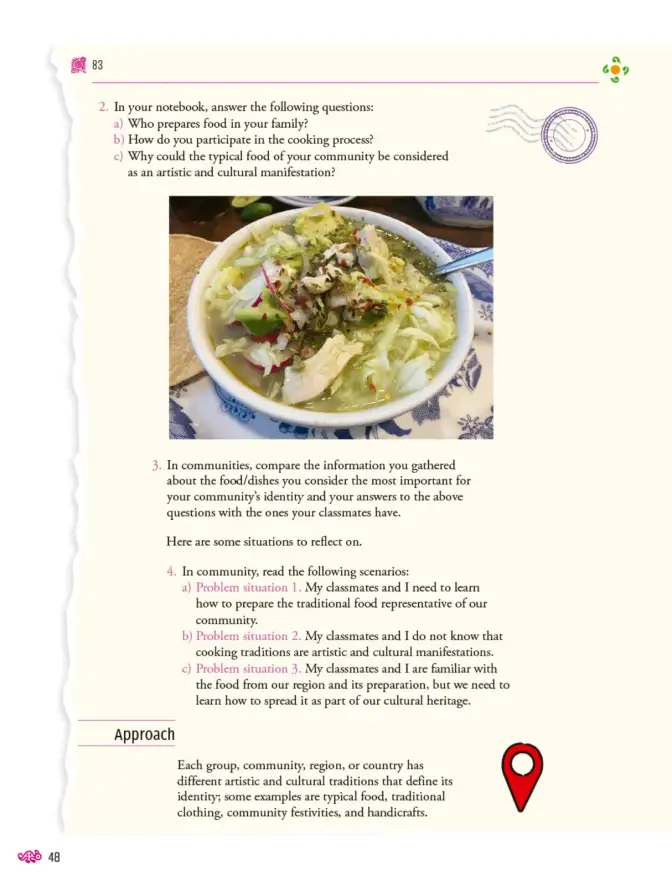
Enunciado: Why could the typical food of your community be considered as an artistic and cultural manifestation?
- Defino qué es una manifestación artística y cultural: una expresión creada por un grupo que transmite su identidad.
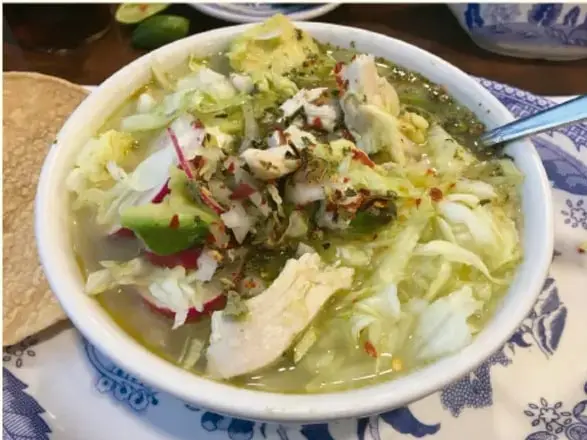
- Relaciono la comida típica con esa definición: recetas heredadas, ingredientes locales, técnicas, colores, aromas y presentación.
- Concluyo que la comida expresa historia, territorio y sentido de pertenencia.
Respuesta orientativa: The typical food of my community can be considered an artistic and cultural manifestation because it is created with local ingredients, prepared with techniques inherited from our ancestors, and shared in celebrations. Its colors, flavors, and presentation express our history and identity, so cooking is a form of art and a way to keep our culture alive.