
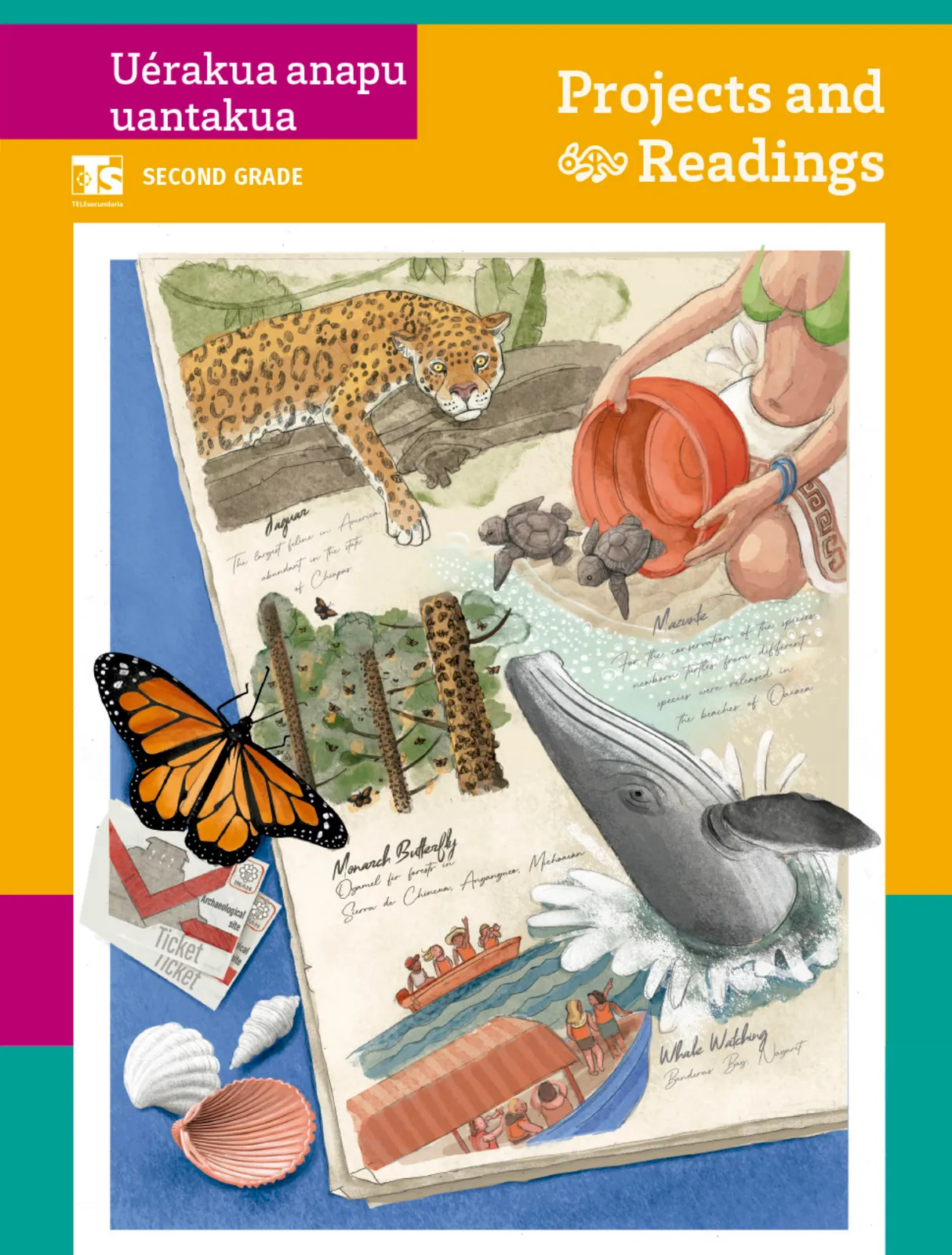
Página — Uerakua Anapu Uantakua Projects And Readings 2 (pág. 168)
Solución no disponible aún
Esta página está en proceso de revisión.
Pídela y la resolveremos antes. Sin registro.
📝 Transcripción de la página (texto seleccionable) 2853 caracteres
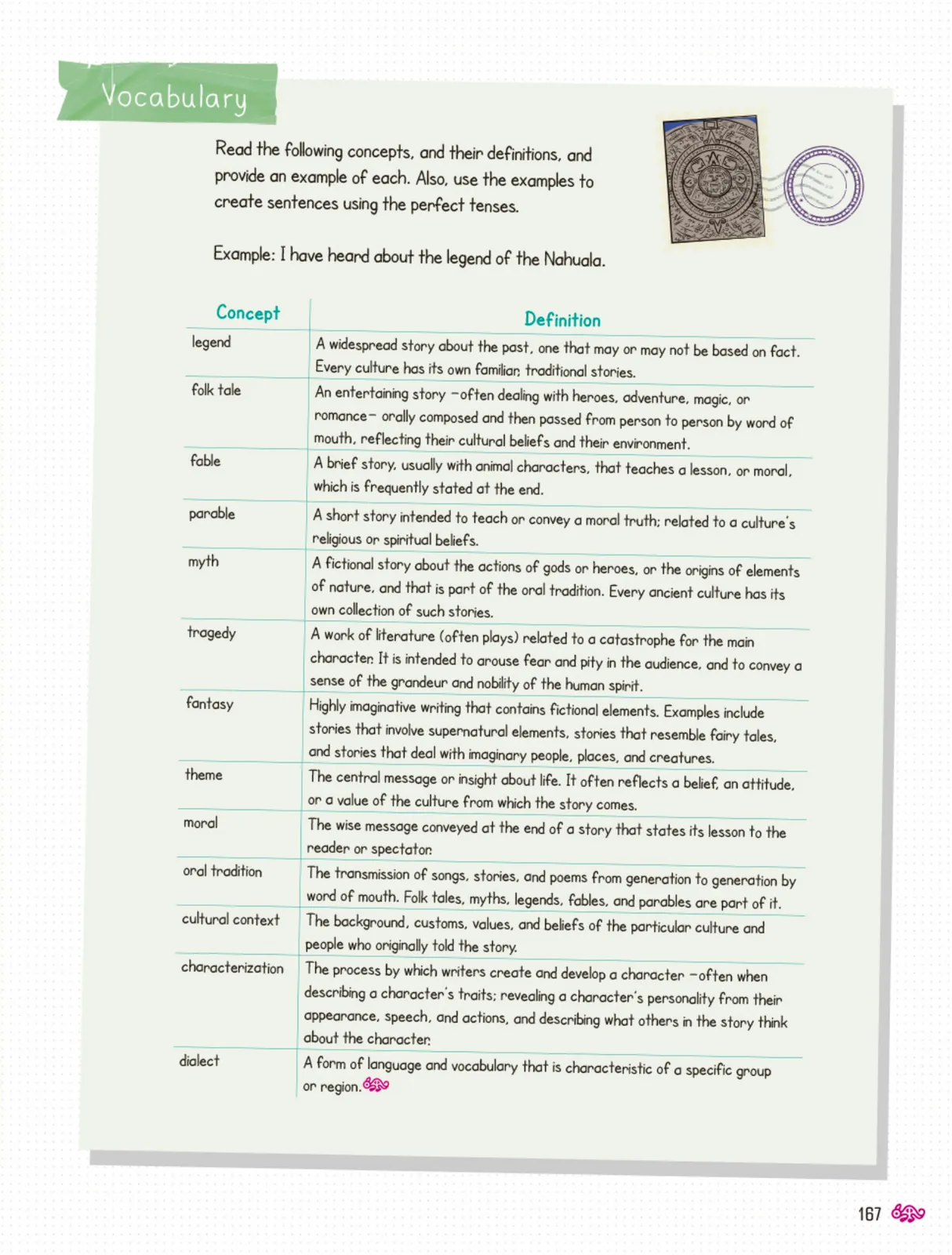
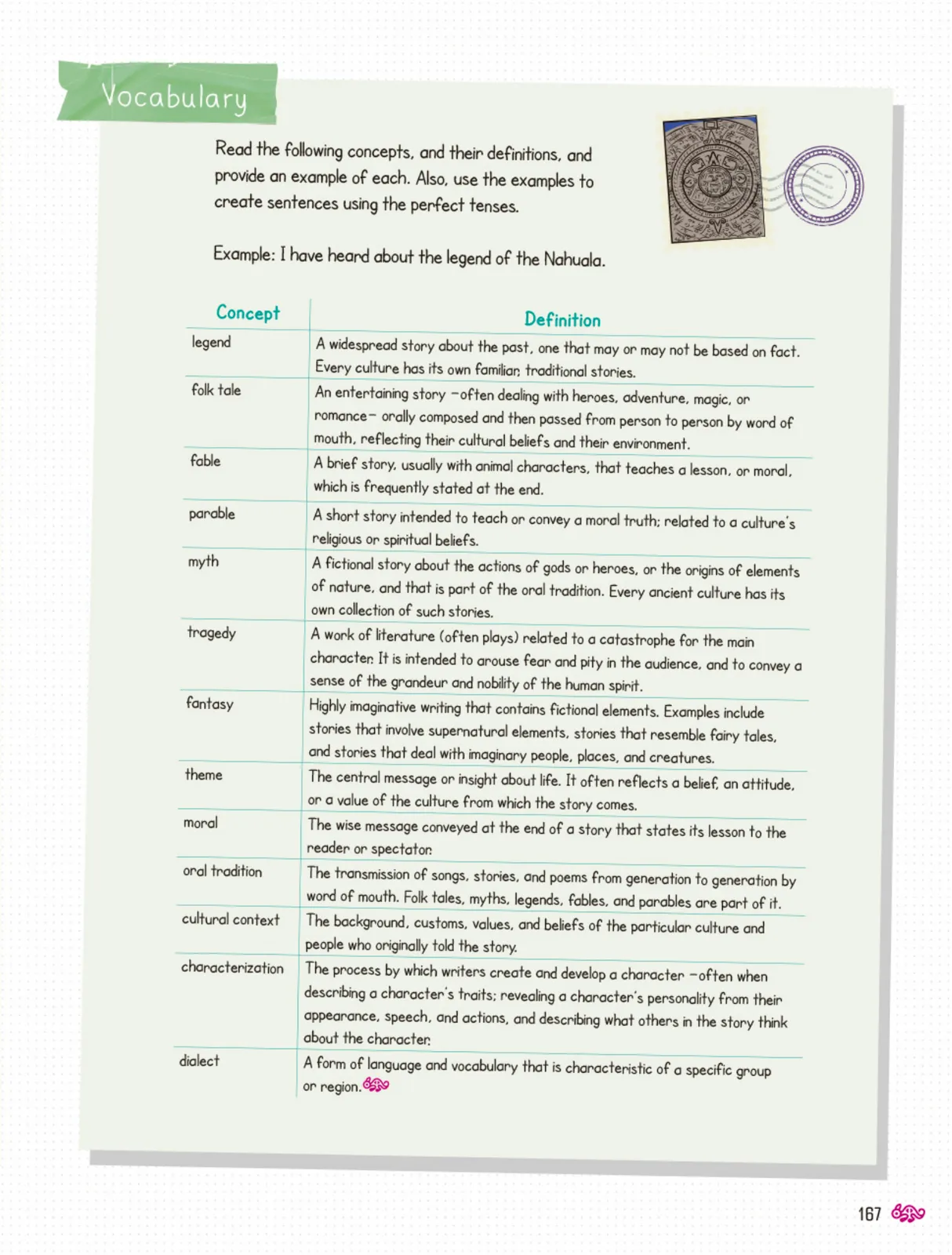
Vocabulary
Read the following concepts, and their definitions, and provide an example of each. Also, use the examples to create sentences using the perfect tenses.

Example: I have heard about the legend of the Nahuala.
| Concept | Definition |
| legend | A widespread story about the past, one that may or may not be based on fact. Every culture has its own familian; traditional stonies. |
| folk tale | An entertaining story -often dealing with heroes, adventure, magic,or romance- orally composed and then passed from person to person by word of |
| fable | mouth, reflecting their cultural beliefs and their environment. A brief story, usually with animal chanacters,that teaches alesson,or moral, which is frequently stated at the end. |
| parable | A short story intended to teach or convey a moral truth; related to a culture's religious or spinitual beliefs. |
| myth | A fictional story about the actions of gods or heroes, or the origins of elements of nature, and that is pant of the oral tradition. Every ancient culture has its own collection of such stories. |
| tragedy | A work of litenature(often plays) related to a catastrophe for the main chanacten: It is intended to arouse fear and pity in the audience, and to convey a sense of the grandeur and nobility of the human spinit. |
| fantasy | Highly imaginative wniting that contains fictional elements. Examples include stories that involve supernatunal elements, stories that resemble fairy tales, and stonies that deal with imaginary people, places, and creatures. |
| theme | The central messoge or insight about life. It often reflects a belief, an attitude, or a value of the culture from which the story comes. |
| moral | The wise message conveyed at the end of a story that states its lesson to the reader or spectaton: |
| oral tradition | The transmission of songs, stories, and poems from genenation to generation by wond of mouth.Folk tales, myths,legends, fables, and parables ane pant of it. |
| cultural context | The background, customs, values, and beliefs of the panticular culture and people who originally told the story. |
| characterization | The process by which wniters create and develop a chanacter -often when descnibing a character's traits; revealing a chanacter's personality from thein appearance, speech, and actions, and describing what othens in the story think about the character. |
| dialect | A form of language and vocabulary that is chanactenistic of a specific group or region.8 |
167
8

Otros libros recomendados
Uérakua anapu uantakua. Projects and Readings. Libro de Educación Telesecundaria Grado 3° Ciclo Escolar 2025 - 2026
SEP/CONALITEG
187 págs.
Colección Sk´asolil. De lo humano y lo comunitario. Libro de Educación Telesecundaria Grado 2° Ciclo Escolar 2025 - 2026
SEP/CONALITEG
259 págs.
Colección Sk´asolil. Nuestro libro de Proyectos. Tomo II. Libro de Educación Telesecundaria Grado 2° Ciclo Escolar 2025 - 2026
SEP/CONALITEG
259 págs.
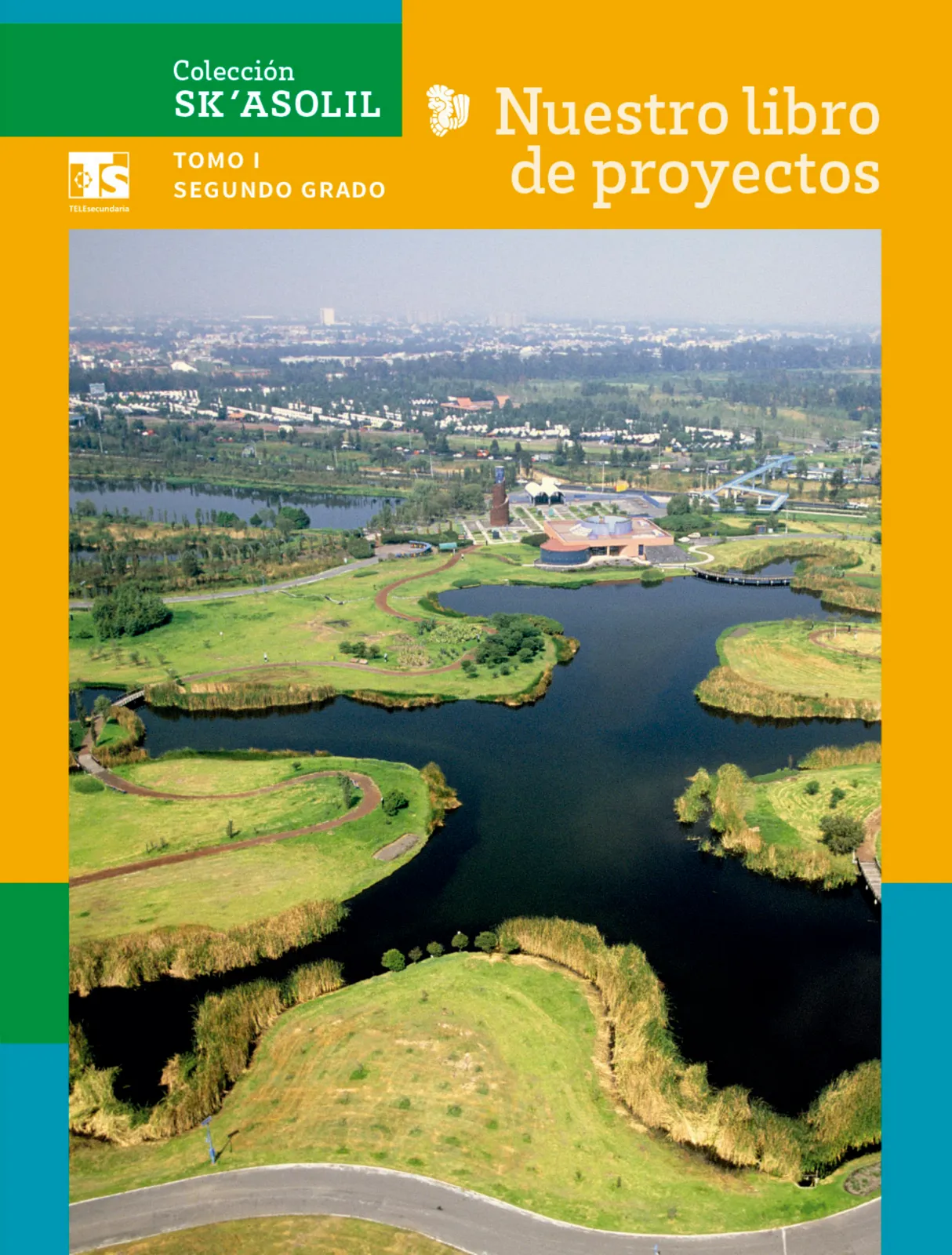
Colección Sk´asolil. Nuestro libro de Proyectos. Tomo I. Libro de Educación Telesecundaria Grado 2° Ciclo Escolar 2025 - 2026
SEP/CONALITEG
291 págs.
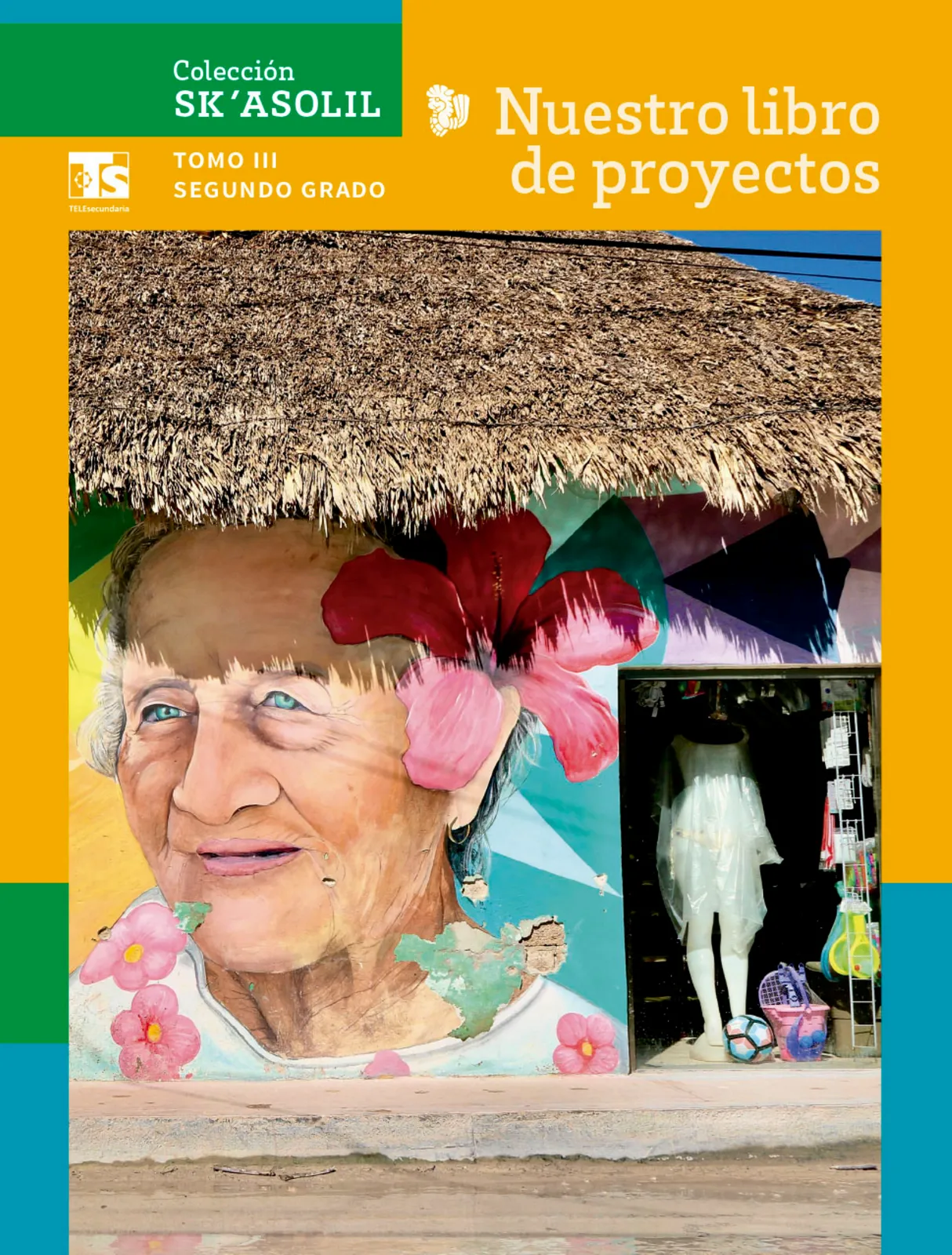
Colección Sk´asolil. Nuestro libro de Proyectos. Tomo III. Libro de Educación Telesecundaria Grado 2° Ciclo Escolar 2025 - 2026
SEP/CONALITEG
291 págs.
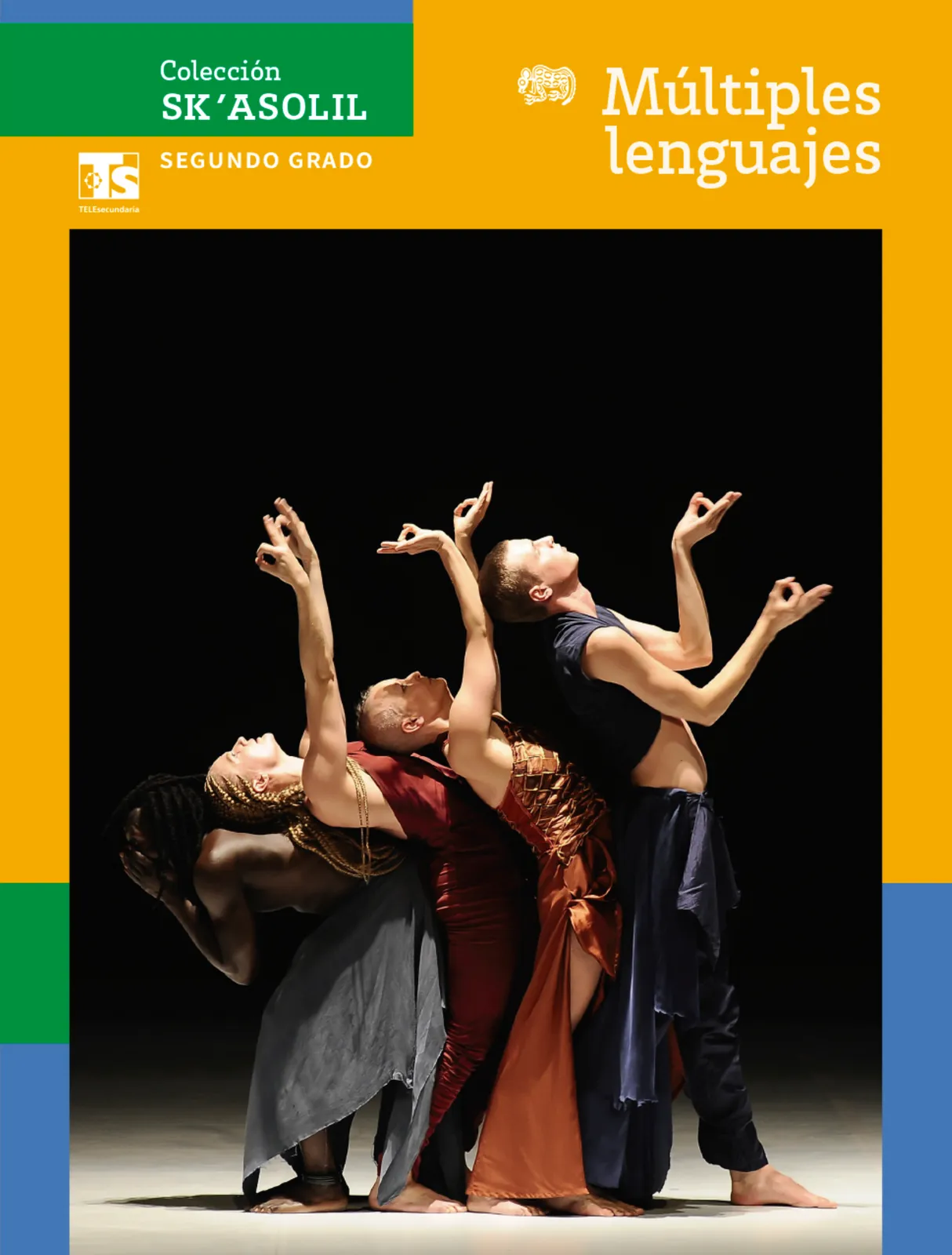
Colección Sk´asolil. Múltiples lenguajes. Libro de Educación Telesecundaria Grado 2° Ciclo Escolar 2025 - 2026
SEP/CONALITEG
163 págs.
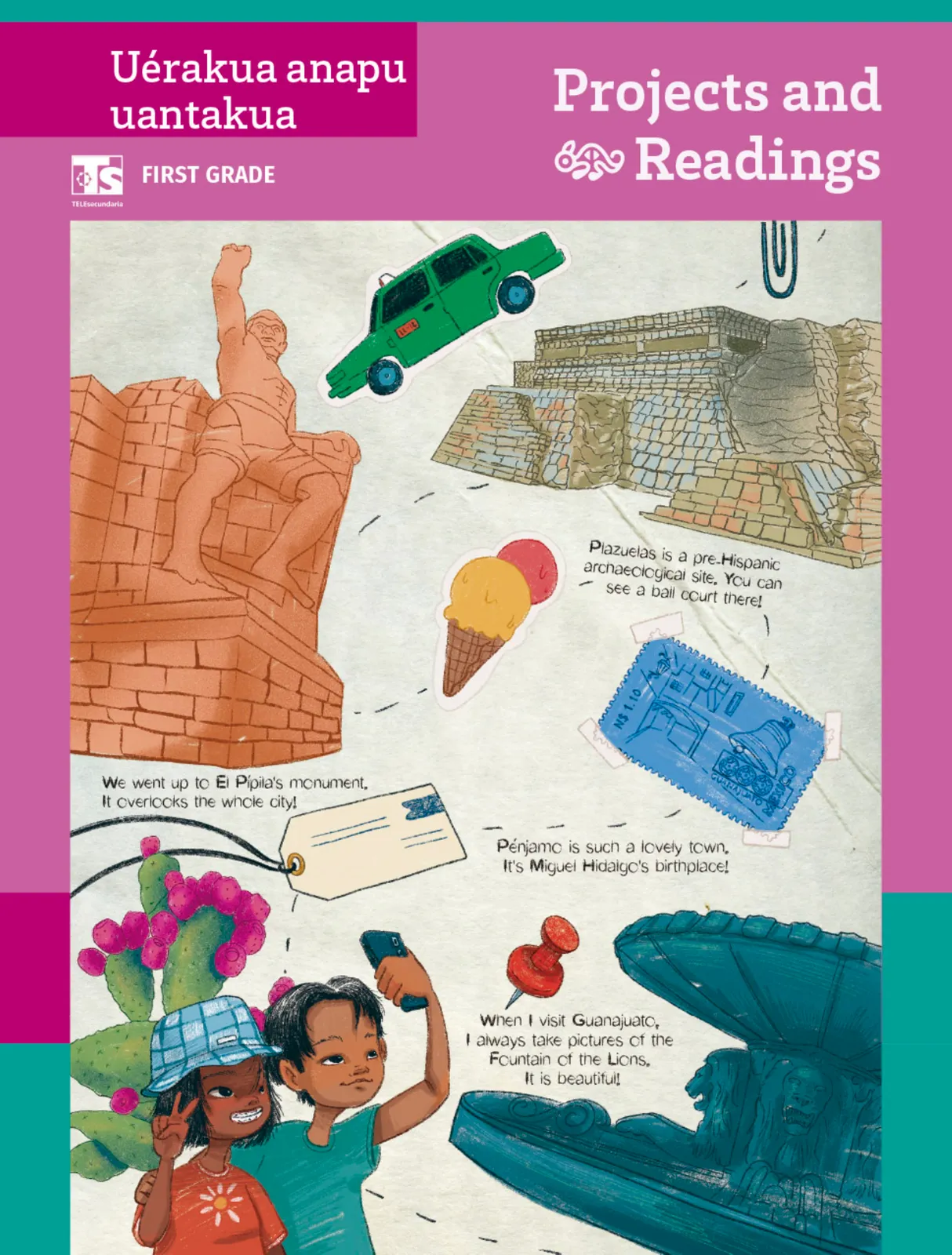
Uérakua anapu uantakua. Projects and Readings. Libro de Educación Telesecundaria Grado 1° Ciclo Escolar 2025 - 2026
SEP/CONALITEG
187 págs.
Uérakua anapu uantakua. Projects and Readings. Libro de Educación Secundaria Grado 3° Ciclo Escolar 2025 - 2026
SEP/CONALITEG
187 págs.