















Saltar al contenido
MisLibrosTexto
Ad

Conducting Interviews and Making a Health Catalog

📄 ejercicios ingles 🎓 secundaria · 2° Secundaria México 🇲🇽 MX 🗣 Español
Página 120
120 de 171
Página 120 de Uérakua anapu uantakua. Projects and Readings.  Libro de Educación Secundaria Grado 2°  Ciclo Escolar 2025 - 2026
Anterior Página 120 / 171 Siguiente

Respuesta rápida

Clasificación: recuperar (bastón), mejorar (lentes), reemplazar (prótesis). Servicios: dental, consulta, nutrición, laboratorio. Catálogo con dibujos, video y agradecimiento. Presentación y acuerdos en asamblea.

📚 exercise ingles ⭐⭐ Dificultad 2/5 ⏱ 8 min lectura

Solución — Página 120

Uérakua anapu uantakua. Projects and Readings. Libro de Educación Secundaria Grado 2° Ciclo Escolar 2025 - 2026

5
Ejercicio 5

Conduct the interviews (Realiza las entrevistas).

a
Parte 5.a

Organize the data and images of the instruments, machines, and tools used to regain, improve, or replace some bodily functions, and classify them.

  1. Recolectar datos e imágenes de instrumentos, máquinas y herramientas que recuperan, mejoran o reemplazan funciones corporales.
  2. Clasificarlos en una tabla de tres columnas: Regain (recuperar), Improve (mejorar), Replace (reemplazar).
  3. Ejemplo de clasificación:
Regain Improve Replace
Bastón, muletas Lentes, audífonos Prótesis de pierna, marcapasos
Silla de ruedas Tensiómetro Implante coclear

Respuesta orientativa: Los instrumentos se organizan según su función: recuperar (fisioterapia), mejorar (lentes) o reemplazar (prótesis) funciones del cuerpo.

b
Parte 5.b

If there is only one health center, find out which services are provided and visit each facility.

  1. Identificar el centro de salud de la comunidad.
  2. Preguntar por los servicios: dental, consulta general, nutrición, laboratorio, entre otros.
  3. Registrar la información en una lista.

Respuesta orientativa: Se visita el centro de salud y se anotan los servicios disponibles para incluirlos en el catálogo.

c
Parte 5.c

Once you have the information, in assembly, select the best items and images and answer the questions with short and attractive sentences.

  1. Reunirse en asamblea y elegir los mejores datos e imágenes.
  2. Responder las preguntas con oraciones cortas y atractivas.

Respuestas orientativas:

  • Did you know that there are financial aids for buying low-cost wheelchairs in the community? → Yes, some community programs offer financial aid for low-cost wheelchairs.
  • Are you aware of the technological innovations that help improve your vision with lenses that darken in sunlight? Are they available in your community? → Yes, photochromic lenses are available at local optical shops.
  • Did you know that orthopedic services to treat problems related to the musculoskeletal system are available in your community? → Yes, the health center offers orthopedic surgeries, devices, and therapies.
  • Did you know that there are permanent vaccination campaigns at the community's clinic? → Yes, the clinic has permanent vaccination campaigns.
  • Did you know that your community provides ambulatory surgery services for some medical conditions? → Yes, ambulatory surgery is available for some conditions.
  • The following services are available in the community:
    • Devices and test strips to measure the concentration of glucose in blood.
    • Devices for measuring blood pressure.
    • Devices to improve hearing.
Respuesta

Se seleccionan los datos y se redactan oraciones breves para el catálogo.
6
Ejercicio 6

Let's make the catalog! Remember the following:

a
Parte 6.a

Use drawings or photographs to make it attractive.

Respuesta orientativa: Se incluyen dibujos o fotografías para que el catálogo sea visualmente atractivo.

b
Parte 6.b

If you use the video catalog format, you can share it in social networks.

Respuesta orientativa: El catálogo en video puede compartirse en redes sociales para mayor difusión.

c
Parte 6.c

Include a thank you note for those who helped you, as well as for the place you visited.

Respuesta orientativa: Se agrega una nota de agradecimiento a las personas y al lugar visitado.

Sharing and Assessing What We Learned

  1. Present your project to the school community in an exhibition or on a wall newspaper.
  2. Share your catalog in the community where you live; you can paste copies in public places, such as libraries, kiosks, and markets, among others.
  3. In assembly, talk about the impact of the catalog.
  4. Talk to your family about the usefulness of tools, machines, and instruments that facilitate and increase human capabilities in the health field.
  5. Finally, write in your notebooks the assembly agreements reached by the community to learn more about the machines, tools, and instruments that you can get access to in the health field.

Respuesta orientativa: Se presenta el proyecto, se comparte el catálogo, se dialoga sobre su impacto, se comenta en familia y se registran los acuerdos de la asamblea en el cuaderno.

Contenido de la página

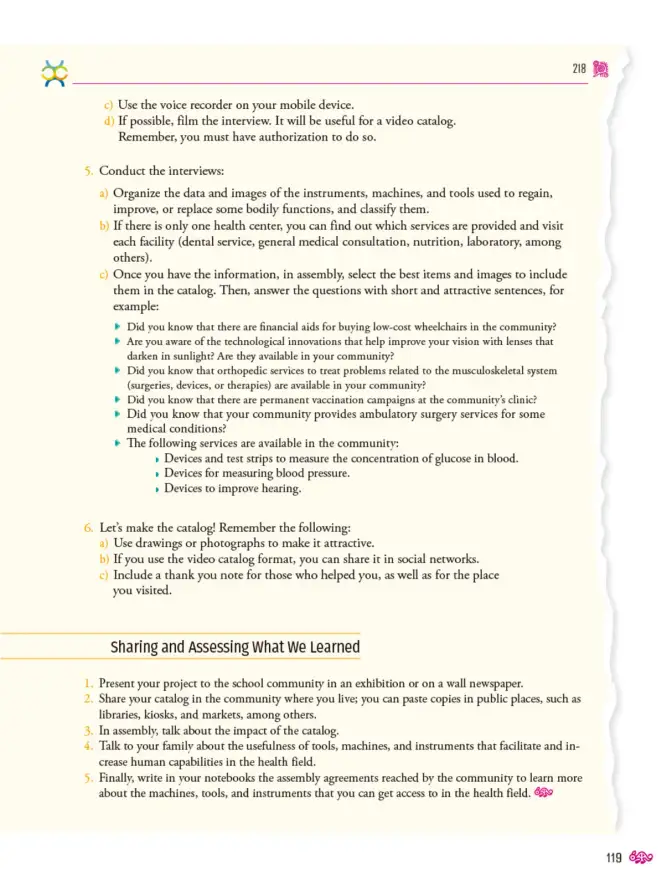
c) Use the voice recorder on your mobile device.

d) If possible, film the interview. It will be useful for a video catalog. Remember, you must have authorization to do so.

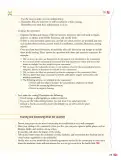
5. Conduct the interviews:

a) Organize the data and images of the instruments, machines, and tools used to regain, improve, or replace some bodily functions, and classify them.

b) If there is only one health center, you can find out which services are provided and visit each facility (dental service, general medical consultation, nutrition, laboratory, among others).

c) Once you have the information, in assembly, select the best items and images to include them in the catalog. Then, answer the questions with short and attractive sentences, for example:

  • Did you know that there are financial aids for buying low-cost wheelchairs in the community?
  • Are you aware of the technological innovations that help improve your vision with lenses that darken in sunlight? Are they available in your community?
  • Did you know that orthopedic services to treat problems related to the musculoskeletal system (surgeries, devices, or therapies) are available in your community?
  • Did you know that there are permanent vaccination campaigns at the community's clinic?
  • Did you know that your community provides ambulatory surgery services for some medical conditions?
  • The following services are available in the community:
    • Devices and test strips to measure the concentration of glucose in blood.
    • Devices for measuring blood pressure.
    • Devices to improve hearing.

6. Let's make the catalog! Remember the following:

a) Use drawings or photographs to make it attractive.

b) If you use the video catalog format, you can share it in social networks.

c) Include a thank you note for those who helped you, as well as for the place you visited.

Sharing and Assessing What We Learned

  1. Present your project to the school community in an exhibition or on a wall newspaper.

  2. Share your catalog in the community where you live; you can paste copies in public places, such as libraries, kiosks, and markets, among others.

  3. In assembly, talk about the impact of the catalog.

  4. Talk to your family about the usefulness of tools, machines, and instruments that facilitate and increase human capabilities in the health field.

  5. Finally, write in your notebooks the assembly agreements reached by the community to learn more about the machines, tools, and instruments that you can get access to in the health field.

Tabla

Regain Improve Replace
Bastón, muletas Lentes, audífonos Prótesis de pierna, marcapasos
Silla de ruedas Tensiómetro Implante coclear

Glosario (8)

regain
recuperar
improve
mejorar
replace
reemplazar
wheelchair
silla de ruedas
musculoskeletal
musculoesquelético
ambulatory surgery
cirugía ambulatoria
test strips
tiras reactivas
assembly
asamblea

Preguntas para practicar

Did you know that there are financial aids for buying low-cost wheelchairs in the community?

Yes, some community programs offer financial aid for low-cost wheelchairs.

Are you aware of the technological innovations that help improve your vision with lenses that darken in sunlight? Are they available in your community?

Yes, photochromic lenses are available at local optical shops.

Did you know that orthopedic services to treat problems related to the musculoskeletal system are available in your community?

Yes, the health center offers orthopedic surgeries, devices, and therapies.

Did you know that there are permanent vaccination campaigns at the community's clinic?

Yes, the clinic has permanent vaccination campaigns.

Did you know that your community provides ambulatory surgery services for some medical conditions?

Yes, ambulatory surgery is available for some conditions.

Temas y conceptos clave

Entrevistas comunitariasCatálogo de saludInstrumentos y servicios médicosEvaluación de proyectosRegain, improve, replace bodily functionsHealth servicesCatalogAssemblyCommunity impact
¿Te fue útil esta página?

Preguntas que la gente también hace

¿Cómo hacer un catálogo de servicios de salud en inglés?
Consulta la solución completa arriba o explora el libro entero para temas relacionados.
¿Qué instrumentos médicos se usan para recuperar, mejorar o reemplazar funciones corporales?
Consulta la solución completa arriba o explora el libro entero para temas relacionados.
¿Cómo se evalúa un proyecto comunitario en la escuela?
Consulta la solución completa arriba o explora el libro entero para temas relacionados.
📌 Antes de leer esto
  • • Vocabulario básico de salud en inglés
  • • Uso de grabadora de voz o cámara
  • • Habilidades de entrevista y organización de información
Siguiente tema sugerido
Presentación de proyectos y evaluación de aprendizajes
📝 Transcripción de la página (texto seleccionable) 2502 caracteres

c) Use the voice recorder on your mobile device.

d) If possible, film the interview. It will be useful for a video catalog.Remember, you must have authorization to do so.

5. Conduct the interviews:

a) Organize the data and images of the instruments, machines, and tools used to regain,improve, or replace some bodily functions, and classify them.

b) If there is only one health center, you can find out which services are provided and visit each facility (dental service, general medical consultation, nutrition, laboratory, among others).

C)Once you have the information, in assembly, select the best items and images to include them in the catalog. Then, answer the questions with short and attractive sentences, for example:

Did you know that there are financial aids for buying low-cost wheelchairs in the community?

Are you aware of the technological innovations that help improve your vision with lenses that darken in sunlight? Are they available in your community?

Did you know that orthopedic services to treat problems related to the musculoskeletal system (surgeries, devices, or therapies) are available in your community?

Did you know that there are permanent vaccination campaigns at the community's clinic?

Did you know that your community provides ambulatory surgery services for some medical conditions?

The following services are available in the community:

, Devices and test strips to measure the concentration of glucose in blood.

, Devices for measuring blood pressure.

, Devices to improve hearing.

  1. Let's make the catalog! Remember the following:

a) Use drawings or photographs to make it attractive.

b) If you use the video catalog format, you can share it in social networks.

c) Include a thank you note for those who helped you, as well as for the place you visited.

Sharing and Assessing What We Learned

  1. Present your project to the school community in an exhibition or on a wall newspaper.

  2. Share your catalog in the community where you live; you can paste copies in public places, such as libraries, kiosks, and markets, among others.

  3. In assembly, talk about the impact of the catalog.

  4. Talk to your family about the usefulness of tools, machines, and instruments that facilitate and increase human capabilities in the health field.

  5. Finally, write in your notebooks the assembly agreements reached by the community to learn more about the machines, tools, and instruments that you can get access to in the health field.8

8

119

Ad

Otros libros recomendados

Ver todos →
Ad

Usamos cookies propias y de terceros para personalizar contenido, mostrar publicidad y analizar el tráfico. Las cookies necesarias siempre están activas.