
















Saltar al contenido
MisLibrosTexto
Ad

The Cave of Crystals: extreme conditions and scientific research

📄 teoria ciencias-naturales 🎓 secundaria · 2° Secundaria México 🇲🇽 MX 🗣 Español
Página 123
123 de 171
Página 123 de Uérakua anapu uantakua. Projects and Readings.  Libro de Educación Secundaria Grado 2°  Ciclo Escolar 2025 - 2026
Anterior Página 123 / 171 Siguiente

Respuesta rápida

  1. Extreme temperatures, humidity and toxic gases; only scientists, 10 minutes, special suits. 2) A hair's thickness per century. 3) How the minerals grew and their chemical composition.
📚 theory ciencias-naturales ⭐⭐ Dificultad 2/5 ⏱ 5 min lectura

Solución — Página 123

Uérakua anapu uantakua. Projects and Readings. Libro de Educación Secundaria Grado 2° Ciclo Escolar 2025 - 2026

1
Ejercicio 1

Read the text and answer: Why can't tourists visit the Cave of Crystals anymore?

  1. El texto indica que años atrás los turistas sí podían visitarla.
  2. Ahora el acceso está limitado por tres factores: temperaturas extremas (extreme temperatures), humedad (humidity) y presencia de gases tóxicos (toxic gases), como sulfuro de hidrógeno y dióxido de carbono.
  3. Solo investigadores y científicos pueden entrar, máximo diez minutos y con trajes especiales.
Respuesta

Because of the extreme temperatures, the humidity and the presence of toxic gases; only researchers and scientists can enter, for a maximum of ten minutes and wearing special suits.
2
Ejercicio 2

How fast do the crystals of the cave grow?

  1. El texto afirma que los cristales crecen el equivalente al grosor de un cabello cada siglo.
  2. Es decir, un crecimiento extremadamente lento: aproximadamente 0.1\,\text{mm} por cada 100 años.
Respuesta

The crystals grow the equivalent of the thickness of a hair every century.

3
Ejercicio 3

What do scientists want to understand about the Cave of Crystals?

  1. Desde su descubrimiento, la cueva se ha estudiado con diversos experimentos científicos.
  2. Los científicos buscan comprender cómo crecieron estas formaciones minerales.
  3. También quieren conocer su composición química.
Respuesta

They want to understand how these mineral formations grew and their chemical composition.

Ad
4
Ejercicio 4

Find in the text three words related to chemistry and write them with their Spanish meaning.

  1. Hydrogen sulfide → sulfuro de hidrógeno.
  2. Carbon dioxide → dióxido de carbono.
  3. Chemical composition → composición química.
Respuesta

hydrogen sulfide (sulfuro de hidrógeno), carbon dioxide (dióxido de carbono), chemical composition (composición química).

Contenido de la página

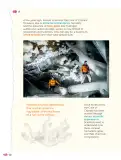
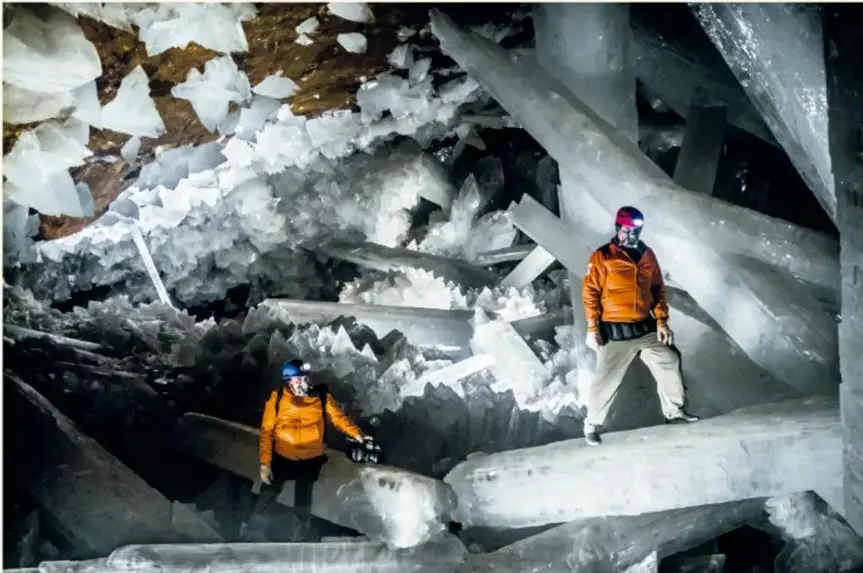
A few years ago, tourists could visit the Cave of Crystals. However, due to extreme temperatures, humidity, and the presence of toxic gases (like hydrogen sulfide and carbon dioxide), access is now limited to researchers and scientists, who can stay for a maximum of ten minutes and must wear special suits.

Researchers have determined that crystals grow the equivalent of the thickness of a hair every century.

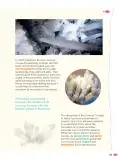
Since its discovery, the Cave of Crystals has been studied through various scientific experiments. Scientists want to understand how these mineral formations grew and their chemical composition.

Tabla

Aspecto Antes Ahora
Visitantes Turistas Solo investigadores y científicos
Tiempo dentro No especificado Máximo 10 minutos
Equipo No especificado Trajes especiales
Riesgos — Temperaturas extremas, humedad, gases tóxicos

Diagrama

mindmap
  root((Cave of Crystals))
    Conditions
      Extreme temperatures
      High humidity
      Toxic gases
        Hydrogen sulfide
        Carbon dioxide
    Access
      Only researchers and scientists
      Maximum 10 minutes
      Special suits
    Research
      Crystal growth
        Hair thickness per century
      Chemical composition
      Scientific experiments

Glosario (9)

Cave
Cueva: cavidad natural en la tierra o en una montaña.
Extreme temperatures
Temperaturas extremas: temperaturas muy altas o muy bajas, peligrosas para el ser humano.
Humidity
Humedad: cantidad de vapor de agua presente en el aire.
Toxic gases
Gases tóxicos: gases que pueden causar daño o intoxicación a los seres vivos.
Hydrogen sulfide
Sulfuro de hidrógeno: gas incoloro, tóxico y con olor a huevo podrido.
Carbon dioxide
Dióxido de carbono: gas producido por la respiración y la combustión.
Researchers
Investigadores: personas que realizan estudios científicos.
Scientific experiments
Experimentos científicos: pruebas controladas para obtener conocimiento.
Chemical composition
Composición química: elementos y proporciones que forman una sustancia.

Preguntas para practicar

Why do scientists wear special suits inside the cave?

Because the cave has extreme temperatures, high humidity and toxic gases that can harm human health. The suits protect researchers from heat, moisture and chemical exposure during the ten minutes they are allowed to stay.

Why is the Cave of Crystals important for science?

It is a natural laboratory where scientists can study how minerals grow over thousands of years and analyze their chemical composition. Understanding these formations helps explain geological processes and may have applications in materials science.

Temas y conceptos clave

Lectura informativa en inglésGeología y mineralesCondiciones extremas y seguridad científicaextreme temperaturestoxic gaseshydrogen sulfidecarbon dioxidescientific experimentschemical compositioncrystal growth
¿Te fue útil esta página?

Figuras de la página (2)

Fotografía de dos investigadores con trajes naranjas y cascos dentro de la Cueva de los Cristales, rodeados de enormes vigas de cristales blancos y translúcidos.
Figura 1 image
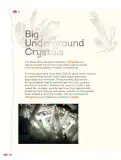
Ilustración de un grupo de cristales blancos de forma prismática, usada como elemento decorativo.
Figura 2 image

Preguntas que la gente también hace

¿Por qué ya no se permite la entrada de turistas a la Cueva de los Cristales?
Consulta la solución completa arriba o explora el libro entero para temas relacionados.
¿Cuánto tardan en crecer los cristales de la cueva?
Consulta la solución completa arriba o explora el libro entero para temas relacionados.
¿Qué gases tóxicos hay en la Cueva de los Cristales?
Consulta la solución completa arriba o explora el libro entero para temas relacionados.
📌 Antes de leer esto
  • • Vocabulario básico en inglés sobre ciencia y minerales
  • • Nociones de química: gases, minerales y composición química
  • • Comprensión lectora en inglés (nivel A2-B1)
Siguiente tema sugerido
Scientific experiments: how minerals and crystals are studied in the laboratory
📝 Transcripción de la página (texto seleccionable) 690 caracteres

A few years ago, tourists could visit the Cave of Crystals.However, due to extreme temperatures, humidity.and the presence of toxic gases(like hydrogen sulfide and carbon dioxide), access is now limited to researchers and scientists, who can stay for a maximum of ten minutes and must wear special suits.

Researchers have determined that crystals grow the equivalent of the thickness of a hair every century.

Since its discovery,the Cave of Crystals has been studied through various scientific experiments.Scientists want to understand how these mineral formations grew and their chemical composition.

C

![](page=0,bbox=[231, 401, 1094, 974])

![](page=0,bbox=[202, 1176, 721, 1479])

,

Ad

Otros libros recomendados

Ver todos →
Ad

Usamos cookies propias y de terceros para personalizar contenido, mostrar publicidad y analizar el tráfico. Las cookies necesarias siempre están activas.