Saltar al contenido
MisLibrosTexto
Ad

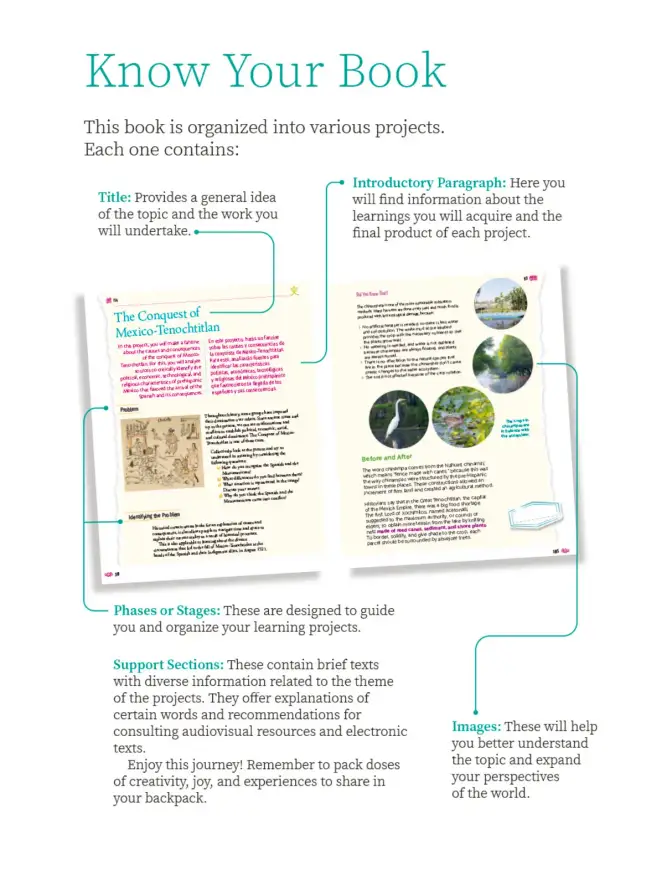
Know Your Book: estructura de los proyectos del libro

📄 introduccion ingles 🎓 secundaria · 2° Secundaria México 🇲🇽 MX 🗣 Español
Página 6
6 de 171
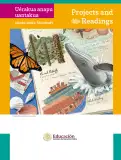
Página 6 de Uérakua anapu uantakua. Projects and Readings.  Libro de Educación Secundaria Grado 2°  Ciclo Escolar 2025 - 2026
Anterior Página 6 / 171 Siguiente

Respuesta rápida

Cada proyecto: título, párrafo introductorio, fases/etapas, secciones de apoyo e imágenes. El párrafo introductorio indica aprendizajes y producto final; las secciones de apoyo amplían información y vocabulario.

ingles ⭐ Dificultad 1/5 ⏱ 4 min lectura

Solución — Página 6

Uérakua anapu uantakua. Projects and Readings. Libro de Educación Secundaria Grado 2° Ciclo Escolar 2025 - 2026

1
Ejercicio 1

Identifica y explica los cinco componentes que forman cada proyecto del libro.

  1. Title (Título): da la idea general del tema y del trabajo que se realizará.
  2. Introductory Paragraph (Párrafo introductorio): informa qué aprendizajes se adquirirán y cuál es el producto final del proyecto.
  3. Phases or Stages (Fases o etapas): guían y organizan el desarrollo del proyecto paso a paso.
  4. Support Sections (Secciones de apoyo): textos breves con información diversa, explicación de palabras y recomendaciones de recursos audiovisuales y electrónicos.
  5. Images (Imágenes): apoyan la comprensión del tema y amplían la perspectiva del mundo.
Respuesta

Cada proyecto se compone de título, párrafo introductorio, fases o etapas, secciones de apoyo e imágenes.

2
Ejercicio 2

¿Qué información encontrarás en el párrafo introductorio de cada proyecto?

  1. Se localiza al inicio del proyecto, junto al título.
  2. Describe los aprendizajes que se van a adquirir.
  3. Anuncia el producto final que se elaborará.
Respuesta

Los aprendizajes esperados y el producto final del proyecto.

3
Ejercicio 3

¿Para qué sirven las secciones de apoyo (Support Sections)?

  1. Contienen textos breves con información variada sobre el tema del proyecto.
  2. Explican el significado de ciertas palabras (glosario).
  3. Recomiendan consultar recursos audiovisuales y textos electrónicos.
Respuesta

Para ampliar información, aclarar vocabulario y sugerir recursos adicionales.

Ad
4
Ejercicio 4

Observa las páginas de ejemplo (pp. 14-15) y responde: ¿qué tipo de actividades se muestran?

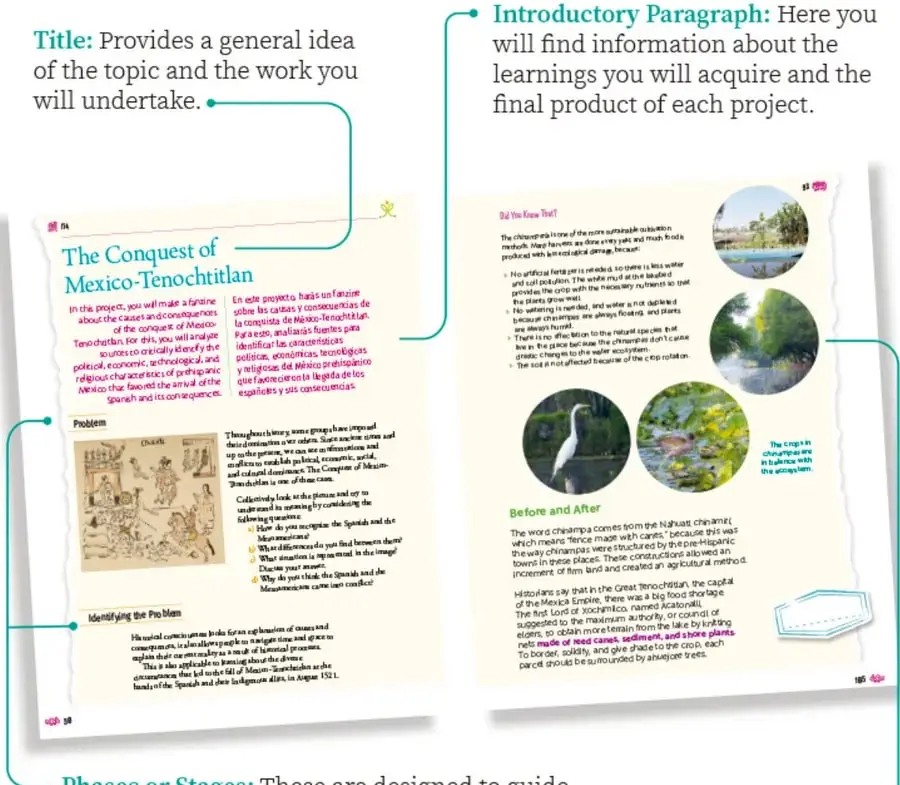
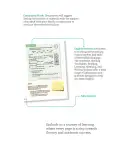
  1. En la página 14 aparece el proyecto The Conquest of Mexico-Tenochtitlan con las secciones Problem e Identifying the Problem.
  2. En la página 15 aparecen las secciones Did You Know That?, Before and After y un recuadro de escritura.
  3. Estas secciones corresponden a las fases o etapas y a las secciones de apoyo del proyecto.
Respuesta

Actividades de análisis histórico (conquista de México-Tenochtitlan) con preguntas guía, datos curiosos y un espacio para redactar.

5
Ejercicio 5

¿Qué mensaje final da el libro al estudiante?

  1. Invita a disfrutar el recorrido de aprendizaje.
  2. Recomienda llevar "dosis de creatividad, alegría y experiencias" en la mochila.
Respuesta

Disfrutar el aprendizaje con creatividad, alegría y experiencias para compartir.

Contenido de la página

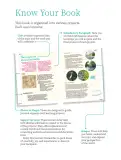
Know Your Book

This book is organized into various projects. Each one contains:

  • Title: Provides a general idea of the topic and the work you will undertake.
  • Introductory Paragraph: Here you will find information about the learnings you will acquire and the final product of each project.
  • Phases or Stages: These are designed to guide you and organize your learning projects.
  • Support Sections: These contain brief texts with diverse information related to the theme of the projects. They offer explanations of certain words and recommendations for consulting audiovisual resources and electronic texts.
  • Images: These will help you better understand the topic and expand your perspectives of the world.

Enjoy this journey! Remember to pack doses of creativity, joy, and experiences to share in your backpack.


Páginas de ejemplo (pp. 14-15)

Página 14 — The Conquest of Mexico-Tenochtitlan

In this project, you will make a figure about the causes and consequences of the conquest of Mexico-Tenochtitlan. For this, you will analyze sources to identify the political, economic, technological, and religious characteristics of the period before the arrival of the Spanish and its consequences.

Problem

Throughout history, some groups have imposed their traditions over others. Some examples are the conquest of Mexico-Tenochtitlan and the Spanish mandate in the political, economic, social, and cultural domains. The Conquest of Mexico-Tenochtitlan was a process of domination.

Currently, it is a phenomenon and/or a problem to approach by considering the following questions:

  • What do you recognize the Spanish and the Mexica as?
  • What were the main causes of the conquest?
  • What arguments do you find between them?
  • What arguments do you find in the image?
  • Do you think the indigenous people were defeated?
  • What do you think the Spanish and the Mexica thought about the war?

Identifying the Problem

Historical events have different versions of the same event. It is important to recognize that the same event can be interpreted in multiple ways. This is applicable to the Conquest of Mexico-Tenochtitlan, where the vision of the Spanish and the indigenous peoples differ.

Página 15 — Did You Know That?

The chinampas are one of the most sustainable agricultural systems. They are artificial islands created with branches and mud, which produce up to seven harvests per year.

  • The chinampas are an example of the relationship between humans and their environment.
  • The crops in the chinampas are grown in water.
  • The chinampas are always floating, and plants are always fresh.
  • There are more than 20,000 hectares of chinampas in Mexico City.
  • The chinampas are a model of sustainable agriculture.

Before and After

The word chinampa comes from the Nahuatl chinamitl, which means "made with care", because it was built with branches and mud. These constructions allowed an increase in agricultural production.

Historians say that in the Great Tenochtitlan, the capital of the Mexica Empire, there was a big flood. The Mexica built a dike to separate the fresh water from the salt water. To do this, they used tezontle, tepalcates, and tezontle stones. To build the dike, they used tezontle, tepalcates, and tezontle stones. To build the dike, they used tezontle, tepalcates, and tezontle stones.


Ejemplos resueltos

Identifica las cinco partes de un proyecto del libro.

  1. Title. 2. Introductory Paragraph. 3. Phases or Stages. 4. Support Sections. 5. Images.

Tabla

Componente Función
Title Da la idea general del tema y del trabajo
Introductory Paragraph Informa aprendizajes y producto final
Phases or Stages Guían y organizan el proyecto
Support Sections Textos breves, glosario y recursos
Images Apoyan la comprensión y amplían la perspectiva

Diagrama

mindmap
  root((Proyecto))
    Title
      Idea general del tema
    Introductory Paragraph
      Aprendizajes
      Producto final
    Phases or Stages
      Guían el trabajo
    Support Sections
      Textos breves
      Glosario
      Recursos
    Images
      Comprensión
      Perspectiva del mundo

Glosario (7)

Title
Título: da la idea general del tema y del trabajo a realizar.
Introductory Paragraph
Párrafo introductorio: informa los aprendizajes y el producto final del proyecto.
Phases or Stages
Fases o etapas: guían y organizan el desarrollo del proyecto.
Support Sections
Secciones de apoyo: textos breves, glosario y recomendaciones de recursos.
Images
Imágenes: apoyan la comprensión del tema y amplían la perspectiva.
Chinampa
Del náhuatl chinamitl, 'hecho con cuidado'; isla artificial para cultivo.
Tezontle
Roca volcánica porosa usada en construcciones mexicas.

Preguntas para practicar

¿Por qué es útil conocer la estructura del libro antes de empezar?

Porque permite anticipar qué se aprenderá, cómo se organizará el trabajo y dónde encontrar apoyo o vocabulario cuando se necesite.

¿Qué relación existe entre las fases del proyecto y las secciones de apoyo?

Las fases marcan el camino del proyecto y las secciones de apoyo brindan la información, el vocabulario y los recursos necesarios para completarlas.

Temas y conceptos clave

Organización del libro de textoPartes de un proyectoGuía de navegación para el estudianteTitleIntroductory ParagraphPhases or StagesSupport SectionsImages
¿Te fue útil esta página?

Figuras de la página (1)

Página 14 del libro: proyecto 'The Conquest of Mexico-Tenochtitlan' con ilustración de la conquista, secciones Problem e Identifying the Problem.
Figura 1 image

Preguntas que la gente también hace

¿Cuáles son las partes de un proyecto en el libro de inglés?
Consulta la solución completa arriba o explora el libro entero para temas relacionados.
¿Qué es el párrafo introductorio de un proyecto?
Consulta la solución completa arriba o explora el libro entero para temas relacionados.
¿Para qué sirven las secciones de apoyo en el libro?
Consulta la solución completa arriba o explora el libro entero para temas relacionados.
📌 Antes de leer esto
  • • Lectura básica en inglés
  • • Conocimiento de vocabulario escolar (title, images, project)
Siguiente tema sugerido
Proyecto 1: The Conquest of Mexico-Tenochtitlan (páginas 14-15)
📝 Transcripción de la página (texto seleccionable) 643 caracteres

Know Your Book

This book is organized into various projects.Each one contains:

Phases or Stages: These are designed to guide you and organize your learning projects.

Support Sections: These contain brief texts with diverse information related to the theme of the projects. They offer explanations of certain words and recommendations for consulting audiovisual resources and electronic texts.

Enjoy this journey! Remember to pack doses of creativity, joy, and experiences to share in your backpack.

![](page=0,bbox=[144, 316, 1044, 1101])

Images: These will help you better understand the topic and expand your perspectives of the world.

Ad

Páginas cercanas

Otros libros recomendados

Ver todos →
Ad

Usamos cookies propias y de terceros para personalizar contenido, mostrar publicidad y analizar el tráfico. Las cookies necesarias siempre están activas.