
















Saltar al contenido
MisLibrosTexto
Ad

Retrieval: Vocabulary Practice and Interviewing an Adult About Social Media

📄 ejercicios ingles 🎓 bachillerato · 3° Secundaria México 🇲🇽 MX 🗣 Español
Página 177
177 de 187
Página 177 de Uérakua anapu uantakua. Projects and Readings.  Libro de Educación Secundaria Grado 3°  Ciclo Escolar 2025 - 2026
Anterior Página 177 / 187 Siguiente

Respuesta rápida

  1. inquire = preguntar; knowledge = conocimiento; typical dish = platillo típico; schedule = horario; draft = borrador; gather = reunir; cardstock = cartulina. 2. Entrevista a un adulto sobre cómo aprendía culturas antes de las redes sociales.
📚 exercise ingles ⭐⭐ Dificultad 2/5 ⏱ 8 min lectura

Solución — Página 177

Uérakua anapu uantakua. Projects and Readings. Libro de Educación Secundaria Grado 3° Ciclo Escolar 2025 - 2026

1
Ejercicio 1

Completa el vocabulario con la definición o traducción de cada palabra.

  1. Inquire: preguntar, indagar o solicitar información. To ask for information.
  2. Knowledge: conocimiento, saber o información adquirida. Facts or skills learned through experience or education.
  3. Typical dish: platillo típico o comida tradicional de una región. A traditional food from a specific place.
  4. Schedule: horario o programa de actividades. A plan that shows times for activities.
  5. Draft: borrador o versión preliminar de un texto. A first version of a piece of writing.
  6. Gather: reunir, recopilar o juntar. To collect things or people.
  7. Cardstock: cartulina o papel grueso. A thick, stiff type of paper.
Respuesta

inquire = preguntar; knowledge = conocimiento; typical dish = platillo típico; schedule = horario; draft = borrador; gather = reunir; cardstock = cartulina.


2
Ejercicio 2

Individually, but considering your classmates, choose and interview an adult person from your community using the questions on the following page; if necessary, you can add more. Write the answers in your notebook.

  1. Elige a un adulto de tu comunidad (familiar, vecino o maestro) y pídele permiso para entrevistarlo.
  2. Formula las preguntas de la página siguiente sobre el uso de internet y redes sociales en su juventud.
  3. Escucha con atención y anota las respuestas en tu cuaderno, usando frases completas en inglés.
  4. Compara tus respuestas con las de tus compañeros y comenta en clase las diferencias entre generaciones.

Respuesta orientativa: Entrevista modelo: “When I was young, we learned about other cultures through books, radio and television. We did not have social media, so we talked with people from other countries by letters or in person.”

Contenido de la página

Inquire: ________________________________________________

Knowledge: ______________________________________________

Typical dish: ____________________________________________

Schedule: _______________________________________________

Draft: __________________________________________________

Gather: _________________________________________________

Cardstock: ______________________________________________

Retrieval

You may have realized from “Identification” that social media is a reference when it comes to learning new words or phrases in English.

Through songs, videos, pictures, video games, and traditional dishes, along with the work of painters, poets, tattoo artists, and influencers, people get in touch with other cultures. The interculturalism phenomenon comes from appropriating the previously mentioned cultural and artistic manifestations.

The use of the internet and social media has become increasingly relevant over the last few years. Current generations use them frequently, and it has become normal for the so-called trends to impact their personalities and their everyday knowledge.

It is interesting to examine the opinions of previous generations about the use of the internet and social media, given that, at the beginning of the 21st century, people learned about cultural and artistic manifestations from other countries in different ways.

Individually, but considering your classmates, choose and interview an adult person from your community using the questions on the following page; if necessary, you can add more. Write the answers in your notebook.

176

Ejemplos resueltos

Completa el significado de la palabra inquire.

Inquire significa preguntar o indagar. Ejemplo: I will inquire about the schedule of the English course.

Glosario (9)

Inquire
Preguntar, indagar o solicitar información.
Knowledge
Conocimiento o saber adquirido.
Typical dish
Platillo típico o comida tradicional de una región.
Schedule
Horario o programa de actividades.
Draft
Borrador o versión preliminar de un texto.
Gather
Reunir, recopilar o juntar.
Cardstock
Cartulina o papel grueso.
Interculturalism
Interculturalidad; contacto e intercambio entre culturas.
Trends
Tendencias o modas.

Preguntas para practicar

How did previous generations learn about cultural and artistic manifestations from other countries?

Previous generations learned about other cultures through books, radio, television, letters, and personal contact, before social media existed.

How do social media and the internet influence current generations?

Social media and the internet influence current generations through trends, videos, songs, and images that shape their personalities and everyday knowledge.

Temas y conceptos clave

Vocabulario en inglésEntrevistaRedes sociales e interculturalidadinquireknowledgetypical dishscheduledraftgathercardstockinterviewsocial media
¿Te fue útil esta página?

Figuras de la página (2)

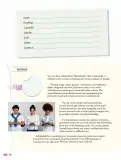
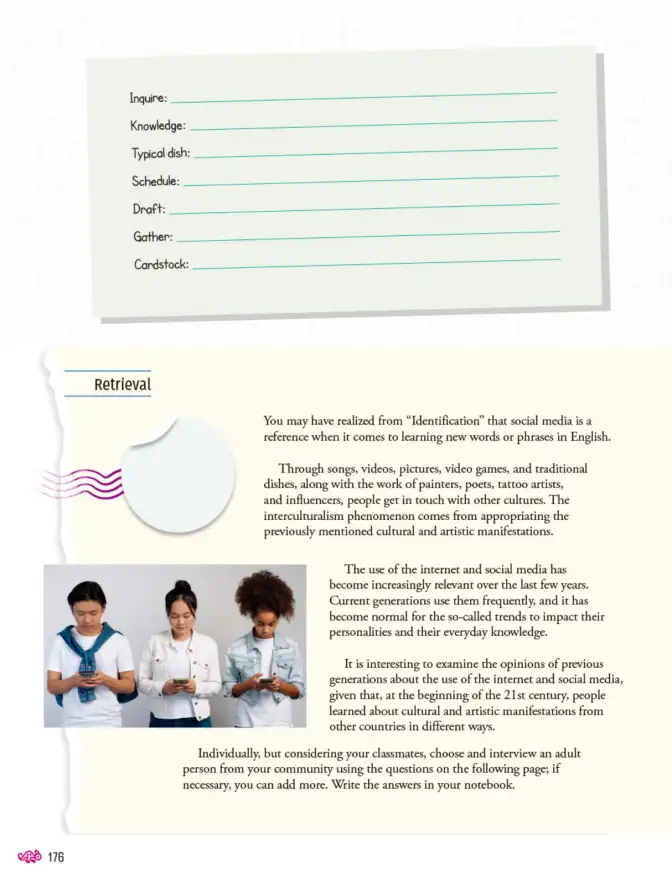
Tres jóvenes de secundaria mirando sus teléfonos celulares; uno lleva mochila y sudadera azul, otra chamarra blanca y otra chamarra de mezclilla.
Figura 1 image
Número de página 176 con un pequeño adorno decorativo.
Figura 2 image

Preguntas que la gente también hace

¿Qué significa 'inquire' en español?
Consulta la solución completa arriba o explora el libro entero para temas relacionados.
¿Cómo se dice 'platillo típico' en inglés?
Consulta la solución completa arriba o explora el libro entero para temas relacionados.
¿Cómo hacer una entrevista en inglés sobre el uso de redes sociales?
Consulta la solución completa arriba o explora el libro entero para temas relacionados.
📌 Antes de leer esto
  • • Vocabulario básico en inglés
  • • Uso de preguntas en presente y pasado simple
  • • Habilidad para escribir oraciones completas
Siguiente tema sugerido
Entrevista a un adulto: preguntas y respuestas sobre el uso de internet y redes sociales
📝 Transcripción de la página (texto seleccionable) 1344 caracteres

Inquine:

Knowledge:

Typical dish:

Schedule:

Draft:

Gather:

Cardstock:

Retrieval

You may have realized from "Identification" that social media is a reference when it comes to learning new words or phrases in English.

Through songs, videos, pictures, video games, and traditional dishes, along with the work of painters, poets, tattoo artists,and influencers, people get in touch with other cultures. The interculturalism phenomenon comes from appropriating the previously mentioned cultural and artistic manifestations.

The use of the internet and social media has become increasingly relevant over the last few years.Current generations use them frequently, and it has become normal for the so-called trends to impact their personalities and their everyday knowledge.

It is interesting to examine the opinions of previous generations about the use of the internet and social media,given that, at the beginning of the 21st century, people learned about cultural and artistic manifestations from other countries in different ways.

Individually, but considering your classmates, choose and interview an adult person from your community using the questions on the following page; if necessary, you can add more. Write the answers in your notebook.

![](page=0,bbox=[74, 739, 429, 975])

![](page=0,bbox=[79, 1018, 552, 1313])

乐

176

Ad

Otros libros recomendados

Ver todos →
Ad

Usamos cookies propias y de terceros para personalizar contenido, mostrar publicidad y analizar el tráfico. Las cookies necesarias siempre están activas.