
















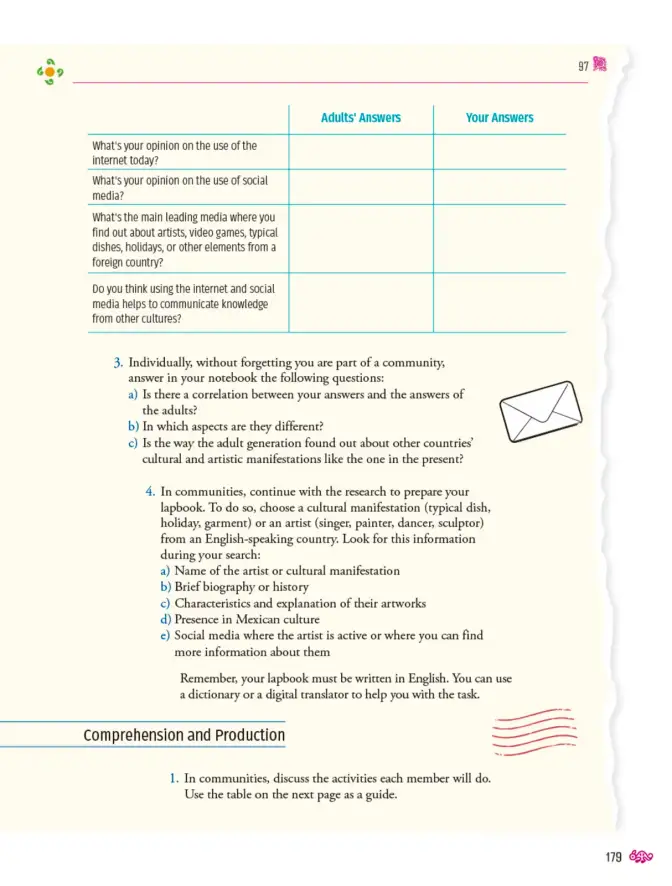
Individually, without forgetting you are part of a community, answer in your notebook the following questions:
Is there a correlation between your answers and the answers of the adults?
- Se comparan las columnas "Adults' Answers" y "Your Answers" de la tabla.
- Se identifican coincidencias: ambos suelen usar internet y redes sociales a diario.
- Se observa que la correlación es alta en el uso, pero media en la opinión sobre sus efectos.
Respuesta orientativa: Yes, there is a partial correlation. Both generations use the internet and social media frequently, but adults tend to be more cautious about privacy and misinformation, while teenagers focus on entertainment and instant communication.
In which aspects are they different?
- Se contrastan frecuencia de uso, tipo de plataforma y propósito.
- Se agrupan las diferencias en tres ejes: tecnológicas, culturales y de valoración.
Respuesta orientativa: They differ in the platforms they prefer, the time they spend online, and the way they judge content. Adults often prefer Facebook or WhatsApp and value reliability; teenagers prefer TikTok, Instagram or YouTube and value immediacy and trends.
Is the way the adult generation found out about other countries' cultural and artistic manifestations like the one in the present?
- Se identifica el medio actual: internet y redes sociales.
- Se identifica el medio de la generación adulta: televisión, radio, revistas, libros y viajes.
- Se comparan velocidad, alcance y tipo de información.
Respuesta orientativa: No, it is not the same. Adults relied on television, radio, printed magazines, books and personal travel, so access was slower and limited. Today, social media and streaming platforms allow immediate, global and audiovisual contact with other cultures.