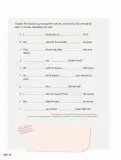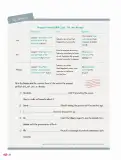
















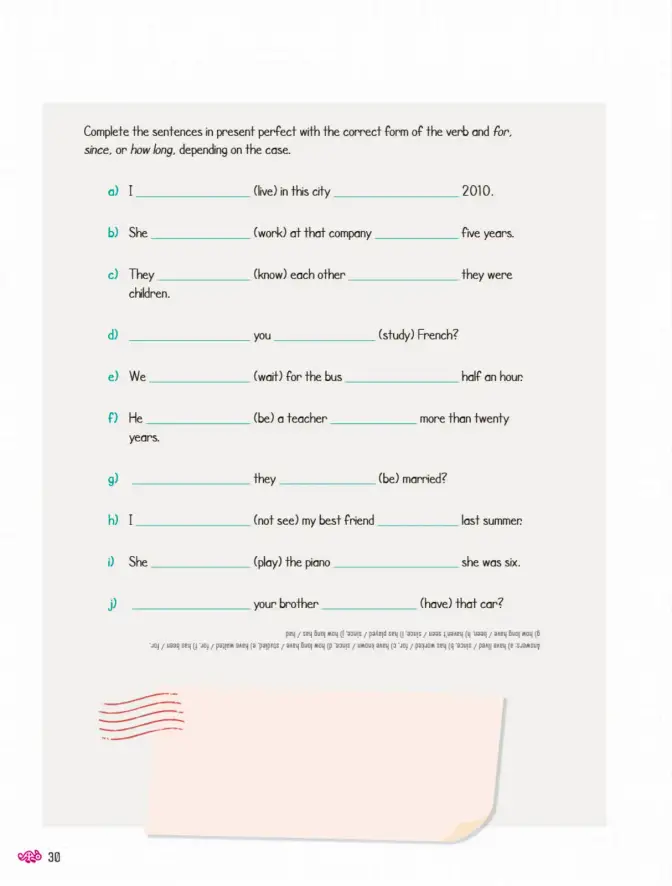
Complete the sentences in present perfect with the correct form of the verb and for, since, or how long, depending on the case.
I ___ (live) in this city ___ 2010.
- El verbo live en present perfect con el sujeto I es have lived.
- 2010 es un punto de inicio en el tiempo, por lo que se usa since.
I have lived in this city since 2010.
She ___ (work) at that company ___ five years.
- El verbo work con she forma has worked.
- five years es un período de tiempo, por lo que se usa for.
She has worked at that company for five years.
They ___ (know) each other ___ they were children.
- El verbo know con they forma have known.
- they were children es un momento pasado concreto, por lo que se usa since.
They have known each other since they were children.
___ you ___ (study) French?
- Es una pregunta, por lo que el auxiliar have va antes del sujeto: Have you.
- El verbo study en participio es studied.
- No se necesita for ni since porque no se especifica duración ni inicio.
Have** you studied French?
We ___ (wait) for the bus ___ half an hour.
- El verbo wait con we forma have waited.
- half an hour es un período de tiempo, por lo que se usa for.
We have waited for the bus for half an hour.
He ___ (be) a teacher ___ more than twenty years.
- El verbo be con he forma has been.
- more than twenty years es un período de tiempo, por lo que se usa for.
He has been a teacher for more than twenty years.
___ they ___ (be) married?
- Pregunta con they: el auxiliar have va antes del sujeto: Have they.
- El participio de be es been.
Have** they been married?
I ___ (not see) my best friend ___ last summer.
- El verbo see en negativa con I forma have not seen.
- last summer es un momento pasado concreto, por lo que se usa since.
I have not seen my best friend since last summer.
She ___ (play) the piano ___ she was six.
- El verbo play con she forma has played.
- she was six es un punto de inicio en el pasado, por lo que se usa since.
She has played the piano since she was six.
___ your brother ___ (have) that car?
- Pregunta con your brother: el auxiliar have va antes del sujeto: Has your brother.
- El participio de have es had.
Has** your brother had that car?