















Saltar al contenido
MisLibrosTexto
Ad

Hot Potato, Leading Questions y Vocabulary: lenguas y comunicación

📄 ejercicios ingles 🎓 otro · 1° TELESECUNDARIA México 🇲🇽 MX 🗣 Español
Página 99
99 de 187
Página 99 de Uérakua anapu uantakua. Projects and Readings.  Libro de Educación Telesecundaria Grado 1°  Ciclo Escolar 2025 - 2026
Anterior Página 99 / 187 Siguiente

Respuesta rápida

1.a) México, España, Egipto, China, Australia. 1.b) China (chino mandarín), Australia (inglés), México (español), Egipto (árabe), España (español). 1.c) Comparar y verificar con fuentes. Hot Potato: juego oral en inglés. Leading Questions: respuestas sobre lengua, inclusión y diversidad.

📚 exercise ingles ⭐⭐ Dificultad 2/5 ⏱ 8 min lectura

Solución — Página 99

Uérakua anapu uantakua. Projects and Readings. Libro de Educación Telesecundaria Grado 1° Ciclo Escolar 2025 - 2026

1
Ejercicio 1

In communities, do the following activity: a) Think about five countries, preferably one per continent, and write them on a piece of paper. b) On a separate paper, write the official language of each country, and order the countries from the largest to the smallest. c) Exchange the paper with another community, and ask them to write their information in subparagraphs a and b on the same paper. After 10 minutes, compare your answers with those of the other community. If there were any differences, find out the correct answers. Then, check them with the whole class.

a
Parte 1.a
  1. Selecciono cinco países, uno por continente.
  2. Los escribo en una hoja: México (América), España (Europa), Egipto (África), China (Asia), Australia (Oceanía).
Respuesta

México, España, Egipto, China, Australia.

b
Parte 1.b
  1. Escribo la lengua oficial de cada país: México → español; España → español; Egipto → árabe; China → chino mandarín; Australia → inglés.
  2. Ordeno de mayor a menor superficie: China (9{,}6 millones de km^{2}), Australia (7{,}7 millones de km^{2}), México (1{,}96 millones de km^{2}), Egipto (1{,}0 millón de km^{2}), España (0{,}506 millones de km^{2}).
Respuesta

China (chino mandarín), Australia (inglés), México (español), Egipto (árabe), España (español).

c
Parte 1.c
  1. Intercambio la hoja con otra comunidad.
  2. Comparo mis respuestas con las suyas y anoto diferencias (por ejemplo, si escribieron 'mandarín' en lugar de 'chino', o si ordenaron por población en vez de superficie).
  3. Verifico con fuentes confiables y comparto con la clase.

Respuesta orientativa: Las diferencias se resuelven consultando un atlas o enciclopedia; se aclara que 'chino' y 'mandarín' se usan como equivalentes en este contexto y que el orden puede variar según el criterio (superficie o población).

Paso 1: Hot Potato

In communities, play Hot Potato. Follow the instructions below.

  1. Formo una bola con un trapo.
  2. Elijo un moderador que escriba las respuestas.
  3. Jugamos cinco rondas; contamos del 1 al 10 en inglés mientras lanzamos la bola.
  4. Quien tenga la bola al llegar a 10 responde la pregunta del moderador.
  5. Si la pregunta se repite, agrego nuevos elementos a mi respuesta.

Respuesta orientativa: El juego se desarrolla en inglés, con conteo oral y respuestas breves; el moderador rota al final de cada ronda.

Paso 2: Leading Questions

  1. ¿Cuál es la diferencia entre lengua en general y lengua como conjunto de palabras y sonidos usados para comunicarse en un país o comunidad?
  2. Además de la lengua oral y escrita, ¿qué otros sistemas lingüísticos usamos?
  3. ¿Qué otras lenguas hablan las personas en tu clase, escuela, comunidad y familia?
  4. ¿Cómo puedes involucrarte en aprender otras lenguas y cuáles te gustan?
  5. ¿Qué frases son representativas de tu forma de comunicarte en tu comunidad pero no se usan en otros lugares? ¿Puedes mencionar algunos ejemplos?
  6. ¿Con qué poema, canción o frase te identificas? Comparte un fragmento.

Respuesta orientativa:

  1. La lengua en general es la facultad humana de comunicarse; la lengua de un país o comunidad es el sistema específico de signos y reglas que esa colectividad usa.
  2. Usamos lenguaje corporal, señas, Braille, lenguaje de señas, símbolos matemáticos, emojis y códigos digitales.
  3. En México se hablan 68 lenguas indígenas además del español; en el aula puede haber náhuatl, maya, mixteco, inglés, etc.
  4. Me involucro practicando con hablantes nativos, viendo series subtituladas y usando aplicaciones; me gustaría aprender náhuatl e inglés.
  5. Ejemplos: '¿Qué onda?', '¡Aguas!', '¡Órale!', 'Buen provecho'; son expresiones coloquiales mexicanas que no se usan igual en otros países.
  6. Me identifico con el poema 'No te rindas' de Mario Benedetti; comparto: 'No te rindas, aún estás a tiempo de alcanzar y comenzar de nuevo'.

Paso 3: Causas de las dificultades comunicativas

  1. Causa 1: los jóvenes no saben que existen otras lenguas o sistemas lingüísticos necesarios para comunicarse con compañeros que hablan otra lengua o necesitan un sistema especial (Braille o lengua de señas).
  2. Causa 2: los jóvenes no se interesan en aprender otras lenguas para hablar con compañeros que usan una lengua o sistema lingüístico diferente.
  3. Causa 3: la incapacidad de identificar otras lenguas como oportunidades de comunicación en expresiones artísticas, para abrir un diálogo con la diversidad cultural o la inclusión de personas que usan otros sistemas lingüísticos.

Respuesta orientativa: Comprender estas causas ayuda a promover la inclusión y el respeto por la diversidad lingüística en la escuela y la comunidad.


Contenido de la página

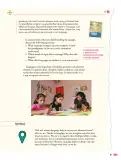
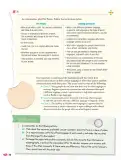
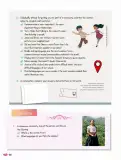
In communities, play Hot Potato. Follow the instructions below.

Hot Potato Leading Questions
Make a ball with a cloth. You and your classmates will throw it at each other. What is the difference between language, in general, and language as the body of words and sounds used for communicating in a country or community?
Choose a moderator to write the answers. The moderator will change at the end of each round of questions. Besides oral and written language, what other language systems do we use?
Do five rounds. Count from 1 to 10 in English while you throw the ball. What other languages do people speak in your class, school, community, and family?
Whenever you get to 10, the classmate with the ball will answer the moderator's question. How can you get involved in learning other languages, and which ones do you like?
If the question is repeated, add new elements to your answer. What phrases are representative of the way you communicate with people in your community but are not used elsewhere? Can you mention a few examples?
What poem, song, or phrase do you identify with? Share a fragment.

It is important to understand the hardships people face when they cannot communicate in their mother language or when they cannot establish communication with their peers. The causes may be some of the following:

  • Cause 1. Young people do not know that there may be other languages or necessary linguistic systems to communicate with classmates who speak a different language or need a special system to help them communicate (such as Braille or sign language).
  • Cause 2. Young people are not interested in learning other languages to talk with classmates who use a different language or linguistic system.
  • Cause 3. The inability to identify other languages as opportunities for communication in artistic expressions, to open a dialogue with cultural diversity or inclusion for people who use other linguistic systems.

Vocabulary

  1. In communities, do the following activity:
    • a) Think about five countries, preferably one per continent, and write them on a piece of paper.
    • b) On a separate paper, write the official language of each country, and order the countries from the largest to the smallest.
    • c) Exchange the paper with another community, and ask them to write their information in subparagraphs a and b on the same paper. After 10 minutes, compare your answers with those of the other community. If there were any differences, find out the correct answers. Then, check them with the whole class.

Tabla

Hot Potato Leading Questions
Make a ball with a cloth. You and your classmates will throw it at each other. What is the difference between language, in general, and language as the body of words and sounds used for communicating in a country or community?
Choose a moderator to write the answers. The moderator will change at the end of each round of questions. Besides oral and written language, what other language systems do we use?
Do five rounds. Count from 1 to 10 in English while you throw the ball. What other languages do people speak in your class, school, community, and family?
Whenever you get to 10, the classmate with the ball will answer the moderator's question. How can you get involved in learning other languages, and which ones do you like?
If the question is repeated, add new elements to your answer. What phrases are representative of the way you communicate with people in your community but are not used elsewhere? Can you mention a few examples?
What poem, song, or phrase do you identify with? Share a fragment.

Glosario (7)

Hot Potato
Juego de 'papas calientes' en el que se lanza una bola y quien la tiene al llegar a 10 responde una pregunta.
moderator
Persona que dirige el juego y escribe las respuestas.
mother language
Lengua materna, primera lengua que aprende una persona.
Braille
Sistema de lectura y escritura táctil para personas ciegas.
sign language
Lengua de señas, sistema de comunicación gestual para personas sordas.
official language
Lengua oficial de un país o Estado.
linguistic system
Sistema lingüístico, conjunto organizado de signos y reglas.

Preguntas para practicar

What is the difference between language, in general, and language as the body of words and sounds used for communicating in a country or community?

Language in general is the human capacity to communicate; the language of a country or community is the specific system of words, sounds and rules shared by that group.

Besides oral and written language, what other language systems do we use?

We use body language, sign language, Braille, mathematical symbols, emojis and digital codes.

What other languages do people speak in your class, school, community, and family?

In Mexico, besides Spanish, many indigenous languages are spoken, such as Náhuatl, Maya, Mixteco, Zapoteco, and also foreign languages like English.

How can you get involved in learning other languages, and which ones do you like?

I can practice with native speakers, watch subtitled series, use language apps and take courses; I would like to learn Náhuatl and English.

What phrases are representative of the way you communicate with people in your community but are not used elsewhere? Can you mention a few examples?

Expressions like '¿Qué onda?', '¡Aguas!', '¡Órale!' and 'Buen provecho' are typical in Mexico and may not be used in other countries.

What poem, song, or phrase do you identify with? Share a fragment.

I identify with Mario Benedetti's poem 'No te rindas'; a fragment is: 'No te rindas, aún estás a tiempo de alcanzar y comenzar de nuevo'.

Temas y conceptos clave

Juego Hot PotatoPreguntas guía sobre lengua y comunicaciónCausas de las dificultades comunicativasVocabulario: países, lenguas oficiales y tamañoLenguaComunicaciónDiversidad lingüísticaLengua oficialBrailleLengua de señasInclusión
¿Te fue útil esta página?

Figuras de la página (2)

Ilustración de un círculo beige con un borde curvo, similar a una burbuja o sello.
Figura 1 image
Sello postal con la palabra 'Vocabulary' y un diseño de líneas curvas.
Figura 2 image

Preguntas que la gente también hace

¿Cuántas lenguas se hablan en México?
Consulta la solución completa arriba o explora el libro entero para temas relacionados.
¿Qué es la diversidad lingüística?
Consulta la solución completa arriba o explora el libro entero para temas relacionados.
¿Cómo se dice 'lengua oficial' en inglés?
Consulta la solución completa arriba o explora el libro entero para temas relacionados.
📌 Antes de leer esto
  • • Vocabulario básico de países y nacionalidades en inglés
  • • Conteo del 1 al 10 en inglés
  • • Nociones de geografía (continentes y países)
Siguiente tema sugerido
Lenguas indígenas de México y su valor cultural
📝 Transcripción de la página (texto seleccionable) 2807 caracteres

It is important to understand the hardships people face when they cannot communicate in their mother language or when they cannot establish communication with their peers. The causes may be some of the following:

Cause 1. Young people do not know that there may be other languages or necessary linguistic systems to communicate with classmates who speak a different language or need a special system to help them communicate (such as Braille or sign language).

Cause 2. Young people are not interested in learning other languages to talk with classmates who use a different language or linguistic system.

Cause 3. The inability to identify other languages as opportunities for communication in artistic expressions, to open a dialogue with cultural diversity or inclusion for people who use other linguistic systems.

Vocabulary

  1. In communities, do the following activity:

a) Think about five countries, pneferably one per continent, and wnite them on a piece of paper.b) On a separate papen; write the official language of each country, and order the countries from the largest to the smallest.

c)Exchange the paper with another community, and ask them to wnite their information in subparagraphs a and b on the same paper: After 10 minutes, compare your answers with those of the other community. If thene were any differences, find out the correct answers.Then, check them with the whole class.

C

26

In communities, play Hot Potato. Follow the instructions below.

Hot PotatoLeading Questions
Make a ball with a cloth. You and your classmates will throw it at each other. Choose a moderator to write the answers.What is the difference between language, in general, and language as the body of words and sounds used for communicating in a country
The moderator will change at the end of each round of questions.or community? Besides oral and written language, what other language systems do we use?
,Do five rounds. Count from 1 to 10 in English while you throw the ball.What other languages do people speak in your class, school, community, and family?
Whenever you get to 10, the classmate with the ball will answer the moderator's question. , If the question is repeated, add new elementsHow can you get involved in learning other languages, and which ones do you like? What phrases are representative of the way
to your answer.you communicate with people in your community but are not used elsewhere? Can you mention a few examples? • What poem, song, or phrase do you identify with? Share a fragment.

![](page=0,bbox=[65, 799, 353, 1092])

![](page=0,bbox=[856, 1180, 1030, 1273])

98

Ad

Otros libros recomendados

Ver todos →
Ad

Usamos cookies propias y de terceros para personalizar contenido, mostrar publicidad y analizar el tráfico. Las cookies necesarias siempre están activas.