

















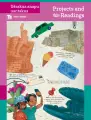
Comparative and Superlative Adjectives - Conversation 3
Respuesta rápida
Conversation 3: b) A loves K-pop. Grammar: tabla de comparativos y superlativos según sílabas y terminaciones.
Solución — Página 102
Uérakua anapu uantakua. Projects and Readings. Libro de Educación Telesecundaria Grado 1° Ciclo Escolar 2025 - 2026
Conversation 3
Enunciado: According to the conversation, choose the correct option.
- Leemos la conversación: A dice "I also love K-pop" y B pregunta "What is K-pop?".
- Verificamos cada opción:
- a) B likes French food → falso, B menciona comida española y libanesa.
- b) A loves K-pop → verdadero, A lo afirma explícitamente.
- c) Both friends love Italian food → falso, no se menciona comida italiana.
Respuesta: b) A loves K-pop.
Grammar
Enunciado: Look at the table about comparative and superlative adjectives. Then, discuss it as a class.
- La tabla clasifica los adjetivos según su número de sílabas y terminación.
- Regla general para comparativos: se agrega -er + than a adjetivos de una sílaba (slow → slower than).
- Regla general para superlativos: se agrega the + -est (slow → the slowest).
- Casos especiales:
- Terminados en -e: solo se agrega -r / -st (late → later / the latest).
- Consonante + vocal corta + consonante: se duplica la consonante (big → bigger / the biggest).
- Terminados en -y: se cambia la y por i (lucky → luckier / the luckiest).
- Dos o más sílabas: se usa more / the most (expensive → more expensive / the most expensive).
- Excepciones: good → better / the best; bad → worse / the worst.
Respuesta orientativa: La tabla muestra que la formación del comparativo y superlativo depende del número de sílabas y de la terminación del adjetivo. Los adjetivos cortos usan sufijos (-er/-est), los largos usan more/the most, y existen formas irregulares como good/better/best.
Contenido de la página
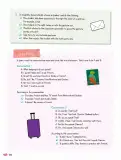
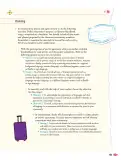
Conversation 3
A: What kind of food do you like? B: I like Spanish and Lebanese food. A: Me too. I also like Indian food. B: Do you like Korean food? A: Yes, and I also love K-pop. B: What is K-pop? A: K-pop is Korean pop music.
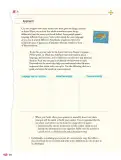
According to the conversation:
a) B likes French food. b) A loves K-pop. c) Both friends love Italian food.
Grammar
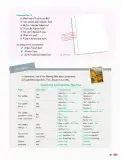
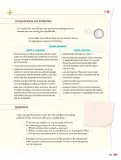
In communities, look at the following table about comparative and superlative adjectives. Then, discuss it as a class.
Comparative and Superlative Adjectives
| Rules | Adjectives | Comparatives | Superlatives |
|---|---|---|---|
| One-syllable | slow, fast | adjective + -er + than: slower than, faster than | the + adjective + -est: the slowest, the fastest |
| One-syllable ends in -e | late, wise | adjective + -r + than: later than, wiser than | the + adjective + -st: the latest, the wisest |
| One-syllable consonant + short vowel + consonant | big, hot | double consonant + -er + than: bigger than, hotter than | double consonant + -est: the biggest, the hottest |
| Two syllables ending in -y | lucky, pretty | drop -y and + -ier + than: luckier than, prettier than | drop -y and + -iest: the luckiest, the prettiest |
| Two or more syllables | expensive, interesting | more + adjective + than: more expensive than, more interesting than | the most + adjective: the most expensive, the most interesting |
| Common exceptions | good, bad | better than, worse than | the best, the worst |
Ejemplos resueltos
Forma el comparativo y superlativo de big.
Termina en consonante + vocal corta + consonante, por lo que se duplica la consonante final: bigger than y the biggest.
Forma el comparativo y superlativo de expensive.
Tiene tres sílabas, por lo que se usa more y the most: more expensive than y the most expensive.
Tabla
| Rules | Adjectives | Comparatives | Superlatives |
|---|---|---|---|
| One-syllable | slow, fast | slower than, faster than | the slowest, the fastest |
| One-syllable ends in -e | late, wise | later than, wiser than | the latest, the wisest |
| Consonant + short vowel + consonant | big, hot | bigger than, hotter than | the biggest, the hottest |
| Two syllables ending in -y | lucky, pretty | luckier than, prettier than | the luckiest, the prettiest |
| Two or more syllables | expensive, interesting | more expensive than, more interesting than | the most expensive, the most interesting |
| Common exceptions | good, bad | better than, worse than | the best, the worst |
Diagrama
graph TD
A[Adjetivos] --> B[1 sílaba]
A --> C[2 sílabas -y]
A --> D[2+ sílabas]
A --> E[Irregulares]
B --> B1[-er / -est]
C --> C1[-ier / -iest]
D --> D1[more / the most]
E --> E1[good-better-best / bad-worse-worst]
Glosario (5)
- comparative
- Forma del adjetivo que compara dos elementos (ej. faster than).
- superlative
- Forma del adjetivo que indica el grado máximo entre varios elementos (ej. the fastest).
- syllable
- Unidad de pronunciación que contiene una vocal; determina la regla del comparativo.
- K-pop
- Música pop coreana.
- Lebanese
- Relativo al Líbano.
Preguntas para practicar
Why do some adjectives use -er/-est and others use more/the most?
Porque los adjetivos de una o dos sílabas aceptan sufijos, mientras que los de tres o más sílabas suenan mejor con more/the most. Esta regla evita pronunciaciones difíciles y mantiene la fluidez del idioma.
Temas y conceptos clave
Figuras de la página (2)


Preguntas que la gente también hace
¿Cómo se forman los comparativos y superlativos en inglés?
¿Cuáles son las excepciones de los adjetivos comparativos y superlativos?
¿Cómo identificar la idea principal de una conversación en inglés?
- • Reconocer adjetivos calificativos en inglés
- • Identificar sílabas en palabras en inglés
- • Vocabulario básico de comidas y nacionalidades
📝 Transcripción de la página (texto seleccionable) 1743 caracteres
Conversation 3
A: What kind of food do you like? B:I like Spanish and Lebanese food. A: Me too. I also like Indian food. B:Do you like Korean food? A: Yes, and I also love K-pop. B: What is K-pop? A: K-pop is Korean pop music.
According to the conversation:a) B likes French food.b) A loves K-pop. c) Both friends love Italian food.
Grammar
~In communities, look at the following table about comparative and superlative adjectives. Then, discuss it as a class.


Comparative and Superlative Adjectives
| Rules | Adjectives | Comparatives | Superlatives |
| One-syllable | slow fast | adjective +-en + than slower than faster than | the + adjective + -est the slowest the fastest |
| One-syllable ends in -e | late wise | adjective + -p+ than later than wiser than | the + adjective + -st the latest the wisest |
| One-syllable consonant + short vowel + consonant | big hot | double consonant+ -er + than bigger than hotter than | double consonant + -est the biggest the hottest |
| Two syllables ending in -y | lucky pretty | drop -y and + -ien + than luckier than prettier than | drop -y and + -iest the luckiest the prettiest |
| Two or mone syllables | expensive interesting | more + adjective + than more expensive than more interesting than | the most + adjective the most expensive the most interesting |
| Common exceptions | good bad | better than wonse than | the best the worst |
101
Otros libros recomendados

Historia del pueblo mexicano. Multigrado Libro de Educación Telesecundaria Grado 1° Ciclo Escolar 2025 - 2026
SEP/CONALITEG
331 págs.

Colección Ximhai. Lenguajes. Libro de Educación Telesecundaria Grado 1° Ciclo Escolar 2025 - 2026
SEP/CONALITEG
323 págs.

Colección Ximhai. Ética, naturaleza y sociedades. Libro de Educación Telesecundaria Grado 1° Ciclo Escolar 2025 - 2026
SEP/CONALITEG
355 págs.
Uérakua anapu uantakua. Projects and Readings. Libro de Educación Telesecundaria Grado 3° Ciclo Escolar 2025 - 2026
SEP/CONALITEG
187 págs.

Uérakua anapu uantakua. Projects and Readings. Libro de Educación Telesecundaria Grado 2° Ciclo Escolar 2025 - 2026
SEP/CONALITEG
171 págs.

Colección Ximhai. De lo humano y lo comunitario. Libro de Educación Telesecundaria Grado 1° Ciclo Escolar 2025 - 2026
SEP/CONALITEG
259 págs.

Colección Ximhai. Nuestro libro de Proyectos. Tomo II. Libro de Educación Telesecundaria Grado 1° Ciclo Escolar 2025 - 2026
SEP/CONALITEG
267 págs.

Un libro sin recetas para la maestra y el maestro. Fase 6. Libro de Educación Telesecundaria Grado 1°, 2°, 3° Ciclo Escolar 2025 - 2026
SEP/CONALITEG
203 págs.